

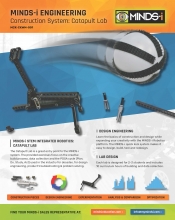
The Catapult Lab is a great entry point to the MINDS-i system. The provided exercises focus on the creative build process, data collection and the PDSA cycle (Plan, Do, Study, Act) used in the industry for decades, for design engineering, product troubleshooting & problem-solving.
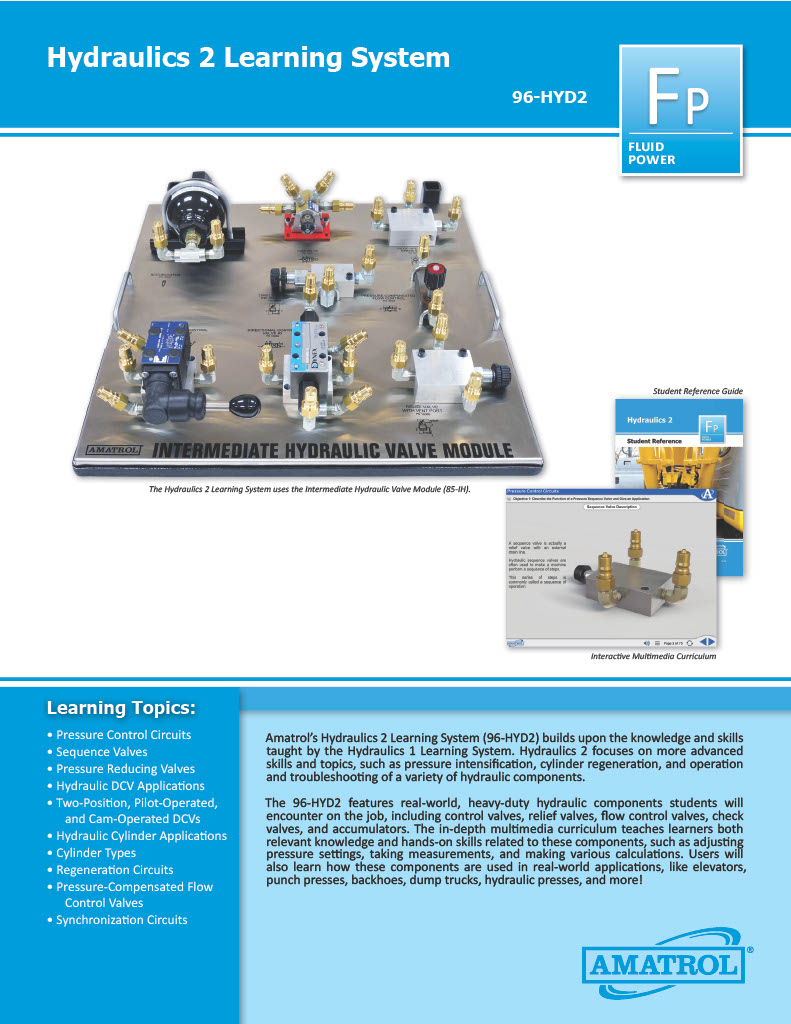
Amatrol's Hydraulics 2 Learning System (96-HYD2) builds upon the knowledge and skills taught by the Hydraulics 1 Learning System. Hydralics 2 focuses on more advanced skills and topics such as pressure intensification, cylinder regeneration, and operation and troubleshooting of various hydraulic components.
The 96-HYD2 features real-world, heavy-duty hydraulic components students will encounter on the job, including control valves, relief valves, flow control valves, check valves and accumulators. The in-depth multimedia curriculum teaches learners both relevant knowledge and hands-on skills related to these components, such as adjusting pressure settings, taking measurements, and making various calculations. User will also learn how these components are use in real-world application, like elevators, punch presses, backhoes, dump trucks, hydraulic presses, and more!
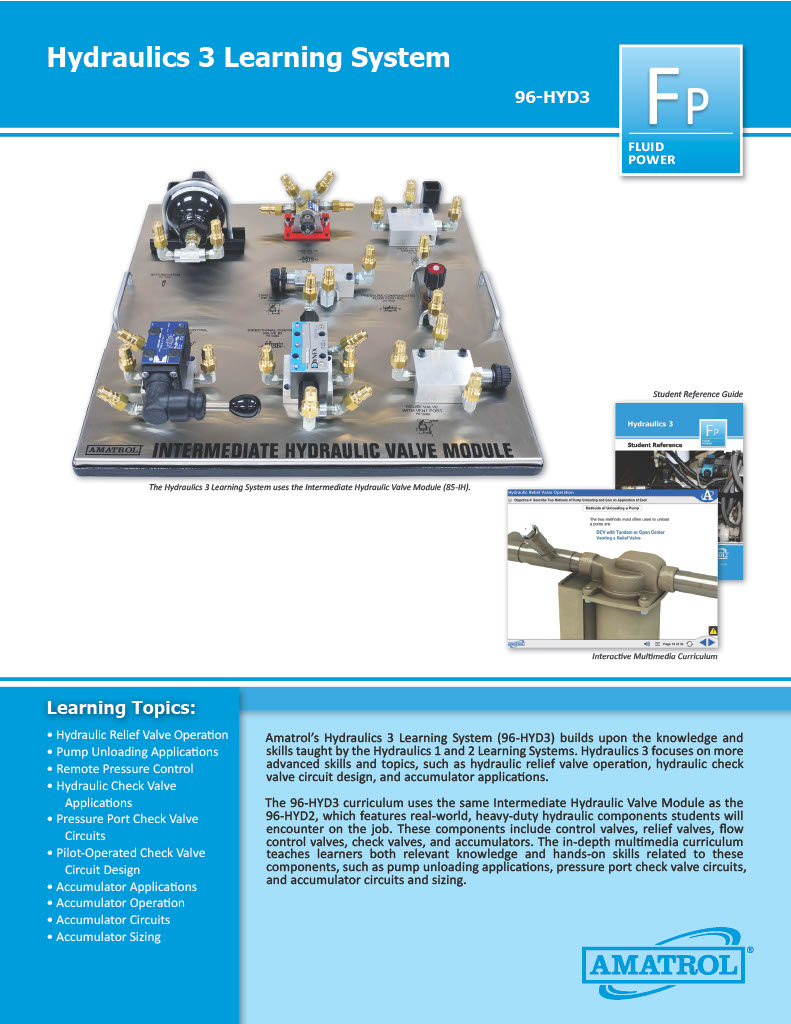
Amatrol’s Hydraulics 3 Learning System (96-HYD3) builds upon the knowledge and skills taught by the Hydraulics 1 and Hydraulics 2 training systems. The Hydraulics 3 training system focuses on more advanced skills and topics, such as hydraulic relief valve operation, hydraulic check valve circuit design, and accumulator applications.
The Hydraulics 3 training system curriculum uses the same Intermediate Hydraulic Valve Module as the Hydraulics 2 training system, which features real-world, heavy-duty hydraulic components students will encounter on the job. These components include control valves, relief valves, flow control valves, check valves, and accumulators. The in-depth multimedia curriculum teaches learners both relevant knowledge and hands-on skills related to these components, such as pump unloading applications, pressure port check valve circuits, and accumulator circuits and sizing.
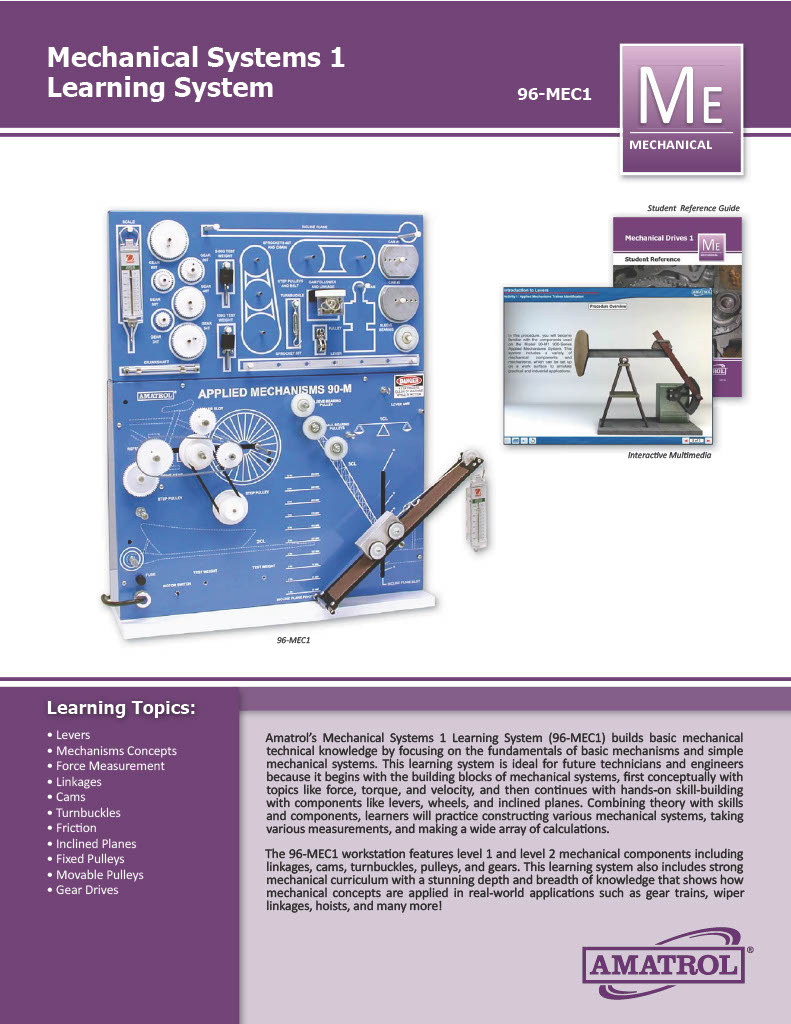
Amatrol’s Mechanical Systems 1 Learning System (96-MEC1) builds basic mechanical technical knowledge by focusing on the fundamentals of basic mechanisms and simple mechanical systems. This learning system is ideal for future technicians and engineers because it begins with the building blocks of mechanical systems, first conceptually with topics like force, torque, and velocity, and then continues with hands-on skill-building with components like levers, wheels, and inclined planes. Combining theory with skills and components, learners will practice constructing various mechanical systems, taking various measurements, and making a wide array of calculations.
The 96-MEC1 workstation features level 1 and level 2 mechanical components including linkages, cams, turnbuckles, pulleys, and gears. This learning system also includes strong mechanical curriculum with a stunning depth and breadth of knowledge that shows how mechanical concepts are applied in real-world applications such as gear trains, wiper linkages, hoists, and many more!
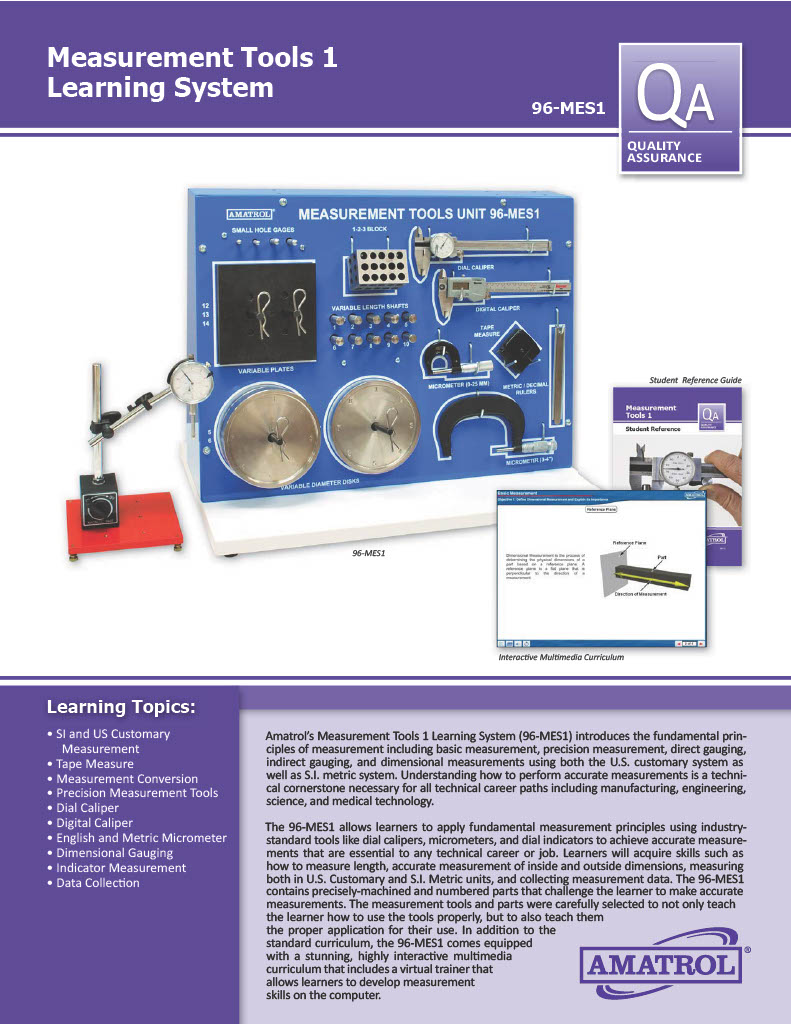
Amatrol’s Measurement Tools 1 Learning System (950-MES1) teaches learners the fundamental principles of measurement, including basic and precision measurement and direct and indirect gauging. The concepts and skills covered in Amatrol’s in-depth curriculum are critical and used in every manufacturing plant in the world by inspectors, machinists, manufacturing engineers, and others to determine if parts meet quality standards. After all, the ability to produce quality products begins with determining whether a product meets specified dimensions.
Using Amatrol’s comprehensive multimedia curriculum, learners will study a variety of measurement topics, including: digital and dial calipers; dimensional gauging; statistical process control; control chart operation and analysis; geometric dimensioning and tolerancing; and location, orientation, and form tolerances. The measurement tools training system also includes industrial-quality components, such as a tabletop workstation, measurement tools like digital and dial calipers, variable length shafts and diameter disks, and more! The combination of robust curriculum with real-world equipment gives learners practical, hands-on experience with instruments they’ll encounter on the job.
Amatrol's Measurement Tools 3 Learning System (96-MES3) teaches the high demand skills of conventional and geometric dimensioning and tolerancing, a key component of quality assurance. General Dimensioning & Tolerancing (GD&T) techniques are common practice offered by the 96-MES3 will provide learners with marketable skills. The 96-MES3 covers basic GD&T information and skills before focusing on three main areas: location tolerances, orientation tolerances, and form tolerances.
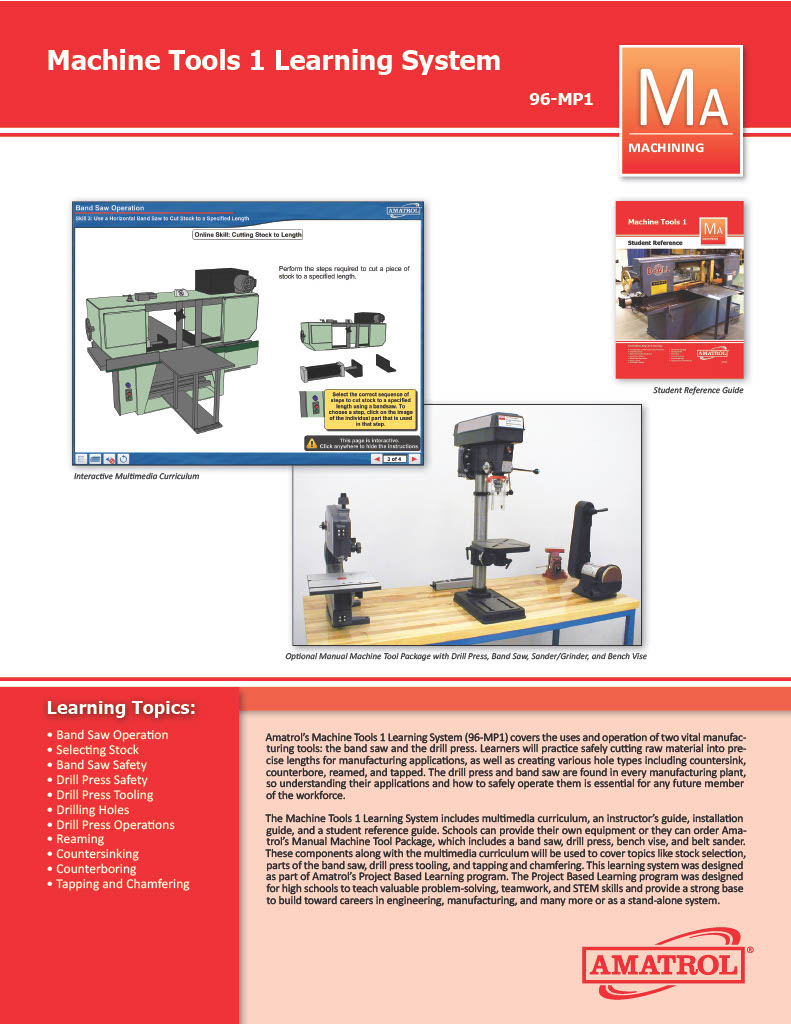
Amatrol's Machine Tools 1 Learning System (96-MP1) is a comprehensive resource that explores the uses and functionality of two essential manufacturing tools: the band saw and the drill press. Through this system, learners engage in safe practices for cutting raw materials precisely and creating various hole types, such as countersink, counterbore, reamed, and tapped, crucial for manufacturing applications. Understanding the applications and safe operation of the drill press and band saw is vital for anyone entering the workforce in manufacturing.
This learning system encompasses multimedia curriculum materials, an instructor's guide, installation guide, and a student reference guide. Schools have the option to use their own equipment or acquire Amatrol's Manual Machine Tool Package, which includes essential tools like a band saw, drill press, bench vise, and belt sander. These components, combined with the multimedia curriculum, cover essential topics like stock selection, band saw components, drill press tooling, and tapping and chamfering techniques. Developed as part of Amatrol's Project Based Learning initiative, this system not only imparts technical knowledge but also fosters problem-solving, teamwork, and STEM skills. It serves as a strong foundation for careers in engineering, manufacturing, and related fields or can function as a standalone educational tool.
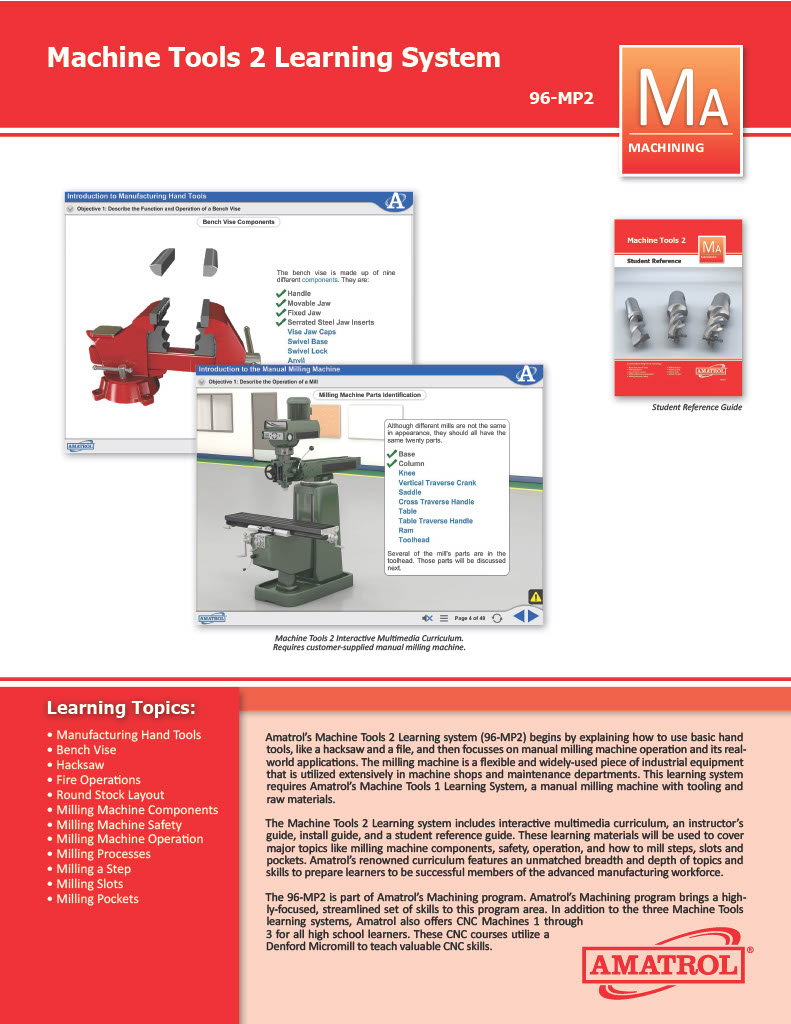
Amatrol's Machine Tools 2 Learning System (96-MP2) begins by explaining how to use basic hand tools, like a hacksaw and a file, and then focusses on manual milling machine operation and its real-world applications. The milling machine is a flexible and widely-used piece of industrial equipment that is utilized extensively in machine shops and maintenance departments. This learning system requires Amatrol's Machine Tools 1 Learning System, a manual milling machine with tooling and raw materials.
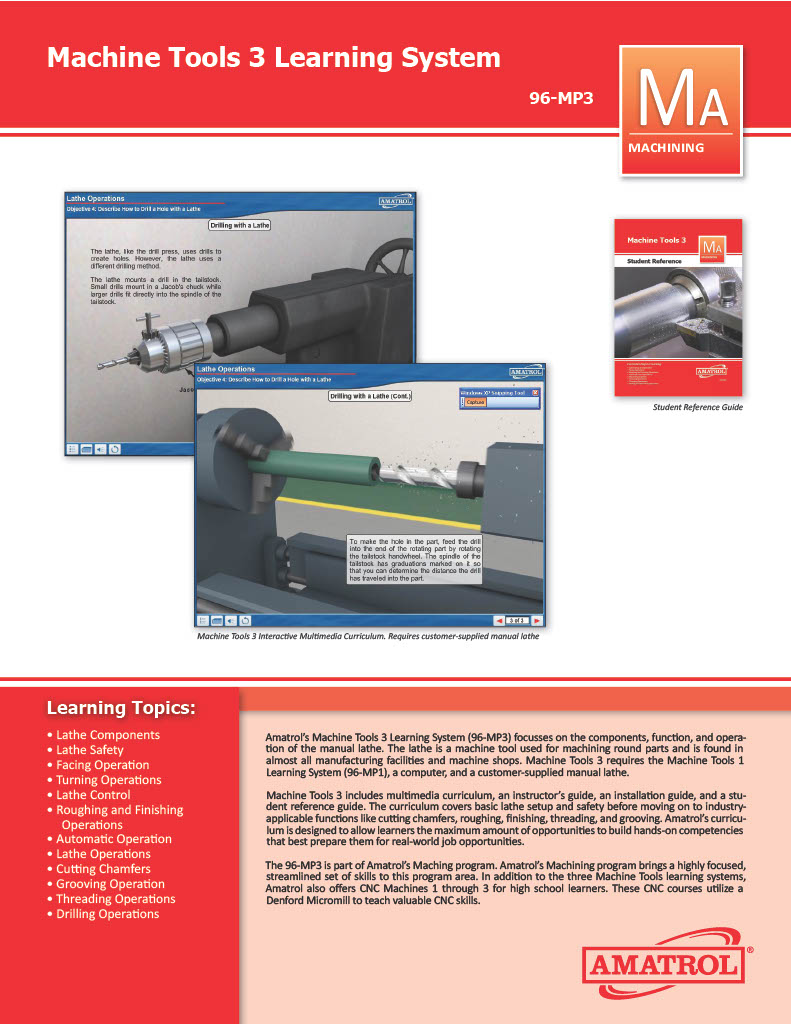
Amatrol's Machine Tools 3 Learning System (96-MP3) focuses on the components, function and operation of the manual lathe. The lathe is a machine tool used for machining round parts and is found in almost all manufacturing facilities and machine shops. Machine Tools 3 requires the Machine Tools 1 Learning System (96-MP1), a computer, and a customer-supplied manual lathe.
Mechanical fabrication plays an important role in today’s economy as the cost to produce goods increases and the profit margins shrink. To stay competitive, companies must manufacture high quality goods. In our information based world, learners increasingly do not have knowledge or skills for mechanical fabrication. Amatrol’s Mechanical Fabrication 1 Learning System (96-MPF1) focuses on the safe application of basic hand tools used in assembly.
The Mechanical Fabrication training system includes real-world hand tools and associated components such as screwdrivers, wrenches, and sockets for hands-on skill-building. Learners will gain hand tools training and basic assembly skills training by practicing skills like: inspecting and installing a threaded fastener; using fixed, adjustable, Allen, and ratchet wrenches to tighten threaded fasteners; and installing pipe thread and straight thread pneumatic fittings. This hand tools training system also includes interactive multimedia curriculum, an instructor’s assessment guide, an installation guide, and a student reference guide. Amatrol combines equipment, strong print-based curriculum, and interactive multimedia so that learners can study and practice mechanical fabrication skills in the style that they need.
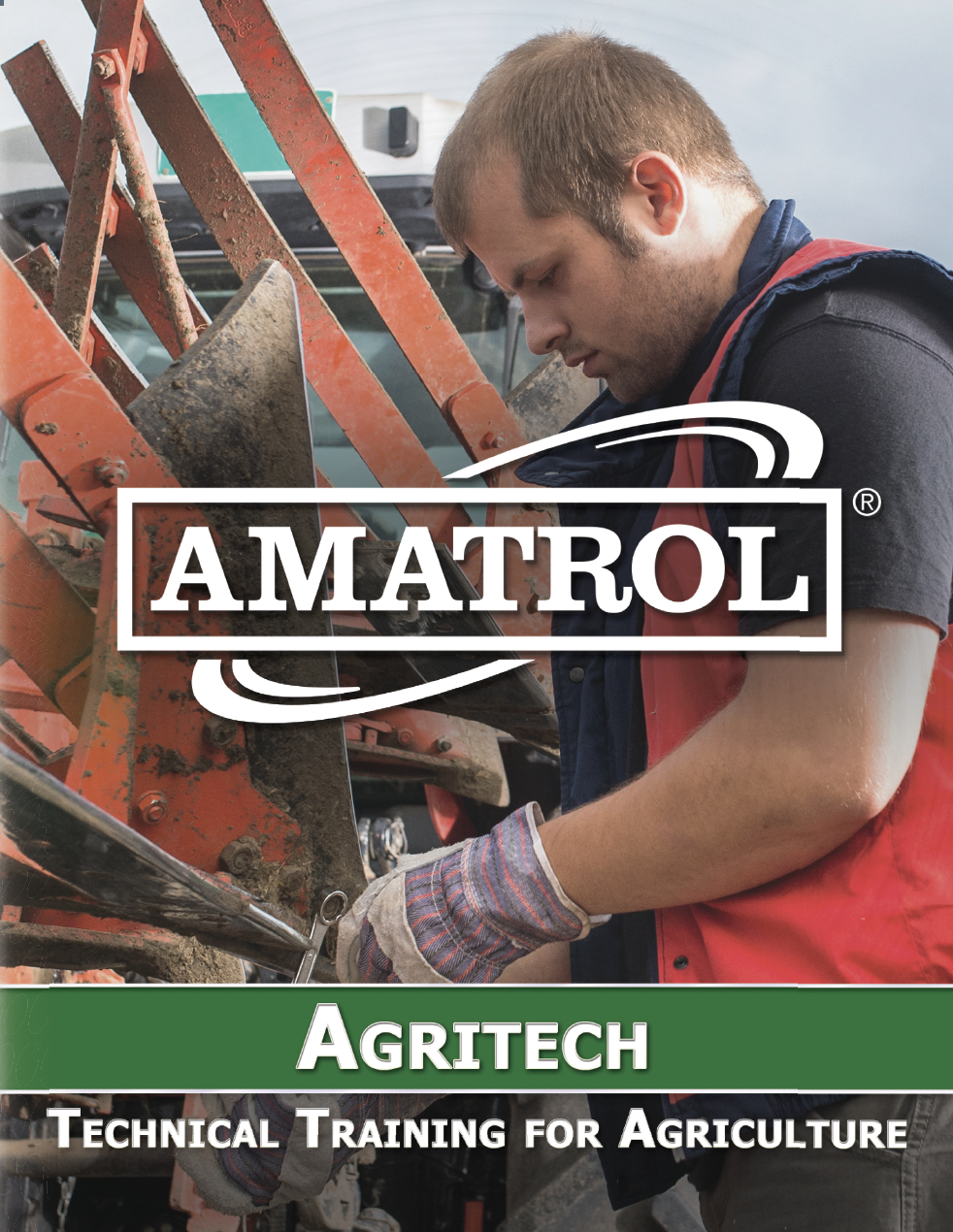
TECHNICAL TRAINING FOR AGRICULTURE
When it comes to industries, agriculture can stake its claim to being one of the oldest industries in the world with a history that stretches back over 12,000 years. What began with small groups of people in different parts of the world figuring out how to domesticate animals and grow their own food has become a multi-trillion-dollar industry that connects nations across the globe.
Sparked by a series of industrial revolutions, major changes have taken place throughout industry over the last couple of centuries. These same changes have shaped agriculture over the years. Manual processes and hand tools were replaced with machines. Technological advances, including computers and the Internet, have made agricultural machines and processes more productive and efficient.
As technology continues to advance, agriculture must keep evolving to ensure that productivity keeps pace with an ever-expanding world population. In fact, today’s agricultural experts need experience with more types of technology than ever before.
Today's agriculture experts need experience with more types of technology then ever before.
Pages
-
 Item Number:MCK-CKWM-001
 -
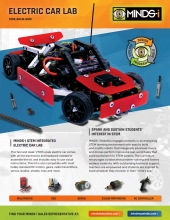 Item Number:MCK-ECLB-2WDThis fast and sleek 1/10th scale electric car comes with all the electronics and hardware needed to assemble the kit and includes easy to use visual instructions. This kit is also compatible with most hobby standard DC motors, gears, radio transmitters, servos, bodies, wheels, tires, and more.
 -
 Item Number:MCK-107P-001Prepare students for FAA Part 107 knowledge areas with the MINDS-i FAA 107 Certification Prep Course. Explore regulations, airspace, weather, safety, and UAV operations in a 45-hour program.
 -
 Item Number:CPK-W4X4-001Explore the Minds-i Search and Rescue Competition Kit, created for SkillsUSA robotics events. Learn how students can build, program, and remotely operate robots to tackle real-world rescue challenges.
 -
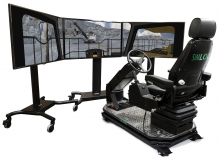 Item Number:MTModern mining equipment is increasingly complex, costly, and difficult to operate productively. As a result, proper operator training has become everyone's business. The fact is, it takes training to spot a truck and position it for loading under a full bucket. It also takes training to back up a truck just using mirrors under that bucket. Otherwise, your mining operations will suffer from lower productivity, higher fuel costs, increased tire wear, and more equipment maintenance and repair.
 -
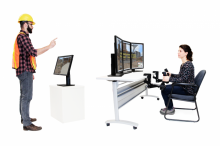 Item Number:MCRASimlog’s Advanced Edition puts you at the controls of a modern rough-terrain mobile crane equipped with telescoping boom and jib, and a variety of hook-blocks with best-in-class simulation graphics and physics, slings that go “slack”, and a boom that deflects. And now there’s wind, with parameters to define the direction, strength, and gusting.
 -
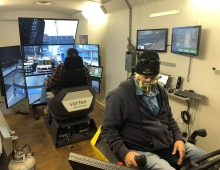 CM Labs’ Mobile Training Center is designed to give organizations the flexibility to offer training and assessment anywhere. It provides on-site presence, reducing team displacement and job site disruption. Community colleges and vocational schools can expand training locations and access markets previously out of reach or too remote.
 -
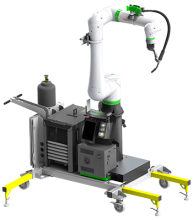 Item Number:TRV10L / TRV25Mobile robotic welding training with the MOD-WELD® Cobot Traveler. Teach FANUC cobot welding, programming, and real-world fabrication workflows in flexible lab environments.
 -
 Item Number:DCDA-30Teach advanced robotic welding with the MOD-WELD® Cobot Drop Center, a FANUC CRX-25iA dual-axis positioner system for hands-on automation and fabrication training.
 -
 Allow your welders to double their throughput with a pre-engineered robot welding system. Both the MAC series, designed with a FANUC CRX Cobot, and the MATE series, designed with a FANUC ARC Mate robot, give endless opportunities for quick setup and ease of use.