



Train students and technicians in diagnosing and repairing high-voltage hybrid and electric vehicles safely. The LN CarTrain ASE L3 Trainer integrates real 400V HV components, interactive software, and fault simulations for hands-on, standards-based learning.
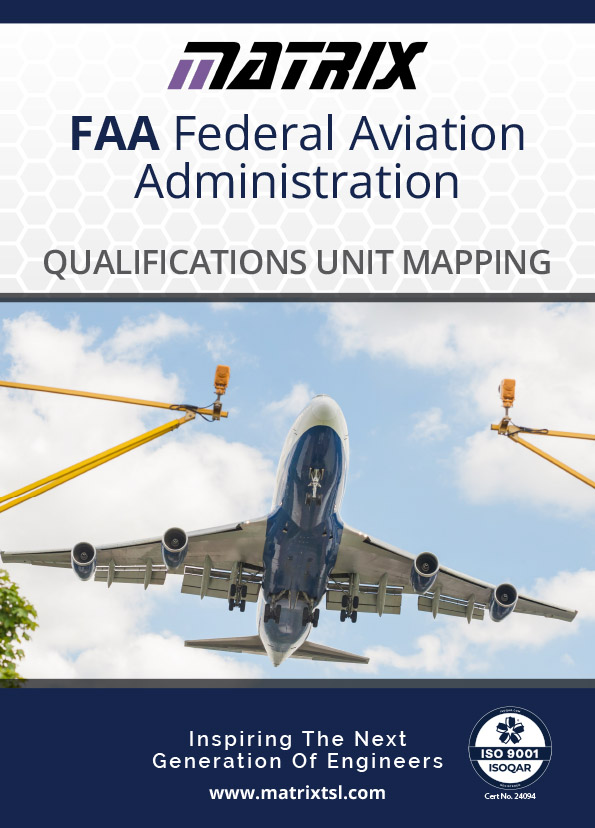
Explore how Matrix TSL aviation training solutions align with key knowledge and skill areas within the FAA Aviation Mechanic General, Airframe, and Powerplant Airman Certification Standards. This downloadable guide maps hands-on training equipment to topics including electrical and electronic fundamentals, aircraft materials, fluid systems, aviation physics, flight controls, instrumentation, communication and navigation, aircraft electrical systems, rotorcraft fundamentals, and engine electrical systems.
Use the guide to identify training solutions that can help reinforce both theoretical understanding and practical technical skills in aviation maintenance and aerospace education programs. Download the FAA Curriculum Mapping Guide to explore the Matrix TSL systems associated with individual FAA knowledge and skills objectives and begin planning a more hands-on aviation training program.
See how hands-on training can help students connect engineering theory with practical, real-world applications. This video provides an overview of the training equipment and demonstrates how learners can explore key concepts through practical experimentation.
By giving students the opportunity to work directly with real equipment, educators can reinforce classroom instruction while developing problem-solving, analytical, and technical skills. Watch the video to see the system in action and discover how it can support your engineering or technical education program.
- Explore hands-on engineering concepts
- Connect classroom theory with practical experimentation
- Develop technical and problem-solving skills
- Support engineering and technical education programs
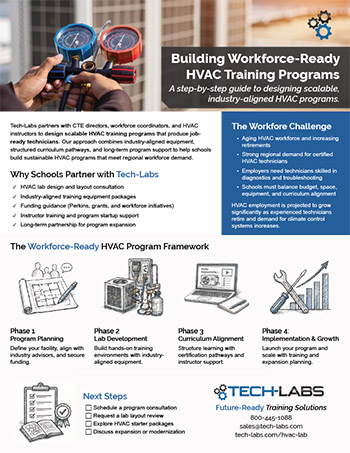
Tech-Labs’ guide, Building Workforce-Ready HVAC Training Programs, outlines a four-phase framework for creating scalable, industry-aligned HVAC programs. It covers program planning, hands-on lab development, curriculum and certification alignment, instructor support, implementation, and future growth.
The guide also examines workforce challenges such as technician shortages, retirements, and rising demand for diagnostic and troubleshooting skills. Readers will learn how schools can balance facility space, equipment, funding, and curriculum needs to prepare job-ready HVAC technicians.
Explore the complete Mastrex line of Laser Powder Bed Fusion (LPBF) metal 3D printers, from compact systems for education, research, and prototyping to large-format machines engineered for industrial production. This catalog compares the MX100, MX120, MX150, MX220, MX300, MX400, and MX800, including build capacities, laser configurations, material compatibility, and applications.
Mastrex metal additive manufacturing systems support materials such as titanium alloys, stainless steel, aluminum, cobalt-chromium, and copper alloys. The catalog also covers available powder materials, service, installation, training, warranty, and technical support.
The Mastrex MX-100 is a compact LPBF metal 3D printer designed for education, research, prototyping, and small-batch production. Its desktop-friendly footprint makes industrial-grade metal additive manufacturing more accessible while supporting detailed parts, tight tolerances, and high-quality surface finishes.
This catalog includes the MX-100’s 4-inch-diameter by 3.15-inch build volume, 300-watt laser, supported materials, layer-height range, machine dimensions, and operating requirements. It also covers compatible metal powders and Mastrex installation, training, warranty, and support.
The Mastrex MX120 provides a larger build area than the MX100 while maintaining a compact footprint and accessible workflow. Designed for engineers, researchers, educators, and manufacturers, it supports precision metal printing for prototypes, functional components, applied research, and limited production.
The catalog details the MX120’s 4.72-inch-diameter by 4-inch build volume, 300-watt laser, supported materials, machine dimensions, and electrical requirements. It also includes information on metal powders, installation, training, warranty coverage, and ongoing technical support.
The Mastrex MX-150 combines increased build capacity with an industrial LPBF platform suitable for laboratories, workshops, and production environments. Its 5.91 x 5.91 x 4.72-inch build volume supports larger components, multiple parts per cycle, rapid design iteration, and short production runs.
This catalog outlines the MX-150’s 500-watt laser, layer-height capabilities, supported metal alloys, printing speed, dimensions, weight, and electrical requirements. It also includes material options and information about installation, training, warranty coverage, and support.
The Mastrex MX-220 is a dual-laser LPBF system engineered to increase throughput without sacrificing precision or surface quality. Two independently controlled 500-watt lasers cover the full build area, enabling faster production and consistent results across complex or densely packed builds.
The catalog provides specifications for the 8.66 x 5.51 x 7.87-inch build volume, dual-laser scanning system, layer-height capabilities, supported alloys, print speeds, dimensions, and operating requirements. It also covers material choices and available installation, training, warranty coverage, and technical support.
The Mastrex MX-300 expands dual-laser LPBF production with an 11.81 x 11.81 x 13.78-inch build volume. It is designed for larger parts, increased quantities, and complex assemblies used in aerospace, energy, industrial research, and advanced manufacturing applications.
This catalog describes the MX300’s two 500-watt lasers, full-area scanning system, supported metals, machine dimensions, weight, and electrical requirements. It also covers powder materials, installation, operator training, warranty coverage, and technical support.
The Mastrex MX-400 is a large-format LPBF metal 3D printer built for industrial production. Its 15.75 x 13.78 x 15.75-inch build volume and four-laser system provide full-area coverage for large components and high-throughput batch manufacturing.
An integrated powder-management workflow supports sieving, depowdering, recovery, and reuse while reducing manual powder handling. The catalog includes technical specifications, supported alloys, machine requirements, material information, and details about installation, training, warranty coverage, and support.
Pages
-
 Item Number:CO3223-6X7
 -
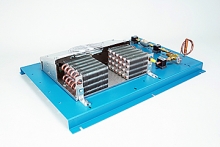 Item Number:373-991DAC Worldwide’s Ceiling Unit Cooler System Cutaway is a professionally-crafted, sectioned example of a refrigeration system fragment, including ceiling unit cooler with associated components, as used in commercial refrigeration systems relating to food preservation applications.
 -
 Item Number:950-CL1Amatrol’s Central Lubrication Learning System (950-CL1) is for hands-on training in operating, maintaining, and troubleshooting piston distributor and series/progressive valve lubrication systems—plus oils, greases, and lubricant management.
 -
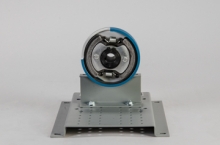 Item Number:200-2204DAC Worldwide’s Centrifugal Clutch Cutaway (200-2204) depicts a modified industrial centrifugal clutch for mechanical drive training in a classroom or laboratory. This sectioned mechanical power transmission component uses centrifugal force to connect two concentric shafts by throwing a centrifugal shoe outwards at a right angle to the primary shaft axis, which allows for shift during start-up.
 -
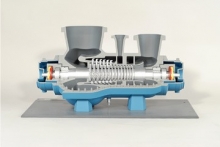 Item Number:211CThe design of the Centrifugal Compressor Model is based upon common industrial centrifugal compressors.
 -
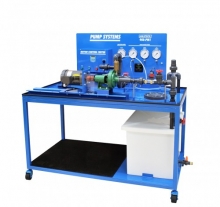 Item Number:950-PM1The model 950-PM1 Pumps Learning System teaches skills related to centrifugal pumps, which are used in almost every industry to transfer non-hydraulic fluids of various types from one place to another. Students learn a comprehensive set of industry-relevant skills including how to operate, install, maintain, troubleshoot, analyze performance, and select centrifugal pumps as well as system design.
 -
 The CFT program was created in partnership with the Material Handling Equipment Distributors Association (MHEDA) to provide skills to entry-level forklift technicians, enhancing their performance in the world of material handling. The CFT prepares individuals to repair and maintain technical systems utilizing key engineering principles that underpin most forklift vehicles.
 -
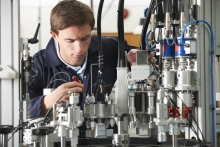 Item Number:C-101 / C-102 / C-103 / C-104SACA’s Associate certifications are introductory Industry 4.0 certifications appropriate for operators and other individuals seeking to become familiar with Industry 4.0 factory floor automation equipment and processes.
 -
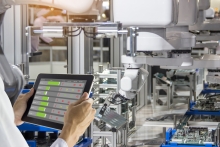 SACA’s Certified Industry 4.0 Professional certification is an engineering certification that focuses on the analysis, design, and optimization of Industry 4.0 systems. It prepares engineers to succeed in positions in modern production environments that use Industry 4.0 technologies.
 -
 SACA’s Specialist certifications certify Industry 4.0 technical skills in operations, troubleshooting, programming, maintenance, and systems integration. Each certification is keyed to a skilled occupation.