The APT MTEC is a FANUC Certified, advanced manufacturing, CNC Load/Unload system; complete with curriculum and training for your students to integrate and program a CNC and Robot.

Unlocking STEM Opportunities for Future Careers
According to the National Science Board, in 2019, the STEM workforce represented 23% of the total U.S. workforce. Notably, over half of STEM workers don't hold a bachelor’s degree and are prominent in sectors like health care (19%), construction trades (20%), installation and repair (21%), and production (14%). STEM workers experienced lower unemployment (2%) compared to non-STEM workers (4%) in 2019, with higher median earnings.
Our Approach
Through activity-, project-, and problem-based curriculum, our programs empower students to apply their knowledge, solve problems, and lead their own learning. When students see the relevance of their education to their lives and careers, they become more engaged and successful.
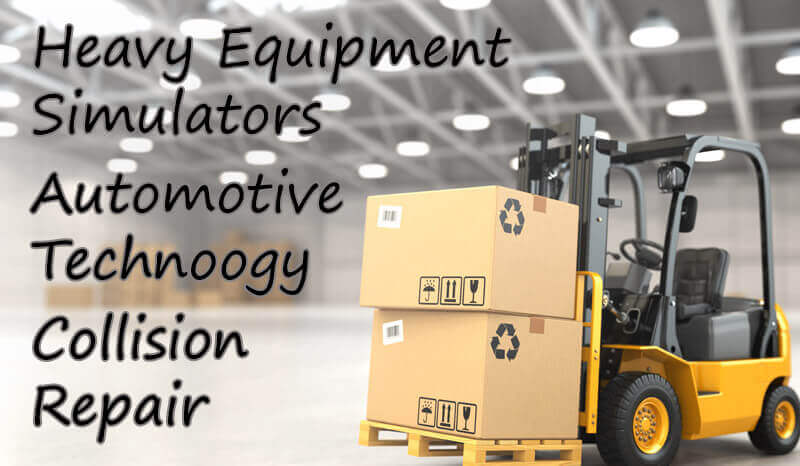 The U.S. Dept. of Labor forecasts that the automotive industry is expected to add 237,500 new jobs and have a 30 percent growth rate through 2020
We offer a variety of training products for this career cluster including:
- Automotive Technology and Diesel Engine programs from LJ Create
- SimSpray virtual reality paint spraying for Collision Repair programs
- Simlog Heavy Equipment Simulators for training heavy equipment operators
- OilTec Port Crane Simulators
- Transas Maritime Simulation & Training
Helping Solve Industry 4.0
APT Manufacturing Solutions has over 25 years of unique insights on industrial needs and applications that help high-tech automation. They are authorized FANUC robotics integrators certified at the highest level (IV).
These years of experience allow APT to design and build equipment and curriculum that advances industry 4.0 and IIoT manufacturing in vocational schools, trade schools, and universities throughout the US.
Innovative Technologies and Lifecycle Solutions for the Marine and Energy Markets
 Wartsila offers best-in-class navigation systems and integrated bridge solutions, recognized training and simulation solutions, renowned VTMS and coastal surveillance systems, fleet and port management systems, onboard and individual decision support systems for professional crew and pilots, as well as popular applications for leisure and the marine mass market.
Wartsila is a trendsetter and visionary of the market for the last 25 years. Wartsila promotes its own concept of e-Navigation as the future model for Marine IT integrating all elements of the marine industry and all systems into one information environment.
Developing future leaders in advanced manufacturing.
Desktop Metal is reinventing how engineering and manufacturing teams produce metal parts - from prototyping through mass production.
By investing in 3D printing, students can gain hands-on experience by designing and producing their own functional parts and build the skills needed for next-generation manufacturing careers.
Pages
-
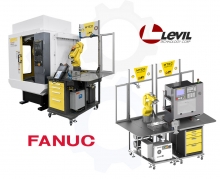 Item Number:MTEC
 -
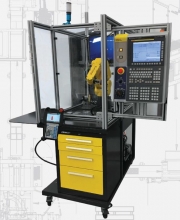 Item Number:MTEC-SIMThis machine comes ready for mill and lathe operation with the robot moving a blank from a pick location to a simulated mill vice or lathe chuck all in one compact cell. The student can see the machine tool come to life on the monitor, hear the tools cutting, and crash the machine (virtually).
 -
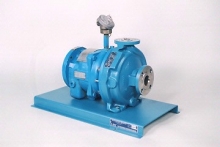 Item Number:275-150DAC's Magnetic Drive Centrifugal Pump Dissectible (Goulds/IR/Durco/Flowserve) (275-150) is an industrial pump for training relating to process pumps.
 -
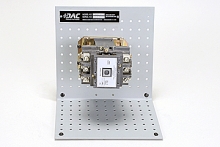 Item Number:273-910DAC Worldwide’s Magnetic Motor Starter Cutaway (273-910) depicts a professionally-crafted, sectioned example of a commonly encountered 3-phase magnetic motor starter used in industrial and commercial electrical systems to control high horsepower AC induction motors, lighting systems, and other non-inductive loads.
 -
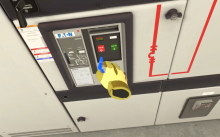 Interactive VR training for the Magnum DS Breaker, helping electrical students and technicians practice safe operation, component identification, and racking procedures in a controlled environment.
 -
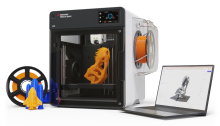 Discover the MakerBot Sketch Sprint 3D printer, designed for education with high-speed printing, cloud-based management, and classroom-ready safety features. Ideal for STEM and CTE programs.
 -
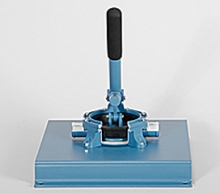 Item Number:278-181DAC Worldwide’s Manual Diaphragm Pump Cutaway (278-181) depicts a sectioned hand-operated diaphragm-type positive displacement pump that allows for convenient classroom training in the design, operation, construction, and maintenance of this common pump type used in industrial, marine, commercial, and agricultural applications for pumping liquids by hand.
 -
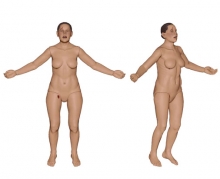 Item Number:MATTI-BLAST-FMM-1Explore TacMed's Simulation™ MATTi™ Medical Simulator, a modular whole-body female medical simulator designed to revolutionize medical training. Discover unparalleled realism, versatility, and effectiveness in simulation technology. Prepare healthcare professionals for real-world scenarios with MATTi™ today.
 -
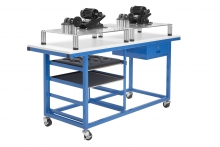 Item Number:27-MEA1Amatrol’s Mechanical Drives 1 Assessment Workstation (27-MEA1) features a compact workstation designed to effectively assess hands-on mechanical skills with both belt and chain drives.
 -
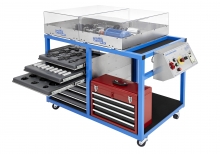 Item Number:970-ME1Amatrol’s Mechanical Drives 1 Learning System (970-ME1) covers installation, operation, motor drive alignment, and various motor drive systems applications.