

SACA’s Certified Industry 4.0 Professional certification is an engineering certification that focuses on the analysis, design, and optimization of Industry 4.0 systems. It prepares engineers to succeed in positions in modern production environments that use Industry 4.0 technologies.
Hose and Tube Fitting
Amatrol’s Pneumatic Fitting Construction Learning System (94-PFC-1) covers how to select the proper fittings required for connecting components and installing fittings to hoses and flexible tubing. Major topics covered by the Pneumatic Fittings training system include air supply connections, control air connections, and power air connections. The topics and pneumatic skills included in this system are required knowledge for any technician or engineer involved in the construction of pneumatic systems.
The Pneumatic Fittings training system includes a tabletop workstation with pre-mounted pneumatic components like a pneumatic cylinder, flow control valve, manifold, and directional control valve. Learners will use these and other components to practice skills like installing a rubber hose onto a push-on type fitting, connecting tubing using a ferrule type fitting, and installing a bulkhead fitting. Working with these industrial-grade components will help learners gain confidence and build real-world applicable skills for rewarding careers like industrial maintenance technicians.
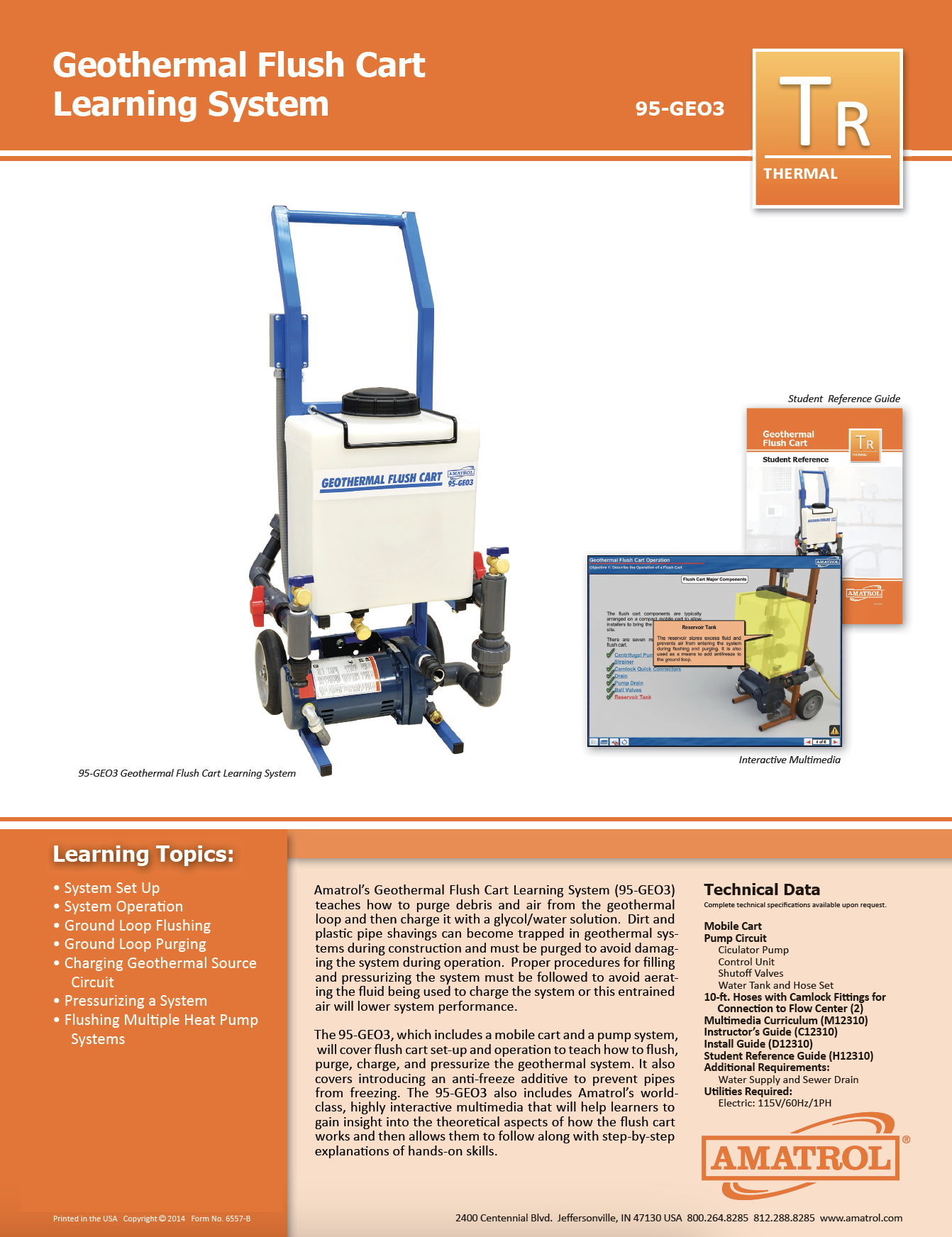
Amatrol’s Geothermal Flush Cart Learning System (95-GEO3) teaches how to purge debris and air from the geothermal loop and then charge it with a glycol/water solution. Dirt and plastic pipe shavings can become trapped in geothermal systems during construction and must be purged to avoid damaging the system during operation. Proper procedures for filling and pressurizing the system must be followed to avoid aerating the fluid being used to charge the system or this entrained air will lower system performance.
The 95-PAS2 Split Flange Coupling Learning System teaching learners how to identify, select, install and troubleshoot a split flange coupling. Incorrect assembly of a split flange coupling can lead to product failure, code compliance issues, and safety problems. Amatrol's Split Flange Coupling Learning system equips learners with the knowledge to select and use split flange coupling correctly, as well as teaching them the hands-on skills need to work well with these types of connections.
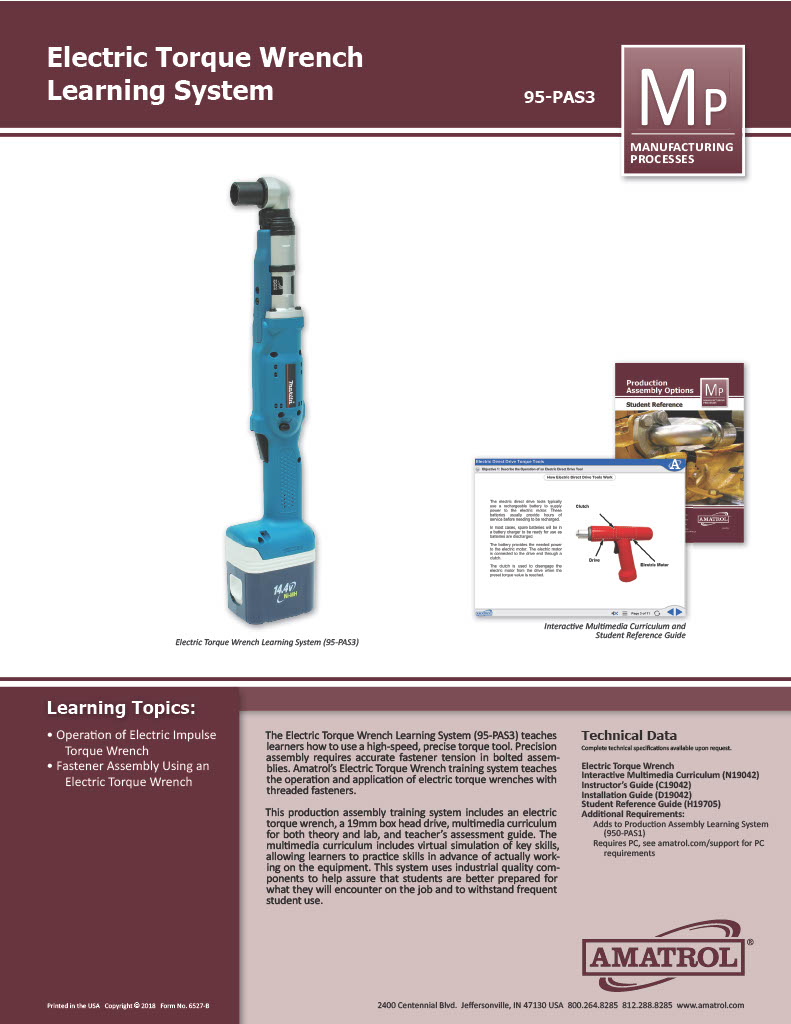
The Electric Torque Wrench Learning System (95-PAS3) teaches learners how to use a high-speed, precise torque tool. Precision assembly requires accurate fastener tension in bolted assemblies. Amatrol's Electric Torque Wrench training system teaches the operation and application of electric torque wrenches with threaded fasteners.
The Stall Bar Training System (95-PAS4) teaches learners how to use a stall bar torque tool to assemble threaded fasteners. These are often used in assembly operations requiring very accurate torque.
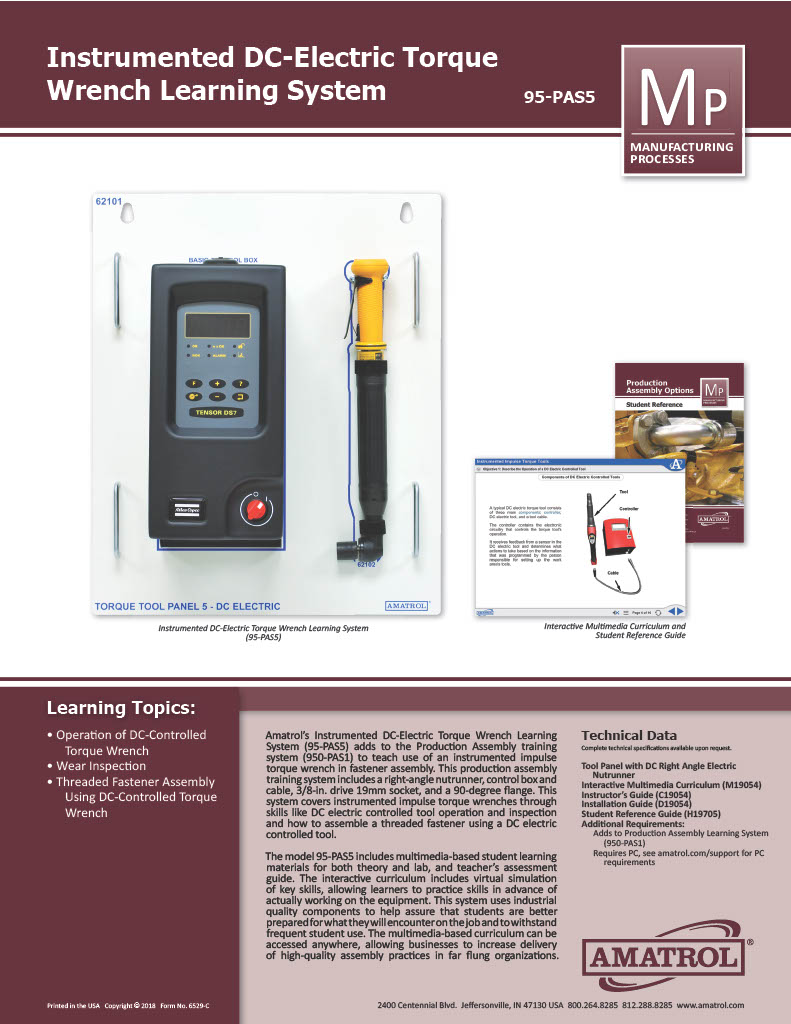
Amatrol's Instrumented DC-Electric Torque Wrench Learning System (95-PAS5) adds to the Production Assembly Training System (950-PAS1) to teach use of an instrumented impulse torque wrench in fastener assembly. This production assembly training system includes a right-angle nutrunner, control box and cable, 3/8-in. drive 19mm socket, and a 90-degree flange. This system covers instrumented impulse torque wrenches through skills like DC electric controlled tool operation and inspection and how to assemble a threaded fastener using a DC electric controlled tool.
Hands-On Skills with Parallel and Series Pumps
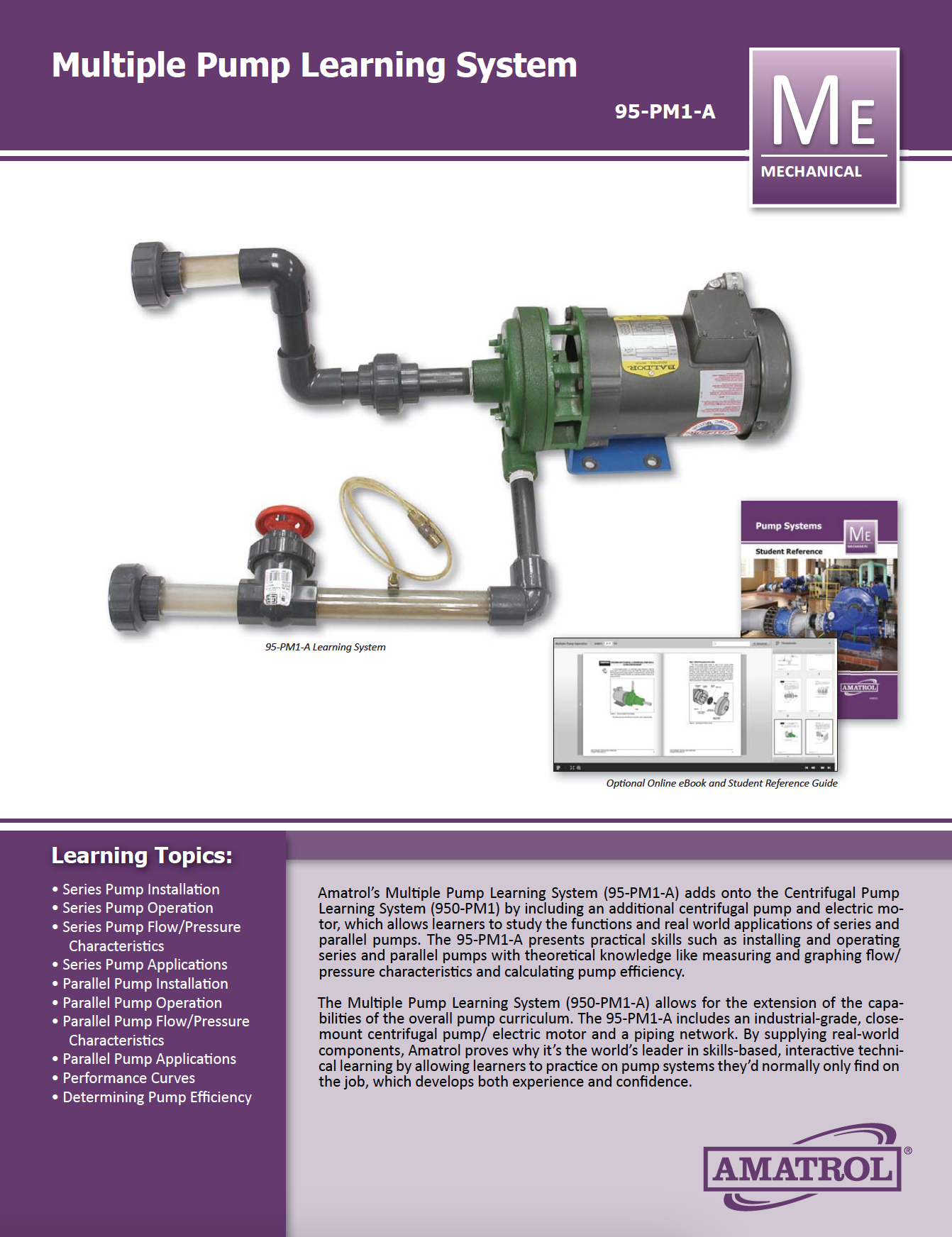
Amatrol’s Multiple Pump Learning System (95-PM1-A) adds onto Amatrol’s Pumps training system (950-PM1) by including an additional centrifugal pump and electric motor, allowing learners to study the functions and real world applications of series and parallel pumps. This industrial pump training system presents practical skills such as pump installation and pump operation for series and parallel pumps with theoretical knowledge like measuring and graphing flow/pressure characteristics and calculating pump efficiency.
Pump Maintenance and Troubleshooting
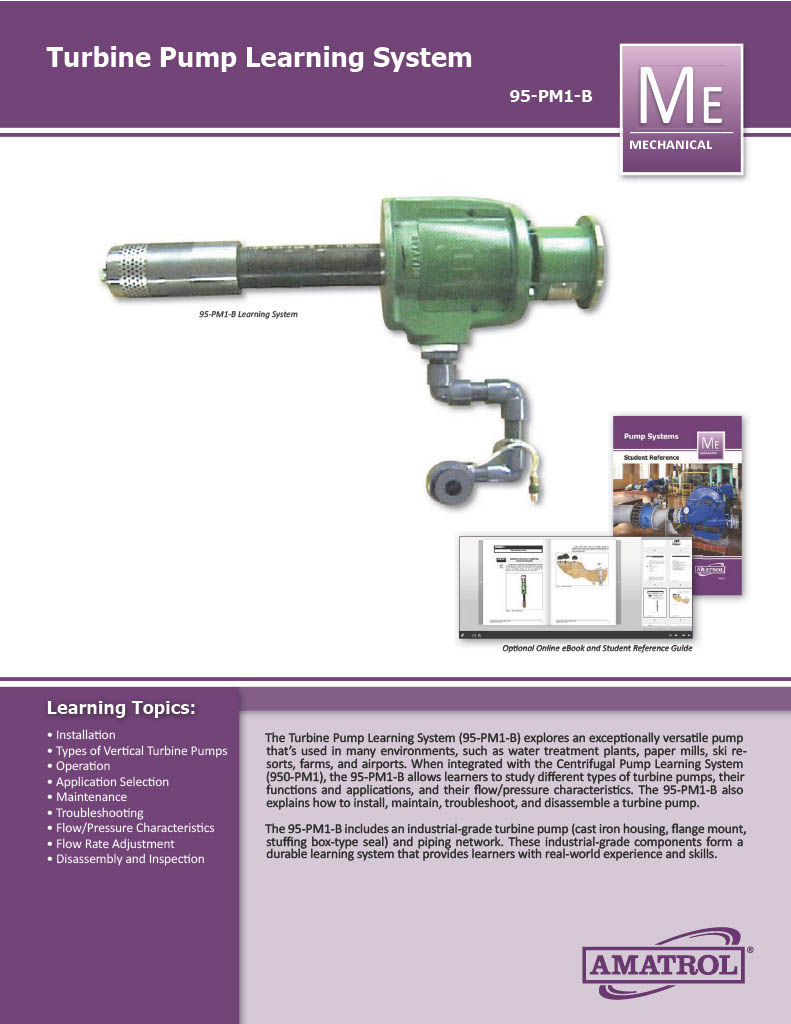
The Turbine Pump Learning System (95-PM1-B) explores an exceptionally versatile industrial pump that’s used in many environments, such as water treatment plants, paper mills, ski resorts, farms, and airports. When integrated with Amatrol’s centrifugal pumps training system (950-PM1), this system allows learners to get training on different types of turbine pumps, their functions and applications, and their flow/pressure characteristics. This system also explains pump installation, pump maintenance, pump troubleshooting, and how to disassemble a turbine pump.
Hands-On Skills with Parallel and Series Pumps
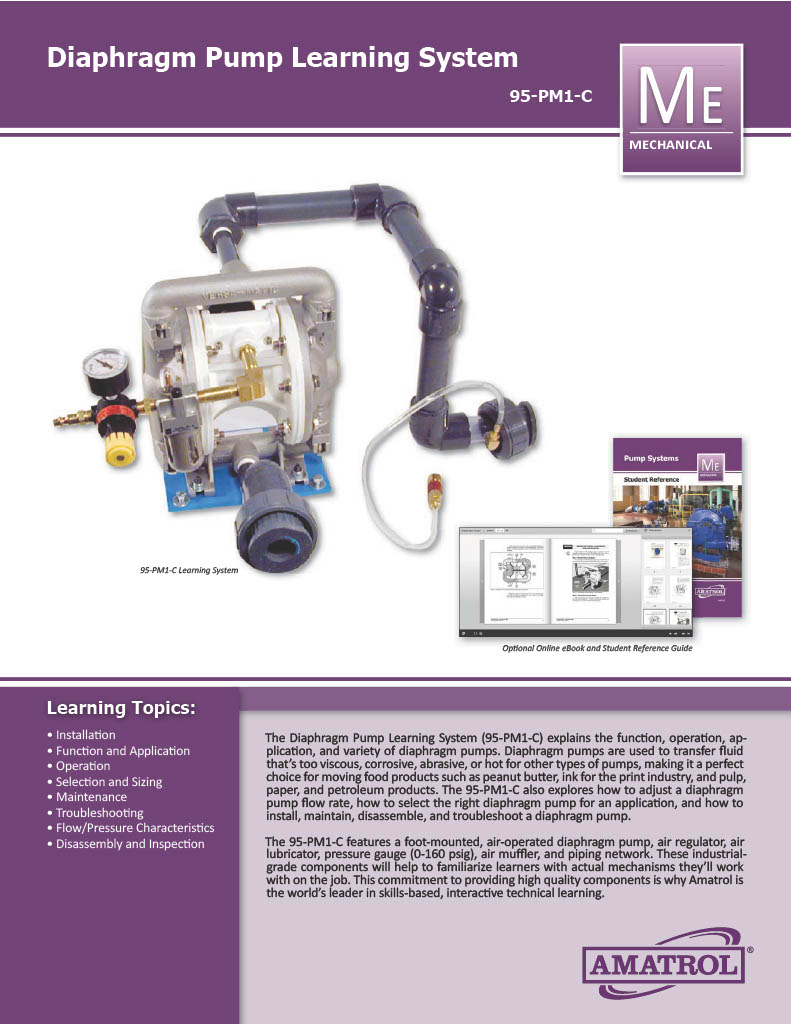
The Diaphragm Pump Learning System (95-PM1-C) explains the function, operation, application, and variety of diaphragm pumps. Diaphragm pumps are used to transfer fluid that’s too viscous, corrosive, abrasive, or hot for other types of industrial pumps, making it a perfect choice for moving food products such as peanut butter, ink for the print industry, and pulp, paper, and petroleum products. The diaphragm pump training system explores how to adjust a diaphragm pump flow rate, how to select the right diaphragm pump for an application. It also covers pump installation, pump maintenance, disassembly, and pump troubleshooting.
Pages
-
-
 SACA’s Specialist certifications certify Industry 4.0 technical skills in operations, troubleshooting, programming, maintenance, and systems integration. Each certification is keyed to a skilled occupation.
 -
 The purpose of the Certified Logistics Technician (CLT) program is to recognize through certification individuals who demonstrate mastery of the core competencies of material handling at the front-line (entry-level through front-line supervisor) through successful completion of the certification assessments.
 -
 Item Number:CPT / CPT+ / CPT 4.0The purpose of the Certified Production Technician (CPT) ® 4.0 certification program is to recognize through certification, individuals who demonstrate mastery of the foundational, core competencies of advanced manufacturing production at the entry-level to front-line supervisor through successful completion of the certification assessments.
 -
 Item Number:CT-SCAMSSC’s Certified Technician in Supply Chain Automation (CT-SCA) logistics certification enables both students and incumbent workers to gain the skills needed to meet the definition of a supply chain automation technician established by the National Science Foundation-funded National Center for Supply Chain Automation: a technician who installs, operates, supports, upgrades or maintains the automated material handling equipment and systems which support the supply chain.
 -
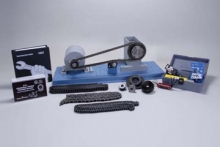 Item Number:223-000DAC Worldwide’s Chain Drive Training System (223-000) is a heavy-duty learning aide that allows for in-depth training in industrial chain drives, heavy/silent chains, and sprocket set usage.
 -
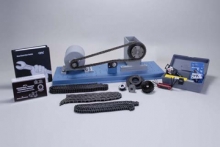 Item Number:223-PACDAC Worldwide’s Chain Drive Training System Plus (223-PAC) is a heavy-duty learning aide that allows for in-depth training in industrial chain drives, heavy/silent chains, and sprocket set usage.
 -
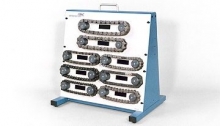 Item Number:838-PACDAC Worldwide’s Chain Sample Board (838-PAC) is an introductory hands-on teaching aid, designed to supplement courses in chain selection and maintenance. It includes samples of eight (8) industrial-quality chains for users to learn to identify.
 -
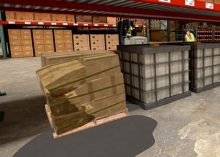 Hard Hat VR's Chemical Spill Cleanup simulation is ideal for future employees or supervisors who will work in or visit warehouses or factories. The primary goal of this course is to teach individuals safe work procedures for chemical spill cleanup.
 -
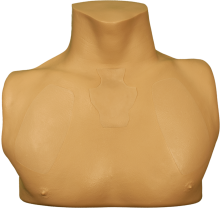 Item Number:TFX-T-CT-1The TacMed Simulation Chest Trainer is a ruggedized partial upper torso medical simulator that helps trainees during the crawl phase of training to treat patients requiring needle decompression and intraosseous (I/O) infusion. Students learn to locate realistic anatomic landmarks to execute critical patient treatment without relying on marked indicators. The unit functions as a stand-alone skills station with multiple training sites that allow for multiple uses with cost-effective replacement components.