LJ Create's CAN Systems Desktop Trainers give students an introduction to CAN systems and provide them with the working knowledge to diagnose and solve CAN bus problems.
 OnRobot Collaborative Robot Solutions
Transferring, Sorting, Packaging, Palletizing
Machine tending can be a dull and dangerous job that requires a high level of consistency – even after many hours of work. Automating your machine tending job increases safety for your workers and frees them up for higher level tasks. Plus, it also increases productivity and allows for production to continue after operators have left the workshop, meaning you can take on bigger jobs. With our dual gripper solution, you can significantly decrease cycle times as it is able to handle 2 objects and actions simultaneously.

 OnRobot Collaborative Robot Solutions
Deburring, Sanding, Polishing, Buffing, Drilling, Milling
Every surface has small variations, so in order to achieve an even surface finish, the sander or polisher must meet the surface with a constant force and move with an even speed. We have built-in software tools with the HEX sensor that make it super easy to use for polishing/sanding – you can record the path with your hand, rather than recording every waypoint. Then you program the force and torque and the robot adjusts to the surface instantly, giving you a perfectly polished surface.
 OnRobot Collaborative Robot Solutions
Measuring, Testing, Inspecting
Laboratories are often small and space is at a premium, so a small collaborative robot can be a great solution. Attaching an OnRobot end-of-arm tool ensures precision and consistency in your operation. With programmable force, the OnRobot grippers easily handle blood test samples or other delicate operations. With the sensitivity offered by our sensors, the robot also can safely hand items to a human worker for inspection.
OnRobot Collaborative Robot Solutions
Inserting, Mounting, Positioning, Screwdriving, Nutdriving
When automating assembly operations with one or more collaborative robot applications you increase production speed and quality while lowering your costs. It can run safely next to your employees and take over repetitive tasks to free up your staff for more value-adding work. Handling even small and irregular items, our solutions can help you optimize processes such as screwdriving, mounting, positioning and more. The versality is remarkable, and with easy redeployment, our solutions provide massive value for businesses with a high mix/low volume production.
Prepare Your Team with Immersive Simulator-Based Training
Acron Aviation, formerly L3 Harris, is a U.S.-based manufacturer of high-performance driving simulators designed to meet the training needs of commercial fleets, emergency responders, and aviation ground operations. Their simulator systems combine realistic driving scenarios, ergonomic hardware, and proven curriculum support to enhance safety and preparedness.
Train Safer. Smarter. More Efficiently.
These immersive systems recreate real-world driving conditions in a controlled environment, allowing drivers to develop essential skills—including vehicle handling, judgment, and situational awareness—without endangering personnel or equipment.
Key Features
- True-to-life controls and immersive vehicle environments
- Scenario-based training paths and customizable curriculum
- Multi-vehicle configuration and modular hardware options
- Performance tracking, feedback, and reporting tools
- Durable build quality with options for classroom or mobile setups
Whether for public safety, commercial logistics, or aviation ground support, Acron Aviation simulators are purpose-built to deliver consistent, repeatable, and data-driven training outcomes.
Acron Aviation’s driving simulators deliver immersive, hands-on training experiences—empowering drivers to develop critical skills in a risk-free environment. These cutting-edge systems provide real-world practice without putting personnel, vehicles, or equipment in harm’s way.
By simulating high-risk scenarios and complex environments, Acron Aviation’s simulators help trainees build confidence, sharpen decision-making, and enhance operational readiness—safely and effectively.
Why Use Driving Simulators?
Simulation-based driver training allows organizations to expose personnel to a variety of high-stress and hazardous situations within a controlled and repeatable environment. Instructors can monitor response times, track behaviors, and deliver structured after-action reviews that highlight performance strengths and improvement areas. The result: safer drivers, smarter decisions, and more resilient operations.
6 Reasons Why Simulation-Based Training Works
Increased Learning Retention
Modern experiential training platforms promote stronger learning transfer and long-term retention through active engagement.
Progressive Skill Development
Adaptive training paths help learners build core competencies, develop defensive driving habits, and master increasingly complex maneuvers.
Standardized Curriculum
Ensure consistency across your organization with uniform training protocols that meet your department’s goals and compliance needs.
Situational Awareness
Realistic scenarios build critical thinking and enhance the trainee’s ability to assess, react, and adapt in high-stakes environments.
Scenario Customization
Create targeted training experiences that align with your specific operational demands, routes, and response procedures.
Safe, Controlled Environment
Reinforce curriculum through repeatable practice in simulated environments—without the risk of injury, damage, or downtime.
Efficacy of Driving Simulators
Research from institutions worldwide confirms the effectiveness of simulation in training programs. Simulation-based training is proven to accelerate learning, improve driver performance, and reduce incident rates—making it a valuable investment for any organization prioritizing safety and readiness.
Driving Simulation Solutions
Acron Aviation’s simulator solutions are engineered for results. These immersive systems allow drivers to gain experience, build muscle memory, and develop judgment skills—without the risk, cost, or downtime of live vehicle training.
Training solutions for the Law Enforcement and Public Service Career Cluster specialize in skills needed for Emergency Services and Law Enforcement careers.
Police officers, firefighters, EMTs and dog handlers require specialized skills when responding to emergencies. We offer a variety of simulators that cover the skills required for hybrid and electric vehicle accidents, active shooters, patrol or fire truck driving, canine injuries, and more!
Shaping the Automotive Service Industry
Since 1972 the National Institute for Automotive Service Excellence (ASE), an independent non-profit organization, has worked to improve the quality of vehicle repair and service by testing and certifying automotive professionals. With over a quarter of a million individuals holding an ASE certification, ASE Certified professionals work in every part of the transportation industry.
We offer training solutions aligned with the certifications below. Our solutions are 100% aligned unless marked with an asterisk. *The content and equipment currently cover 70% of the tasks for the tests.
Supported Automotive Certifications
Entry-Level Automotive Tests
Automatic Transmission/Transaxle (AT)
Brakes (BR)
Electronic/Electrical Systems (EE)
Engine Performance (EP)
Engine Repair (ER)
Heating and Air Conditioning (AC)
Manual Drive Train and Axles (MD)
Maintenance and Light Repair (MR)
Service Technology
Suspension and Steering (SS)
Entry-Level Medium/Heavy Truck Tests
Brakes (TB)*
Diesel Engines (DE)*
Electrical/Electronic Systems (TE)*
Suspension and Steering (TS)*
ASE Refrigerant Recovery and Recycling
Training Solutions
The Smart Automation Certification Alliance (SACA) is a non-profit organization whose mission is to develop and deploy modular Industry 4.0 certifications for a wide range of industries. SACA provides highly affordable, accessible certifications ensuring that companies have the highly skilled workers they need and individuals are prepared to be successful in an Industry 4.0 world.
Skill Validation
Certifying over 100,000 candidates, the Manufacturing Skill Standards Council (MSSC)®, an industry-led 501(c)3 non-profit, is America's leader in training and certifying foundational technical competencies for front-line technicians for in-demand, higher-wage, higher-skill jobs in advanced manufacturing and supply chain logistics.
Technicians with MSSC Certifications are qualified for 11.3 million jobs in front-line production, material handling, and distribution. 84% of executives surveyed agree there is a talent shortage in U.S. manufacturing. MSSC is helping industry close that gap as they prepare to manufacture the future!
Training Solutions
Pages
-
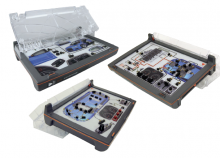 Item Number:701-02 / 720-02 / 711-01
 -
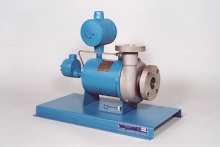 Item Number:275-140DAC's Canned Sealless, Centrifugal Pump Dissectible (Crane/Chempump) (275-140) is an industrial pump for training relating to process pumps.
 -
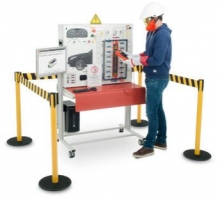 Item Number:CO3221-6SThis training system focuses on the digitally networked CAN-bus battery management system in a traction battery and on the corresponding components.
 -
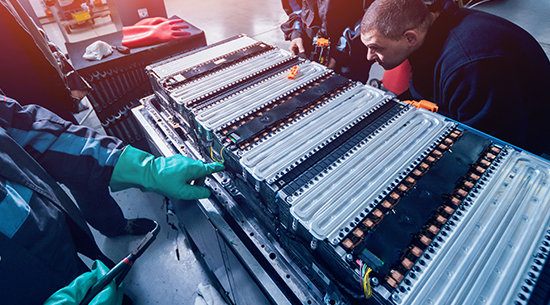
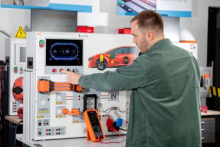 Item Number:CO3223-6X7Train students and technicians in diagnosing and repairing high-voltage hybrid and electric vehicles safely. The LN CarTrain ASE L3 Trainer integrates real 400V HV components, interactive software, and fault simulations for hands-on, standards-based learning.
 -
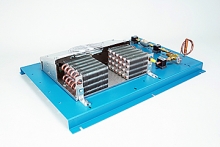 Item Number:373-991DAC Worldwide’s Ceiling Unit Cooler System Cutaway is a professionally-crafted, sectioned example of a refrigeration system fragment, including ceiling unit cooler with associated components, as used in commercial refrigeration systems relating to food preservation applications.
 -
 Item Number:950-CL1Amatrol’s Central Lubrication Learning System (950-CL1) is for hands-on training in operating, maintaining, and troubleshooting piston distributor and series/progressive valve lubrication systems—plus oils, greases, and lubricant management.
 -
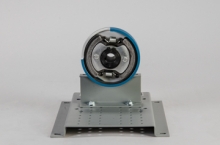 Item Number:200-2204DAC Worldwide’s Centrifugal Clutch Cutaway (200-2204) depicts a modified industrial centrifugal clutch for mechanical drive training in a classroom or laboratory. This sectioned mechanical power transmission component uses centrifugal force to connect two concentric shafts by throwing a centrifugal shoe outwards at a right angle to the primary shaft axis, which allows for shift during start-up.
 -
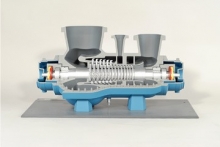 Item Number:211CThe design of the Centrifugal Compressor Model is based upon common industrial centrifugal compressors.
 -
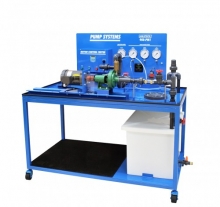 Item Number:950-PM1The model 950-PM1 Pumps Learning System teaches skills related to centrifugal pumps, which are used in almost every industry to transfer non-hydraulic fluids of various types from one place to another. Students learn a comprehensive set of industry-relevant skills including how to operate, install, maintain, troubleshoot, analyze performance, and select centrifugal pumps as well as system design.
 -
 The CFT program was created in partnership with the Material Handling Equipment Distributors Association (MHEDA) to provide skills to entry-level forklift technicians, enhancing their performance in the world of material handling. The CFT prepares individuals to repair and maintain technical systems utilizing key engineering principles that underpin most forklift vehicles.