VRNA Advanced EMS Virtual Reality Training

Hands-On Technical Trainers

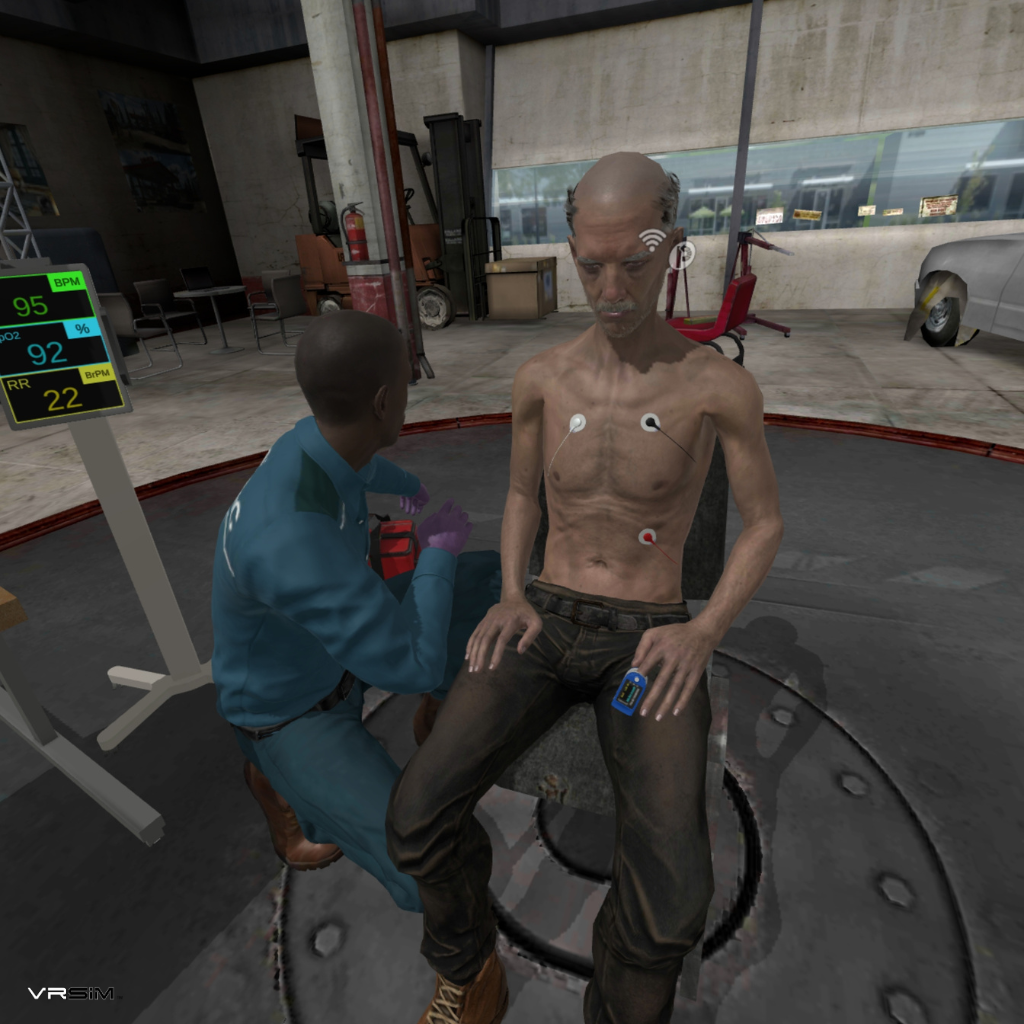
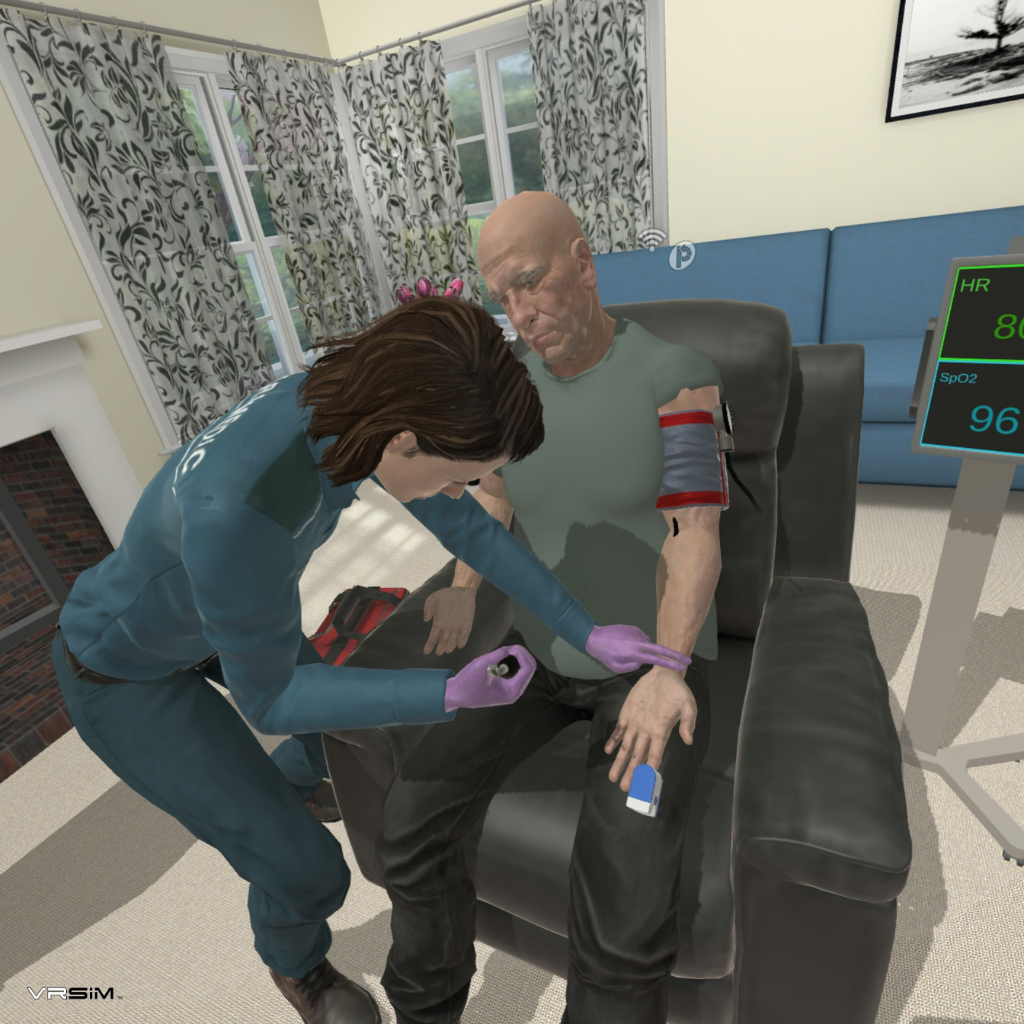
VRNA Advanced EMS (AEMS) from VRSim is an immersive virtual reality training system developed for Advanced EMTs, paramedics, advanced life support providers and other first responders. It gives learners a safe, repeatable environment for practicing clinical judgment while managing the people, distractions and time pressure that shape real emergency scenes.

Move Beyond Protocol Practice

Emergency care requires more than remembering the correct procedure. Providers must assess symptoms, establish priorities, communicate with teammates, direct care and adapt when a scene changes unexpectedly.

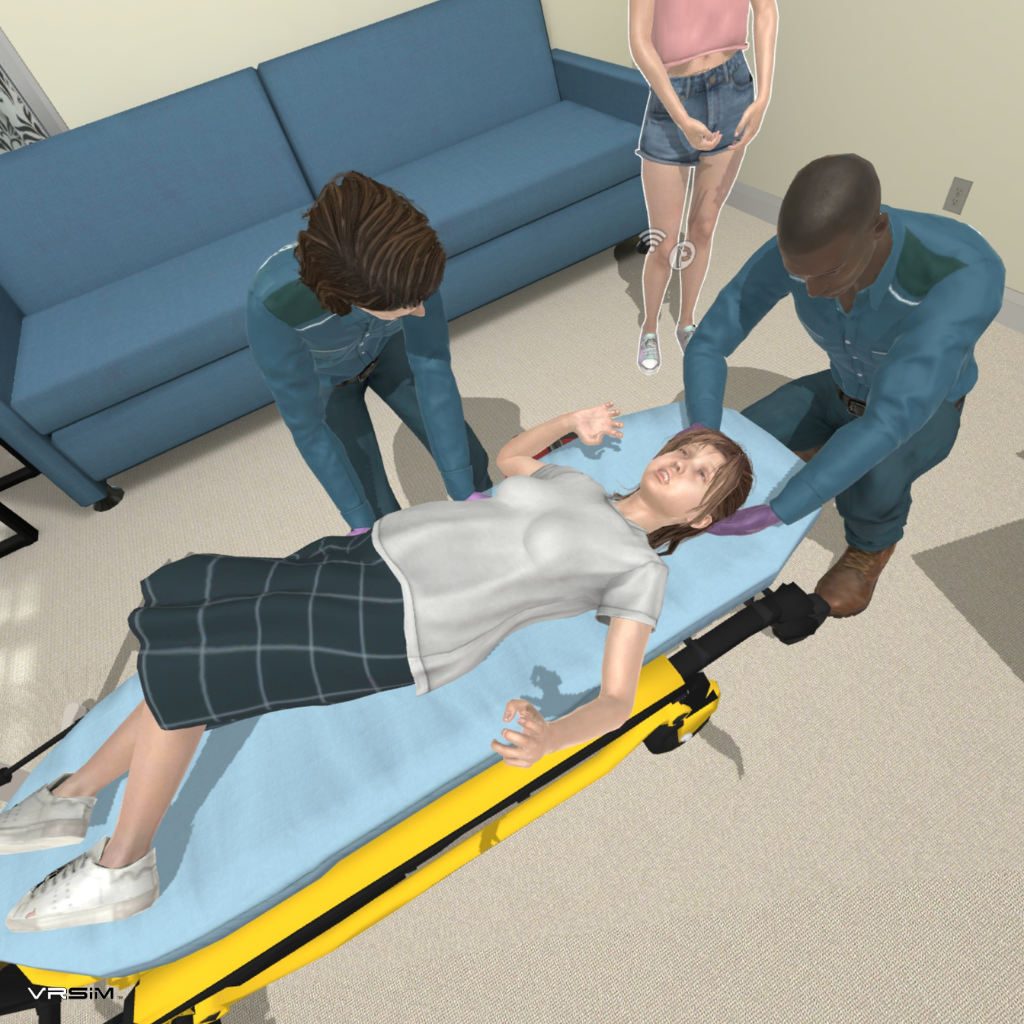
VRNA Advanced EMS places learners inside realistic emergency situations where clinical decisions occur alongside team management and environmental stressors. Simulated interactions with concerned parents, disruptive onlookers and other scene variables challenge learners to maintain situational awareness while providing patient care.

VRNA AEMS uses adaptive scenario logic so factors and patient symptoms can change when a scenario begins. Learners cannot rely solely on memorizing one sequence of actions. They must evaluate the information presented, recognize changes and determine the appropriate response.

This variation supports repeated practice while continuing to challenge clinical reasoning, prioritization and decision-making under pressure.

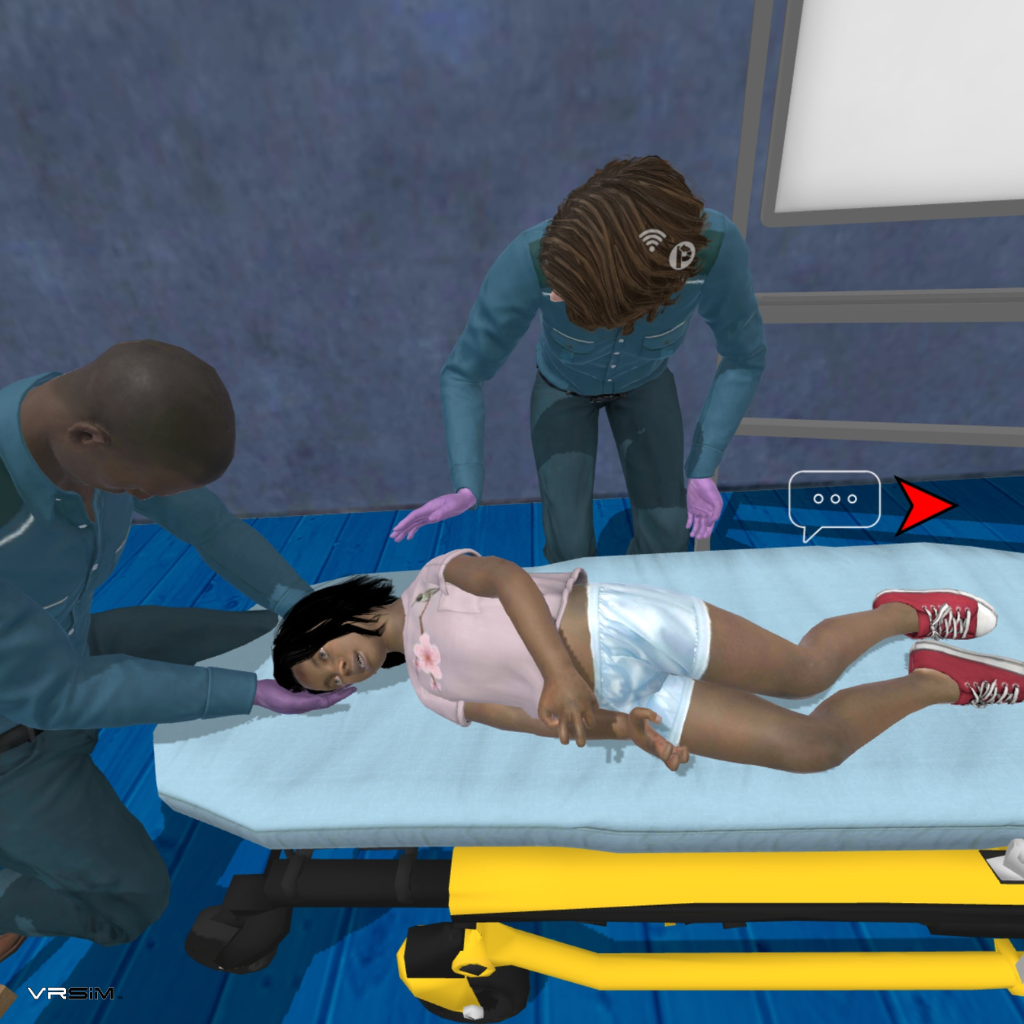
The Advanced EMS module includes adult and pediatric scenarios that help learners prepare for high-stakes and less frequently encountered events. Available training content includes scenarios involving:

  • Adult stroke
  • Adult respiratory distress
  • Pediatric altered level of consciousness
  • Pediatric seizure
  • High-performance CPR
  • Additional advanced emergency responses

Scenario availability and content may evolve as VRSim releases software updates. Contact Tech-Labs for the current module list.

VRNA AEMS helps learners practice the human side of emergency response as well as clinical care. During a simulation, users may need to:

  • Lead and coordinate a response team
  • Communicate priorities and delegate tasks
  • Assess patient symptoms while monitoring the surrounding environment
  • Respond to concerned family members or bystanders
  • Maintain focus as conditions and information change
  • Make timely decisions in a high-pressure setting

These immersive experiences give learners opportunities to practice the mental workload of emergency response without the logistical demands of staging every scenario with live actors.

After each session, learners receive an individualized debrief that identifies strengths and targeted areas for improvement. The integrated online Performance Portal gives instructors objective information to review progress and guide follow-up instruction.

Available performance data can include:

  • Scenario completion time
  • Accuracy of learner actions
  • Patient and scenario outcomes
  • Performance within individual skills
  • Progress across repeated training sessions

Safe, Repeatable Practice

Learners can make decisions, receive feedback, and repeat demanding scenarios without placing patients, personnel, or equipment at risk.

Consistent Experiences

Programs can provide learners with standardized scenarios and measurable outcomes while instructors identify individual skill gaps.

Scalable Simulation

VR reduces the materials, setup time, and live-actor coordination required to provide frequent scenario-based practice.

VRNA Advanced EMS can supplement training provided by:

  • High school emergency medical services and public-safety programs
  • Technical colleges and community colleges
  • Paramedic and Advanced EMT education programs
  • Fire departments and emergency medical services agencies
  • Hospitals, municipal organizations and workforce-training providers
  • First-responder onboarding and continuing-education programs

Standard VRNA packages include:

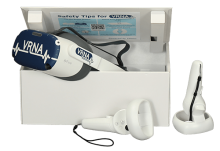
  • A selected number of VR headsets with one VRNA module preinstalled on each headset
  • A four-year software license with unlimited user accounts
  • A four-year limited warranty
  • Four years of complimentary technical support
  • Access to the online Performance Portal
  • English and Spanish language availability

Package configurations and terms are subject to change. Tech-Labs can help determine the appropriate number of headsets and module configuration for your program.

  • Training space: A clear 10-foot by 10-foot area is the minimum; approximately 12 feet by 12 feet is recommended for greater freedom of movement.
  • Internet: A stable 2.4 GHz or 5 GHz Wi-Fi connection is required.
  • Network access: The network firewall must allow secure HTTPS traffic to VRNA domains through port 443. Captive-portal networks are not currently supported.
  • Hardware: VRNA software is supplied on its configured headsets and is not offered for installation on separately purchased or existing headsets.

Bring Advanced EMS Simulation to Your Program

Tech-Labs can help schools, colleges, agencies, and training organizations evaluate space, headset quantity, program goals, and implementation requirements for VRNA Advanced EMS. We can also help programs connect VR simulation with complementary classroom, skills-lab and physical medical-simulation resources.

VRNA supplements instructor-led, laboratory, clinical and field training. The system does not independently award an EMS certification or credential.

Frequently Asked Questions

The AEMS module is designed for Advanced EMTs, paramedics, advanced life support providers, and other first responders who need to practice clinical judgment, team leadership and scene management.

VRNA EMS supports Emergency Medical Responders, EMT-Basic learners, first responders, and basic life support providers. VRNA Advanced EMS is intended for higher-level providers such as Advanced EMTs and paramedics and emphasizes advanced clinical decisions, leadership, and complex scene management.

No. It supplements classroom, laboratory, clinical, and field experiences by giving learners additional opportunities for safe, repeatable scenario practice.

No. VRNA is a training system and does not independently confer an EMS certification or other credential. Programs should confirm all current curriculum and certification requirements with the appropriate governing organization.

No. VRNA modules are provided on configured VRNA headsets and are not available for installation on separate, pre-owned or alternative headset hardware.

More Information

Manufacturer: 
Videos: 

VRNA Advanced EMS | VR Scene Management Training

Explore VRNA Advanced EMS by VRSim, a virtual reality training solution that helps EMS professionals practice scene management, patient assessment and decision-making.