Experience the future of CNC machining with the LMH-300 5X—a precision 5-axis milling machine designed for advanced part production, educational training, and robotic automation. Perfect for schools and industry.
Designed with education in mind, these 3D printing solutions support quick adoption in classrooms and labs through intuitive setup, guided workflows, and minimal technical barriers. Students can move from concept to physical part with confidence, allowing more time to focus on design thinking, iteration, and problem-solving.
A fully connected ecosystem of hardware, materials, and cloud-based software enables instructors to manage multiple devices and student projects efficiently. This streamlined approach is especially valuable in environments where scalability, ease of management, and consistent results are critical.
Reliable performance and repeatable output help ensure successful prints across a wide range of applications, from introductory STEM activities to more advanced engineering and prototyping projects. Built-in safeguards and user-friendly interfaces support safe operation while maintaining a strong emphasis on hands-on learning.
This approach aligns well with K-12, early college, and workforce training programs seeking to introduce additive manufacturing in a way that is accessible, structured, and easy to integrate into existing curriculum pathways.
See how a dedicated STEM center is expanding access to hands-on learning through 3D printing, mentorship, and shared resources. Students from multiple schools are gaining real experience designing, prototyping, and testing their ideas—using industry-relevant equipment in an environment built for exploration and growth.
This video highlights how quickly learners can get started, build confidence through iteration, and develop skills aligned with today’s technical education and workforce pathways. With accessible tools, certification opportunities, and mentor support, programs like this help improve engagement and create meaningful, career-connected learning experiences.
Watch to see how this scalable model supports goals around equity, access, and workforce readiness—and how similar approaches can be implemented to strengthen STEM programs and expand opportunities for your students.

Matrix TSL engineering education systems are designed to bridge the gap between theory and real-world application by giving students hands-on experience with core engineering principles. Developed by Matrix TSL, these compact, lab-ready solutions support universities, community colleges, and advanced STEM programs with equipment and curriculum that align directly with industry expectations. From mechanical and structural analysis to fluid dynamics and advanced manufacturing, each system is built to reinforce critical concepts through experimentation, measurement, and applied learning.
Unlike traditional lecture-based instruction, Matrix systems emphasize active engagement—allowing learners to visualize, test, and analyze engineering concepts in a controlled environment. Integrated data acquisition, structured experiments, and instructor resources make it easy to deliver consistent, outcomes-focused training while supporting a wide range of teaching styles. Whether introducing foundational concepts or advancing into specialized applications, these systems help students develop the problem-solving skills and technical confidence required for today’s engineering careers.
By combining scalable hardware with guided curriculum, Matrix TSL solutions enable institutions to modernize their labs without overcomplicating setup or delivery. The result is a flexible, future-ready learning environment where students gain practical experience that directly translates to the workplace—preparing them for careers in engineering, manufacturing, and technology-driven industries.
Matrix TSL aerospace teaching resources provide students with a hands-on introduction to the systems and technologies that power modern aviation. Covering topics such as aerodynamics, avionics, and aircraft electrical systems, these solutions allow learners to explore complex concepts through practical experimentation rather than theory alone.
Designed for schools, colleges, and advanced technical programs, these systems support structured learning while building the foundational knowledge required for careers in aviation maintenance, aerospace engineering, and related industries. By simplifying advanced aerospace principles into safe, lab-based activities, students gain confidence before transitioning to real-world applications.
Matrix TSL automotive teaching resources are designed to help students understand the underlying technologies behind today’s vehicles before working on live systems. With a strong focus on electrical systems, diagnostics, and vehicle networks, these solutions break down complex automotive concepts into manageable, hands-on learning experiences.
From introductory automotive electricity to advanced topics like CAN bus systems and high-voltage battery circuits, these training systems support learners at multiple levels. The result is a scalable pathway that prepares students for careers in automotive service, EV technology, and advanced vehicle diagnostics.
Matrix TSL electrical engineering teaching resources provide a comprehensive platform for learning electrical and electronic principles through practical application. Students move beyond theory by building circuits, testing systems, and analyzing real data—developing a deeper understanding of how electrical systems function in real-world environments.
These systems support a wide range of topics, from foundational electrical concepts to advanced control systems and embedded technologies. With integrated curriculum and structured experiments, educators can deliver consistent, outcomes-focused training that prepares students for careers in electrical engineering, electronics, and industrial automation.
Matrix TSL manufacturing engineering teaching resources introduce students to modern production methods, combining traditional machining concepts with advanced manufacturing technologies. Through hands-on systems such as CNC machining, process control, and automated production, learners gain practical insight into how products are designed, produced, and optimized.
These solutions help bridge the gap between classroom learning and industrial practice, enabling students to develop skills in areas such as G-code programming, quality control, and production workflows. Ideal for technical education and workforce training programs, they prepare learners for careers in advanced manufacturing and Industry 4.0 environments.
Matrix TSL mechanical engineering teaching resources allow students to explore core principles such as statics, dynamics, materials, and thermodynamics through hands-on experimentation. Rather than relying solely on theoretical instruction, learners can visualize and test mechanical behavior in a controlled lab setting.
These systems are designed to support engineering programs at multiple levels, helping students build problem-solving skills and a strong understanding of mechanical systems. By connecting theory to real-world applications, they prepare learners for careers in mechanical design, engineering analysis, and related technical fields.
Matrix TSL skilled trade teaching resources are designed to build foundational technical skills that apply across multiple industries. From electrical installation and maintenance to basic engineering and troubleshooting, these systems provide hands-on training that emphasizes practical, job-ready competencies.
Ideal for career and technical education programs, these solutions help students develop confidence working with tools, systems, and processes they will encounter in the field. By combining structured curriculum with real-world applications, they support pathways into apprenticeships, certifications, and skilled trade careers.
Matrix TSL renewable energy teaching resources help students understand the technologies driving the global transition to sustainable energy. Covering areas such as solar, wind, and energy management systems, these solutions provide practical, hands-on experience with the principles behind renewable power generation and distribution.
With a focus on real-world applications, students can explore how energy is generated, stored, and integrated into modern grids. These systems support programs preparing learners for careers in renewable energy, electrical systems, and sustainable infrastructure.
Pages
-
 Item Number:LMH-300
 -
 Item Number:LMT-300Prepare students for the future of advanced manufacturing with the LMT-300 “Mystique” 5-Axis Mill-Turn. Compact, powerful, and classroom-ready, this machine brings real-world CNC training to your lab.
 -
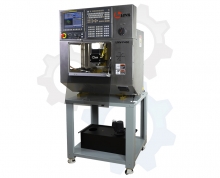 Item Number:LMV-400 CNCCompact, powerful, and automation-ready — Levil Technology's LMV-400 CNC milling machine combines precision machining with FANUC robotic integration for education and industry.
 -
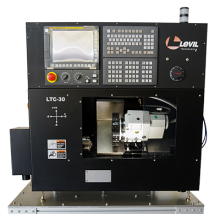 Item Number:LTC-30Compact CNC turning center for education and training. The Levil Technology LTC-30 Series delivers industrial-grade performance, FANUC control, a small footprint, and classroom-ready power.
 -
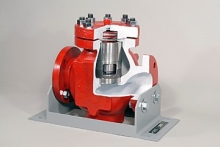 Item Number:295-717DAC Worldwide’s Lift Check Valve Cutaway, Oilfield-Type (295-717) depicts a sectioned industrial lift-type check valve.
 -
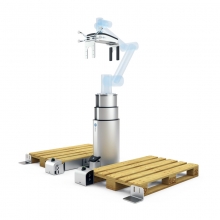 Item Number:LIFT100The OnRobot Lift100 is a long-stroke, high-payload elevator with minimal deflection that ensures precise positioning of boxes, even at high speeds. Its integrated safety features, with TÜV-certified stop functionality, facilitate collaborative deployment. Out-of-the-box integration with the OnRobot palletizing solution shortens deployment time and offers future-proof flexibility.
 -
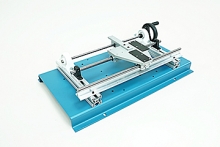 Item Number:221-000DAC Worldwide’s Linear Drives Training System (221-000) is a benchtop device that facilitates training in the design, function, installation, and alignment of common linear drive components. Fabricated from steel and aluminum, the training aid combines a variety of common industrial components and installation scenarios in one assembly.
 -
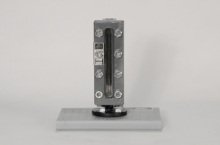 Item Number:272-475DAC Worldwide's Dissectible Liquid Level Gauge Sample (272-475) allows for close visual inspection of a common armored, flat-glass liquid level gauge to better understand its function, design characteristics, operation, and routine maintenance.
 -
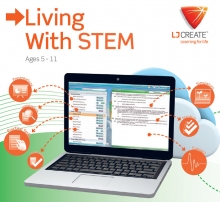 Item Number:LWS-ALLJ Create's Living with STEM provides hands-on digital courses teaching standards-based Elementary STEM curriculum, and is supplemented with a range of support materials for English and Math.
 -
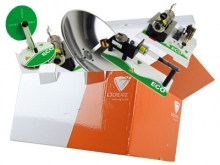 LJ Create's CTE program offers a diverse range of industry-focused disciplines wth resources that relate to the Energy Sector, Manufacturing, and Electronics our program helps students connect their learning to real-world applications.