The AD 2000 iQ’s technology delivers superior and measurable performance, ensuring airflow and filtration is maintained even when particulates start to build up. It’s thanks to the vacuum/pressure which is three times greater than that of its predecessor, the AD 2000.
Pignat’s OTP Pilots simulate full-scale industrial processes, giving students and professionals a realistic, high-fidelity environment to explore advanced chemical engineering operations. These systems replicate complex processes like controlled continuous distillation, CO₂ absorption and regeneration, and distillation control using industrial-grade components and instrumentation.
Designed for universities, pilot plants, and advanced workforce development centers, OTP Pilots emphasize safety, control systems, and operational efficiency. Learners gain experience with real process variables, troubleshooting, and scalable process optimization—preparing them for roles in chemical manufacturing, environmental engineering, and process design.
Absorption processes are critical in gas-liquid operations where a component from a gas phase is transferred into a liquid solvent. Commonly used in environmental control (e.g., CO₂ capture) and chemical production, these systems help study parameters such as gas solubility, contact efficiency, and column dynamics. Educational units like Pignat’s ABS/100 and ABS/2000 provide hands-on training in both manual and automated gas absorption processes, reinforcing understanding through transparent components and real-time instrumentation.
Adsorption is a surface-based separation technique in which molecules from a fluid phase adhere to a solid surface, often used for purification, drying, and environmental applications. With units like ADM/2000 and ADS/2000, learners can explore gas-solid and liquid-solid adsorption in lab and pilot scales. These systems support detailed study of breakthrough curves, isotherms, and regeneration cycles, making them ideal for chemical engineering and process technology programs.
Crystallization is a key method for purifying solid compounds from liquids and is widely used in pharmaceuticals, food processing, and chemical manufacturing. Pignat’s CRA/100 and CRA/200 systems enable the study of both batch and continuous crystallization. These units support investigation into cooling and evaporation methods, crystal size distribution, and process optimization—ideal for demonstrating real-world industrial separation techniques in an academic setting.
Distillation is a fundamental separation technique that exploits differences in boiling points to purify or fractionate chemical mixtures. Pignat’s product line ranges from lab-scale DVI/100 and DVI/300 mini units to advanced pilot-scale DVI/6000 systems. These solutions cover essential concepts like mass and energy balances, reflux ratios, thermosiphon reboilers, and differential pressure monitoring, preparing students and professionals for real-world industrial distillation operations.
An ebulliometer is used to determine the boiling point of liquids and study vapor-liquid equilibrium, a core topic in thermodynamics. Pignat’s EEA/1000 and EEA/2000 ebulliometers allow for both manual and automated experiments, supporting instruction in azeotrope formation, Raoult’s Law, and boiling point elevation. These compact units serve as vital tools in chemical engineering labs focusing on phase equilibrium and fluid properties.
Liquid-liquid extraction is a separation method used to isolate compounds based on solubility differences in two immiscible liquids. Pignat’s ELA/100 and ELA/3000 stirred extraction units, along with the ELM/2000 mixer-settler system, allow learners to explore batch and continuous extraction processes. These systems are ideal for studying partition coefficients, emulsion formation, and separation efficiency in pharmaceutical, food, and chemical industries.
Evaporation is essential for concentrating solutions by removing solvents, typically water, through thermal energy. Pignat offers both simple (EVV/100) and multiple-effect (EVV/1000, EVV/2000) evaporators to demonstrate core concepts like heat transfer, boiling point elevation, and energy savings through effect cascading. These units are ideal for exploring process efficiencies and the design considerations found in food processing and chemical production.
Filtration is a solid-liquid separation process that is foundational in industries such as pharmaceuticals, water treatment, and chemical manufacturing. Pignat’s FSP/3000, FIL/2000, and FIP/2000 units offer varied filtration methods and study parameters such as flow rate, cake resistance, and filter media selection. These systems enhance student comprehension of industrial-scale separation challenges while maintaining hands-on laboratory relevance.
Chemical reaction systems provide students with practical experience in kinetics, reactor design, and process control. Pignat’s REA/2000 and REA/3000 reactors offer both basic and computerized training platforms to investigate isothermal and non-isothermal reactions. These units are designed to demonstrate fundamental reaction engineering principles, including residence time distribution, catalyst behavior, and heat effects, preparing learners for diverse applications in chemical and pharmaceutical industries.
Pages
-
-
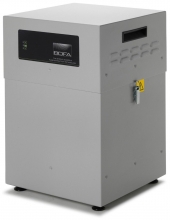
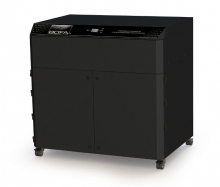
Low airflow entry-level laser fume extractor incorporating DeepPleat pre filter technology and large combined filter.
BOFA’s Advantage 250 fume extraction and filtration system has been designed to provide a cost-effective solution for light duty applications. This compact and extremely quiet system is ideal for use in schools, sign making workshops, small-scale industrial environments and light laser coding applications.
-
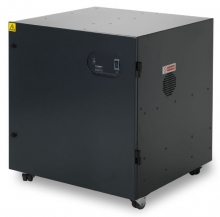
The Advantage Base C180 has been designed specifically for the GCC C180 laser engraver. The dimensions of the unit allow the C180 to fit perfectly onto the extractor, effectively doubling it up as a workstation. The unit is also offered with an onboard air compressor to provide the laser with its air assist requirements and comes complete with extraction hose kit and compressor link up on compressor models.
-
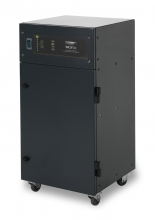
The compact system designed for small-scale industrial sites and light laser coding applications.
The AD Nano+ fume extraction and filtration system has been designed as a cost-effective solution for light to medium duty applications and is the ideal choice for installations where floor space is limited.
-
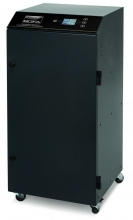
The AD Oracle iQ is our most technically advanced laser fume extractor, combining a powerful range of unique features into one compact unit.
This versatile unit can be used across a range of laser applications and the revolutionary auto-voltage sensing blower automatically self-adjusts to run on any voltage worldwide.
Our inline AD Cyclone has been designed to separate lower particle sizes during laser marking process.
-
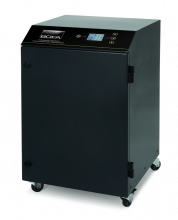 Introducing BOFA’s most technically advanced compact laser fume extractor. The AD Oracle SA iQ has been enhanced with BOFA’s iQ Operating System, RFA and ACF technology and packs a powerful range of unique features into one compact unit.
 -
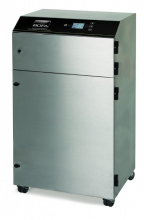
The AD PVC iQ extraction system has been designed to effectively deal with the corrosive nature of the fumes generated when lasering PVC materials.
The latest design specification now offers many of the features associated with our “Best in class” AD Oracle iQ model as standard but in addition all internally exposed surfaces have been coated to resist the corrosive nature of the fume and each unit is fitted with HCL and VOC sensors which continually monitor the exhaust air of the unit giving added safety assurance.
-
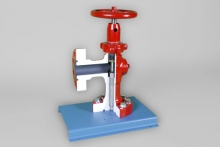 Item Number:295-711ADAC Worldwide’s Adjustable Oil Field Choke Valve Cutaway (295-711A) is a sectioned, specialty valve sample that supports training in the design features, internal components, and maintenance of adjustable choke valves used in oil and gas production operations.
 -
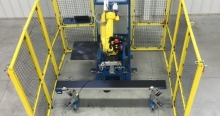 Item Number:AM-CERTThe AM-CERT cell was specifically designed for Advanced Manufacturing training. Learn robot to PLC interface, PLC ladder logic, operator interface, safety, mechatronics, and iRVision all in one cell. Certified for Material Handling, Level II and III Training.
 -
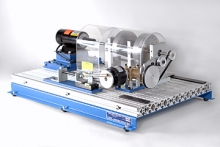 Item Number:203E-PACIndustrial maintenance technicians must learn to operate, maintain, troubleshoot, and repair a wide variety of mechanical systems used to manufacture products. One of the key diagnostic tools technicians will use during preventive maintenance as well as to maintain optimum efficiency is vibration analysis.