Amatrol’s e-Learning program meets the challenge for flexible technical training by offering superb technical content depth as well as breadth, strong interactivity for skill development, and excellent assessment and student tracking through an intuitive, easy-to-use web portal. With 24 x 7 access, Amatrol’s eLearning program creates easy access to educational opportunities for technical skill development previously restricted to the classroom...
This video demonstrates the Matrix Torsion of Rods experiment in manual mode, where students investigate how different materials respond to applied torque. Following the included curriculum workbook, learners compare the torsional characteristics of brass, aluminum, and steel rods while collecting experimental data for analysis.
During the investigation, students install each rod, measure its dimensions, and gradually increase the angle of twist while recording the torque required at each increment. The experiment is repeated for each material, allowing students to compare torque-versus-angle relationships and better understand material properties, torsional stiffness, and structural behavior through practical experimentation.
What You'll Learn
- How to set up the Torsion of Rods experiment in manual mode
- Comparing the torsional behavior of brass, aluminum, and steel rods
- Measuring torque and angle of twist using integrated LCD displays
- Recording experimental measurements for multiple materials
- Investigating the relationship between torque and angular displacement
- Repeating experiments to compare material properties
- Plotting torque versus angle graphs for analysis
- Reinforcing engineering concepts through hands-on laboratory investigations
Why Study Torsion?
Torsional loading is an important consideration in the design of shafts, drive systems, fasteners, and structural components. This experiment gives students practical experience measuring the effects of torque on different materials, helping them connect engineering theory with real-world mechanical behavior and material performance.
This video demonstrates the Matrix Bending Stress experiment using data acquisition mode, allowing students to investigate how bending loads create stress within a beam. Using the included curriculum workbook, learners configure strain gauges, collect real-time measurement data, and perform engineering analysis to validate theoretical calculations.
Students begin by configuring a quarter-bridge Wheatstone bridge circuit using strain gauges and precision resistors before applying incremental loads to the beam. As each load is added, measurements are captured through the integrated data acquisition system and exported for analysis. The resulting data allows students to calculate bending stress, compare theoretical and experimental results, and gain practical experience with strain measurement techniques used throughout structural and mechanical engineering.
What You'll Learn
- How to configure a quarter-bridge Wheatstone bridge using strain gauges
- Setting up the Bending Stress experiment using data acquisition
- Applying incremental loads to investigate bending stress
- Collecting real-time strain measurements using integrated sensors
- Measuring beam dimensions for engineering calculations
- Exporting experimental data for post-laboratory analysis
- Comparing theoretical bending stress calculations with measured results
- Developing practical skills in experimental stress analysis
Why Study Bending Stress?
Measuring bending stress is fundamental to understanding how structural components perform under load. This experiment introduces students to strain gauge technology, Wheatstone bridge circuits, and modern data acquisition methods while reinforcing core concepts in mechanics of materials, structural analysis, and engineering design.
This video provides an overview of the Matrix Fundamental Mechanics Materials Kit, demonstrating how students perform practical experiments to investigate the mechanical properties of engineering materials. Designed for classroom and laboratory environments, the kit allows learners to build experiments using the portable work panel while following the included curriculum workbook.
The featured experiment investigates how an aluminum beam deflects under increasing loads. Students measure the beam's dimensions, apply incremental weights, and use a precision dial gauge to record deflection. The collected data is then plotted on a graph, helping students understand the relationship between load and beam deflection while reinforcing important concepts in material science and mechanics.
What You'll Learn
- How to perform beam deflection experiments using the Materials Kit
- Measuring beam dimensions for engineering calculations
- Recording beam deflection with a precision dial gauge
- Applying incremental loads and collecting experimental data
- Plotting deflection versus load graphs for analysis
- Understanding stress, strain, and elastic behavior
- Exploring Young's modulus and other material properties
- Developing practical laboratory and engineering analysis skills
Topics Covered by the Materials Kit
The Fundamental Mechanics Materials Kit supports a wide range of experiments covering beam deflection, stress and strain, torsion, elastic constants, Young's modulus, and other core principles of mechanics of materials. The included curriculum provides approximately 10 hours of guided laboratory activities that combine theory with practical investigation, making it ideal for engineering, technology, and STEM education programs.
Pages
-
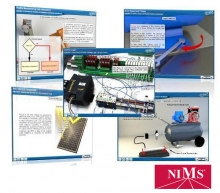
-
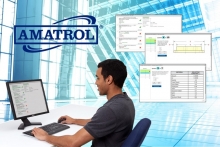 Amatrol's eAssessment streamlines technical skills assessment and training with assessment tests to individually determine a CTE student's skill level in specific areas to dramatically improve training effectiveness and efficiency while reducing training cost and time.
 -
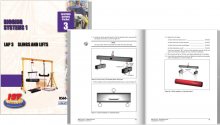 Online training is an essential tool in today’s workplace and educational institutions. Amatrol is increasing its already extensive online offerings with the introduction of eBooks. Amatrol’s eBooks are digital versions of its print-based LAPs (Learning Activity Packets) that allow organizations to set up courses completely online, including assessments!
 -
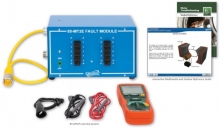 Item Number:85-MT2E Regular / 85-MT2ESL Sheathed Banana LeadsThe Motor Troubleshooting Learning System (85-MT2E) covers the testing and troubleshooting of AC and DC motors using a multimeter and a megger meter. The skills and knowledge covered by this learning system will prove invaluable for industrial maintenance technicians or anyone working in a field that uses AC and/or DC motors.
 -
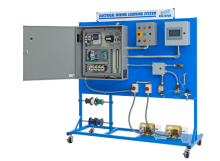 Item Number:850-MT6BAmatrol’s 850-MT6B Electrical Wiring Learning System allows students to learn electrical wiring skills hands-on.
 -
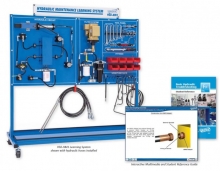 Item Number:950-HM1Train students and technicians in essential hydraulic maintenance with Amatrol’s 950-HM1 Learning System. Learners will gain hands-on experience in fluid servicing, fittings, seals, tubing, hoses, and component installation using industry-standard equipment.
 -
 Amatrol Industry 4.0 Fundamentals (I4F) is a high school-based program that prepares students for high-paying Industry 4.0 careers in local industries.
 -
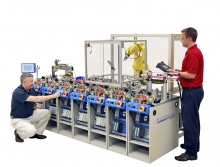 Amatrol's 870 Mechatronics Learning System teaches students a broad array of job-ready skills in integrating technologies. Students work together in a team environment to make the whole process work. Seven stations make up a complete flexible manufacturing system. Each station is a small mechatronics system in itself with multiple, integrated technologies that can be used stand-alone or in various combinations, creating unlimited project capability. The Learning System is compact, enabling it to fit into almost any teaching facility.
 -
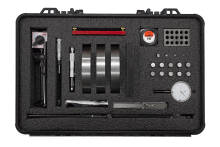 Item Number:990-MES1Learners will acquire skills such as how to measure length, accurate measurement of inside and outside dimensions, measuring both in U.S. Customary and S.I. Metric units, and collecting measurement data. The 990-MES1 contains precisely-machined and numbered parts that challenge the learner to make accurate measurements. Understanding how to perform accurate measurements is relevant to technical careers such as quality control inspector, machinist, manufacturing engineer, operations manager, and production technician. The 990-MES1’s compact size and durable case also provide for safe storage when available training space must be used to teach other topics.
 -
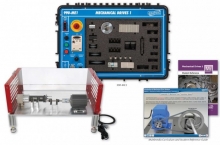 Item Number:990-ME1Amatrol’s Portable Mechanical Drives 1 Learning System (990-ME1) covers the fundamentals of mechanical transmission systems and applications, such as how to: operate, install, analyze performance, and design basic mechanical transmission systems using chains, vbelts, spur gears, bearings, and couplings. These fundamentals can be applied to a variety of applications within the automotive, agricultural, and power industries.