Introduce students to robotics with easy to assemble and modify rovers that feature real-world applications. Working collaboratively, students build and program advanced robots.
This video demonstrates the Matrix Torsion of Rods experiment in manual mode, where students investigate how different materials respond to applied torque. Following the included curriculum workbook, learners compare the torsional characteristics of brass, aluminum, and steel rods while collecting experimental data for analysis.
During the investigation, students install each rod, measure its dimensions, and gradually increase the angle of twist while recording the torque required at each increment. The experiment is repeated for each material, allowing students to compare torque-versus-angle relationships and better understand material properties, torsional stiffness, and structural behavior through practical experimentation.
What You'll Learn
- How to set up the Torsion of Rods experiment in manual mode
- Comparing the torsional behavior of brass, aluminum, and steel rods
- Measuring torque and angle of twist using integrated LCD displays
- Recording experimental measurements for multiple materials
- Investigating the relationship between torque and angular displacement
- Repeating experiments to compare material properties
- Plotting torque versus angle graphs for analysis
- Reinforcing engineering concepts through hands-on laboratory investigations
Why Study Torsion?
Torsional loading is an important consideration in the design of shafts, drive systems, fasteners, and structural components. This experiment gives students practical experience measuring the effects of torque on different materials, helping them connect engineering theory with real-world mechanical behavior and material performance.
This video demonstrates the Matrix Bending Stress experiment using data acquisition mode, allowing students to investigate how bending loads create stress within a beam. Using the included curriculum workbook, learners configure strain gauges, collect real-time measurement data, and perform engineering analysis to validate theoretical calculations.
Students begin by configuring a quarter-bridge Wheatstone bridge circuit using strain gauges and precision resistors before applying incremental loads to the beam. As each load is added, measurements are captured through the integrated data acquisition system and exported for analysis. The resulting data allows students to calculate bending stress, compare theoretical and experimental results, and gain practical experience with strain measurement techniques used throughout structural and mechanical engineering.
What You'll Learn
- How to configure a quarter-bridge Wheatstone bridge using strain gauges
- Setting up the Bending Stress experiment using data acquisition
- Applying incremental loads to investigate bending stress
- Collecting real-time strain measurements using integrated sensors
- Measuring beam dimensions for engineering calculations
- Exporting experimental data for post-laboratory analysis
- Comparing theoretical bending stress calculations with measured results
- Developing practical skills in experimental stress analysis
Why Study Bending Stress?
Measuring bending stress is fundamental to understanding how structural components perform under load. This experiment introduces students to strain gauge technology, Wheatstone bridge circuits, and modern data acquisition methods while reinforcing core concepts in mechanics of materials, structural analysis, and engineering design.
This video provides an overview of the Matrix Fundamental Mechanics Materials Kit, demonstrating how students perform practical experiments to investigate the mechanical properties of engineering materials. Designed for classroom and laboratory environments, the kit allows learners to build experiments using the portable work panel while following the included curriculum workbook.
The featured experiment investigates how an aluminum beam deflects under increasing loads. Students measure the beam's dimensions, apply incremental weights, and use a precision dial gauge to record deflection. The collected data is then plotted on a graph, helping students understand the relationship between load and beam deflection while reinforcing important concepts in material science and mechanics.
What You'll Learn
- How to perform beam deflection experiments using the Materials Kit
- Measuring beam dimensions for engineering calculations
- Recording beam deflection with a precision dial gauge
- Applying incremental loads and collecting experimental data
- Plotting deflection versus load graphs for analysis
- Understanding stress, strain, and elastic behavior
- Exploring Young's modulus and other material properties
- Developing practical laboratory and engineering analysis skills
Topics Covered by the Materials Kit
The Fundamental Mechanics Materials Kit supports a wide range of experiments covering beam deflection, stress and strain, torsion, elastic constants, Young's modulus, and other core principles of mechanics of materials. The included curriculum provides approximately 10 hours of guided laboratory activities that combine theory with practical investigation, making it ideal for engineering, technology, and STEM education programs.
Pages
-
 Item Number:MCK-FDLB-4x4
 -
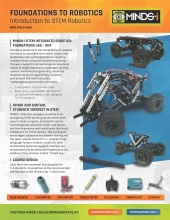
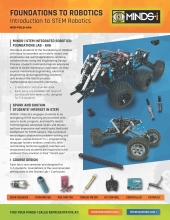 Item Number:MCK-FDLB-6X6The MINDS-i Foundations Curriculum as an introduction to STEM and Robotics designed as an interactive approach to applied science, technology, engineering, and math. In this course, students will become familiar with the basics of robotics and programming through teamwork
 -
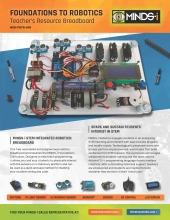 Item Number:MCK-FDTR-001This fully assembled and programmed robotics breadboard accompanies the MINDS-i Foundations Curriculum. Designed to help teach programming, it allows you and your students to physically interact with the sensors on a stationary platform and can be used as a quick and easy method for checking your students' wiring and code.
 -
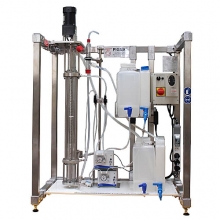 Item Number:ELA/100The unit is used manually, with flows controlled by manual valves and flowmeters. The unit has a stirred glass column, which enhances the visual experience of the extraction process. Students will learn how to determine the interphase level, material balance, efficiency of the column, and more.
 -
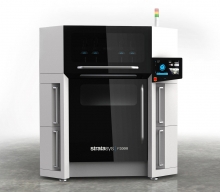 Elevate Your 3D Printing Game with Stratasys' F3300 FDM 3D Printer: Experience Cost Savings, Increased Throughput, Superior Quality, and User-Friendly Operation – Unleash Innovation Today!
 -
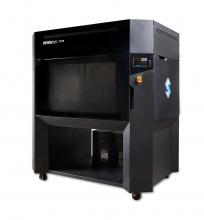 Item Number:F770Print big without the high capital investment of exclusive, large-format printers. The Stratasys F770™ 3D printer makes printing large, complex parts affordable, reliable, and easy.
 -
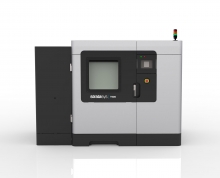 Item Number:F900The F900 gives you the ability to create large parts or multiple smaller parts in the broadest array of FDM materials. With the largest build chamber available among FDM printers, the F900 enables additive manufacturing at scale while delivering consistent, accurate results.
 -
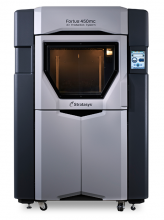 Item Number:450mc and 380mcThe Fortus 450mc can run standard, engineering, and high-performance FDM thermoplastics in a 16 x 14 x 16 in. build envelope. It features improved ease of use, including a touchscreen user interface, and builds complex parts faster than its predecessor, the 400mc.
 -
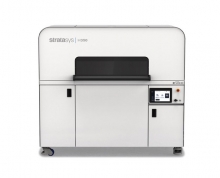 Meet high production demands with the Stratasys H350 powder bed fusion 3D printer. Leveraging Selective Absorption Fusion, SAF technology, into the H-Series production platform, the Stratasys H350 is designed to deliver functional, production-grade parts with unrivaled consistency.
 -
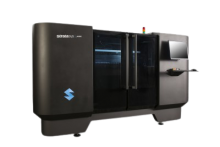 Item Number:J4100Whatever the complexity, the J4100 can handle any design. An ultra-large build tray, multi-material capabilities, fast throughput, and a wide range of material properties mean unlimited design possibilities and improved productivity.