Train future electricians with the EMT 4 Electric Vehicle Charging Station Trainer by Lucas-Nuelle. Portable, smart, and practical — ideal for hands-on electrical vehicle equipment (EVSE) training.
ABSi-P500 is an ABS type with high impact strength. The semi-translucent material used to build the FDM parts is USP Class VI approved. Most commonly used for automotive and medical applications. Available in three colors.
Maria Olivera, a faculty instructor at South Texas College, shares insights into the college’s Advanced Manufacturing Technology (AMT) and Mechatronics program — a hands-on pathway to becoming a technician in today's high-tech workforce.
This program prepares students for careers in:
- Mechatronics and Maintenance Technician roles
- Automation Development and Systems Integration
- Robotics, PLCs, and AC/DC Circuits
- Fluid Power Systems and Electromechanical Devices
Training with Real Industry Tools
Through a partnership with Tech-Labs, students train using Amatrol industry-standard equipment designed to reflect real-world challenges. This hands-on approach ensures students graduate with the skills employers are looking for.
Versatile Career Opportunities
Graduates are equipped to work in a wide range of industries where automation, robotics, and maintenance play a key role. The training is comprehensive, yet adaptable to meet the needs of today's evolving manufacturing environments.
Tech-Labs is proud to support South Texas College with the latest training systems, helping students build the future of American manufacturing — one skill at a time.
Ready to learn more? Contact Us for more information.
Download the Turn 370 Pro Brochure
Turn 370 Pro is a high-capacity, 2-axis CNC lathe designed for education and industrial training environments. Featuring flood coolant, an industrial cabinet base, and programmable spindle speeds, the Turn 370 Pro handles a wide range of resistant materials, including aluminum and steel.
Key Features
- Totally enclosed high-visibility interlocking guard
- Flood coolant and industrial cabinet base
- Quick Change Toolpost and Holder
- VR CNC Turning Operating Software and QuickTURN 2D Design Software
Ready to Elevate Your Training Program? Contact us today to learn how Denford's Turn 370 Pro can integrate into your curriculum or production floor!
Download the VMC 1300 Pro Brochure
VMC 1300 Pro is a robust 3-axis CNC milling machine designed for advanced education and light industrial training. With its high-speed spindle, automatic tool changer options, and full enclosure for safety, it’s the perfect machine for hands-on technical skills development.
Highlights
- High-speed 6000 rpm spindle
- Optional 6- or 8-station automatic tool changer
- Flood coolant system and industrial cabinet base available
- Includes VR CNC Milling Software and QuickCAM 2D Design Software
Ready to elevate your CNC milling capabilities? Download the VMC 1300 Pro brochure to discover all the features and options available for technical training programs!
PCB Engraver is a compact 3-axis CNC machine designed for PCB manufacturing and precision engraving across copper boards, plastics, and acrylics. Its floating head technology allows accurate machining even on uneven surfaces, making it ideal for educational and training programs.
Highlights
- Floating head technology for high-precision engraving
- Gerber and DXF file import capability
- Ideal for copper, plastics, and acrylic engraving
- Includes powerful, user-friendly operating software
Take your PCB prototyping to the next level! Download the PCB Engraver brochure and see how it supports technical education and hands-on training.
MCR-100 is a compact 3-axis desktop CNC router developed exclusively for F1 in Schools car manufacturing. Its enclosed design, easy-to-use software, and high-speed performance make it the ideal solution for STEM-focused programs and technical education initiatives worldwide.
Highlights
- Designed specifically for F1 in Schools competitions
- Compact, desktop-sized footprint
- Fully enclosed guarding for student safety
- Includes QuickCAM Pro Software with Car Wizard
Inspire the next generation of engineers! Download the MCR-100 brochure and explore affordable CNC technology for your STEM program.
Compact 1000 and Compact 1000 Pro are 3-axis CNC routers built for education, light manufacturing, and rapid prototyping. Featuring a fully enclosed design and optional non-ferrous metal cutting on the Pro model, these routers deliver precision and safety for a wide range of training environments.
Highlights
- Fully enclosed safety guard with interlocks
- Pro version offers non-ferrous metal cutting
- VR CNC Milling Software and QuickCAM 2D Design Software included
- Available machine bench and 4th axis options
Expand your training capabilities today! Download the Compact 1000/1000 Pro brochure for full details and specifications.
Router 2600 and Router 2600 Pro are high-capacity, 3-axis CNC routers perfect for technical training programs. With a fully enclosed design, large table capacity, and optional non-ferrous metal cutting (Pro model), these machines deliver flexibility for a wide range of education and prototyping applications.
Highlights
- Large table capacity for larger projects
- Fully enclosed high-visibility guard for safe training
- Pro version supports non-ferrous metal cutting
- Includes VR CNC Milling Software and QuickCAM 2D Design Software
Boost your CNC training capabilities! Download the Router 2600/2600 Pro brochure and find the right fit for your classroom or lab.
Router 6600 and Router 6600 Pro are large-format, high-speed CNC routers specifically designed for educational programs and training centers. With a built-in bench, expansive machining area, and optional non-ferrous metal capabilities (Pro model), they’re ideal for handling complex, full-scale projects.
Highlights
- Large-format table for full-size projects
- Fully enclosed guarding and integrated bench
- Pro version supports non-ferrous metal cutting
- Includes VR CNC Milling Software and QuickCAM 2D Design Software
Bring large-scale CNC training to life! Download the Router 6600/6600 Pro brochure and explore how it fits into your advanced manufacturing curriculum.
 We are proud to partner with NeuroMaker, a global leader in STEM education innovation. Designed by engineers and educators from Harvard and MIT, NeuroMaker solutions combine cutting-edge technology with hands-on learning experiences to inspire the next generation of creators, scientists, and problem-solvers. Their flagship product, the NeuroMaker HAND 2.0, empowers students to explore robotics, prosthetics, programming, and biomedical engineering through real-world applications.
 Pages
-
 Item Number:EMT 4
 -
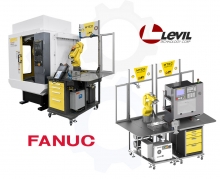 Item Number:MTECThe APT MTEC is a FANUC Certified, advanced manufacturing, CNC Load/Unload system; complete with curriculum and training for your students to integrate and program a CNC and Robot.
 -
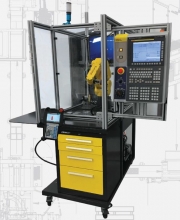 Item Number:MTEC-SIMThis machine comes ready for mill and lathe operation with the robot moving a blank from a pick location to a simulated mill vice or lathe chuck all in one compact cell. The student can see the machine tool come to life on the monitor, hear the tools cutting, and crash the machine (virtually).
 -
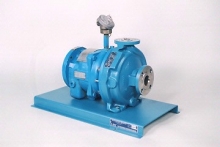 Item Number:275-150DAC's Magnetic Drive Centrifugal Pump Dissectible (Goulds/IR/Durco/Flowserve) (275-150) is an industrial pump for training relating to process pumps.
 -
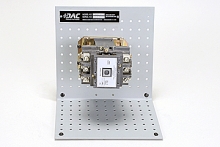 Item Number:273-910DAC Worldwide’s Magnetic Motor Starter Cutaway (273-910) depicts a professionally-crafted, sectioned example of a commonly encountered 3-phase magnetic motor starter used in industrial and commercial electrical systems to control high horsepower AC induction motors, lighting systems, and other non-inductive loads.
 -
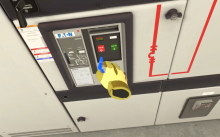 Interactive VR training for the Magnum DS Breaker, helping electrical students and technicians practice safe operation, component identification, and racking procedures in a controlled environment.
 -
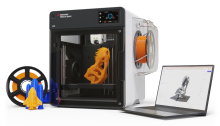 Discover the MakerBot Sketch Sprint 3D printer, designed for education with high-speed printing, cloud-based management, and classroom-ready safety features. Ideal for STEM and CTE programs.
 -
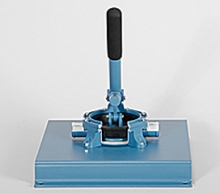 Item Number:278-181DAC Worldwide’s Manual Diaphragm Pump Cutaway (278-181) depicts a sectioned hand-operated diaphragm-type positive displacement pump that allows for convenient classroom training in the design, operation, construction, and maintenance of this common pump type used in industrial, marine, commercial, and agricultural applications for pumping liquids by hand.
 -
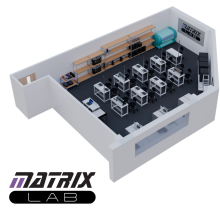 Create a flexible, future-ready engineering learning environment with Matrix Lab. Integrated equipment, curriculum, storage, and classroom design solutions for technical education, workforce development, and engineering training programs.
 -
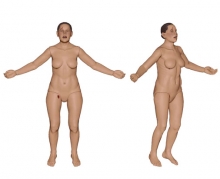 Item Number:MATTI-BLAST-FMM-1Explore TacMed's Simulation™ MATTi™ Medical Simulator, a modular whole-body female medical simulator designed to revolutionize medical training. Discover unparalleled realism, versatility, and effectiveness in simulation technology. Prepare healthcare professionals for real-world scenarios with MATTi™ today.