




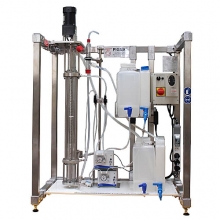
The unit is used manually, with flows controlled by manual valves and flowmeters. The unit has a stirred glass column, which enhances the visual experience of the extraction process. Students will learn how to determine the interphase level, material balance, efficiency of the column, and more.
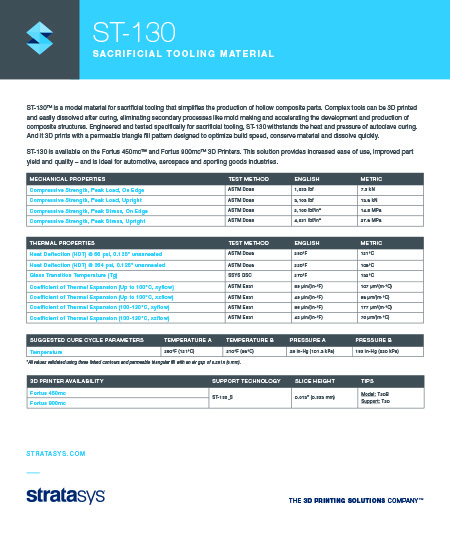
ST-130TM is a model material for sacrificial tooling that simplifies the production of hollow composite parts. Complex tools can be 3D printed and easily dissolved after curing, eliminating secondary processes like mold making and accelerating the development and production of composite structures. Engineered and tested specifically for sacrificial tooling, ST-130 withstands the heat and pressure of autoclave curing. And it 3D prints with a permeable triangle fill pattern designed to optimize build speed, conserve material and dissolve quickly.
ST-130 is available on the Fortus 450mcTM and Fortus 900mcTM 3D Printers. This solution provides increased ease of use, improved part yield, and quality – and is ideal for automotive, aerospace, and sporting goods industries.
Victrex AM 200 filament is a high-performance, low-melt PAEK (polyaryletherketone) designed specifically for additive manufacturing. It offers performance capabilities similar to PEEK and PEKK but without the challenges of 3D printing those materials. Victrex AM 200 is formulated to provide dimensional stability and optimal interlayer bonding (Z-strength).
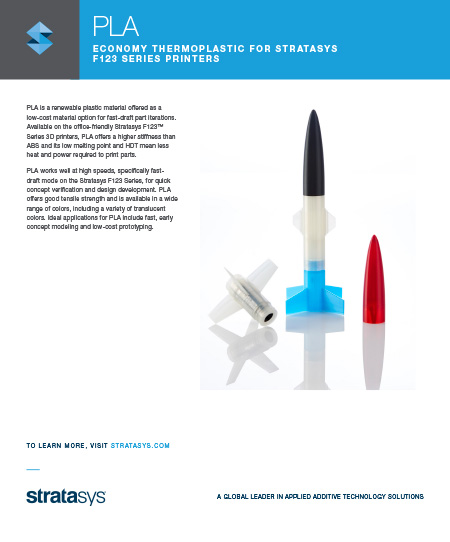
PLA is a renewable plastic material offered as a low-cost option for fast-draft part iterations. Available on the office-friendly Stratasys F123™ Series 3D printers, PLA offers a higher stiffness than ABS, and its low melting point and HDT mean less heat and power required to print parts.
PLA works well at high speeds, specifically fastdraft mode on the Stratasys F123 Series, for quick concept verification and design development. PLA offers good tensile strength and is available in various colors, including various translucent colors. Ideal applications for PLA include fast, early concept modeling and low-cost prototyping.
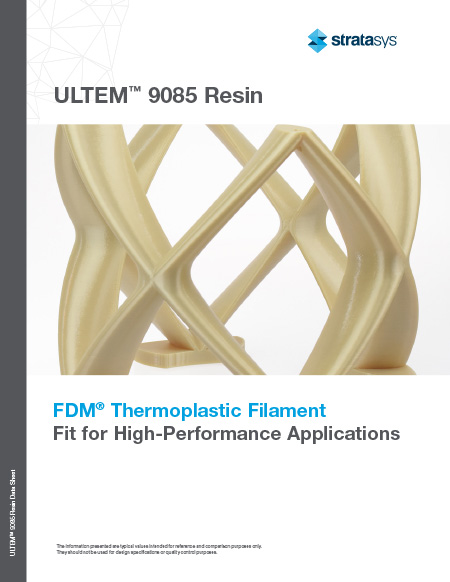
ULTEM™ 9085 resin filament is a PEI (polyetherimide) thermoplastic FDM material. It features a high strength-to-weight ratio, high thermal and chemical resistance, and meets multiple aerospace and railway industry standards for flame, smoke and toxicity (FST) characteristics. Available colors are Natural, Black, Red, Jana White, White 7362, Dream Gray, Gunship Gray and Aircraft Gray.
ULTEM™ 9085 resin is a thermoplastic resin manufactured by SABIC Innovative Plastics. As you know, with all the other FDM thermoplastics the resin manufactures names and resin formulations are highly confidential.
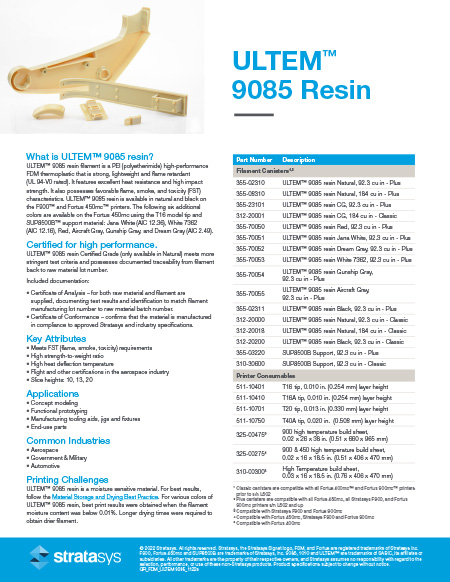
ULTEM™ 9085 resin filament is a PEI (polyetherimide) high-performance FDM thermoplastic that is strong, lightweight, and flame retardant (UL 94-V0 rated). It features excellent heat resistance and high impact strength. It also possesses favorable flame, smoke, and toxicity (FST) characteristics.
ULTEM™ 9085 resin is available in natural and black on the F900™ and Fortus 450mc™ printers. The following six additional colors are available on the Fortus 450mc using the T16 model tip and SUP8500B™ support material: Jana White (AIC 12.36), White 7362 (AIC 12.16), Red, Aircraft Gray, Gunship Gray, and Dream Gray (AIC 2.49).
 The full-color, multi-material Stratasys® J850™ TechStyle™ and J850™ Prime FabriX™ printers powered by 3DFashion™ technology boast the innovative capability of printing 3D designs directly onto fabric. With Stratasys printing materials, combinations of colors, transparency, and flexibility are possible all in one print on different textiles and flexible substrates.
The following sections describe tips, guidelines, and online resources for designers to start 3D printing using Stratasys technologies and materials. With this wealth of information and your experimentation, you will gain the knowledge and skills you need to achieve outstanding results.
Guidelines and Tips
- Tips for Getting Started
- Vector Designs
- Distance Between Elements
- Element Size
- Element Height
- Size Recommendations Table
- Color Assignment
- File Type Support
- Stratasys Online Resources
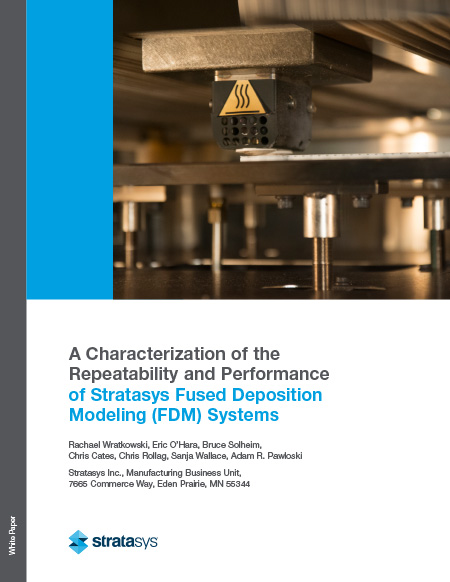
Printer performance and reliability directly impact your bottom line. Stratasys' F123 line of FDM 3D printers is the most accurate compared to various competitors and the fastest, with the least downtime. Confidently print more parts in less time with a Stratasys F123 series FDM 3D printer.
Industry Report: White Paper
Desktop and low-priced 3D printers may seem the logical choice to start with 3D printing. But it’s often the wrong choice because these 3D printers are typically not up to the task nor have the trusted reliability of FDM technology.
This white paper highlights a third-party head-to-head comparison and how each 3D printer fared. Curious to know how F123 Series FDM 3D printers stack up against these competitors?
Download this white paper, evaluate and learn how F123 Series out preforms it's competition.
PPSF/PPSU (polyphenylsulfone) material has the greatest heat and chemical resistance of all Fortus® materials - ideal for aerospace, automotive and medical applications. PPSF parts manufactured on Fortus 3D Printers are not only mechanically superior, but also dimensionally accurate, to better predict end-product performance. Users can also sterilize PPSF via steam autoclave, EtO sterilization, plasma sterilization, chemical sterilization and radiation*. PPSF gives you the ability to manufacture parts direct from digital files that are ideal for conceptual modeling, functional prototyping, manufacturing tools and production parts.
PPSF (polyphenylsulfone) is a high-temperature, high-strength, and chemically resistant FDM material. While ideal for demanding applications, the durability and chemical resistance make finishing PPSF parts with sandpaper or solvents difficult and time-consuming.
When smooth surfaces are needed, hand sanding or milling are the two options most often used. Resistant to abrasion, PPSF makes hand sanding a laborious task that can consume hours. While a finishing pass with a CNC mill can make short work of surface smoothing, it negates many of the advantages of the FDM process. To prepare for machining, time is needed for CAM programming and machine set-ups. Machining also requires that an operator oversees the process.
If PPSF is used to make tools or molds, there is a new and faster alternative for surface smoothing, thermoforming. A thin sheet of plastic is drawn onto the surface of the PPSF part. While it conforms to the part’s shape, the plastic sheet does not transfer the layer lines to the outer surface. To preserve the mechanical, thermal, and chemical advantages of PPSF, the thermoforming process uses sheets of plastic made from PEEK resin. Versus hand sanding, PEEK thermoforming can reduce lead time by 75 percent
and cost by 90 percent (table 1).
Pages
-
 Item Number:ELA/100
 -
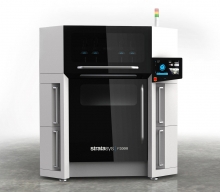 Elevate Your 3D Printing Game with Stratasys' F3300 FDM 3D Printer: Experience Cost Savings, Increased Throughput, Superior Quality, and User-Friendly Operation – Unleash Innovation Today!
 -
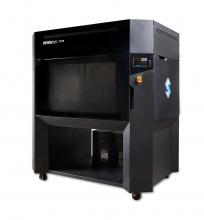 Item Number:F770Print big without the high capital investment of exclusive, large-format printers. The Stratasys F770™ 3D printer makes printing large, complex parts affordable, reliable, and easy.
 -
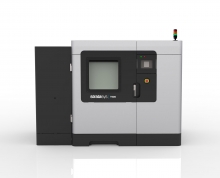 Item Number:F900The F900 gives you the ability to create large parts or multiple smaller parts in the broadest array of FDM materials. With the largest build chamber available among FDM printers, the F900 enables additive manufacturing at scale while delivering consistent, accurate results.
 -
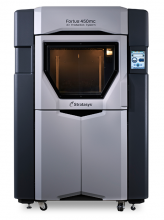 Item Number:450mc and 380mcThe Fortus 450mc can run standard, engineering, and high-performance FDM thermoplastics in a 16 x 14 x 16 in. build envelope. It features improved ease of use, including a touchscreen user interface, and builds complex parts faster than its predecessor, the 400mc.
 -
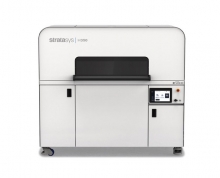 Meet high production demands with the Stratasys H350 powder bed fusion 3D printer. Leveraging Selective Absorption Fusion, SAF technology, into the H-Series production platform, the Stratasys H350 is designed to deliver functional, production-grade parts with unrivaled consistency.
 -
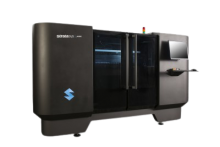 Item Number:J4100Whatever the complexity, the J4100 can handle any design. An ultra-large build tray, multi-material capabilities, fast throughput, and a wide range of material properties mean unlimited design possibilities and improved productivity.
 -
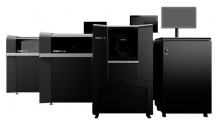 Item Number:J850 Pro / J850 Prime / J826 PrimeFrom ideation to creation, the J8 Series delivers a fully-functioning, multi-material, Pantone™ validated prototype 200% faster than traditional methods.
 -
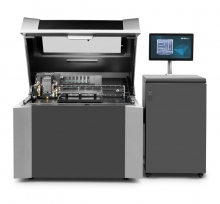 The J850™ TechStyle™ 3D printer is powered by 3DFashion™ technology and provides full-color, multi-material capabilities for designs that can be printed directly to fabric, garments, footwear, and luxury accessories, delivering results that are not possible with traditional methods.
 -
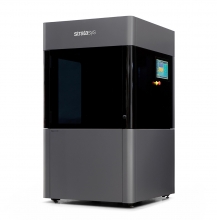 Item Number:Neo450e / Neo450sThe Stratasys Neo450e is an affordable industrial-grade 3D printer producing small to medium parts with consistent accuracy and repeatability. The Neo450s offers performance and versatility along with all the benefits of Neo450e.