• First page of the Electrical Training Program Guide

Electrical training programs are essential for preparing students and technicians for careers in electrical systems, industrial maintenance, automation, and skilled trades.

This free guide provides a practical framework for developing workforce-ready electrical training programs that align with employer needs while balancing equipment, curriculum, facility, and budget considerations.

Inside the Guide:

  • Current workforce challenges impacting electrical training programs
  • A workforce-ready electrical training framework
  • Program design and lab planning recommendations
  • Equipment and technology integration strategies
  • Curriculum alignment and certification pathways
  • Implementation and program growth best practices

Who Should Download This Guide?

  • CTE Directors
  • Electrical Instructors
  • Technical College Faculty
  • Workforce Development Leaders
  • Apprenticeship Coordinators
  • Training Managers

Whether you're launching a new electrical program, modernizing an existing lab, or expanding workforce development initiatives, this guide can help support your planning process.

  • Matrix Lab engineering training laboratory solutions brochure featuring hands-on equipment, software, curriculum resources, and lab design services.

Matrix Lab: Complete Engineering Training Laboratories Designed for Student Success

Matrix Lab provides a comprehensive approach to engineering education by combining hands-on training equipment, interactive software, curriculum resources, instructor support, and complete lab design services into a unified learning environment. Designed to inspire the next generation of engineers and technicians, Matrix Lab solutions help educational institutions create engaging, practical learning experiences that bridge the gap between classroom theory and real-world applications.

From individual classroom training systems to fully customized engineering laboratories, Matrix Lab supports educators with everything needed to build effective training environments. Each solution is designed for durability, flexibility, and long-term value, allowing programs to expand and evolve as industry requirements and educational objectives change.

What's Included with Matrix Lab?

  • Hands-On Equipment designed for practical engineering and technical training
  • Interactive Software developed alongside the equipment for data collection, analysis, and experimentation
  • Teaching Resources including instructor guides, worksheets, assessments, and lesson materials
  • Custom Lab Design services tailored to available space, class sizes, and learning objectives
  • Teacher Portal with access to instructor resources, answers, results, and planning tools
  • Online Learning Environment featuring simulations, interactive exercises, progress tracking, and student feedback
  • Lifetime Support from training and implementation through ongoing classroom assistance
  • Storage and Furniture Planning to maximize functionality and organization

Engineering Disciplines Supported

Matrix Lab solutions support a wide variety of engineering and technical education pathways, helping institutions create specialized learning environments for multiple disciplines.

  • Electrical and Electronic Engineering
  • Mechanical Engineering
  • Manufacturing and Automation
  • Industrial Maintenance
  • Aerospace Engineering
  • Automotive Technology
  • Skilled Trades
  • Renewable Energy
  • Civil Engineering
  • Chemical Engineering
  • Defense and Technical Training

Designed for Every Learning Environment

Whether serving high schools, community colleges, universities, private training providers, or industrial workforce development programs, Matrix Lab solutions can be customized to meet specific curriculum requirements and facility constraints. The modular approach allows institutions to start with targeted training areas and expand over time as programs grow.

From Empty Space to Complete Engineering Lab

Matrix Lab offers a complimentary lab planning and design service that helps institutions transform unused or underutilized space into modern engineering learning environments. Services include room layout planning, equipment selection, storage recommendations, furniture integration, and instructor training to ensure successful implementation and long-term program success.

Ready to create a hands-on engineering training environment? Contact Tech-Labs to learn how Matrix Lab can help design and equip a complete laboratory solution tailored to your educational goals and workforce development needs.

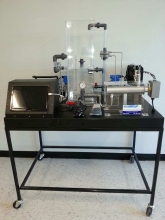
Discover the Matrix Fundamental Fluids training system and see how students can explore the principles of fluid mechanics through engaging, hands-on experiments.

Designed for mechanical engineering and engineering technology programs, the system combines a versatile main workstation with sixteen interchangeable experiment modules to create nine laboratory experiments. Students investigate concepts such as pressure, flow, and fluid behavior while building practical skills through real-world testing.

Six experiments utilize USB-connected pressure and flow sensors to automatically capture and graph data for analysis, while three manual experiments reinforce traditional measurement and interpretation techniques. Quick-release components allow each experiment to be assembled and changed over quickly, and a complete curriculum with guided laboratory exercises is included to support instruction.

Watch the video below to see the Matrix Fundamental Fluids system in action and learn how it can enhance hands-on fluid mechanics education.

Understanding how arches transfer loads is a fundamental part of structural and civil engineering education. The Matrix Two & Three Pinned Arch Experiment allows students to investigate the behavior of two of the most common arch configurations through practical, hands-on experiments that reinforce structural analysis theory.

In this overview video, you'll see how the training system enables learners to compare two-pinned and three-pinned arches while measuring horizontal thrust, vertical support reactions, and load distribution under a variety of loading conditions. Students can collect real experimental data, compare their findings with theoretical calculations, and gain a deeper understanding of structural mechanics.

What You'll Learn

  • Compare the behavior of two-pinned and three-pinned arches.
  • Measure horizontal thrust generated within arch structures.
  • Determine vertical reactions at the supports.
  • Investigate how loads are distributed throughout an arch.
  • Validate theoretical calculations using experimental measurements.
  • Develop practical skills in structural analysis and engineering mechanics.

Ideal For

  • Civil Engineering programs
  • Structural Engineering courses
  • Engineering Mechanics laboratories
  • University engineering education
  • Applied structural analysis training

By combining theoretical concepts with experimental investigation, the Matrix Two & Three Pinned Arch system gives students valuable insight into how real structures behave under load while strengthening their analytical and problem-solving skills.

Take a behind-the-scenes look at the Matrix Fundamental Fluids training system as it is unpacked and assembled. This video showcases the thoughtful design and modular construction of the workstation, giving educators and students a closer look at the engineering that goes into creating a versatile fluid mechanics training solution.

Designed for mechanical, civil, and multidisciplinary engineering programs, the Matrix Fluid Mechanics Rig features a robust workstation with interchangeable experiment modules that can be assembled quickly without specialized tools. The modular design allows institutions to efficiently support multiple laboratory activities while minimizing setup time between experiments.

Whether you're evaluating equipment for a new laboratory or simply interested in how the system is built, this video provides a unique look at the quality, attention to detail, and practical design philosophy behind Matrix engineering education solutions.

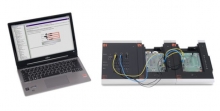
Mechanisms Fundamentals is the newest addition to the Matrix mechanical engineering range, providing students with a practical introduction to the principles that power countless machines and mechanical systems.

Using the included storable work panel, learners quickly assemble a variety of experiments that demonstrate the operation and performance of gears, cams, crank mechanisms, and mechanical drive systems. By building and testing each mechanism, students gain a deeper understanding of force transmission, motion, mechanical advantage, efficiency, displacement, and gear ratios while reinforcing classroom theory through hands-on investigation.

A comprehensive 10-hour workbook, available free through the Matrix Learning Center, guides students through each experiment with structured activities, theory, and analysis. The system is ideal for mechanical engineering, manufacturing technology, engineering technology, and technical education programs seeking engaging laboratory experiences.

Learning Objectives

Mechanisms Fundamentals includes a comprehensive series of practical experiments that introduce students to the operation and analysis of common mechanical systems. Through hands-on investigation, learners explore how gears, cams, crank mechanisms, and drive systems transmit motion and force while developing a deeper understanding of mechanical advantage, efficiency, gear ratios, and displacement.

Investigate mechanical advantage (MA), efficiency, and gear ratios using a variety of gear systems.

  • Simple Gear
  • Compound Gear
  • Rack & Pinion
  • Bevel Gear
  • Worm Gear
  • Screw Jack

Study displacement characteristics produced by different cam profiles.

  • Tangent Cam
  • Snail Cam
  • Eccentric Cam

Analyze force transmission and displacement using crank mechanisms.

  • Force Analysis
  • Displacement Analysis

Compare mechanical advantage, efficiency, and power transmission across multiple drive systems.

  • Universal Joint
  • Belt Transmission
  • Chain Transmission

Watch the video to see how Mechanisms Fundamentals helps students visualize engineering concepts, quickly assemble experiments, and build practical skills in mechanical systems.

The Matrix Wind Tunnel provides a versatile platform for investigating the fundamental principles of aerodynamics through hands-on experimentation. Designed for engineering education, the system enables students to visualize airflow and collect real experimental data while reinforcing the theory taught in the classroom.

In this video, we showcase the range of experiments available with the Matrix Wind Tunnel and demonstrate how quickly students can configure the equipment for different investigations. From measuring lift and drag to analyzing pressure distribution and airflow characteristics, each experiment helps learners develop a deeper understanding of aerodynamic behavior and experimental analysis.

Watch the video to explore the available experiments and see how the Matrix Wind Tunnel supports engaging, practical learning in mechanical and aerospace engineering programs.

This video demonstrates the Matrix Deflection of Beams experiment operating in manual mode, allowing students to perform hands-on structural engineering investigations while following the included curriculum workbook. As the second video in the Structures series, it highlights how the same equipment can be used without data acquisition, helping learners develop practical measurement, observation, and analytical skills.

Students assemble the apparatus, install different beam materials and support configurations, and measure beam deflection using a precision dial gauge. By applying incremental loads and recording measurements, they investigate how support conditions and material properties influence structural behavior. The resulting data can then be plotted and analyzed to compare theoretical calculations with experimental results, reinforcing key concepts in mechanics of materials and structural engineering.

What You'll Learn

  • How to set up the Deflection of Beams experiment in manual mode
  • The differences between fixed supports and cantilever support arrangements
  • How beam material and support configuration affect deflection
  • Using precision measuring equipment to record beam displacement
  • Applying incremental loads and collecting experimental data
  • Converting measurements into SI units for engineering calculations
  • Plotting deflection versus load graphs and calculating gradients
  • Comparing experimental results with structural engineering theory

Why Manual Mode Matters

Manual operation encourages students to take ownership of the experimental process by setting up the apparatus, collecting measurements, recording observations, and interpreting results independently. This approach strengthens practical laboratory skills while reinforcing the engineering principles behind beam deflection, structural supports, and material behavior.

This video demonstrates the Matrix Bending Moments experiment operating in manual mode, giving students a practical understanding of how loads create bending moments within a beam. By following the included curriculum workbook, learners collect real experimental data and compare measured values with theoretical calculations, reinforcing key principles of structural engineering and mechanics.

During the experiment, students move a fixed load to multiple positions along the beam while the integrated load cell measures the resulting forces. The measured data is recorded, analyzed, and used to calculate support reactions and bending moments before being plotted on a graph for comparison with theoretical predictions. This hands-on investigation helps students visualize how load position influences internal beam forces and structural behavior.

What You'll Learn

  • How to set up the Bending Moments experiment in manual mode
  • How load position affects bending moments within a beam
  • Using an integrated load cell to measure reaction forces
  • Recording and analyzing experimental data
  • Calculating reaction forces at beam supports
  • Comparing measured and theoretical bending moment values
  • Plotting graphs to analyze structural behavior
  • Developing practical skills in structural engineering experimentation

Why Study Bending Moments?

Understanding bending moments is fundamental to structural and civil engineering. This experiment allows students to investigate how beams respond to different loading conditions, validate engineering theory through experimentation, and build confidence interpreting structural analysis using real-world measurements.

This video demonstrates the Matrix Shear Force experiment using data acquisition mode, allowing students to investigate how applied loads create shear forces within a beam. Following the guided curriculum workbook, learners collect accurate experimental data while developing a practical understanding of structural behavior and beam analysis.

During the experiment, students apply incremental loads to the beam while an integrated load cell continuously measures the resulting shear force. The measurements are automatically recorded using the Matrix data acquisition software and exported for analysis. Students then use the collected data to create graphs, compare experimental results with engineering theory, and develop a deeper understanding of shear force diagrams and structural mechanics.

What You'll Learn

  • How to perform a shear force experiment using data acquisition
  • How integrated load cells measure shear force within a beam
  • Investigating the effects of changing point loads and load positions
  • Recording experimental data using Matrix data acquisition software
  • Applying incremental loading to analyze structural response
  • Exporting data for graphing and post-experiment analysis
  • Interpreting shear force graphs and engineering results
  • Reinforcing structural engineering concepts through hands-on investigation

Why Study Shear Forces?

Shear forces play a critical role in the design and analysis of beams and structural members. This experiment allows students to collect real measurement data, visualize how shear forces change under different loading conditions, and connect theoretical calculations with practical engineering observations.

Pages

  • Model: 205-290
    Item Number:
    205-290
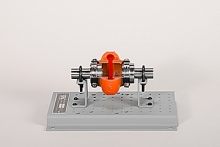
    DAC Worldwide's Variable Speed Gear Reducer Cutaway is a sectioned variable speed industrial gear reducer. Speed variations allow for continuous variable-ratio speed adjustment of mechanical systems are still regularly encountered in industrial applications due to their durability, dependability, and consistency of operation.
  • Hands-On Industrial Pump Skills Trainer
    Item Number:
    275-128D
    DAC Worldwide’s Vertical Centrifugal Pump Dissectible (275-128D) is an actual industrial centrifugal pump assembly that allows for realistic training in the field or bench-top disassembly, inspection, and reassembly of a vertical centrifugal pump.
  • Hands-On Mechanical Skills
    Item Number:
    207-000
    DAC Worldwide’s Vertical Coupling/Shaft Alignment Training System (207-000) is a heavy-duty, precision learning system that allows for convenient, realistic training in shaft alignment. When paired with a variety of hands-on exercises, the system creates a complete performance-based course in the maintenance of shaft alignment.
  • DAC Worldwide Technical Trainers
    Item Number:
    207-PAC
    DAC Worldwide’s Vertical Coupling/Shaft Alignment Training System Plus (207-PAC) is a heavy-duty, precision learning package that allows for convenient, realistic training in shaft alignment. When paired with a variety of hands-on exercises, the training system creates a complete performance-based course in the maintenance of shaft alignment.
  • DAC Worldwide Training Models
    Item Number:
    295-115
    DAC Worldwide's Vertical Cross-Flow Separator Model (209) is a highly-detailed scale model of a common vertical cross-flow separator used throughout the oil and gas industry, as well as other processing, production, and refining applications.
  • DAC Model: 295-101
    Item Number:
    295-101
    DAC Worldwide’s Vertical Separator Trainer (295-101) is a reduced-scale, three-phase vertical separator that mimics its real-world counterpart by using alternate production stream components, refined oil, air, and water.
  • DAC Process Control Trainers
    Item Number:
    295-101-PAC
    DAC Worldwide's Vertical Separator Training System Plus (295-101-PAC) is a realistic working demonstration separation system that duplicates the process at a reduced scale using alternate production stream components: refined oil, air, and water.
  • DAC Heat Transfer & Steam
    Item Number:
    289
    DAC Worldwide's Vertical Thermosyphon Reboiler Heat Exchanger Training Model (289) is a highly-detailed scale model of a vertical thermosyphon reboiler, supporting training in the operation and maintenance of industrial heat exchangers.
  • OnRobot Collaborative Robot Accessories
    Item Number:
    VG10
    The compact OnRobot VG10 Universal Robot Vacuum Gripper doesn't require a compressor or air supply bringing flexibility to your production line and saving maintenance costs. It has flexible arms and an adjustable vacuum enabling the VG10 to handle a variety of objects in many different sizes.
  • OnRobot Collaborative Robot Gripper
    Item Number:
    VGC10
    The OnRobot VGC10 electrical compact universal robot vacuum gripper has unlimited customization possibilities. Smaller than the VG10, the VGC10 can fit into tight environments to extend your automation possibilities.

Pages