


Each Basic Hydraulics training system features standard industrial grade components. This attention to quality gives students experience they would normally only get on-the-job by helping them recognize industrial components and how to troubleshoot them more effectively. Components included with Basic Hydraulics are pre-mounted on circuit panels with silk-screened labels next to each, which facilitates ease of use and identification.
Realistic Training That Works
DAC Worldwide works closely with various industry sectors to develop task-based training solutions to establish skill sets that are relevant in today's modern manufacturing environment. With a flexible and extensive range of products, we can adapt to your needs and budget.
Industry Sectors
Advanced Manufacturing
Advanced manufacturing companies use the newest technologies to be competitive in a global market. These systems require skilled workers to keep them running efficiently. DAC Worldwide's training solutions can help develop individuals with the right skill sets for these rewarding careers.
Military
The military industry includes production and maintenance operations to support their facilities and equipment. This requires skilled workers just like their civilian company counterparts. DAC Worldwide's solutions are perfect for supporting the military's training efforts.
Process / Chemical Manufacturing
Process/chemical manufacturing utilizes many technologies to transform raw materials into useful products. This rewarding career path requires specialized skills to be successful. DAC Worldwide has solutions to train incoming workers with the proper skills or help existing workers gain new ones.
Oil & Gas
The oil & gas industry shares technologies with many other industries; however, they utilize some of these technologies uniquely. This requires specialized training solutions, and DAC Worldwide is here to help with training systems, cutaways, & models geared toward the Oil & Gas Industry.
Marine
The marine industry faces unique challenges as the global market demands more. Modern technology used throughout the industry requires highly skilled workers for operation and maintenance. DAC Worldwide has many solutions to support training in this rewarding field.
Power Generation
Power generation is a critical need, and maintaining these systems requires a highly skilled workforce. Power is generated from various sources including oil, gas, nuclear, and renewable energy sources. Maintaining a pipeline of skilled employees entering this field is essential, and DAC Worldwide has training solutions to help.
Check out DAC Worldwide's product offerings and contact us today for more information!
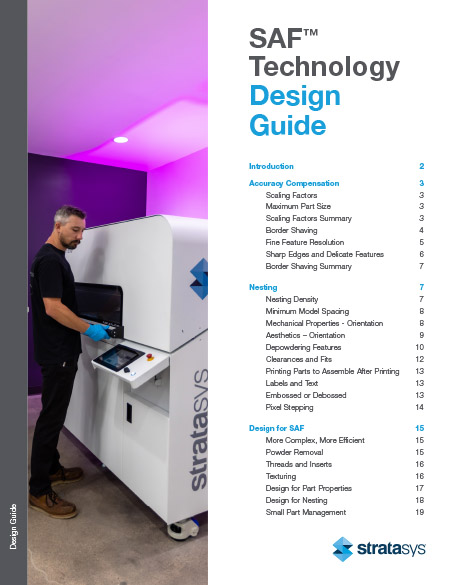
This document provides general guidance on how to get the best quality parts possible from an H350™. The guide will cover accuracy, nesting, and how to optimize designs for printing with SAF. The advice in this guide applies to both High Yield PA11 and SAF™ PA12.
Due to the infinite number of geometric possibilities which could be produced with additive manufacturing, it is difficult to give exact rules, limits, or guarantees for success. This guide aims to understand the factors that should be considered when printing with the H350. This will give the reader a good foundation of knowledge to approach their specific geometries.
Concept to high-volume production of validated 3D printed medical devices in weeks
When the COVID-19 pandemic hit, so did an urgent need for large supplies of personal protective equipment (PPE) for healthcare providers and nasopharyngeal swabs for COVID-19 testing. Supply chain disruptions immediately followed due to complicated supply chains with overwhelmed suppliers and difficult-to-source components. A reliance on a few vendors, instead of multiple supplier sources, and enormous product demand made it difficult for healthcare providers to secure inventory and layered on additional challenges.
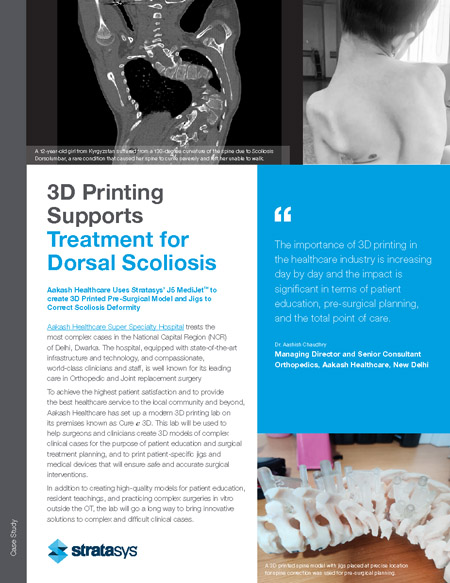
Aakash Healthcare Uses Stratasys’ J5 MediJetTM to create 3D Printed Pre-Surgical Models and Jigs to Correct Scoliosis Deformity
Aakash Healthcare Super Specialty Hospital treats the most complex cases in the National Capital Region (NCR) of Delhi, Dwarka. The hospital, equipped with state-of-the-art infrastructure and technology and compassionate, world-class clinicians and staff, is well known for its utmost care in Orthopedic and Joint replacement surgery.
To achieve the highest patient satisfaction and provide the best healthcare service to the local community and beyond, Aakash Healthcare has set up a modern 3D printing lab called Cure ⅽ 3D. This lab will help surgeons and clinicians create 3D models of complex clinical cases for patient education and surgical treatment planning and print patient-specific jigs and medical devices that will ensure safe and accurate surgical interventions.
In addition to creating high-quality models for patient education, resident teachings, and practicing complex surgeries in vitro outside the OT, the lab will go a long way to bring innovative solutions to complex and difficult clinical cases.
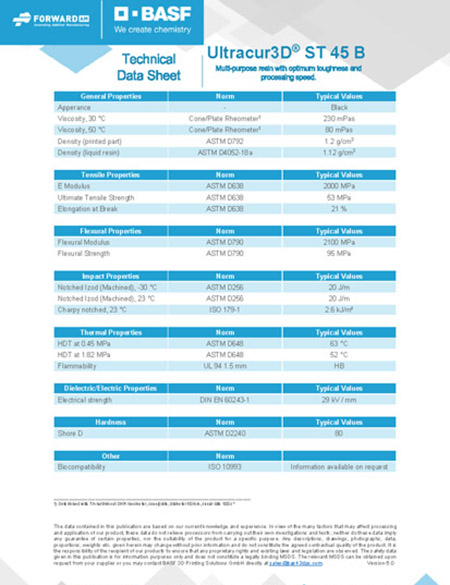
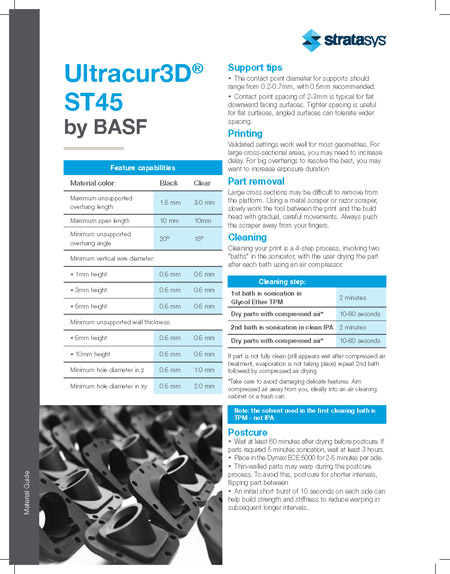
Multi-purpose resin with optimum toughness and processing speed.
Download the technical datasheet for Ultracur3D® ST 45 B.
Download the Stratasys Origin One BASF ST45 Material Processing Guide.
- Support Tips
- Printing
- Part Removal
- Cleaning
- Postcure
One hundred parts produced within 24 hours on a single Origin One, at a fraction of the cost of traditional manufacturing.
Origin® One features several integrated cameras for computer vision and capturing temperature data in the IR range; additional sensors measure other environmental conditions during the print process.
Senior mechanical design engineer Matt Miyamoto designed camera mounts for CNC machining out of black ABS plastic. A compound angle meant that the part could only be machined by a 5-axis CNC (or on a 3-axis CNC with multiple setups), which made the parts expensive to machine at low or high volumes. Matt turned to Origin’s solution to achieve the quality and throughput required.
Slashing costs, improving performance: Medical device development and manufacturing with the Stratasys Origin One
Case Study: Enventys Partners, a full-service, turnkey product launch agency, delivered end-use biocompatible devices, while avoiding the long lead time, high costs and design constraints of injection molding or CNC machining by printing with the Stratasys Origin One.
Producing Lightweight, Durable Robot Parts on Stratasys Origin One
Ghost Robotics™ produces four-legged autonomous unmanned robots with all-terrain stability that can operate in almost any environment. These quadruped robots are size-scalable, ultra-agile, high-endurance, and easy to program. Simple mechanical systems increase the robots’ durability, agility, and endurance. The robots’ modular design supports the efficient field swapping of any sub-assembly.
Challenge
Ghost Robotics needed to produce lightweight, durable parts, with a cosmetic surface finish, for its Spirit™ Series robot.
- The team needed to stay agile, shipping units to customers while maintaining the ability to iterate designs based on customers’ feedback.
- Injection molded parts and CNC machined parts were cost-prohibitive, had long lead times, and could not be easily iterated on.
- The company considered other 3D printing methods as a solution, but the parts weren’t isotropic the mechanical properties weren’t strong enough; and the surface quality was too rough for the parts to be given to customers.
Ongoing sustainment for aging aircraft components
The U.S. Air Force increasingly faces sustainment challenges, including cost, speed, and supply chain agility, when using traditional manufacturing methods to maintain aging aircraft components. The department often seeks innovative engineering solutions to keep aircraft aloft and to modernize the fleet. In 2020, they hosted an open competition to quickly find new and creative 3D printing solutions for the C3175 family of hydraulic line clamps. Thousands of these clamps are used in the Air Force’s F-16 aircraft, in areas like landing gear cavities, and they frequently fail after extended exposure to vibration, environmental chemicals, and heat cycling. Historically, these clamps have been injection molded or CNC machined from a phenolic material that off-gases toxic formaldehyde.
Pages
-
 Item Number:BH-85
 -
 Item Number:85-BPAmatrol’s Basic Pneumatics training system (85-BP) introduces pneumatic principles through a combination of Amatrol’s top-flight multimedia curriculum with hands-on industrial pneumatic skill-building. Topics covered in this learning system include single-acting cylinder circuits, pressure vs. cylinder force, and flow control valves, while the panels can be used to practice skills such as connecting and operating a needle valve to control actuator speed.
 -
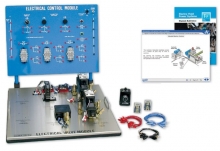 Item Number:85-EHThe Electro-Hydraulics training system includes an electrical control panel with relay control components and an electrical valve module with solenoid-operated hydraulic directional control valves and electrical/electronic sensors. These components will be used to study a variety of topics including electrical control systems, basic control devices, power devices, control relays, sequencing control, timer control, pressure control applications, and circuit applications.
 -
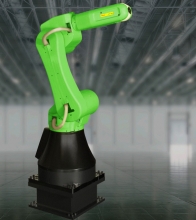 Item Number:CR-35iAFANUC’s new CR-35iA is the world’s first collaborative robot with a payload capacity of up to 35 kg. Fenceless, it opens a whole new world of possibilities. Working safely side by side with human operators, it is space as well as cost saving. And because inside it’s like any other FANUC robot, it operates like all FANUC robots. Certified to meet the requirements of ISO 10218-1:2011 and RIA/ANSI R15.06-2012, FANUC’s CR-35iA collaborative robot can work in a variety of applications alongside human workers including: machine tending, handling heavy payloads that require lift assist devices or custom equipment, higher payload mechanical assembly, palletizing or packing, and tote or carton handling.
 -
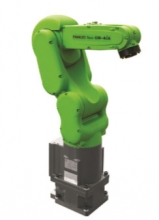 Item Number:CR-4iACR-4iA is a small collaborative robot with 4 kg payload
 -
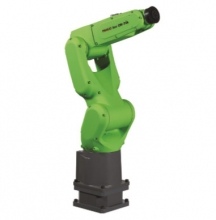 Item Number:CR-7iAThe FANUC CR-7iA is FANUC's newest collaborative robot resembles the LR Mate family. Painted green to show it's ability to work beside humans, you can expect the same reliability as FANUC's yellow robots. The CR-7iA is ideal for small part sorting and assembly, inspection, machine tending, and part delivery. It has a 7 kg payload, 717 mm reach, and is equipped with iRVision and Force Sensing. There are a variety of mounting options such as floor, wall, and ceiling.
 -
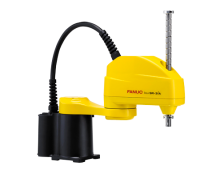 FANUC’s new SCARA robots are ideal for high-speed, precision applications such as assembly, pick and place, testing/inspection and packaging processes.
 -
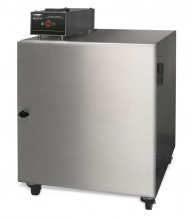
In the rare event that a burning ember or spark is drawn into the fume extraction unit, there is the possibility that debris in the filters could ignite. Although any resultant fire would typically be retained within the fume extraction unit, this would cause significant damage and in extreme circumstances, the risk may extend beyond the extraction unit. For processes where such risks have been identified, additional protection in the form of an in-line firebox is an additional precaution.
-
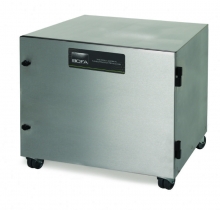
The BOFA inline pre-filter 1000 has been designed specifically for applications that generate high amounts of dust or particulate.
This inline filter unit is positioned alongside the main BOFA fume filtration system to increase the overall filter capacity and extend the life of the main filters. The DeepPleat DUO pre-filter incorporates a massive drop-out chamber within the filter, having a volume area of 15ltrs. Above the drop-out chamber but still within the housing there is a sealed 200mm deep pleat layer of F8 media giving a surface area in excess of 30 sq meters.
-
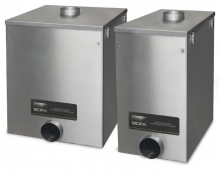 The BOFA inline prefilters have been designed specifically for applications that generate high amounts of dust or particulate.