

Explore the Pignat DVI/100 Continuous Distillation unit – a compact, glass-based educational system for studying thermal separation and column hydrodynamics in chemical engineering programs.
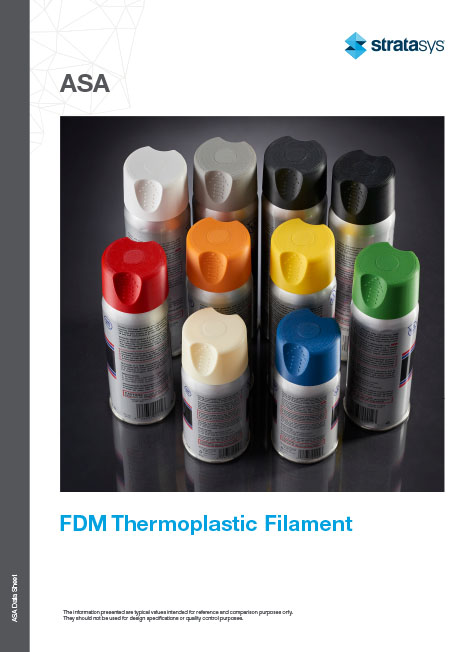
ASA (acrylonitrile styrene acrylate) FDM® filament is a broad-use commodity thermoplastic. It is similar to ABS (acrylonitrile butadiene styrene) but exhibits better UV resistance, mechanical properties, and aesthetics than ABS.
ASA suits most general-purpose 3D printing applications involving prototyping, jigs and fixtures, and low-volume production parts. ASA filament is available in the most colors of any FDM material.
Offering a variety of production-grade thermoplastics, FDM® technology creates parts that are highly accurate, tough, and suitable for both functional prototyping and end-use parts. ABS is the most common material used as it boasts good mechanical properties and high name recognition. Compared with ASA, ABS may be more familiar because of its popularity in mass production.
ASA is another popular all-purpose material for jigs and fixtures, manufacturing aids, prototyping and limited-run end-use parts. ASA matches or exceeds the mechanical properties of standard ABS and has greater heat resistance. Moreover, ASA demonstrates exceptional UV stability and, with its matte finish, offers the best aesthetics of any FDM thermoplastic. It’s especially suited for end-use parts in outdoor commercial and infrastructure applications, and its wide array of color options surpasses that of ABS.
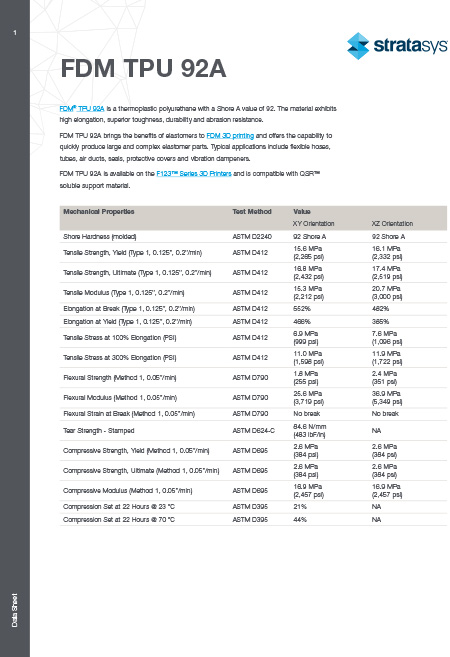
FDM® TPU 92A is a thermoplastic polyurethane with a Shore A value of 92. The material exhibits high elongation, superior toughness, durability, and abrasion resistance.
FDM TPU 92A brings the benefits of elastomers to FDM 3D printing and can quickly produce large and complex elastomer parts. Typical applications include flexible hoses, tubes, air ducts, seals, protective covers, and vibration dampeners.
FDM TPU 92A is available on the F123™ Series 3D Printers and is compatible with QSR™ soluble support material.
Produce Large and Complex Elastomer Parts
Create accurate elastomer parts quickly and efficiently with the ease and reliability of professional FDM 3D printing. The durable elasticity of FDM TPU 92A material makes it a good choice for a variety of applications, including flexible hoses, tubes, air ducts and vibration dampeners.
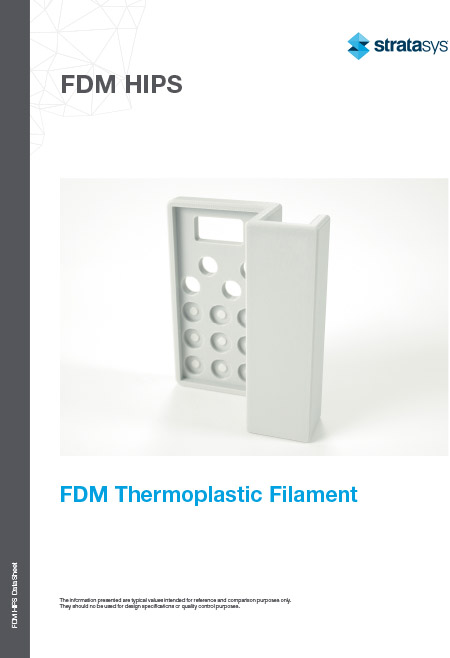
FDM® HIPS (high-impact polystyrene) is a low-cost, general-use 3D printing thermoplastic. It offers similarities to ABS but has high impact resistance making it suitable for printing lower-requirement jigs, fixtures, and prototypes at a reduced cost.
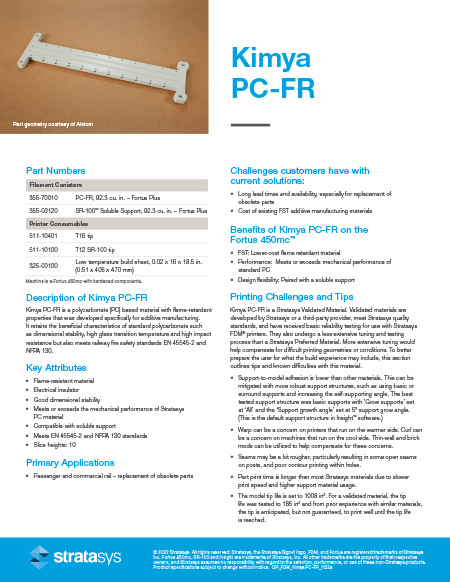
Kimya PC-FR is a polycarbonate FDM® 3D printing filament with flame-retardant properties developed specifically for additive manufacturing. It retains the beneficial characteristics of standard polycarbonate, such as dimensional stability, high glass transition temperature, and high impact resistance.
Kimya PC-FR is a polycarbonate (PC) based material with flame-retardant properties developed specifically for additive manufacturing. It retains the beneficial characteristics of standard polycarbonate such as dimensional stability, high glass transition temperature, and high impact resistance.
Key Attributes
- Flame-resistant material
- Electrical insulator
- Good dimensional stability
- Meets or exceeds the mechanical performance of Stratasys PC material
- Compatible with soluble support
- Meets EN 45545-2 and NFPA 130 standards
- Slice heights: 10
Nylon 12 is a semi-crystalline, FDM® thermoplastic. As with other semi-crystalline materials used in traditional manufacturing processes, special considerations should be implemented to ensure an optimal part is obtained. The information in this document illustrates the following considerations:
- Tip Selection
- Build Modes
- Porosity
- Sacrificial Tower Features
- Build Sheets
- Support Removal
- Annealing
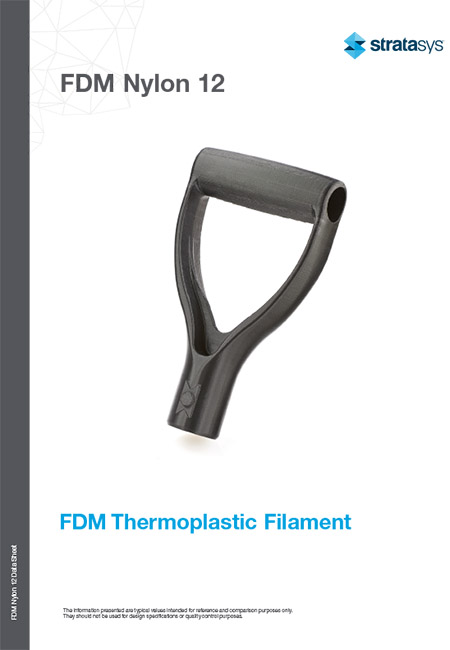
FDM® Nylon 12 filament is the 3D printing equivalent of standard industrial PA12 (polyamide 12) material. A strong engineering thermoplastic that exhibits toughness and high impact strength without being brittle. Its excellent fatigue properties make it a good option for repetitive-flex applications such as snap-fit clips, closures, and press-fit inserts.
Other applications include jigs, fixtures, low-volume production parts, and accurate prototyping of nylon 12 high-volume injection molded parts. FDM Nylon 12 is available in black.
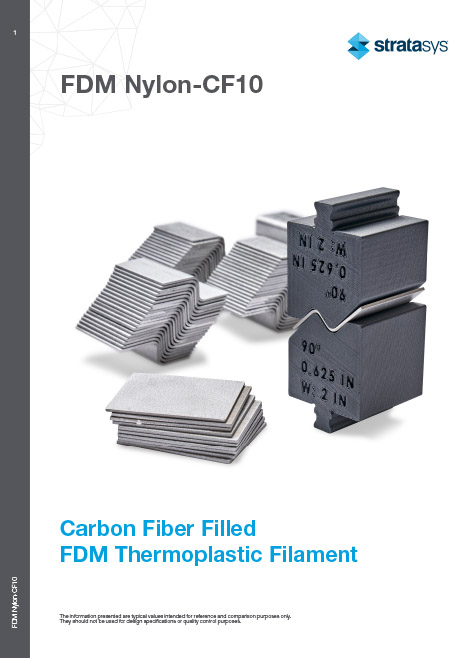
FDM® Nylon-CF10 is a composite material combining a blended nylon polymer with 10% chopped carbon fiber (by weight), enhancing the material’s strength and rigidity. The nylon base polymer also gives FDM Nylon-CF10 good chemical resistance.
Pages
-
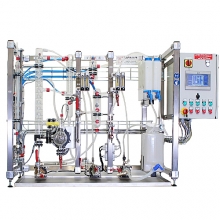 Item Number:DVI/100, DVI/300
 -
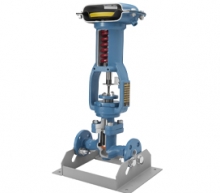 Item Number:255DAC Worldwide’s Control Valve Cutaway, .75"-1.5" (255) supports realistic classroom training in the operation, construction, and maintenance of a pneumatically-operated control valve used in industrial process systems. The complete internal configuration of the valve’s actuator and body is exposed and showcased through carefully-planned sectioning and color-coding.
 -
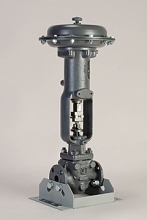 Item Number:255KDAC Worldwide's dissectible (255K) is a realistic, hands-on valve sample that supports realistic classroom training in the disassembly, inspection, and reassembly of a full-size industrial diaphragm-actuated control valve.
 -
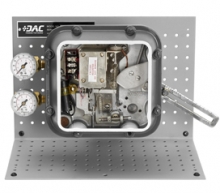 Item Number:273-810DAC Worldwide’s Control Valve Positioner Cutaway (273-810) is a detailed, sectioned, professionally-crafted control valve positioner cutaway that depicts a common control valve positioner.
 -
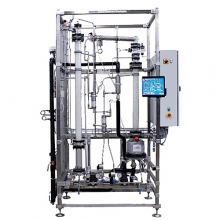 Item Number:ABR/3000The regeneration process is observed on the second column, which is continuously fed. An energy‐saving heat exchanger is placed between the two columns to optimize energy usage. With this unit, students are able to study various control loops, determine mass balance, and process efficiency. The unit also includes a LabView monitoring system.
 -
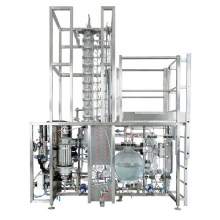 Item Number:OTP-DCPignat's Controlled Distillation Unit (OTP-DC) is an automated, controlled, continuous distillation pilot plant. This industrial-scale unit allows students to study unit operations, maintenance, and process supervision.
 -
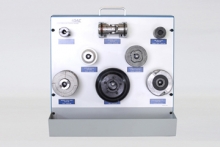 Item Number:839-PACDAC Worldwide’s Coupling Sample Board (839-PAC) is an introductory hands-on teaching aid designed to supplement courses in coupling selection and maintenance. It includes samples of eight industrial-quality couplings for users to learn to identify.
 -
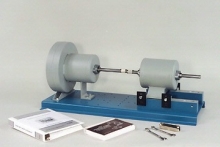 Item Number:208-PACDAC Worldwide’s Coupling/Shaft Alignment Plus (208-PAC) is a heavy-duty, precision learning aid that allows for convenient, realistic training in shaft alignment. When paired with a variety of hands-on exercises, the training system creates a complete performance-based course in the maintenance of shaft alignment.
 -
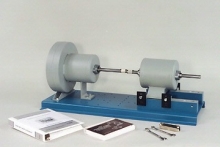 Item Number:208-000DAC Worldwide’s Coupling/Shaft Alignment Trainer (208-000) is a heavy-duty, precision learning aid that allows for convenient, realistic training in shaft alignment. When paired with a variety of hands-on exercises, the training system creates a complete performance-based course in the maintenance of shaft alignment.
 -
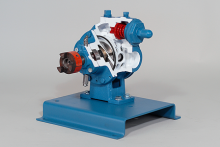
DAC Worldwide believes that successful training must match real-world conditions as much as possible. Our line of industrial cutaways are real-world industrial components that have been restored, cut away, and refinished using durable urethane coatings. Each of these industrial components has been professionally sectioned to expose each device’s primary components.