Keep the action contained, and easily host any indoor or outdoor drone competition with the Drone Cage System. The durable modular design is easy to assemble, transport, store, and re-use. With a variety of sizes, you can accommodate any classroom, gym, or convention center, and they easily combine for future expansion.
This video demonstrates the Matrix Torsion of Rods experiment in manual mode, where students investigate how different materials respond to applied torque. Following the included curriculum workbook, learners compare the torsional characteristics of brass, aluminum, and steel rods while collecting experimental data for analysis.
During the investigation, students install each rod, measure its dimensions, and gradually increase the angle of twist while recording the torque required at each increment. The experiment is repeated for each material, allowing students to compare torque-versus-angle relationships and better understand material properties, torsional stiffness, and structural behavior through practical experimentation.
What You'll Learn
- How to set up the Torsion of Rods experiment in manual mode
- Comparing the torsional behavior of brass, aluminum, and steel rods
- Measuring torque and angle of twist using integrated LCD displays
- Recording experimental measurements for multiple materials
- Investigating the relationship between torque and angular displacement
- Repeating experiments to compare material properties
- Plotting torque versus angle graphs for analysis
- Reinforcing engineering concepts through hands-on laboratory investigations
Why Study Torsion?
Torsional loading is an important consideration in the design of shafts, drive systems, fasteners, and structural components. This experiment gives students practical experience measuring the effects of torque on different materials, helping them connect engineering theory with real-world mechanical behavior and material performance.
This video demonstrates the Matrix Bending Stress experiment using data acquisition mode, allowing students to investigate how bending loads create stress within a beam. Using the included curriculum workbook, learners configure strain gauges, collect real-time measurement data, and perform engineering analysis to validate theoretical calculations.
Students begin by configuring a quarter-bridge Wheatstone bridge circuit using strain gauges and precision resistors before applying incremental loads to the beam. As each load is added, measurements are captured through the integrated data acquisition system and exported for analysis. The resulting data allows students to calculate bending stress, compare theoretical and experimental results, and gain practical experience with strain measurement techniques used throughout structural and mechanical engineering.
What You'll Learn
- How to configure a quarter-bridge Wheatstone bridge using strain gauges
- Setting up the Bending Stress experiment using data acquisition
- Applying incremental loads to investigate bending stress
- Collecting real-time strain measurements using integrated sensors
- Measuring beam dimensions for engineering calculations
- Exporting experimental data for post-laboratory analysis
- Comparing theoretical bending stress calculations with measured results
- Developing practical skills in experimental stress analysis
Why Study Bending Stress?
Measuring bending stress is fundamental to understanding how structural components perform under load. This experiment introduces students to strain gauge technology, Wheatstone bridge circuits, and modern data acquisition methods while reinforcing core concepts in mechanics of materials, structural analysis, and engineering design.
This video provides an overview of the Matrix Fundamental Mechanics Materials Kit, demonstrating how students perform practical experiments to investigate the mechanical properties of engineering materials. Designed for classroom and laboratory environments, the kit allows learners to build experiments using the portable work panel while following the included curriculum workbook.
The featured experiment investigates how an aluminum beam deflects under increasing loads. Students measure the beam's dimensions, apply incremental weights, and use a precision dial gauge to record deflection. The collected data is then plotted on a graph, helping students understand the relationship between load and beam deflection while reinforcing important concepts in material science and mechanics.
What You'll Learn
- How to perform beam deflection experiments using the Materials Kit
- Measuring beam dimensions for engineering calculations
- Recording beam deflection with a precision dial gauge
- Applying incremental loads and collecting experimental data
- Plotting deflection versus load graphs for analysis
- Understanding stress, strain, and elastic behavior
- Exploring Young's modulus and other material properties
- Developing practical laboratory and engineering analysis skills
Topics Covered by the Materials Kit
The Fundamental Mechanics Materials Kit supports a wide range of experiments covering beam deflection, stress and strain, torsion, elastic constants, Young's modulus, and other core principles of mechanics of materials. The included curriculum provides approximately 10 hours of guided laboratory activities that combine theory with practical investigation, making it ideal for engineering, technology, and STEM education programs.
The Matrix Fundamental Mechanics Dynamics Kit introduces students to the core principles of dynamics through a series of engaging, hands-on laboratory experiments. Designed for engineering, physics, and STEM education, the kit uses a portable work panel and a guided curriculum to help learners investigate the behavior of moving systems and connect theoretical concepts to practical applications.
In this video, students complete a flywheel experiment from the included curriculum to measure the effects of applied loads on rotational motion. By recording experimental data, calculating torque and angular acceleration, and analyzing graphical results, learners gain valuable insight into rotational dynamics while developing essential laboratory and engineering analysis skills.
Key Engineering Concepts
- How to perform flywheel experiments using the Dynamics Kit
- Investigating the relationship between torque and angular acceleration
- Measuring rotational motion using experimental techniques
- Recording, averaging, and analyzing laboratory data
- Plotting and interpreting engineering graphs
- Exploring pulleys, mechanisms, and energy conservation
- Investigating static and sliding friction
- Developing practical laboratory and engineering problem-solving skills
Topics Covered by the Dynamics Kit
The Fundamental Mechanics Dynamics Kit supports approximately 10 hours of guided laboratory activities covering flywheels, pulleys, static and sliding friction, mechanical mechanisms, and energy conservation. Each experiment encourages students to collect real experimental data, compare observations with engineering theory, and build a strong foundation in dynamics and mechanical engineering principles.
Pages
-
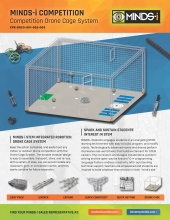 Item Number:CPK-DRCG-001-002-003
 -
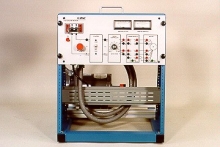 Item Number:416-000DAC Worldwide’s Compound, Cumulatively Wound, DC Motor Training System (416-000) features a common compound wound DC motor used frequently throughout industry. Each motor module includes a welded aluminum mounting baseplate, aluminum control box support structure, and a steel control enclosure.
 -
 Item Number:211-003DAC Worldwide's Compressor Inlet Unloader Valve Replica (211-003) is a plastic facsimile of an inlet unloader valve commonly found on positive displacement compressors.
 -
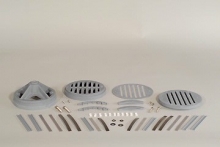 Item Number:211-004DAC's Compressor Outlet Channel Valve Replica (211-004) is a plastic facsimile of an outlet channel valve (or check valve), as found on positive displacement compressors.
 -
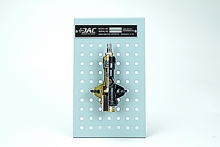 Item Number:373-195A full cutaway view of the valve body exposes the complete internal design characteristics, flow path, valve stem, compressor connection, backseat, front-seat, packing and gauge port, while retaining its operational characteristics.
 -
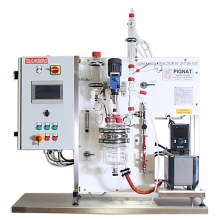 Item Number:REA/3000Pignat's Computerized Chemical Reactor (REA/3000) is a one-gallon, controlled, multi-purpose, jacketed glass reactor system specifically designed for education and research. This unit supports the study of controlled batch chemical reactions and allows students to operate and experience reaction processes and modify the variables upon which the reactions being studied are based.
 -
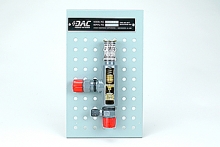 Item Number:373-519This Condenser Pressure Control Valve (KVR) Cutaway provides a full cutaway view of a control valve that exposes the complete internal components and operating principles.
 -
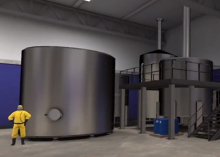 The Confined Space Entry simulation is ideal for future employees or supervisors who work in or around work environments that utilize confined spaces. This course will equip learners with the knowledge and skills necessary to safely enter and work in confined spaces.
 -
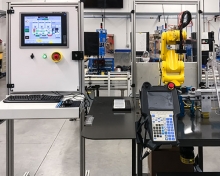 Item Number:CSMConnected Smart Manufacturing System (CSM™) integrates FANUC robotics, CNC machining, Rockwell PLC/HMI control, and APT integration training to teach Industry 4.0 manufacturing, automation, and troubleshooting skills.
 -
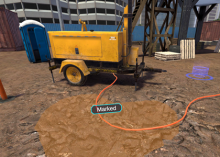 The Construction Electrical Hazard awareness simulation is ideal for future employees and supervisors who work in or around active construction sites. The primary goal of this course is to teach workers safe work procedures to follow while working around electrical hazards in a construction environment.