For agriculture skills training, Amatrol offers training programs that feature a combination of learning methods to engage students' learning styles. Amatrol's training solutions include eLearning curriculum and hands-on, industrial-quality training systems for both industry and education settings.
Advanced Structural Engineering Training System for High School
Amatrol’s Structural Engineering 3 Learning System (96-SE3) covers a variety of foundational industrial topics including: concrete mixing, placement, and testing; how to control column and beam deflection; preventing columns from buckling; and designing buildings to both support normal loads and to stand up to environmental elements. These skills can be used to move into fields like construction, engineering, and architecture. The 96-SE3 utilizes components from the Structural Engineering 1 Learning System (96-SE1) and builds on knowledge introduced in that system.
The Advanced Structural Engineering training system includes concrete and metal beam component sets and a building component set that allow learners to practice real-world skills while they study the safety steps, advantages of certain materials, and overall theoretical knowledge behind these foundational engineering concepts. Some of the major topic areas covered by the 96-SE3’s curriculum include beam and column design, the fundamentals of concrete, building design, and building construction. This interlacing of theoretical knowledge and hands-on skills builds learner competencies and gives them the knowledge to move on to more advanced structural engineering topics.
Because surveying is utilized in so many aspects of industry, the skills taught by the Surveying 1 Learning System (96-SV1) opens the doors to careers in various fields, such as manufacturing, transportation, and construction. Amatrol’s Surveying training system introduces the fundamentals of surveying, which includes focusing on determining the terrestrial or three-dimensional position of points and the distances and angles between them; this signature Amatrol approach to curriculum reinforces both theory and practice, which produces a well-rounded understanding of the topic.
After completing this training system, learners will be able to operate surveying and mapping tools, including global positioning systems (GPS) associated with surveying, but will also understand the relevant key concepts.
Amatrol’s Thermal Technology 1 Learning System provides learners with the knowledge and equipment needed to comprehend the principles of modern thermal systems, such as HVAC, geothermal, refrigeration, and steam systems.
AC, Refrigeration & Heat Pumps
Amatrol's Thermal Technology 2 Learning System (96-TT2) teaches three types of thermal systems: air conditioning, refrigeration, and heat pumps. Students will learn industry-relevant skills including how to operate, install, analyze, and adjust these systems.
The Advanced Thermal Technology training is a working system with industrial components that can perform heat pump, air conditioning, and refrigeration systems operation. These components are mounted on a mobile workstation and supported by instrumentation, microprocessor control, student learning materials for both theory and lab, and teacher’s guide.
Belt & Chain Drive Training System
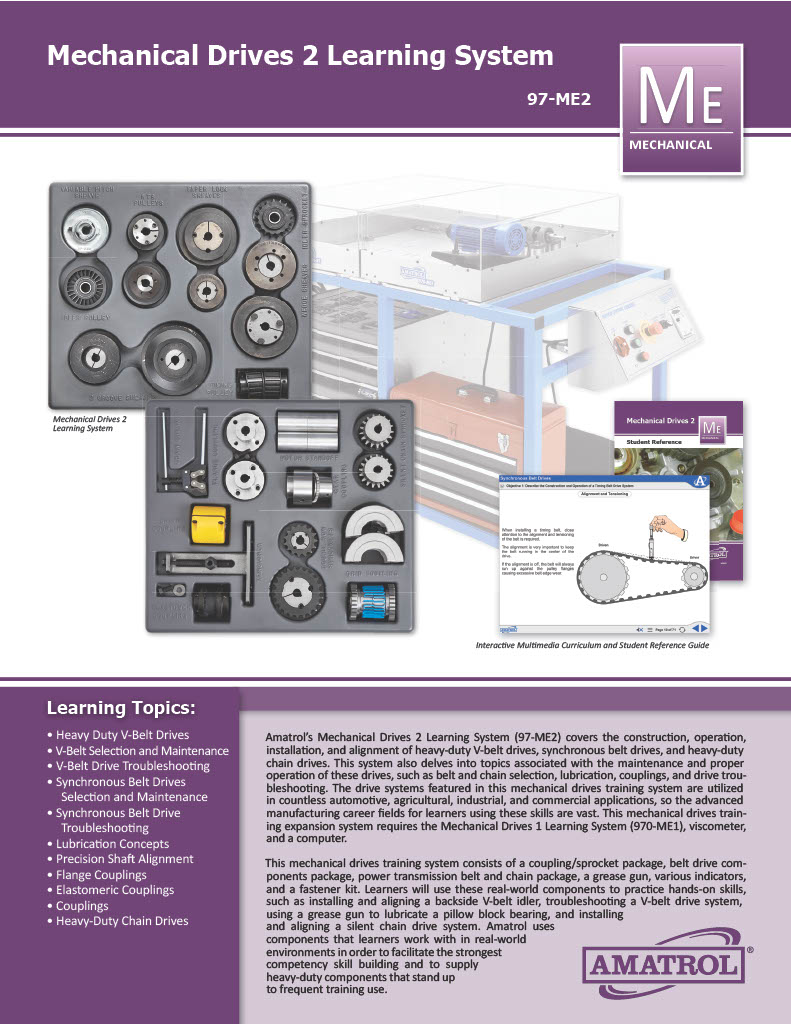
Amatrol’s Mechanical Drives 2 Learning System (97-ME2) covers the construction, operation, installation, and alignment of heavy-duty V-belt drives, synchronous belt drives, and heavy-duty chain drives. This system also delves into topics associated with the maintenance and proper operation of these drives, such as belt and chain selection, lubrication, couplings, and drive troubleshooting. The drive systems featured in this mechanical drives training system are utilized in countless automotive, agricultural, industrial, and commercial applications, so the advanced manufacturing career fields for learners using these skills are vast. This mechanical drives training expansion system requires the Mechanical Drives 1 Learning System (970-ME1), viscosimeter, and a computer.
The 97-ME2 consists of a coupling/sprocket package, belt drive components package, power transmission belt and chain package, a grease gun, various indicators, and a fastener kit. Learners will use these real-world components to practice hands-on skills, such as installing and aligning a backside V-belt idler, troubleshooting a V-belt drive system, using a grease gun to lubricate a pillow block bearing, and installing and aligning a silent chain drive system. Amatrol uses heavy-duty components that stand up to frequent training use and build the skills and competencies learners need to succeed in the workplace.
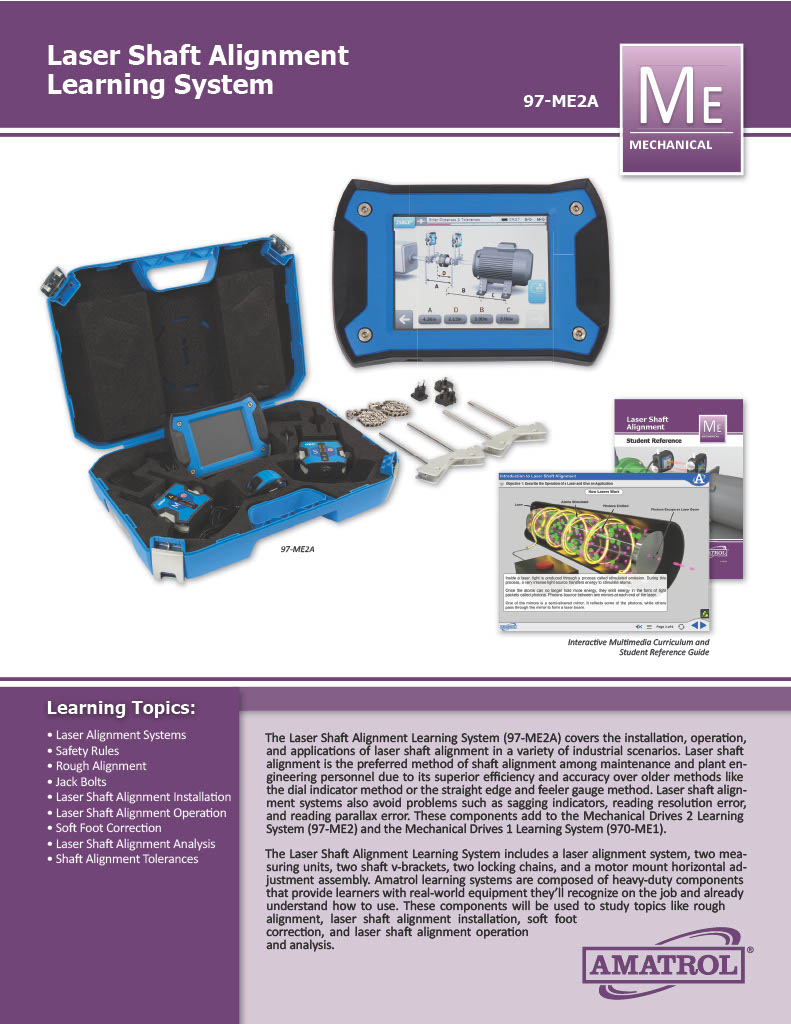
Amatrol's Laser Shaft Alignment Learning System (97-ME2A) covers the installation, operation, and applications of laser alignment in a variety of industrial scenarios. Laser shaft alignment is the preferred method of shaft alignment among maintenance and plant engineering personnel due to its superior efficiency and accuracy over older methods like the dial indicator method or the straight edge and feeler gauge method. Laser alignment systems also avoid problems such as sagging indicators, reading resolution error, and reading parallax error. These components add to the Mechanical Drives 2 Learning System (97-ME2) and the Mechanical Drives 1 Learning System (970-ME1).
Amatrol’s 97-ME2A includes a laser alignment system, two measuring units, two shaft v-brackets, two locking chains, and a motor mount horizontal adjustment assembly. Amatrol learning systems are composed of heavy-duty components that provide learners with real-world equipment they’ll recognize on the job and already understand how to use. These components will be used to study topics like rough alignment, laser shaft alignment installation, soft foot correction, and laser shaft alignment operation and analysis.
Bearings, Gaskets, & Seals Training
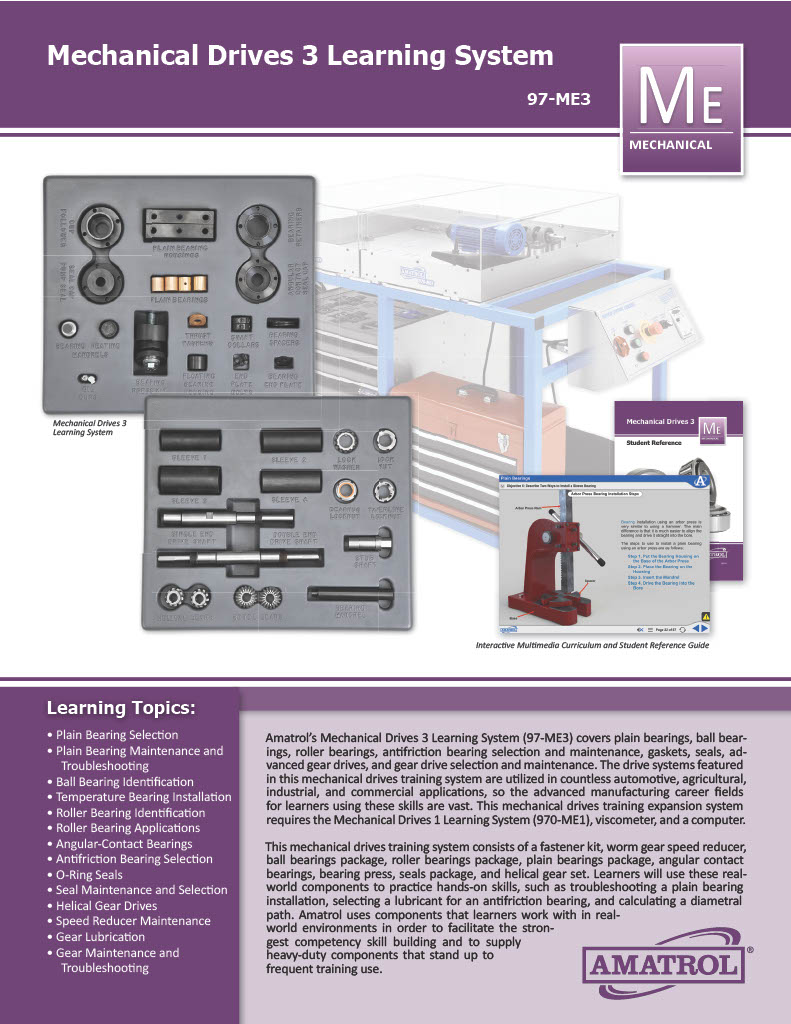
Amatrol’s Mechanical Drives 3 Learning System (97-ME3) covers plain bearings, ball bearings, roller bearings, anti-friction bearing selection and maintenance, gaskets, seals, advanced gear drives, and gear drive selection and maintenance. The drive systems featured in this mechanical drives training system are utilized in countless automotive, agricultural, industrial, and commercial applications, so the advanced manufacturing career fields for learners using these skills are vast. This mechanical drives training expansion system requires the Mechanical Drives 1 Learning System (970-ME1), viscometer, and a computer.
This mechanical drives training system consists of a fastener kit, worm gear speed reducer, ball bearings package, roller bearings package, plain bearings package, angular contact bearings, bearing press, seals package, and helical gear set. Learners will use these real-world components, like bearings and gaskets, to practice hands-on skills, such as troubleshooting a plain bearing installation, selecting a lubricant for an anti-friction bearing, and calculating a diametral path. Amatrol uses components that learners work with in real-world environments in order to facilitate the strongest competency skill building and to supply heavy-duty components that stand up to frequent training use.
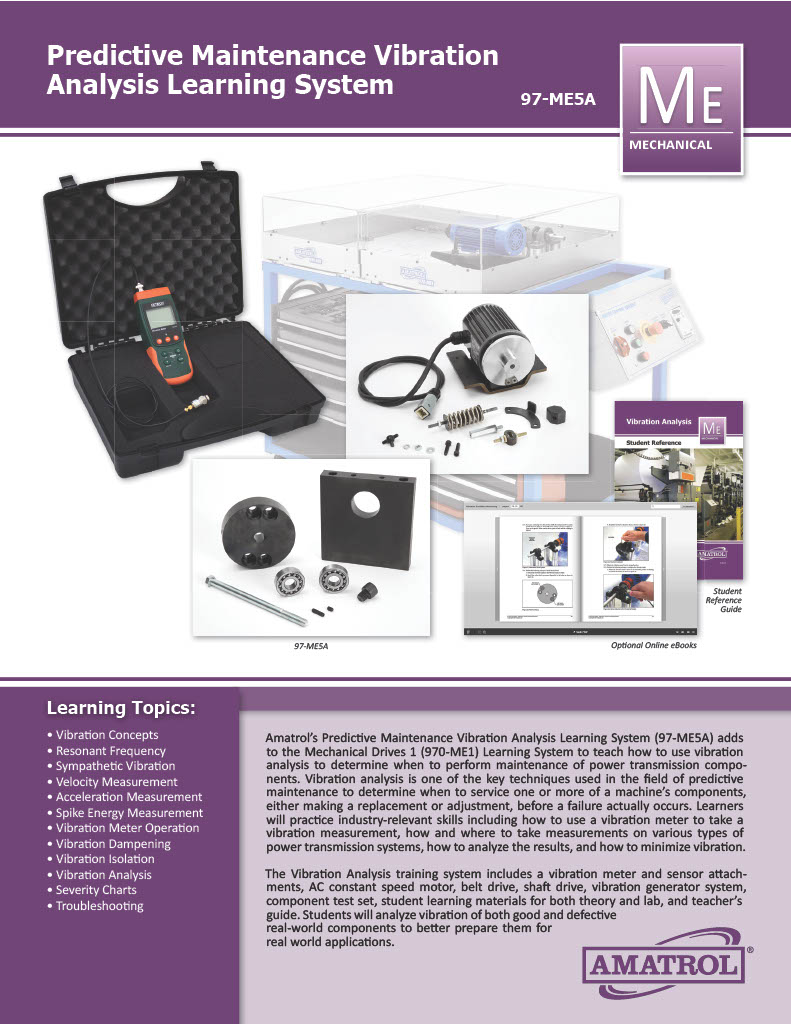
Amatrol’s Predictive Maintenance Vibration Analysis Learning System (97-ME5A) adds to the Mechanical Drives 1 training system (970-ME1) to teach how to use vibration analysis to determine when to perform power transmission component maintenance. Vibration analysis is one of the key techniques used in the field of predictive maintenance to determine when to service one or more of a machine’s components, either making a replacement or adjustment, before a failure actually occurs. Learners will practice industry-relevant skills including how to use a vibration meter to take a vibration measurement, how and where to take various power transmission system measurements, how to read power transmission vibration analysis, and how to minimize vibration.
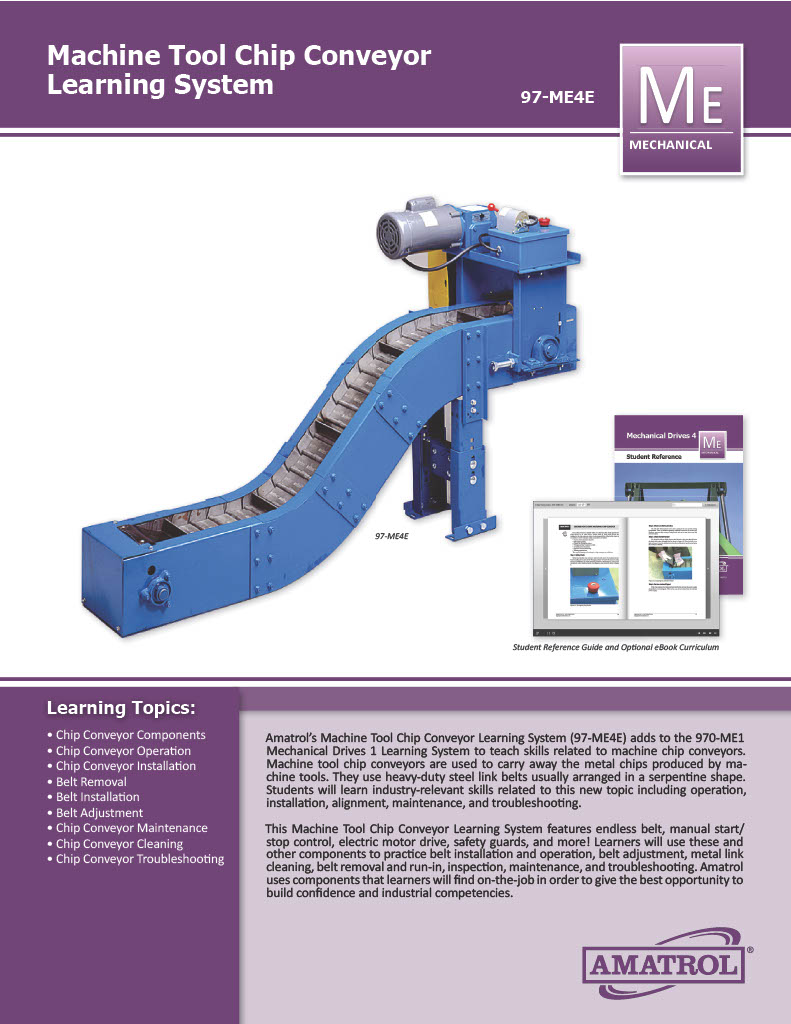
Amatrol’s Machine Tool Chip Conveyor Learning System (97-ME4E) adds to Mechanical Drives training (970-ME1) to teach chip conveyor installation, operation, adjustment, conveyor belt removal, conveyor maintenance, and conveyor troubleshooting. Machine tool chip conveyors carry metal chips produced by machine tools and use heavy-duty steel link belts usually arranged in a serpentine shape.
The 97-ME4E trainer features an endless belt, manual start/stop control, electric motor drive, safety guards, and more! Learners use these components to study the operation, installation, construction, cleaning, and troubleshooting a chip conveyor. Amatrol uses components found on-the-job in order to give learners the best opportunity to build confidence and industrial competencies.
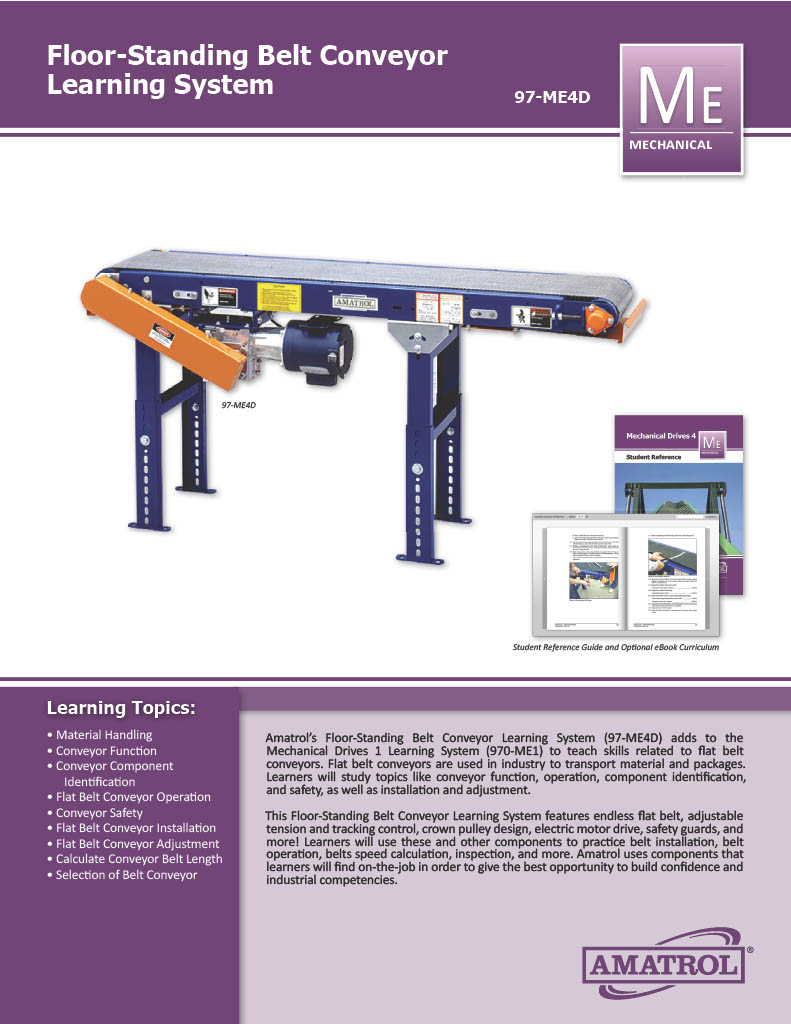
Amatrol’s Floor-Standing Belt Conveyor Learning System (97-ME4D) adds to the Mechanical Drives 1 training system (970-ME1) to teach skills related to flat belt conveyors, such as flat belt conveyor operation, adjustment, maintenance, and more. Flat belt conveyors are used in industry to transport material and packages from point-to-point at low cost. Learners study industry-relevant skills including installing, adjusting, maintenance, and inspection of flat belt conveyors.
Pages
-
-
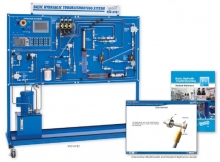 Item Number:950-HTB1Amatrol’s Basic Hydraulic Troubleshooting Learning System (950-HTB1) teaches how to troubleshoot hydraulic systems and components such as hydraulic motors, directional control valves, and cylinders. The knowledge gained from the 950-HTB1’s hardware and curriculum is extremely valuable for maintenance technicians within industries like manufacturing, automotive, agriculture, construction, and many more! This learning system will also serve as a solid foundation towards attaining certifications.
 -
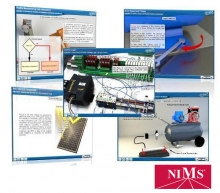 Amatrol’s e-Learning program meets the challenge for flexible technical training by offering superb technical content depth as well as breadth, strong interactivity for skill development, and excellent assessment and student tracking through an intuitive, easy-to-use web portal. With 24 x 7 access, Amatrol’s eLearning program creates easy access to educational opportunities for technical skill development previously restricted to the classroom...
 -
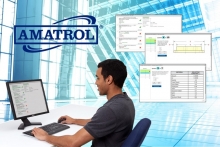 Amatrol's eAssessment streamlines technical skills assessment and training with assessment tests to individually determine a CTE student's skill level in specific areas to dramatically improve training effectiveness and efficiency while reducing training cost and time.
 -
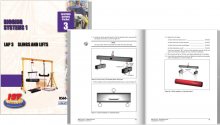 Online training is an essential tool in today’s workplace and educational institutions. Amatrol is increasing its already extensive online offerings with the introduction of eBooks. Amatrol’s eBooks are digital versions of its print-based LAPs (Learning Activity Packets) that allow organizations to set up courses completely online, including assessments!
 -
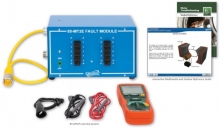 Item Number:85-MT2E Regular / 85-MT2ESL Sheathed Banana LeadsThe Motor Troubleshooting Learning System (85-MT2E) covers the testing and troubleshooting of AC and DC motors using a multimeter and a megger meter. The skills and knowledge covered by this learning system will prove invaluable for industrial maintenance technicians or anyone working in a field that uses AC and/or DC motors.
 -
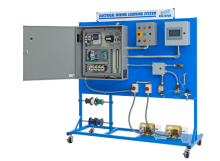 Item Number:850-MT6BAmatrol’s 850-MT6B Electrical Wiring Learning System allows students to learn electrical wiring skills hands-on.
 -
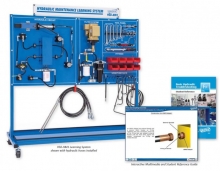 Item Number:950-HM1Train students and technicians in essential hydraulic maintenance with Amatrol’s 950-HM1 Learning System. Learners will gain hands-on experience in fluid servicing, fittings, seals, tubing, hoses, and component installation using industry-standard equipment.
 -
 Amatrol Industry 4.0 Fundamentals (I4F) is a high school-based program that prepares students for high-paying Industry 4.0 careers in local industries.
 -
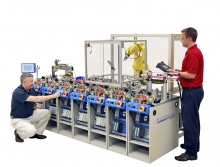 Amatrol's 870 Mechatronics Learning System teaches students a broad array of job-ready skills in integrating technologies. Students work together in a team environment to make the whole process work. Seven stations make up a complete flexible manufacturing system. Each station is a small mechatronics system in itself with multiple, integrated technologies that can be used stand-alone or in various combinations, creating unlimited project capability. The Learning System is compact, enabling it to fit into almost any teaching facility.