Instrumentation and Process Control Training aids include a Basic Process Trainer, Flow and Level Control Trainer, and an Instrumentation Process Trainer.
Support Materials for Complex, High-Quality Prints
Method Series Support materials are engineered for clean, efficient removal—whether using dissolvable supports for internal cavities or breakaway supports for faster workflows. These materials are precisely tuned to work with Method’s dual extrusion system, ensuring perfect adhesion during printing and clean separation during post-processing.
Whether printing intricate assemblies, overhangs, or internal structures, Method support materials give users the freedom to design without limitation—no scraping or sanding required.
- Dissolvable or breakaway options for versatile applications
- Easy removal with no surface damage
- Perfect for printing internal channels and complex overhangs
- Streamlines workflow and reduces post-processing time
Reinforced Composites for Stronger, Stiffer Prints
Method Series Composite materials are formulated with carbon or glass fiber reinforcement to provide enhanced stiffness, strength, and heat resistance. Ideal for functional tools, jigs, and end-use parts, these filaments offer the performance of metal replacement in a lightweight and efficient solution.
These composites are optimized for Method’s enclosed, heated build chamber and precision dual extrusion system, enabling the reliable printing of complex geometries without sacrificing mechanical integrity.
- Reinforced with carbon or glass fibers for improved strength
- Ideal for tooling, end-use components, and rugged applications
- High stiffness and heat-deflection temperatures
- Engineered for dimensional stability and surface quality
The MakerBot SKETCH Classroom is the ultimate turnkey solution for integrating 3D printing into education. With a reliable dual-printer setup, students have more access to hands-on learning while educators benefit from a streamlined workflow and classroom-ready tools. Designed specifically for academic settings, SKETCH Classroom empowers schools to deliver high-impact STEM experiences with ease and confidence.
Every SKETCH Classroom package includes access to the MakerBot Cloud for centralized printing and file management, along with the MakerBot Certification Program for both educators and students. These features support curriculum integration, enhance digital literacy, and foster creativity across all grade levels. Whether you're teaching engineering design or problem-solving skills, the SKETCH Classroom helps you build future-ready learners.
Design. Print. Repeat.
UltiMaker S Series is your ultimate tool for turning ideas into reality—again and again. Built for performance, flexibility, and ease of use, the S Series gives professionals and educators everything they need to explore a wide range of 3D printing applications with confidence and precision.
With support for up to 300 materials, including PLA, ABS, PETG, CPE, nylon, carbon fiber composites, and more, the S Series enables limitless creativity. Whether you're prototyping, iterating designs, or producing functional parts, the UltiMaker S3, S5, S7, and S8 models deliver repeatable, high-quality results—right from your desktop or lab bench.
Why Choose the UltiMaker S Series?
- Plug-and-play ease: NFC-enabled spools, pre-configured print profiles, and intuitive touchscreen controls
- Powerful versatility: Compatible with third-party and specialty filaments for industry-specific applications
- Exceptional reliability: Active bed leveling, dual extrusion, and optimized software with Ultimaker Cura
- Enterprise-ready: Seamlessly integrates into team workflows with Digital Factory printer management
Design. Print. Repeat. With the S Series, you’re not limited by your equipment—you’re empowered by it. Discover what’s possible when professional-grade engineering meets effortless 3D printing.
Specialized 3D Printers for Engineering Applications
Built for precision and performance, the UltiMaker Method Series is engineered to meet the rigorous demands of manufacturing, prototyping, and industrial design. From tooling to end-use parts, Method printers provide repeatable results and dimensional accuracy that professionals rely on—every single print.
With an actively heated build chamber, direct-drive extruder, and rigid metal frame, Method printers are purpose-built for printing a wide range of engineering-grade materials including ABS, Nylon, Carbon Fiber composites, and flame-retardant polymers. Supporting 1.75 mm filament and designed for speed, strength, and reliability, the Method Series bridges the gap between desktop accessibility and industrial performance.
Key Benefits
- Precision engineering: Controlled heated chamber ensures dimensional stability
- Material flexibility: Print carbon fiber, ABS, PC-ABS, Nylon, and more with confidence
- Industrial features: Dual extrusion, mesh bed leveling, and secure remote print management
- Rigid metal frame: Designed to minimize flex and maintain consistent quality
Whether you're producing jigs, fixtures, housings, or replacement parts, the UltiMaker Method Series is your dedicated solution for reliable, production-ready 3D printing in demanding engineering environments.
Meet the UltiMaker S7—the latest evolution of one of the world’s most trusted professional 3D printers. Building on the proven performance of the award-winning UltiMaker S5, the S7 is packed with cutting-edge upgrades that deliver even greater reliability, safety, and print quality.
From the integrated Air Manager that enhances air quality and print consistency, to the PEI-coated flexible build plate for easy part removal, and fully automatic bed leveling for perfect first layers every time, the S7 is designed to help professionals achieve print success—faster and more effortlessly than ever. Watch the video to see how the UltiMaker S7 sets a new standard for professional desktop 3D printing.
Meet the UltiMaker S6—the next evolution of professional 3D printing. Built on the trusted foundation of the S5, the S6 introduces advanced motion control, smarter automation, and up to 4× the productivity to transform your workflow. Designed for engineers, educators, and manufacturers alike, the S6 makes it easier than ever to scale ideas into tangible success.
Featuring the new UltiMaker Cheetah motion planner for lightning-fast print execution, enhanced bed leveling for even greater first-layer accuracy, and compatibility with a flexible build plate option, the S6 sets a new standard for what accessible, high-performance 3D printing can achieve.
Key Highlights
- Up to 4× productivity: Speed up your throughput without sacrificing quality
- UltiMaker Cheetah motion planner: Smarter motion control for faster, smoother prints
- Improved bed leveling: Enhanced accuracy for dependable first layers
- Flexible plate support: Optional flex plate for easier print removal
Whether you're scaling production or speeding up your prototyping process, the UltiMaker S6 is your new go-to for reliable, high-speed, professional 3D printing.
The MakerBot Sketch Sprint brings speed, simplicity, and success to 3D printing. With a compact design and intuitive features, this printer empowers educators, students, and professionals to bring ideas to life—faster and easier than ever before. Whether you're building prototypes or enhancing STEM curriculum, the Sketch Sprint fits seamlessly into your workflow.
Print at speeds up to 300 mm/s, manage projects with Digital Factory, and skill up with MakerBot’s built-in certification and training platform. From classroom creativity to project-based learning, the Sketch Sprint is your reliable tool for turning imagination into innovation.
Key Highlights
- Fast print speeds: Up to 300 mm/s for more output in less time
- Easy to use: Touchscreen interface, remote monitoring, and safe enclosed design
- Training built-in: Includes MakerBot certification, lesson plans, and curriculum
- Cloud ready: Queue and manage print jobs via Digital Factory and Cura Cloud
Designed for education. Built for performance. See how the Sketch Sprint makes 3D printing accessible for every classroom, maker space, or project lab.
Pensa, a leading design, strategy, and engineering consultancy, recently expanded its 3D printing capabilities with the addition of the UltiMaker Method XL. The Method XL joins Pensa’s existing Method and Method X printers, creating a seamless workflow for high-performance prototyping, rapid R&D, and low-volume production.
According to Marco Perry, co-founder of Pensa and Pensa Labs, the Method XL enables their team to create production-grade prototypes using ABS and RapidRinse™, eliminating the guesswork between prototype and final part. Its reliability and ease of use mean designers can iterate faster and run overnight batches with confidence—saving time, money, and manual labor.
Why Method XL Works for Pensa
- High-Fidelity ABS Prototyping: Parts printed on Method XL match production-level quality and tolerances
- Batch Printing Efficiency: Print full sets of parts overnight, ready by morning
- Easy Support Removal: RapidRinse™ enables fast, tap-water-soluble support cleanup
- Repeatable Accuracy: Reliable dimensional performance across all prints
- Always On: Prints continue working over weekends and off-hours
“With the Method XL, we can run full batches overnight, print with confidence, and match the fidelity of injection-molded parts.” — Marco Perry, Co-founder, Pensa
From concept to pre-production, the Method XL helps teams like Pensa prototype faster and smarter—without compromise.
Briggs Automotive Company (BAC), the renowned British supercar manufacturer behind the Mono and Mono R, has integrated UltiMaker S Series 3D printers into their production and prototyping workflow. With over 44 custom components 3D printed on-site, BAC has transformed its design process, cutting costs and increasing the speed of production using industrial-grade materials like carbon fiber–reinforced nylon.
By leveraging the full UltiMaker ecosystem—including Digital Factory, open-material compatibility, and integrated slicing—BAC’s engineering team can prototype and manufacture lightweight, structurally sound components such as air inlet runners, mirror arms, and light surrounds. With UltiMaker’s precision and flexibility, BAC gains critical design freedom while maintaining the strength and performance required of parts used at speeds exceeding 270 km/h.
Highlights from BAC’s Use of UltiMaker S Series
- 44+ custom 3D printed parts: Including structural engine components, mirror mounts, and light surrounds
- Cost reductions: Mirror arms costing £400 when machined now printed for just £90
- Production-ready prototypes: Parts printed in Covestro’s carbon fiber–reinforced nylon (Novamid CF10)
- Digital Factory integration: Remote monitoring, slicing, maintenance tracking, and version control
- Local support: Helped BAC adopt and scale 3D printing across R&D and production workflows
"The UltiMaker ecosystem allows us to bring every element of our production together. From material selection to printer management, it gives us total control and confidence in the quality of our parts." – Ian Briggs, Design Director and Co-founder, BAC
From rapid prototyping to functional end-use parts, the UltiMaker S Series gives BAC the power to move fast, customize freely, and produce precisely—all while maintaining the high-performance standards expected of a world-class supercar brand.
Pages
-
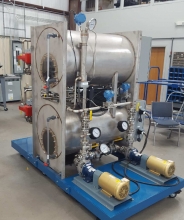 Item Number:120-BPT | 120-CFCD | 120-CPT | 120-IPT
 -
 Provide operators with safe and effective training to reduce the likelihood of tipping and collisions with the Intellia Articulated Dump Truck Simulator Training Pack from CM Labs.
 -
 Train backhoe operators with CM Labs’ advanced simulator—featuring the only solution that replicates backlash and instability for realistic, skill-focused learning in safe virtual environments.
 -
 Train safer, smarter, and more efficiently with CM Labs’ Intellia Boom Truck Simulator Training Pack. Prepare operators for real-world certification using industry-approved exercises and engineering-grade simulation.
 -
 Master excavation and grading techniques with CM Labs’ Bulldozer Simulator—featuring realistic 6-way blade control, innovative soil simulation, and immersive scenarios that build precision and efficiency.
 -
 Provide Compact Track Loader Operators with essential training that helps reduce the likelihood of accidents due to tipping with the Intellia Compact Track Loader Simulator Training Pack from CM Labs.
 -
 Progressive learning for safe lifting operations, crawler crane productivity, and real crane operator skills development with the Intellia Crawler Crane Simulator Training Pack from CM Labs.
 -
 Prepare students and operators for CCO crane certification with the Intellia Digger Derrick Simulator Training Pack, offering realistic machine simulation and performance metrics that develop safe, efficient skills.
 -
 CM Labs’ Intellia Drone View transforms how instructors monitor and assess operator training. Instead of being limited to in-person views, instructors can observe trainees in real-time using three immersive perspectives—drone flyover, avatar walk-through, or subterranean view. This innovative tool enhances feedback, catches negative habits early, and accelerates skills development in virtual training environments.
 -
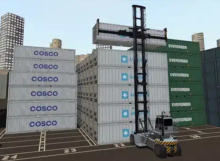 CM Labs’ Intellia Empty Container Handler Simulator Training Pack allows you to prepare trainees for the realities of operating equipment in a busy terminal, without placing equipment or personnel at risk or decreasing productivity.