
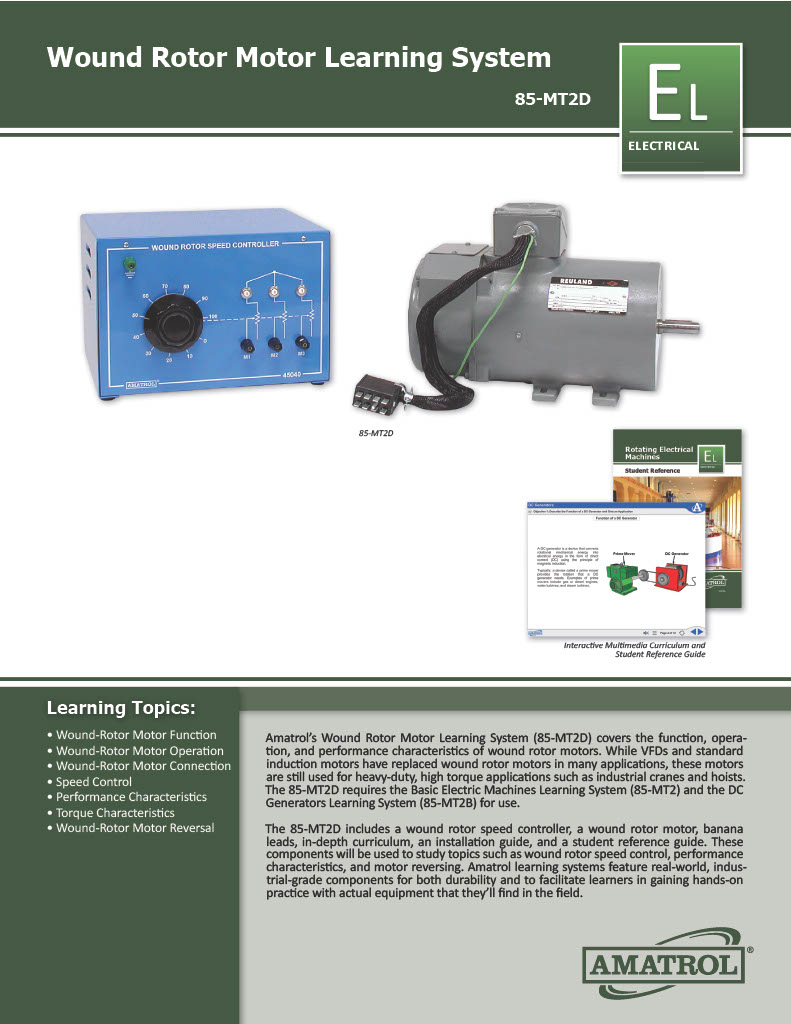
Amatrol’s e-Learning program meets the challenge for flexible technical training by offering superb technical content depth as well as breadth, strong interactivity for skill development, and excellent assessment and student tracking through an intuitive, easy-to-use web portal. With 24 x 7 access, Amatrol’s eLearning program creates easy access to educational opportunities for technical skill development previously restricted to the classroom...
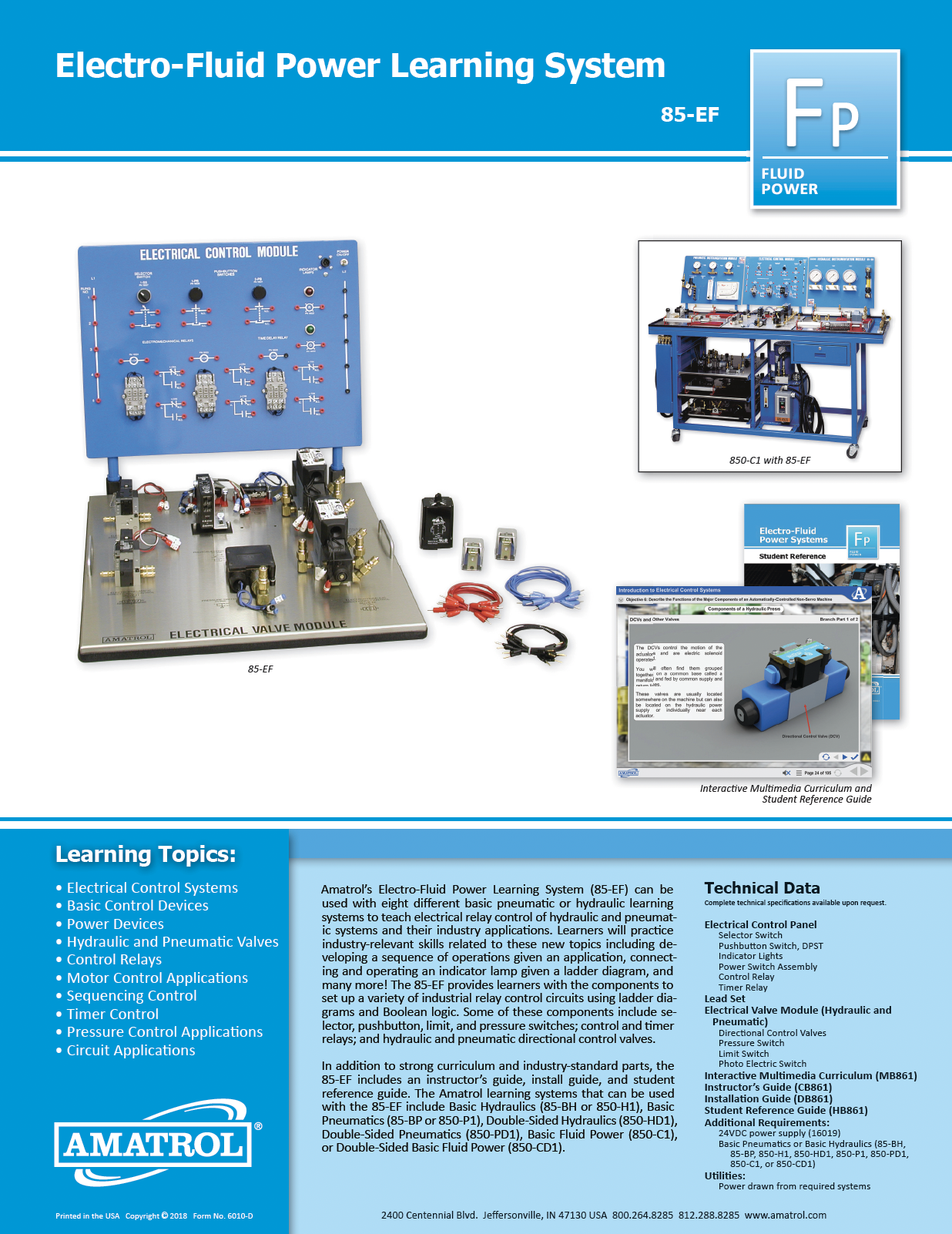
Amatrol’s Electro-Fluid Power Learning System (85-EF) can be used with eight different basic pneumatic or hydraulic learning systems to teach electrical relay control of hydraulic and pneumatic systems and their industry applications. Learners will practice industry-relevant skills related to these new topics including developing a sequence of operations given an application, connecting and operating an indicator lamp given a ladder diagram, and many more!
The Electro-Fluid Power training system provides learners with the components to set up a variety of industrial relay control circuits using ladder diagrams and Boolean logic. Some of these components include selector, pushbutton, limit, and pressure switches; control and timer relays; and hydraulic and pneumatic directional control valves.
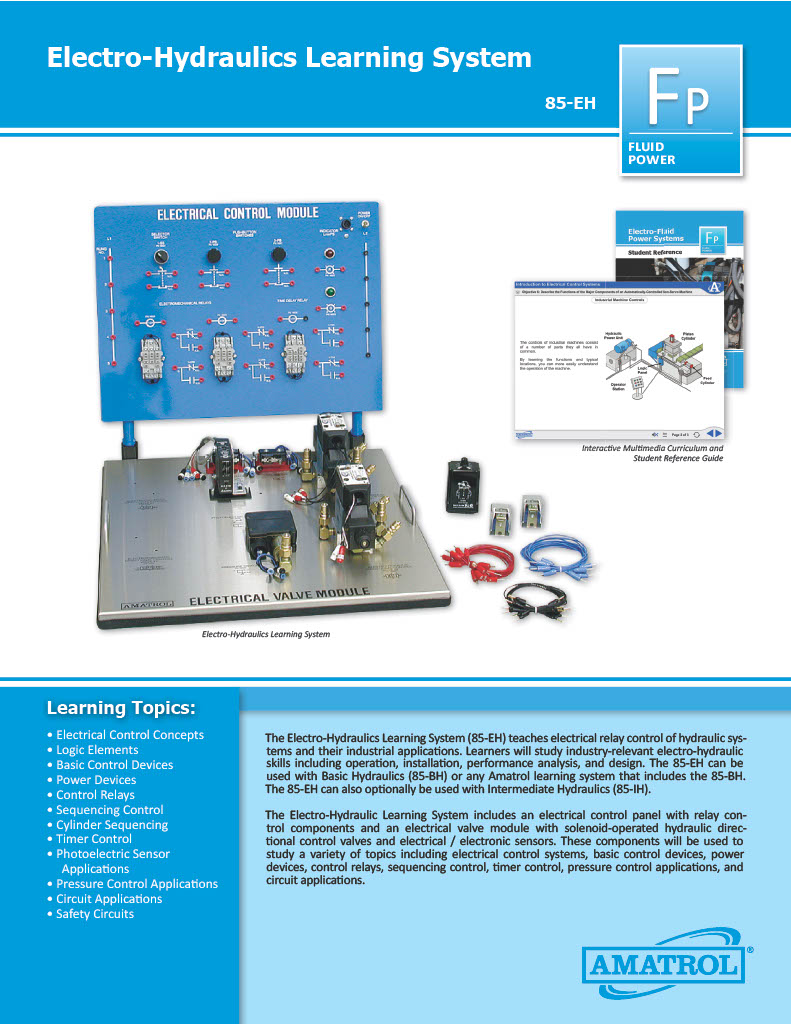
The Electro-Hydraulics Training System (85-EH) teaches electrical relay control of industrial hydraulic applications. Learners will study industry-relevant electro-hydraulic skills including operation, installation, performance analysis, and design. The electro-hydraulic training system can be used with Basic Hydraulics (85-BH) or any Amatrol learning system that includes the Basic Hydraulics training system. Electro-Hydraulics can also optionally be used with Intermediate Hydraulics (85-IH).
The Electro-Hydraulics training system includes an electrical control panel with relay control components and an electrical valve module with solenoid-operated hydraulic directional control valves and electrical / electronic sensors. These components will be used to study a variety of topics including electrical control systems, basic control devices, power devices, control relays, sequencing control, timer control, pressure control applications, and circuit applications.
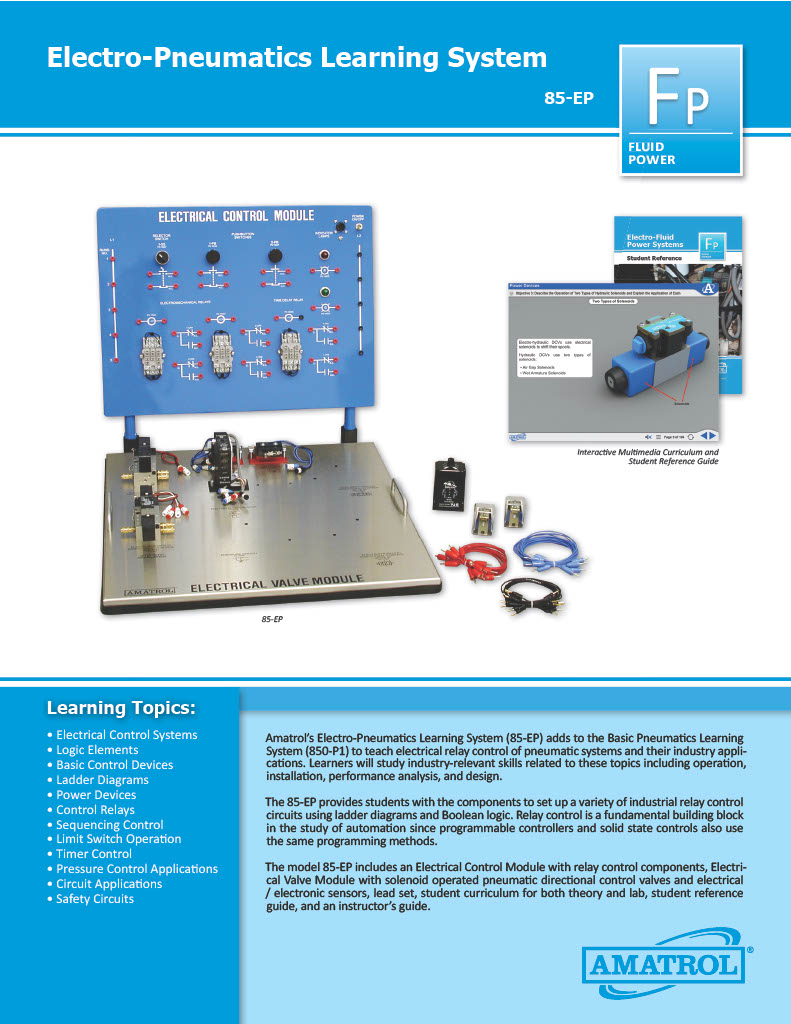
Amatrol’s Electro-Pneumatics Learning System (85-EP) adds to the Basic Pneumatics Learning System (850-P1) to teach electrical relay control of pneumatic systems and their industry applications. Learners will study industry-relevant skills related to these topics including operation, installation, performance analysis, and design.
The 85-EP provides students with the components to set up a variety of industrial relay control circuits using ladder diagrams and Boolean logic. Relay control is a fundamental building block in the study of automation since programmable controllers and solid state controls also use the same programming methods.
The model 85-EP includes an Electrical Control Module with relay control components, Electrical Valve Module with solenoid operated pneumatic directional control valves and electrical/electronic sensors, lead set, student curriculum for both theory and lab, student reference guide, and an instructor’s guide.
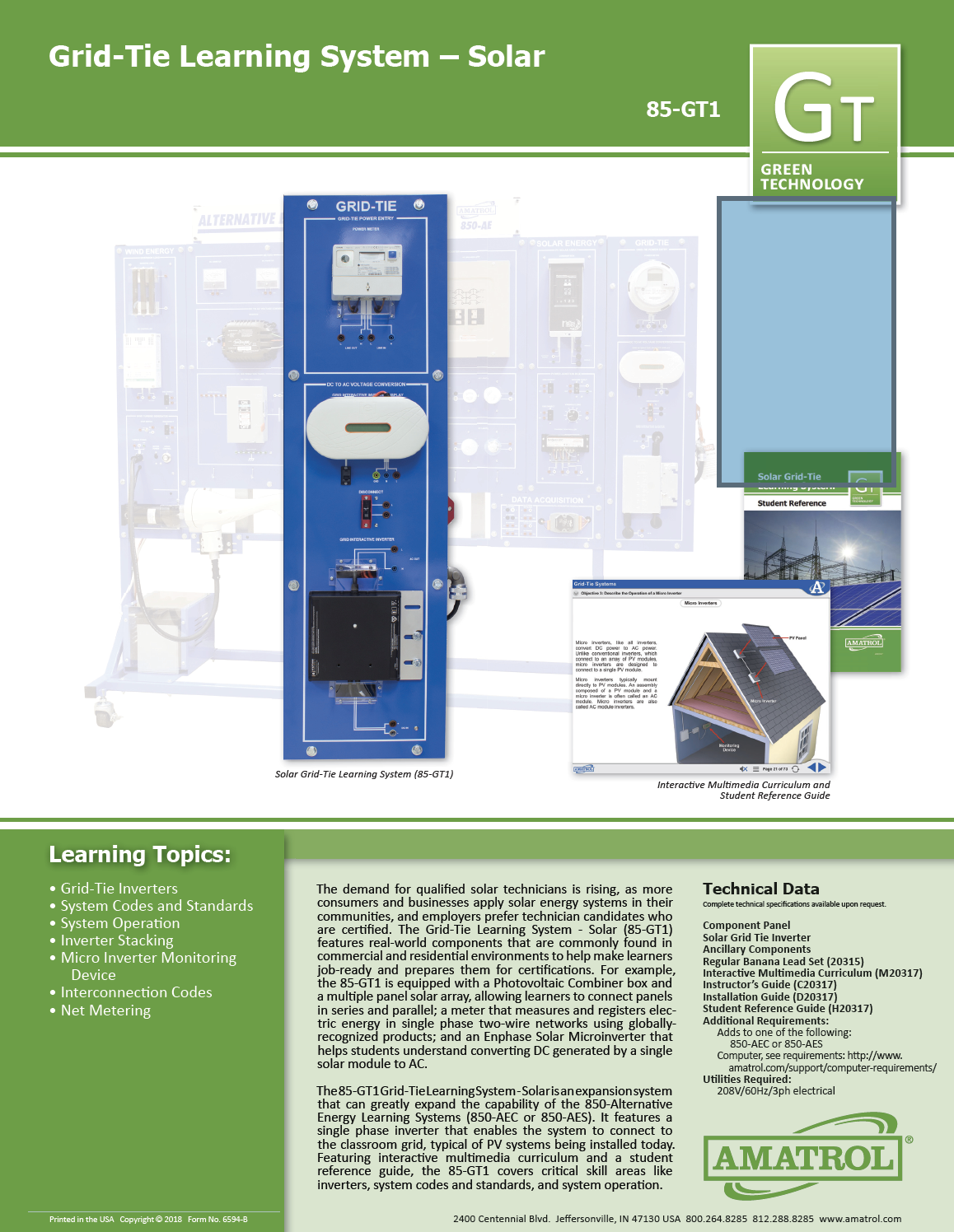
The Grid-Tie Learning System – Solar (85-GT1) features real-world components that are commonly found in commercial and residential environments to help make learners job-ready and prepares them for certifications. For example, the 85-GT1 is equipped with a Photovoltaic Combiner box and a multiple panel solar array, allowing learners to connect panels in series and parallel; an Iskra ME162 single-phase meter that measures and registers electric energy in single phase two-wire networks using globally-recognized products; and an Enphase Solar Microinverter that helps students understand converting DC generated by a single solar module to AC.
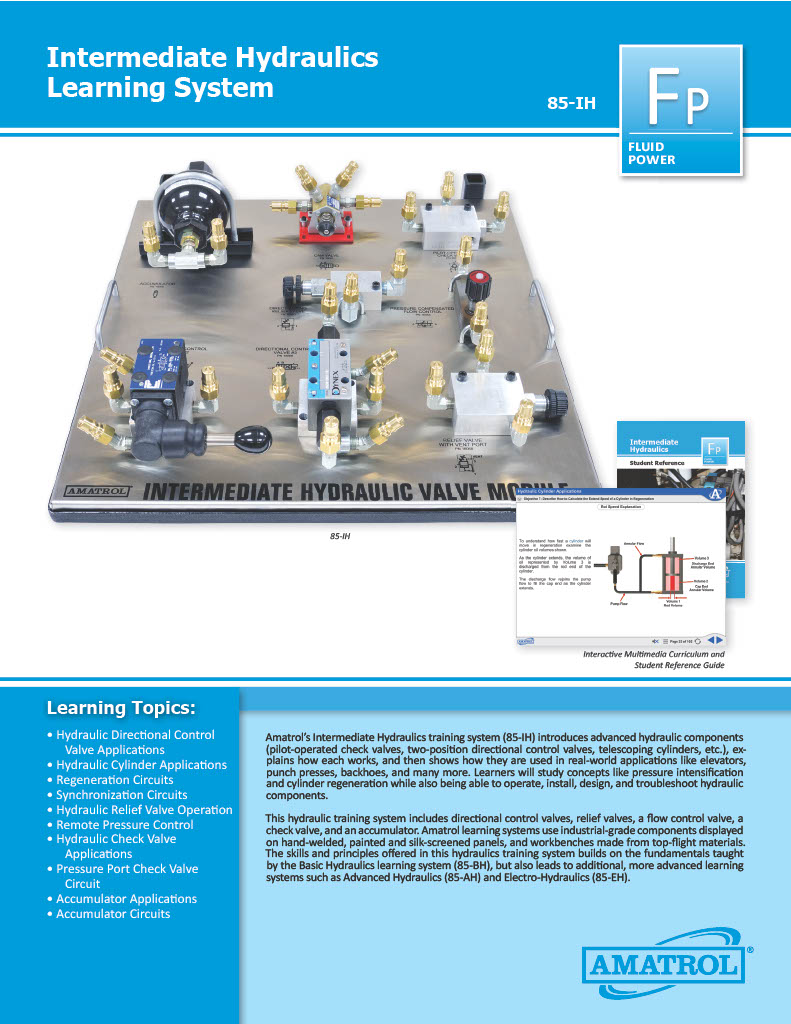
Amatrol’s Intermediate Hydraulics training system (85-IH) introduces advanced hydraulic components (pilot-operated check valves, two-position directional control valves, telescoping cylinders, etc.), explains how each works, and then shows how they relate to real-world applications in elevators, punch presses, backhoes, and many more. This approach to curriculum is an Amatrol signature: reinforce both theory and practice to produce a well-rounded understanding of the topic. Learners will be able to understand concepts like pressure intensification and cylinder regeneration while also being able to operate, install, design, and troubleshoot hydraulic components.
Intermediate Hydraulics includes directional control valves, relief valves, a flow control valve, a check valve, and an accumulator. Amatrol training systems use industrial-grade components displayed on hand-welded, painted and silk-screened panels, and workbenches made from top-flight materials. This precise attention to quality and detail ensures a tough, visually appealing, user-friendly design that will last for years and help learners gain experience with components they’ll actually see on the job.
The skills and principles offered in Intermediate Hydraulics build on the fundamentals taught by the Basic Hydraulics (85-BH), but also lead to additional, more advanced learning systems such as Advanced Hydraulics (85-AH) and Electro-Hydraulics (85-EH). The advanced hydraulics training system teaches learners about hydraulic performance analysis and maintenance, while the electro-hydraulics training system (which is used in several exercises with the intermediate hydraulics training system) introduces electrical relay control of hydraulic systems.
Amatrol’s Intermediate Pneumatics Training System (85-IP) builds on basic pneumatic skills by introducing more advanced concepts such as air logic, ways to decelerate a pneumatic cylinder, and how to prevent condensation in a pneumatic circuit. Learners will have the opportunity to study these concepts while working with a hands-on training module, which enables practicing skills such as connecting and operating a two-way valve and changing an air filter element; this approach of simultaneously teaching theory and practice reinforces each element and results in a thorough understanding of the topic.
The Intermediate Pneumatics training system includes directional control valves, check valve, pneumatic cylinder, Venturi block, assorted filter elements, and much more. Amatrol’s commitment to using top-flight, industry-standard materials ensures that learners work with components they’ll actually see on the job. This attention to quality and detail culminates in a durable, attractive, user-friendly industrial training system that will last for years.
After completing the Intermediate Pneumatics curriculum, learners can continue to build on these skills by moving on to Amatrol’s Advances Pneumatics (85-AP) and the Pneumatics Troubleshooting (950-PT1) training systems. Advanced Pneumatics covers topics such as motor loads, pneumatic cylinder loads, and quick exhaust valves, while Pneumatic Troubleshooting is the first product to offer a realistic troubleshooting experience for learners because the faults are inserted throughout the system.
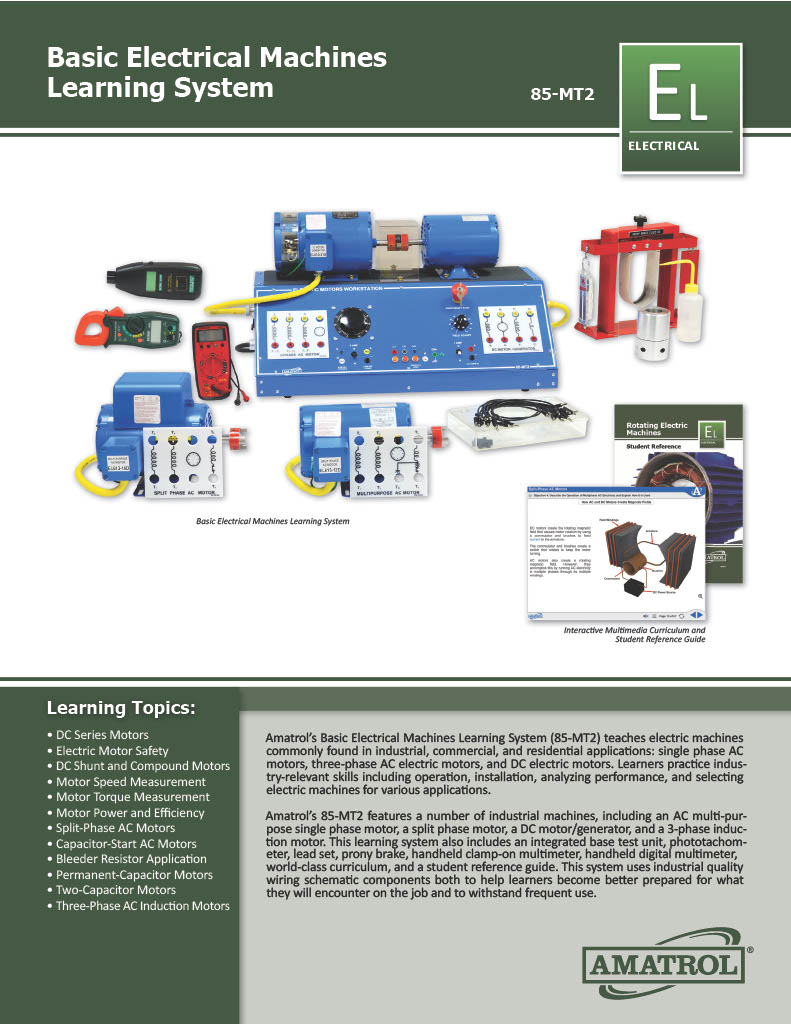
Amatrol’s Basic Electrical Machines Learning System (85-MT2) teaches electric machines commonly found in industrial, commercial, and residential applications: single phase AC motors, three-phase AC electric motors, and DC electric motors. Learners practice industry-relevant skills including operation, installation, analyzing performance, industrial motor wiring, and selecting electric machines for various applications.
The 85-MT2 features a number of industrial machines, including an AC multi-purpose single phase motor, a split phase motor, a DC motor/generator, and a 3-phase induction motor. This learning system also includes an integrated base test unit, lead set, prony brake, handheld clamp-on multimeter, handheld digital multimeter, world-class curriculum, and a student reference guide. This system uses industrial quality wiring schematic components both to help learners become better prepared for what they will encounter on the job and to withstand frequent use.
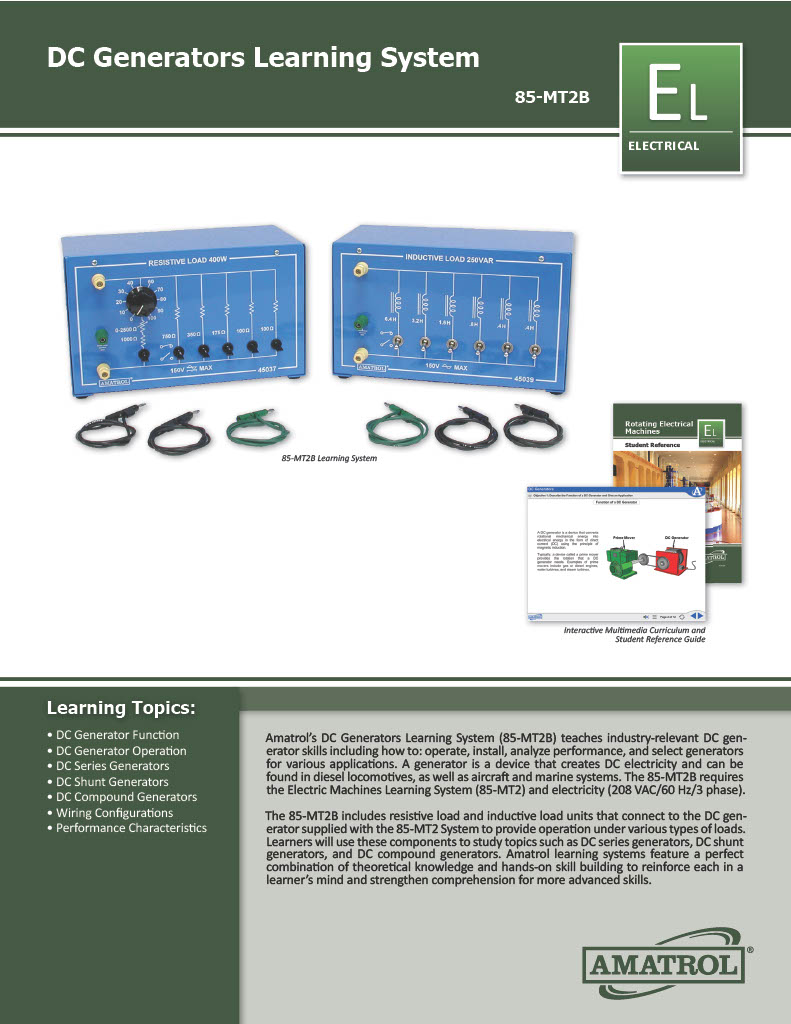
Amatrol’s DC Generators Learning System (85-MT2B) teaches industry-relevant DC generator skills, including how to operate, install, analyze performance, and select generators for various applications. A generator is a device that creates DC electricity and can be found in diesel locomotives, as well as aircraft and marine systems. The DC generators training system requires the Basic Electrical Machines Learning System (85-MT2), as well as 208 VAC/60 Hz/3 phase power.
This industrial motor training system includes resistive load and inductive load units that connect to the DC generator supplied with the 85-MT2 to provide operation under various types of loads. Learners will use these components to study topics such as DC series generators, DC shunt generators, and DC compound generators. Amatrol learning systems feature a perfect combination of theoretical knowledge and hands-on skill building to reinforce each in a learner’s mind and strengthen comprehension for more advanced skills.
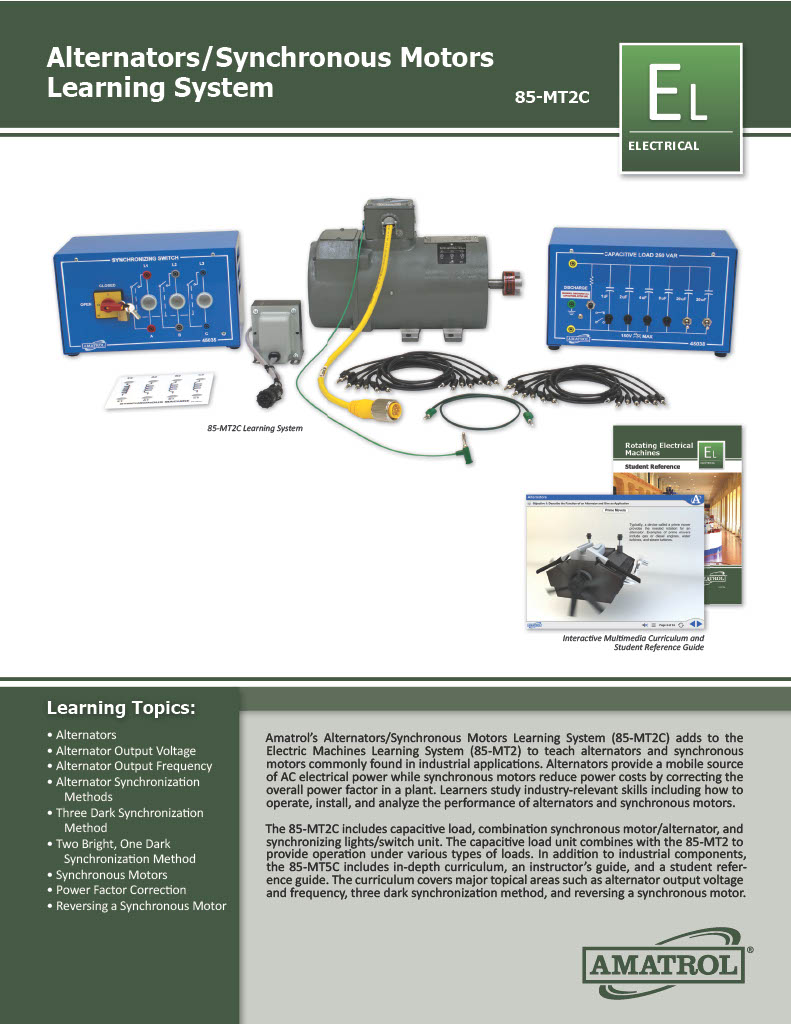
Amatrol’s Alternator/Synchronous Motor Learning System (85-MT2C) adds to the Basic Electrical Machines Learning System (85-MT2) to teach skills related to alternators and synchronous motors commonly found in industrial applications. Alternators provide a mobile source of AC electrical power while synchronous motors reduce power costs by correcting the overall power factor in a plant. Learners will study industry-relevant skills in industrial motor training, including how to operate, install, and analyze the performance of alternators and synchronous motors.
The alternator and synchronous motor training system includes capacitive load, combination synchronous motor/alternator, and synchronizing lights/switch units. The capacitive load unit combines with the 85-MT2 to provide operation under various types of loads. In addition to industrial components, this training system includes in-depth curriculum, an instructor’s guide, and a student reference guide. The highly-interactive, multimedia curriculum covers major topical areas such as alternator output voltage and frequency, three dark synchronization method, and reversing a synchronous motor.
Amatrol’s Wound Rotor Motor Learning System (85-MT2D) covers the function, operation, and performance characteristics of wound rotor motors. While variable frequency drives (VFDs) and standard induction motors have replaced wound rotor motors in many applications, these motors are still used for heavy-duty, high torque applications such as industrial cranes and hoists. Amatrol’s wound rotor motor training system requires the Basic Electrical Machines Learning System (85-MT2) for use.
Wound rotor motor training includes a wound rotor speed controller, a wound rotor motor, banana leads, in-depth multimedia curriculum, an installation guide, and a student reference guide. These components will be used to study topics such as wound rotor speed control, performance characteristics, and motor reversing. Amatrol systems feature real-world, industrial-grade components for both durability and to facilitate learners in gaining hands-on practice with actual equipment that they’ll find in the field.
Pages
-
-
 Amatrol's eAssessment streamlines technical skills assessment and training with assessment tests to individually determine a CTE student's skill level in specific areas to dramatically improve training effectiveness and efficiency while reducing training cost and time.
 -
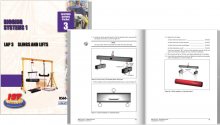 Online training is an essential tool in today’s workplace and educational institutions. Amatrol is increasing its already extensive online offerings with the introduction of eBooks. Amatrol’s eBooks are digital versions of its print-based LAPs (Learning Activity Packets) that allow organizations to set up courses completely online, including assessments!
 -
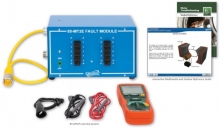 Item Number:85-MT2E Regular / 85-MT2ESL Sheathed Banana LeadsThe Motor Troubleshooting Learning System (85-MT2E) covers the testing and troubleshooting of AC and DC motors using a multimeter and a megger meter. The skills and knowledge covered by this learning system will prove invaluable for industrial maintenance technicians or anyone working in a field that uses AC and/or DC motors.
 -
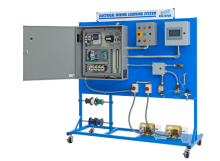 Item Number:850-MT6BAmatrol’s 850-MT6B Electrical Wiring Learning System allows students to learn electrical wiring skills hands-on.
 -
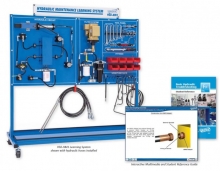 Item Number:950-HM1Train students and technicians in essential hydraulic maintenance with Amatrol’s 950-HM1 Learning System. Learners will gain hands-on experience in fluid servicing, fittings, seals, tubing, hoses, and component installation using industry-standard equipment.
 -
 Amatrol Industry 4.0 Fundamentals (I4F) is a high school-based program that prepares students for high-paying Industry 4.0 careers in local industries.
 -
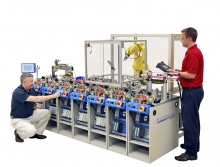 Amatrol's 870 Mechatronics Learning System teaches students a broad array of job-ready skills in integrating technologies. Students work together in a team environment to make the whole process work. Seven stations make up a complete flexible manufacturing system. Each station is a small mechatronics system in itself with multiple, integrated technologies that can be used stand-alone or in various combinations, creating unlimited project capability. The Learning System is compact, enabling it to fit into almost any teaching facility.
 -
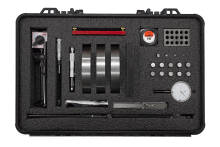 Item Number:990-MES1Learners will acquire skills such as how to measure length, accurate measurement of inside and outside dimensions, measuring both in U.S. Customary and S.I. Metric units, and collecting measurement data. The 990-MES1 contains precisely-machined and numbered parts that challenge the learner to make accurate measurements. Understanding how to perform accurate measurements is relevant to technical careers such as quality control inspector, machinist, manufacturing engineer, operations manager, and production technician. The 990-MES1’s compact size and durable case also provide for safe storage when available training space must be used to teach other topics.
 -
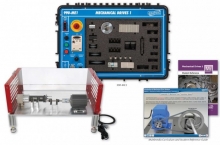 Item Number:990-ME1Amatrol’s Portable Mechanical Drives 1 Learning System (990-ME1) covers the fundamentals of mechanical transmission systems and applications, such as how to: operate, install, analyze performance, and design basic mechanical transmission systems using chains, vbelts, spur gears, bearings, and couplings. These fundamentals can be applied to a variety of applications within the automotive, agricultural, and power industries.