Explore how Matrix TSL aviation training solutions align with key knowledge and skill areas within the FAA Aviation Mechanic General, Airframe, and Powerplant Airman Certification Standards. This downloadable guide maps hands-on training equipment to topics including electrical and electronic fundamentals, aircraft materials, fluid systems, aviation physics, flight controls, instrumentation, communication and navigation, aircraft electrical systems, rotorcraft fundamentals, and engine electrical systems.
Use the guide to identify training solutions that can help reinforce both theoretical understanding and practical technical skills in aviation maintenance and aerospace education programs. Download the FAA Curriculum Mapping Guide to explore the Matrix TSL systems associated with individual FAA knowledge and skills objectives and begin planning a more hands-on aviation training program.
See how hands-on training can help students connect engineering theory with practical, real-world applications. This video provides an overview of the training equipment and demonstrates how learners can explore key concepts through practical experimentation.
By giving students the opportunity to work directly with real equipment, educators can reinforce classroom instruction while developing problem-solving, analytical, and technical skills. Watch the video to see the system in action and discover how it can support your engineering or technical education program.
- Explore hands-on engineering concepts
- Connect classroom theory with practical experimentation
- Develop technical and problem-solving skills
- Support engineering and technical education programs
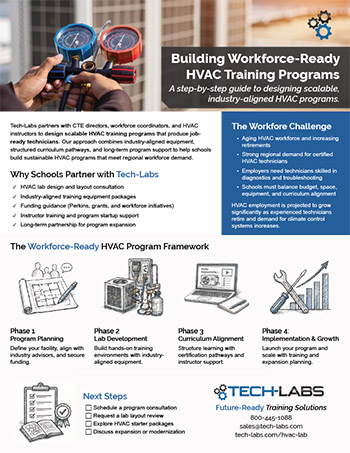
Tech-Labs’ guide, Building Workforce-Ready HVAC Training Programs, outlines a four-phase framework for creating scalable, industry-aligned HVAC programs. It covers program planning, hands-on lab development, curriculum and certification alignment, instructor support, implementation, and future growth.
The guide also examines workforce challenges such as technician shortages, retirements, and rising demand for diagnostic and troubleshooting skills. Readers will learn how schools can balance facility space, equipment, funding, and curriculum needs to prepare job-ready HVAC technicians.