With a payload of up to 15kg, the 3FG15 is ideal for gripping a wide range of cylindrical objects in machine-tending applications such as CNC lathe machines and offers seamless integration with the robots of your choice.
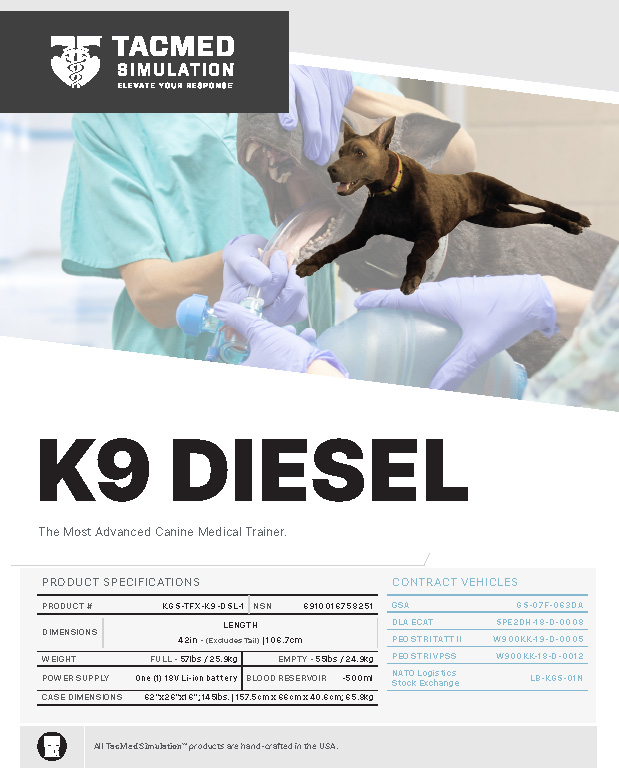
The TacMed Simulation™ Advanced Canine Medical Trainer (K9 Diesel) is a full-body simulator for Operational Canine First Responders, Military Working Dog (MWD) handlers, Veterinarians, and Veterinary Technicians. Designed in partnership with the Department of Defense (DOD), K9 Diesel is a state-of-the-art skills trainer with active breathing, audio queues, and over 28 different features and medical intervention sites. All training sites are designed to replicate actual medical procedures' look, feel, and function. Interchangeable limbs and injuries provide greater flexibility to vary wound patterns. K9 Diesel is the most advanced K9 simulator available and allows learners to perform a wide range of critical life-saving tasks with an incredibly realistic experience.
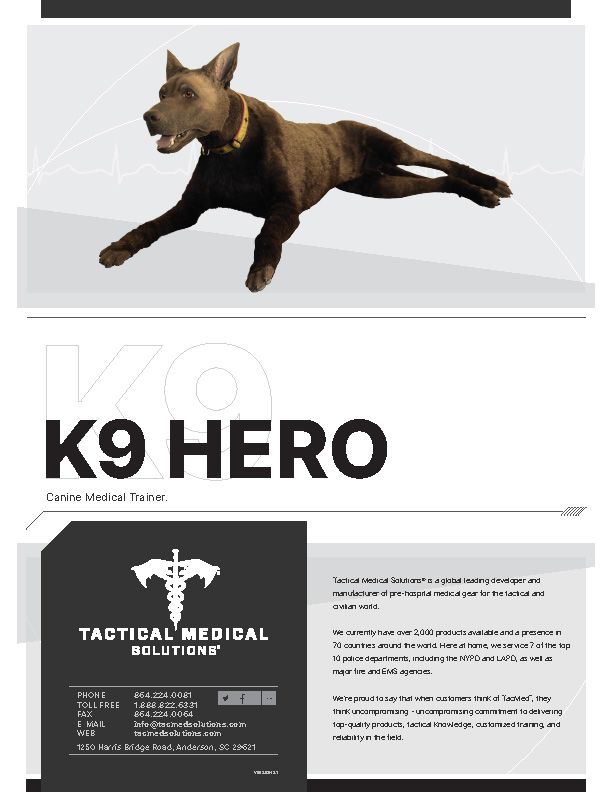
The TraumaFX® Canine Medical Trainer (K9 HERO) is a full-body medical trainer for Operational Canine First Responders, Military Working Dog (WMD) handlers, Veterinarians, and veterinary technicians. All training sites are realistic to replicate actual medical procedures' look, feel, and function. The head of the simulator has been hand-sculpted to mimic a Belgian Malinois, and the exterior is covered in durable, non-staining synthetic fur. K9 HERO allows learners to perform critical life-saving tasks such as maintaining an airway, needle decompression/thoracocentesis, hemostasis, IV insertion, Intraosseous (I/O) infusion, Cardiopulmonary Resuscitation (CPR), tracheostomy, and bandaging.
Immerse yourself in the world of hybrid and electric vehicles with our training system "MobileTrain - Diagnosis and installation of charging stations"! Are you ready to shape the future of vehicle charging and become an expert in the installation and maintenance of charging stations? Then this training system is just right for you!
With the rise of electric vehicles, the demand for competent specialists who are familiar with the installation and maintenance of charging stations is also increasing. Our training system offers you the opportunity to delve deep into the subject matter and learn all about the structure, function and safety aspects of charging stations. From identifying different types of charging stations and connection cables to assessing energy and performance requirements - we cover all the important topics.
You will not only learn about the technical and legal requirements for installation, but also how to connect charging stations in a technically correct way and test communication signals. You will also gain an insight into the protective equipment for charging stations and learn how to carry out maintenance and safety tests in accordance with national regulations. And the best thing? You can start/stop charging with an RFID card or NFC-enabled smartwatch/phone and troubleshoot potential problems on your own.
Our training system is mobile, compact and practical, making it easy to transport and set up. It includes a real practical wallbox with a high-speed charging capability of 22KW (240V 50 Amp) and enables practical commissioning and customer instruction. Thanks to various interfaces such as Ethernet, RS485, Wi-Fi and Bluetooth, networking is possible and you can perform actual vehicle charging with a maximum power of 22KW.
This training system has been specially developed for training electricians and includes not only the wallbox as an individual device, but also the installation of the supply line and its safety devices. It is very practice-orientated and prepares you to professionally inspect, test and maintain the electrical infrastructure for charging stations.
Are you ready to become part of the EV revolution and take your skills to the next level? Then sign up now for our "MobileTrain - Diagnosis and Installation of Charging Stations" training system and become a sought-after expert in the world of electric vehicles!
This video demonstrates a vertical down weld on the MOD-WELD system with a FANUC CRX Cobot.
This video goes over how to start up the CRX MOD-WELD System.
This video demonstrates a simple weld on the MOD-WELD system with a FANUC CRX Cobot.
This video demonstrates how to tack weld on the MOD-WELD system with a FANUC CRX Cobot.
This video demonstrates multi-directional welding on the MOD-WELD system with a FANUC CRX Cobot.
This video demonstrates weaving on the MOD-WELD system with a FANUC CRX Cobot.
This video demonstrates circular welding on the MOD-WELD system with a FANUC CRX Cobot.
Pages
-
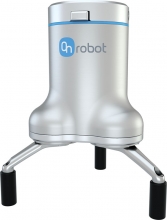 Item Number:3FG15
 -
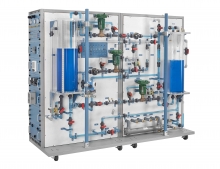 Item Number:603-000Hands-on exercises include industry-relevant process control skills, such as: setting and adjusting pressure switches; installation and calibration of an electronic flow measurement channel; and determining a temperature, pressure, level, and flow process’ operation characteristics.
 -
 Item Number:970-DRV1FTrain students and technicians on AC electronic drives using the Allen-Bradley PowerFlex 755. The Amatrol 970-DRV1F delivers hands-on VFD wiring, programming, communications, and troubleshooting with FaultPro and interactive eLearning.
 -
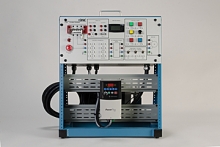 Item Number:429EDAC Worldwide’s AC Variable Frequency Drive Training System Plus (429E) examines AC variable speed drive principles. Learners will explore variable frequency AC solid-state control of 3-phase electric motors in various automation applications.
 -
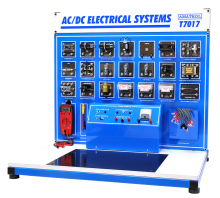 Item Number:T7017AThe model T7017A includes a bench top-mount workstation, AC power supply, DC power supply, electrical components set, lead set, hand-held multimeter, circuit tester, built-in instrumentation console, electrical circuit simulation software, student learning materials for both theory and lab, and teacher’s assessment guide. This system uses industrial quality components to help students become better prepared for what they will encounter on the job.
 -
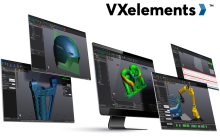 VXelements is a powerful integrated 3D scanning software platform that works in complete synergy with the entire fleet of Creaform’s 3D measurement solutions. It combines both acquisition and application modules into the same simple, easy-to-use interface, providing a complete solution rather than a simple measurement device alone.
 -
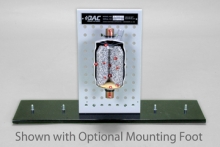 Item Number:373-601DAC Worldwide’s ACR Liquid Line Filter/Drier Cutaway is a carefully-crafted, sectioned example of a commonly-encountered liquid line filter/drier.
 -
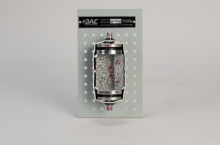 Item Number:373-602This economical, sectioned example showcases the device’s operating principle, internal components, and related installation concerns. Multiple cutaways unveil all internal components, which enhances classroom training in HVAC system design, maintenance, troubleshooting, and preventive/predictive maintenance.
 -
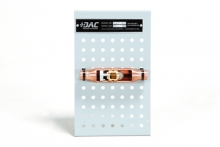 Item Number:373-510This sectioned example showcases the device’s operating principle, internal components, and related installation concerns. Color coding, flow arrows, and numbered call-outs combine to make the device more informative to the inquiring student and more useful to the instructor.
 -
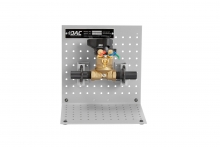 Item Number:373-551This ACR Manual Balancing Valve Cutaway provides a full cutaway view of a balancing valve that exposes the complete internal components and operating principles. The device can be used independently using an optional tabletop mounting foot, or combined with similar devices on optional display and storage frame assemblies.