Today’s automotive technicians must understand increasingly complex electrical and electronic vehicle systems. From lighting and charging circuits to sensors, actuators, and body control systems, modern vehicles rely on integrated technology that requires both theoretical knowledge and hands-on diagnostic skills.

LJ Create Automotive Panel Trainers provide a safe, structured, and highly visual learning platform for teaching automotive electrical and electronic systems. Designed specifically for education and workforce training environments, these panel trainers allow students to explore real-world circuits, perform measurements, diagnose faults, and build confidence before working on live vehicles.

  • Real automotive components mounted on durable training panels
  • Clearly labeled circuits for structured learning
  • Safe, low-risk training environment
  • Supports hands-on diagnostics and troubleshooting
  • Aligned with automotive career pathways

LJ Create panel trainers allow learners to build practical skills in automotive wiring, circuit testing, and system diagnostics. Students use multimeters, test equipment, and structured lab activities to measure voltage, current, resistance, and signal patterns.

By working on clearly organized training panels before transitioning to full vehicles, learners gain foundational understanding while reducing the risk of component damage and improving diagnostic confidence.

  • Basic automotive electrical principles
  • Wiring diagrams and circuit interpretation
  • Lighting and accessory circuits
  • Charging and starting systems
  • Sensors and actuators
  • Body electrical systems
  • Fault finding and diagnostic procedures
  • Safe use of automotive test equipment

LJ Create Automotive Panel Trainers are ideal for high school CTE automotive programs, technical colleges, community colleges, and apprenticeship pathways. Their modular design allows institutions to select panels that align with specific curriculum goals—from foundational electrical systems to advanced electronic diagnostics.

These systems integrate easily into automotive labs and complement live vehicle training, helping programs build structured, progressive skill development models.

  • Automotive Technology CTE programs
  • Community and technical college automotive labs
  • Apprenticeship and pre-apprenticeship programs
  • Workforce development initiatives
  • Instructor-led or blended learning environments
Strengthen your automotive training program with hands-on panel trainers that build diagnostic confidence and real-world system understanding. Contact us today to explore available panels, curriculum alignment, and funding opportunities for your program.

Prepare Technicians for the Future of Electric and Autonomous Vehicle Service

Lucas-Nuelle’s ASE-aligned training systems combine real vehicle components, guided eLearning, and safe diagnostic simulation—empowering learners to confidently service high-voltage and driver-assistance technologies.

Amatrol’s Mitsubishi automation training solutions provide industry-aligned instruction using authentic industrial components from Mitsubishi Electric. Students gain practical experience working with PLCs, HMIs, variable frequency drives, and integrated automation systems that mirror the technologies used in modern manufacturing facilities.

Designed to support mechatronics, industrial maintenance, and automation pathways, these systems bridge the gap between classroom theory and real-world application. Learners build programming, troubleshooting, and system-integration skills that prepare them for careers in advanced manufacturing and smart factory environments.

Amatrol EV Manufacturing Training Systems provide hands-on instruction aligned with today’s electrified automotive production environments. Learners explore key EV manufacturing processes, including electric motors, power electronics, battery fundamentals, automation, and industrial controls used in advanced vehicle and mobility production. Designed for both education and workforce development programs, these systems prepare students and technicians for careers in electric-vehicle, battery, and advanced-mobility manufacturing—helping institutions stay aligned with the rapidly evolving electrification industry.

VR Modules for CTE & Workforce Electrical Training Programs

Electrical programs are balancing safety, lab capacity, equipment costs, and the need for students to build real confidence before working on live systems.

Through our partnership with Hard Hat VR, schools can integrate immersive, skills-based VR modules that reinforce classroom instruction and prepare students for hands-on lab work and apprenticeships.

These modules are designed specifically for skilled trades and industrial electrical training.

Available Electrical Modules

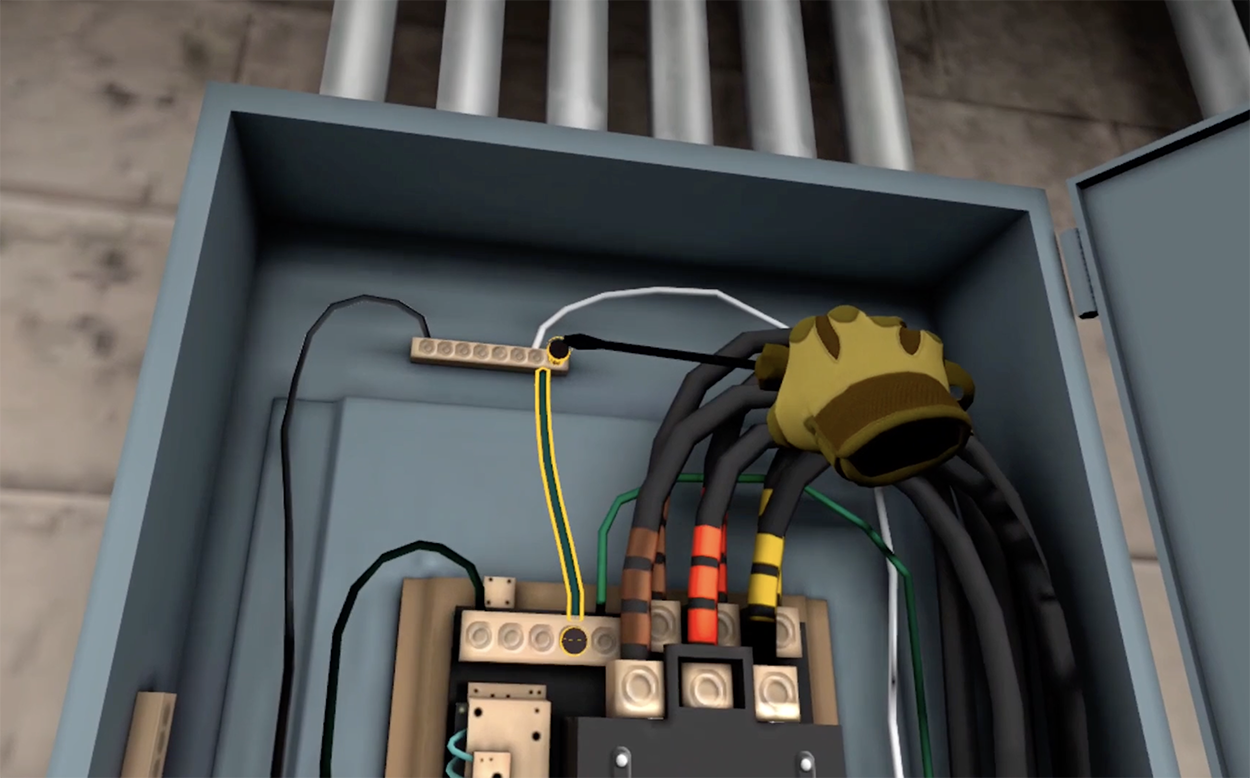
This module allows students to practice proper energy isolation procedures in a realistic electrical room setting.

Students practice:

  • Identifying energy sources
  • Following correct lockout/tagout steps
  • Verifying zero-energy state
  • Recognizing common safety mistakes

This is an effective way to reinforce OSHA-aligned safety habits before students enter the live lab.

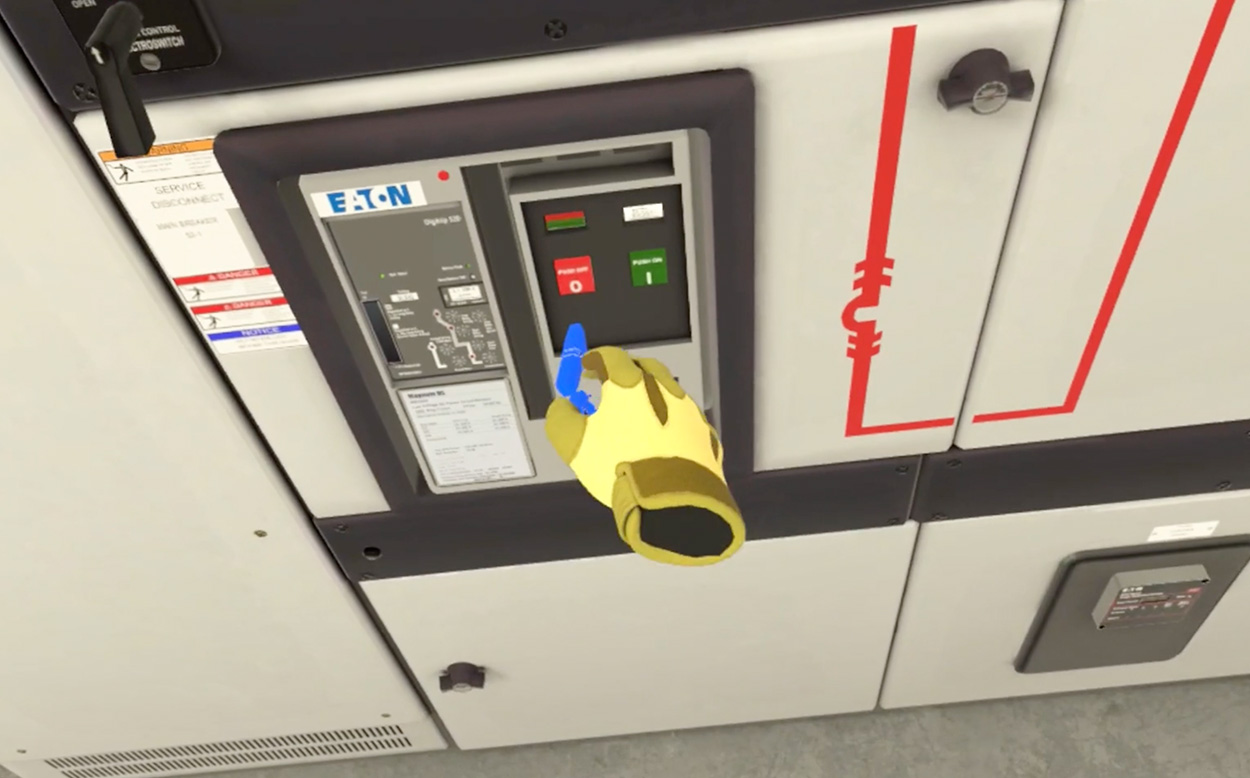
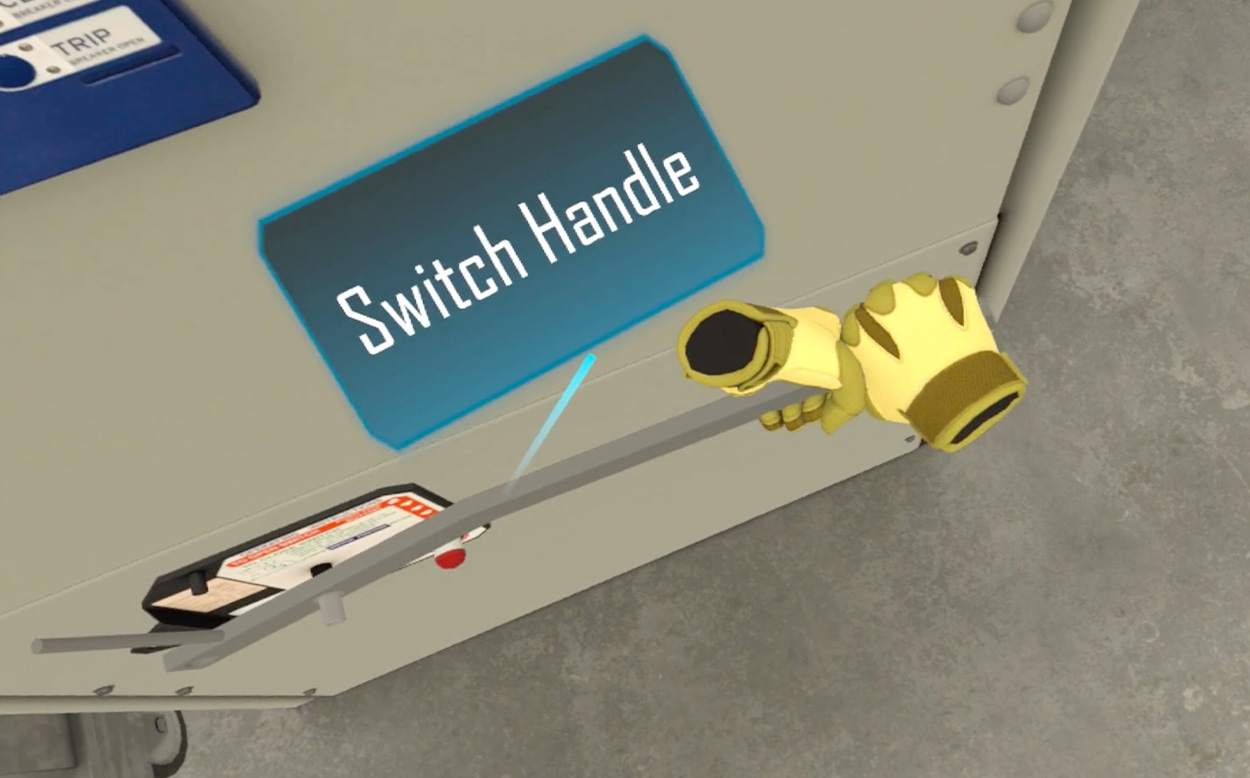
Students gain experience working with large-frame low-voltage power circuit breakers used in commercial and industrial facilities.

Students learn:

  • Breaker components and inspection
  • Trip unit functions
  • Safe racking procedures
  • Operational checks and troubleshooting basics

Students gain familiarity with the equipment they will encounter in real-world facilities.

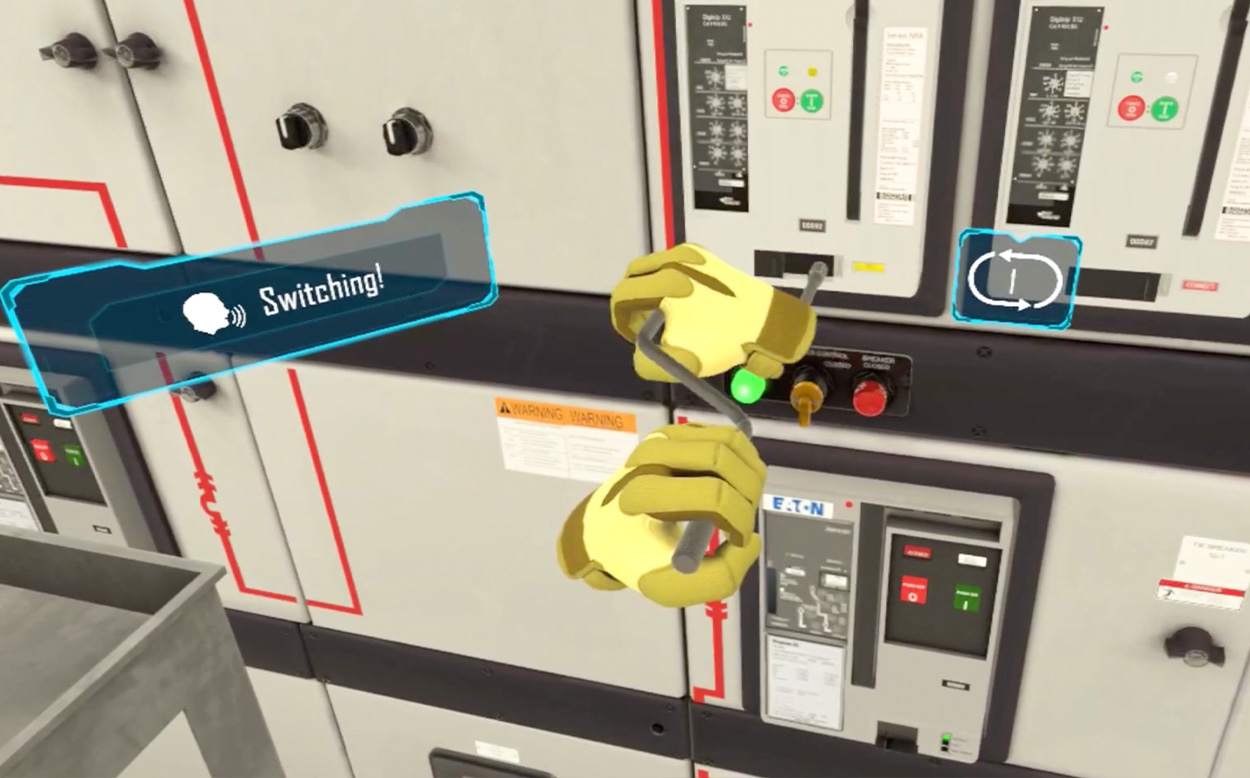
Medium voltage systems require strong procedural discipline and safety awareness. This module provides guided interaction in a safe environment.

Students develop understanding of:

  • Switch operation sequences
  • PPE considerations
  • Arc flash awareness
  • Equipment identification

It helps reinforce high-risk procedures without live voltage exposure.

Created in collaboration with Eaton, this module introduces students to modern air circuit breaker technology used in today’s power distribution systems.

Students explore:

  • Breaker configuration and settings
  • Protective device concepts
  • Operational procedures
  • Manufacturer-relevant equipment design

This supports alignment with current industry equipment and expectations.

Students interact with a virtual switchboard to better understand power distribution systems.

Key learning areas:

  • System startup and shutdown procedures
  • Reading meters and indicators
  • Load awareness
  • Identifying abnormal conditions

This strengthens system-level thinking, not just component-level skills.

Backup power systems are critical in healthcare, data centers, and industrial facilities. This module introduces the fundamentals of UPS systems.

Students gain exposure to:

  • UPS components and layout
  • Battery systems
  • Alarm monitoring
  • Basic troubleshooting scenarios

It connects classroom electrical theory to real-world applications.

How Programs Are Using VR in Electrical Training

Schools are integrating VR to:

  • Reinforce safety before students touch live equipment
  • Provide structured, repeatable skills practice
  • Reduce lab bottlenecks
  • Increase engagement for visual and hands-on learners
  • Support apprenticeship and workforce preparation

VR does not replace hands-on training—it strengthens it. Students can make mistakes, repeat procedures, and build confidence before transitioning to live systems.

Schedule a demonstration to explore how these electrical VR modules could support your curriculum.

Working with industrial power systems requires precision, procedural discipline, and a strong understanding of electrical safety. Large-frame power circuit breakers play a critical role in protecting equipment, maintaining system reliability, and preventing costly electrical failures.

This immersive VR training program allows learners to gain hands-on experience with breaker operation, maintenance, and troubleshooting in a safe, controlled environment. Participants build confidence and procedural accuracy before transitioning to live equipment.

Why Integrate This Training Into Your Electrical Program?

  • Understand Critical Power Systems – Learn the role and importance of low-voltage power circuit breakers in electrical distribution systems.
  • Safe Operation & Switching Procedures – Follow step-by-step guidance for proper breaker handling without exposure to live voltage risk.
  • Hands-On Breaker Racking Practice – Practice racking the breaker in and out manually or using a motorized charge system.
  • Reduce Downtime & Electrical Failures – Strengthen troubleshooting skills to help prevent system disruptions.

Who Will Benefit?

  • Electricians and electrical apprentices
  • Industrial and maintenance technicians
  • Facility and maintenance managers
  • Power system operators
  • CTE and technical college electrical programs

Program Outcomes

Participants gain a clearer understanding of breaker operation, improve safety awareness, and develop confidence in performing essential procedures related to industrial power distribution systems.

  • Strengthen workplace electrical safety
  • Improve system reliability
  • Reinforce compliance with industry safety standards
  • Support workforce readiness and apprenticeship preparation

Medium voltage switches (MVS) play a critical role in managing and protecting electrical distribution networks. Proper operation and maintenance are essential to prevent electrical hazards, minimize downtime, and maintain system reliability in commercial and industrial facilities.

This immersive virtual reality training program provides hands-on experience with medium voltage switch systems in a safe, controlled environment. Learners can practice procedures, build confidence, and reinforce safety protocols before working with live equipment.

Why Integrate Medium Voltage Switch VR Training?

  • Understand Critical Power Systems – Learn the purpose and function of medium voltage switches in electrical distribution networks.
  • Safe Operation Procedures – Practice proper switching techniques and circuit transitions using guided, step-by-step instruction.
  • Routine Inspections & Maintenance – Develop preventative maintenance skills to ensure system integrity.
  • Reduce Electrical Hazards – Gain experience recognizing unsafe conditions and reinforcing compliance with industry safety standards.

Who Will Benefit?

  • Electricians and electrical apprentices
  • Industrial and maintenance technicians
  • Facility and maintenance managers
  • Power system operators
  • CTE and technical college electrical programs

Program Outcomes

Participants strengthen their understanding of medium voltage distribution systems while improving procedural accuracy and safety awareness.

  • Prevent power failures and safety incidents
  • Improve system reliability and uptime
  • Reinforce safe handling and switching procedures
  • Support apprenticeship preparation and workforce readiness

Program Integration

This VR training can be incorporated into advanced electrical systems courses, industrial maintenance programs, apprenticeship preparation, or power distribution instruction. It enhances classroom learning while reducing risk and improving readiness before students transition to live medium voltage systems.

Low-voltage power distribution systems depend on reliable air circuit breakers to protect equipment and maintain system stability. Understanding proper breaker operation, inspection, and troubleshooting procedures is essential for preventing equipment damage and avoiding costly downtime.

This immersive virtual reality training course provides hands-on experience with air circuit breaker operation in a safe, controlled environment. Learners can practice critical procedures, build troubleshooting skills, and strengthen safety awareness before working with live electrical systems.

Why Integrate Breaker VR Training?

  • Understand Critical Power Systems – Learn the role and function of low-voltage breakers in electrical distribution.
  • Safe Operation Procedures – Practice racking the breaker in and out, closing, and tripping the breaker using guided, step-by-step instruction.
  • Hands-On Troubleshooting – Identify and resolve common breaker issues to minimize downtime.
  • Prevent Electrical Hazards – Gain practical experience without the risks associated with live equipment exposure.

Who Will Benefit?

  • Electricians and electrical apprentices
  • Industrial and maintenance technicians
  • Facility and maintenance managers
  • Power system operators
  • CTE and technical college electrical programs

Program Outcomes

  • Improve workplace electrical safety and reliability
  • Reduce risk of equipment damage and power failures
  • Strengthen compliance with industry safety standards
  • Increase confidence in safe breaker handling and maintenance procedures

Electrical switchboards are central to safe and reliable power distribution in commercial and industrial facilities. Proper operation, inspection, and testing procedures are essential to protect personnel, prevent electrical hazards, and maintain system integrity.

This immersive virtual reality training course provides hands-on experience operating a switchboard in a safe, interactive simulation. Learners can practice critical procedures, identify components, and reinforce safety protocols before transitioning to live electrical environments.

Why Integrate Switchboard Operations VR Training?

  • Hands-On Training – Operate a switchboard in a practical, interactive simulation environment.
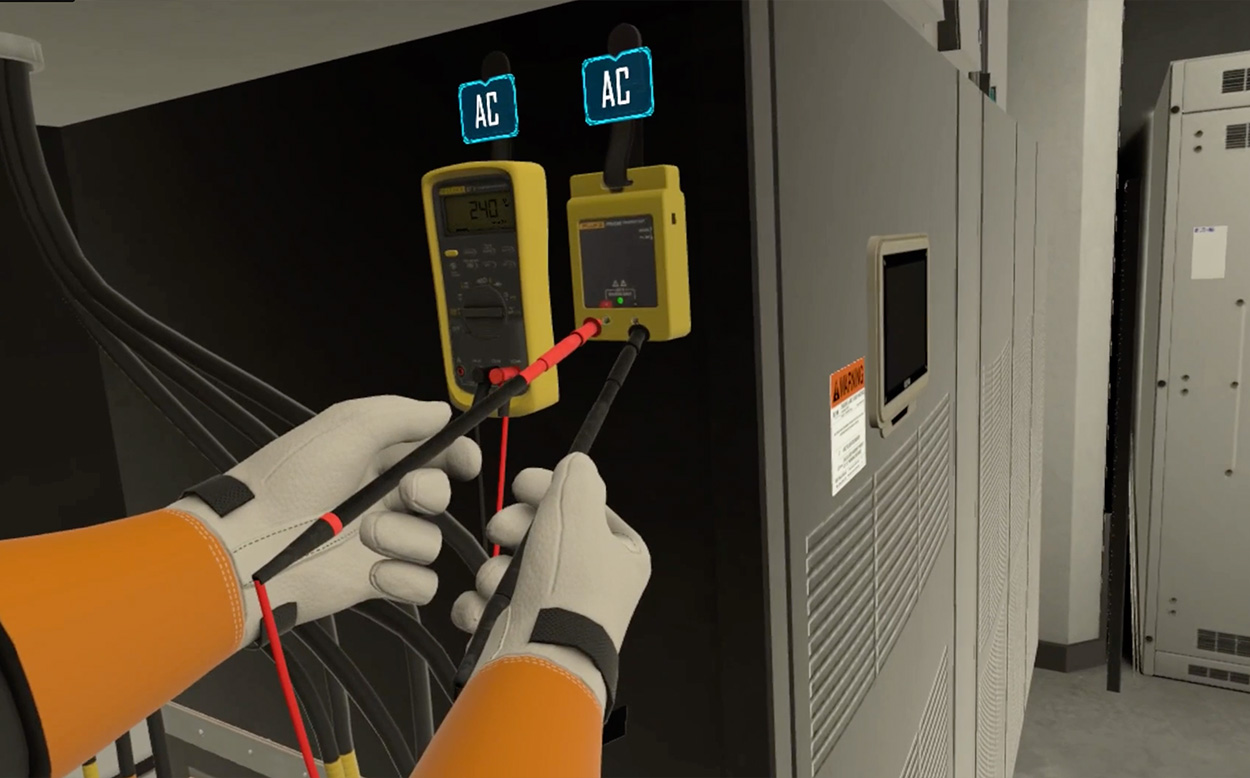
  • Critical Safety Skills – Practice opening and closing the switchboard, utilizing feeder breakers, and performing a live-dead-live test.
  • Comprehensive Component Identification – Locate and understand key switchboard components and their functions.
  • Realistic, Controlled Experience – Build confidence and procedural accuracy without exposure to live electrical risk.

Who Will Benefit?

  • Maintenance personnel
  • Electricians and electrical apprentices
  • Supervisors in electrical facilities
  • CTE and technical college electrical programs

Program Outcomes

  • Enhance electrical safety and operational efficiency
  • Gain practical knowledge of switchboard operation
  • Reduce the risk of electrical hazards
  • Support smooth and reliable facility operations

Pages

  • Hard Hat Virtual Reality Warehouse Training Modules
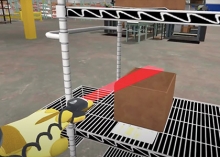
    VR Hard Hat's Warehouse Picking: Case virtual reality course is meticulously designed to provide insights into the best practices of case picking, ensuring both speed and precision.
  • Virtual Reality Warehouse Picking Training from Hard Hat VR
    Front-end labeling, a vital component of the picking process, ensures that products are correctly identified, tracked, and dispatched. Proper labeling can reduce errors, improve efficiency, and enhance customer satisfaction. Hard Hat VR's course is designed to address the nuances of labeling at the initial stages of the picking process, ensuring that errors are minimized and efficiency is maximized.
  • Maritime Simulation Training Solutions from Wartsila
    Leveraging 25 years of industry experience, unparalleled mathematical models and the latest techniques like gamification, virtual and augmented recreations, we offer the most sophisticated immersive training solutions to prepare mariners for the real world that awaits them onboard and onshore. These simulation solutions also expedite innovation and research processes by acting as the perfect testbed for new concepts and products that then directly contribute to the decarbonization and commercialization of the solutions.
  • DAC Models
    Item Number:
    355
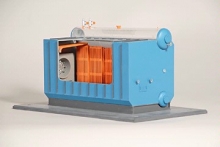
    DAC Worldwide’s Water Tube Boiler Model (355) depicts a highly-detailed scale model of a common water tube boiler in a technically-accurate, professionally-crafted design. The model supports training in the operation and maintenance of industrial boilers found within utility systems in industrial facilities.
  • Collaborative Robot Monitoring Software
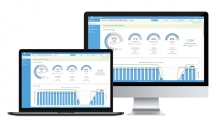
    WebLytics from OnRobot is the first software solution that provides real-time production monitoring for collaborative applications across major robot brands.
  • DAC Worldwide’s Sample Boards
    Item Number:
    825-000
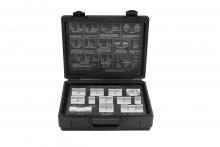
    DAC Worldwide’s Weld Fault Comparison Kit (825-000) is a three-dimensional visual aid with accompanying training materials that facilitates basic training in weld quality and weld fault terminology by accurately depicting and identifying common weld defects.
  • Welding Technology Learning System
    Item Number:
    950-WT1
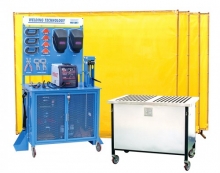
    Welding is central to many industries including manufacturing, construction, and aerospace to name only a few. Welding is a blend of both art and science, joined together to create enduring bonds that allow us to create structures and machines on a scale impossible to achieve without it. The 950-WT1 teaches how to safely create an array of high quality weld types.
  • DAC | 295-703
    Item Number:
    295-703
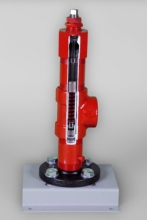
    DAC's Wellhead Backpressure Regulator Cutaway (295-703) is a sectioned specialty regulator example for training in the operation, construction, and maintenance of three industrial back pressure regulators (BPRs), as used in gas and oil service in the oilfield.
  • Cost-Effective Heavy Equipment Training Solution
    Item Number:
    WL
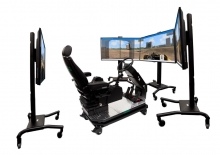
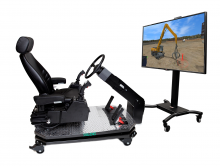
    Simlog’s Wheel Loader Personal Simulator is equipped with either a bucket or forks, at work in a typical construction site with a dump truck or flatbed truck. Configuration options are offered for both “Steering Wheel Steering” and “Stick Steering”, to reproduce the operator controls of (real) small, medium, and large-size wheel loaders.
  • Simlog Personal Simulators for Training Heavy Equipment Operators
    Item Number:
    WMH
    Simlog's new Wheeled Material Handler Personal Simulator puts you at the controls of a typical wheeled material handler equipped with an articulated boom, four-tine grapple, elevating cab, and outriggers. Many different kinds of situations typical of (metal) scrap recycling yards are presented, in order to address the training needs of a wide variety of customers using different operational practices.

Pages