Gateway Technical College (GTC) is helping shape the workforce of tomorrow with its Smart Factory lab located at the SC Johnson Integrated Manufacturing and Engineering Technology (iMET) Center in Sturtevant, Wisconsin. As the first publicly funded technical college in the United States, GTC continues to lead by preparing students with the skills needed for Industry 4.0.

This advanced lab simulates a real-world production line where students gain hands-on experience in “lights out” manufacturing, automation, and data analytics. Learners work with programmable logic controllers (PLCs), human-machine interfaces (HMIs), industrial controllers, and smart sensors to understand how modern factories operate. By integrating connectivity and data analysis, the lab demonstrates how to unlock siloed information and apply it to real-world decision-making.

One of the lab’s most exciting features is its development of a digital twin—a virtual replica of the physical environment that collects and processes real-time data from robotics, machinery, and sensors. This allows students to explore artificial intelligence, advanced automation, and smart technologies that are rapidly transforming the manufacturing industry. By engaging with this innovative environment, students are better prepared to become the highly skilled employees industry partners need today and in the future.

Industrial Absorption Principles for Education & Research

Teaching Industrial Absorption Through Real Experiments

Absorption is a critical separation process in chemical engineering, widely applied in industries such as environmental engineering, pharmaceuticals, and petrochemicals. Pignat’s absorption training systems provide hands-on learning by simulating real-world gas–liquid interactions, enabling students to explore both the theory and practice of mass transfer operations.

These systems are designed for flexibility and precision, helping learners understand core concepts such as absorption efficiency, column design, and operating parameters. Whether used in an undergraduate classroom or an advanced research lab, Pignat’s absorption units bridge the gap between academic knowledge and industrial practice.

Key Learning Outcomes

  • Understand the fundamentals of gas–liquid absorption processes
  • Explore packed and tray column designs
  • Measure and analyze absorption efficiency under varied conditions
  • Apply theoretical principles to real-world separation challenges

Solid–Fluid Adsorption Principles for Engineering Labs

Hands-On Solid–Fluid Interaction Experiments

Adsorption plays a vital role in chemical engineering and industrial applications, from gas purification and pollution control to water treatment and chemical recovery. Pignat’s adsorption training units enable students to study surface phenomena, adsorption isotherms, and regeneration techniques.

These versatile systems demonstrate the behavior of gases and liquids when interacting with solid surfaces, offering real-world insight into adsorption processes that industries rely on daily.

Key Learning Outcomes

  • Understand adsorption isotherms and kinetics
  • Examine breakthrough curves and column design
  • Study regeneration and reuse of adsorbents
  • Apply adsorption theory to environmental and industrial challenges

Crystallization Principles for Future Engineers

Explore the Science of Crystallization with Pignat

Crystallization is a widely used process in chemical, pharmaceutical, and food industries for product purification and separation. Pignat’s crystallization units provide a hands-on approach to studying solubility, cooling rates, and crystal formation.

Students gain real-world understanding of crystal nucleation and growth, learning how operational conditions affect product quality and purity.

Key Learning Outcomes

  • Examine solubility and saturation principles
  • Study the impact of cooling and evaporation on crystallization
  • Analyze crystal growth and size distribution
  • Apply solid–liquid separation concepts to industrial processes

Train Students in Industrial-Scale Distillation Concepts

From Classroom to Industry: Distillation Education

Distillation is one of the most common and important separation methods in the chemical process industry. Pignat’s distillation training systems bring industrial operations into the classroom, teaching fractional distillation, column efficiency, and reflux control.

These systems allow students to analyze mixtures, understand boiling point differences, and optimize process conditions—all while reinforcing real-world chemical engineering skills.

Key Learning Outcomes

  • Perform simple and fractional distillation experiments
  • Examine column efficiency and operating parameters
  • Understand reflux and product purity control
  • Apply separation principles to multi-component systems

Explore Vapor–Liquid Equilibrium with Pignat Systems

Thermodynamics Meets Real-World Application

Understanding vapor–liquid equilibrium (VLE) is essential for designing separation processes. Pignat’s ebulliometer training systems allow students to investigate boiling points, azeotropes, and thermodynamic properties directly in the lab.

These systems bridge theory and practice, giving learners critical insight into the phase behavior that drives distillation and other chemical processes.

Key Learning Outcomes

  • Measure and analyze boiling points under different pressures
  • Explore azeotrope formation and its impact on separation
  • Apply vapor–liquid equilibrium data to distillation design
  • Strengthen thermodynamic understanding with hands-on training

Teach Industrial Evaporation in the Lab

Evaporation Experiments for Chemical Engineering Education

Evaporation is widely used in chemical, food, and environmental industries to concentrate solutions and recover solvents. Pignat’s evaporation training units provide hands-on learning of heat transfer, phase change, and energy efficiency.

These systems allow students to evaluate operating conditions and optimize processes, preparing them for practical applications in industrial environments.

Key Learning Outcomes

  • Understand evaporation principles and heat transfer
  • Study concentration and solvent recovery techniques
  • Explore the role of energy efficiency in evaporation systems
  • Connect theoretical concepts with real-world industrial practice

Liquid–Liquid Separation for Education & Research

From Theory to Application: Extraction Education

Liquid–liquid extraction is a versatile separation technique, commonly applied in pharmaceuticals, environmental engineering, and chemical production. Pignat extraction units give students a hands-on platform to explore solvent recovery, phase equilibria, and distribution coefficients.

By operating real equipment, learners connect theoretical concepts to industrial practices, gaining valuable process engineering skills.

Key Learning Outcomes

  • Understand phase equilibria in liquid–liquid systems
  • Perform separation and purification through extraction
  • Study solvent recovery and distribution coefficients
  • Apply liquid–liquid extraction to real industrial challenges

Explore Solid–Liquid Separation Hands-On

Pignat Filtration Systems for Education & Research

Filtration is a core separation method across industries, from chemical production to environmental management. Pignat’s filtration training units let students experiment with solid–liquid separation, pressure effects, and filtration media.

These systems prepare learners for real-world challenges by linking academic knowledge with industrial filtration applications.

Key Learning Outcomes

  • Study the mechanics of solid–liquid separation
  • Understand the impact of pressure and media type
  • Evaluate efficiency and product quality
  • Apply filtration principles to chemical and environmental processes

Pignat Reaction Training Units for Education

Hands-On Training in Chemical Kinetics

Reaction engineering is the foundation of chemical process design. Pignat’s reaction training systems enable students to explore kinetics, reactor operation, and process optimization in a controlled lab setting.

These systems reinforce critical concepts in chemical engineering, preparing learners to design and scale up industrial processes effectively.

Key Learning Outcomes

  • Understand chemical kinetics and reaction rates
  • Explore different reactor designs and configurations
  • Study process optimization and operating parameters
  • Apply reaction engineering concepts to industrial challenges

Pages

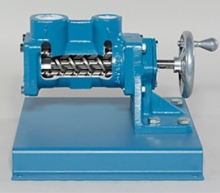
  • 278-190 | Screw Pump Cutaway
    Item Number:
    278-190
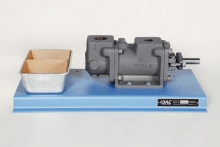
    DAC Worldwide’s Screw Pump Cutaway (278-190) depicts a sectioned industrial screw-type pump allows for convenient and realistic classroom training in the operation, construction, and maintenance of common process pumps used in various applications across the globe.
  • DAC Model: 275-190
    Item Number:
    275-190
    DAC Worldwide’s Screw Pump Dissectible (Imo) (275-190) is one of a limited group of enhanced dissectible products. This re-manufactured, realistic dissectible industrial pump can be used for training relating to the repair and overhaul of specialized process pumps.
  • Virtual Reality IT Training
    This course will educate learners on best practices for maintaining general security in the workplace and safeguarding against cyber threats.
  • Item Number:
    373-120
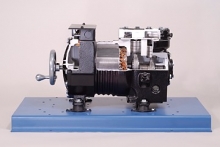
    DAC Worldwide’s Semi-Hermetic Compressor Cutaway (373-120) is an expertly-sectioned example of a common intermediate (1”-1 ½”) horsepower semi-hermetic refrigeration compressor that facilitates and supports practical training in compressor design, operating principles, and maintenance.
  • DAC Dissectibles | Mechanical Drives
    Item Number:
    205-150
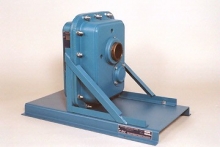
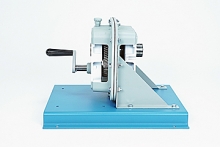
    The dissectible features a carefully restored, industrial shaft mounted, hollow-shaft helical gear reducer to provide learners with a realistic training experience
  • DAC Worldwide Cutaways
    Item Number:
    205-260
    Shaft-mounted, hollow-shaft helical gear reducers have a unique set of benefits. On helical gears, the tooth traces are slanted. Compared to other gears, helical gears are stronger and produce less noise because of higher meshing ratios.
  • DAC Worldwide Cutaways
    Item Number:
    273-945
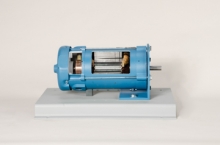
    This DC shunt-wound induction motor cutaway supports industrial training activities related to electric motor types, as well as repair and troubleshooting.
  • DAC Electrical/Electronics Trainer
    Item Number:
    415-000
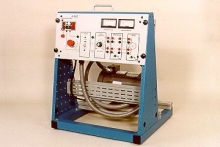
    DAC Worldwide’s Shunt Wound, DC Motor Training System (415-000) features a common shunt wound DC motor used frequently throughout industry. Each motor module includes a welded aluminum mounting baseplate, aluminum control box support structure, and a steel control enclosure.
  • Process Instrumentation Training
    Item Number:
    272-715
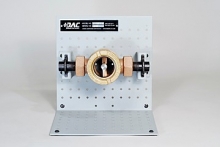
    DAC Worldwide's Dissectible Sight Flow Indicator Sample (272-715) allows for close visual inspection of a common in-line flow indicator to better understand its function, design, and operation.
  • DAC HVAC Cutaways
    Item Number:
    373-652
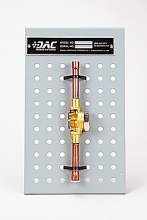
    This Sightglass with Moisture Indicator Cutaway provides a full cutaway view of a sightglass that exposes the complete internal components and operating principles.

Pages