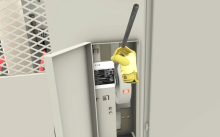
Interactive VR training for medium voltage switch operation, inspection, and maintenance—designed to strengthen electrical safety, reduce hazards, and support CTE and workforce programs.
Explore LJ Create's Learning Management System
Exporting your LMS data is as easy as 1-2-3!
This video shows how to create a simple report for your class, delete a failed assessment attempt and save your report to use again later... all in less than 2 minutes!
Life-Saving Skills: First Aid Training for CPR & AED Use
Cardiopulmonary resuscitation (CPR) and automated external defibrillators (AEDs) are crucial in emergencies, often making the difference between life and death. Immediate CPR, as per the American Heart Association (AHA), can double or triple survival chances post cardiac arrest. When coupled with AED usage, survival rates significantly increase. This course is tailored to impart comprehensive CPR and AED skills, empowering participants to act effectively during cardiac emergencies.
Key Learning Objectives
This course aims to equip participants with vital knowledge and practical skills in CPR and AED use. Topics covered include:
- Understanding the basics of the human cardiovascular system
- Techniques for performing hands-only and traditional CPR for adults
- Safe and efficient operation of an AED device
- Emphasizing the importance of swift response in cardiac emergencies
- Role of CPR and AEDs in the chain of survival
Ideal for individuals ranging from laypersons to healthcare professionals, the First Aid: CPR & AED course prepares participants to confidently respond to cardiac emergencies in community or workplace settings.
Simulation Details
Industry Focus: General Industry
Duration: 10-15 minutes
Language: English
Headset Compatibility: Our training content is compatible with most major headset models available in the market.
In both the US and globally, chemical spills pose severe risks, causing injuries, environmental harm, and operational disruptions. Immediate and proper handling of these incidents is crucial to safeguard workers, communities, and the environment. Adequate training becomes imperative in guiding appropriate responses during such emergencies.
A chemical spill encompasses the unintended release of liquid, solid, or gaseous chemicals, often stemming from equipment malfunctions, human errors, or unforeseen circumstances. Regardless of the chemical's nature or hazard levels, knowing how to respond to diverse spills is fundamental for safety and averting further disasters.
Key Learning Objectives
This course aims to equip individuals with safe practices for responding to chemical spills effectively. By course completion, participants will learn to:
- Understand the critical role of Safety Data Sheets (SDS) in spill response
- Implement proper containment strategies for varying spill types
- Effectively utilize spill kits and their components
- Manage post-spill cleanup and waste disposal in compliance with regulations
- Appropriately use Personal Protective Equipment (PPE) during spill responses
This training is indispensable for current and future employees and supervisors operating in areas involving the storage, handling, or transportation of chemicals.
Across various industries, workers are often required to enter confined spaces – areas not designed for continuous occupancy and limited means for entry and exit. These spaces, due to their design and potential for hazardous atmospheres, present unique risks. Mishandling a confined space entry can lead to serious injuries or fatalities. Proper knowledge, training, and equipment are essential for ensuring the safety of personnel involved in these operations.
A confined space might include tanks, silos, storage bins, vaults, pits, manholes, tunnels, equipment housings, and other similar areas. Hazards in these spaces can range from lack of oxygen, presence of toxic gasses, engulfment risks, to physical dangers like moving parts.
Learning Objectives
- Recognize potential hazards associated with confined space entry
- Understand the importance and process of obtaining a confined space entry permit
- Determine atmospheric conditions using testing and monitoring equipment
- Implement safety procedures for entry, work, and exit from confined spaces
- Utilize appropriate rescue and emergency procedures in the event of an incident
- Properly select and use Personal Protective Equipment (PPE) and entry equipment
- Maintain effective communication with entrants, attendants, and emergency personnel
This course is vital for current and future workers, supervisors, safety officers, and anyone involved in operations that require confined space entry.
On construction sites, a single story often reaches an average height of 14 feet. Despite seeming modest, falls from such heights can lead to severe injuries; 4 out of 5 falls from over 11 feet result in fatalities. Shockingly, workplace falls caused 1,008 fatalities in 2018, with 33.5% occurring in construction, making fatal falls OSHA's top job site accident. However, these tragedies are entirely preventable.
Key Learning Objectives
This course aims to educate workers about safe practices when working at heights in construction. Participants will learn:
- Proper utilization of personal fall arrest systems
- Inspection and selection of safety harnesses and lanyards
- Identification and selection of secure anchorage points
- Recognition of specific fall hazards
- Engagement in accident prevention on job sites
The Fall Protection awareness simulation targets employees and supervisors engaged in construction environments, ensuring enhanced safety measures.
Electricity poses significant risks in the workplace, often unnoticed by many workers, increasing their vulnerability to potential electrocution hazards. Tragically, countless workers suffer injuries or fatalities annually due to exposure to hazardous electrical energy. Electric shocks, burns, and falls are prevalent dangers associated with working with electricity, where electrocution stands as the gravest risk. Hence, handling electricity demands utmost caution and awareness.
Why Choose Our VR First Aid Course?
This course aims to educate workers on safe practices when dealing with electrical hazards in construction settings. Participants will learn:
- Hands-On Experience: Learn CPR and AED usage in a realistic VR setting.
- Critical Skills Development: Master life-saving techniques with step-by-step guidance.
- Emergency Preparedness: Respond effectively in critical situations.
- Accessible Learning: Suitable for anyone, from the general public to healthcare professionals.
Who Will Benefit?
- Healthcare Providers
- First Responders
- Corporate Employees
- Community Members
Enhance Your Emergency Response Skills
- Gain Confidence in First Aid Scenarios
- Improve Survival Chances in Cardiac Emergencies
- Promote a Safer Community and Workplace
OSHA's 29 CFR 1910.1030 mandates employers to protect workers at risk of occupational exposure to blood or infectious materials.
Bloodborne pathogens, infectious microorganisms in human blood, encompass hepatitis B (HBV), hepatitis C (HCV), and human immunodeficiency virus (HIV), among others. To mitigate risks, employers must enact an exposure control plan outlining protective measures for employees.
Key Learning Objectives
This course aims to educate workers on proper procedures in potential bloodborne pathogen incidents. Participants will learn:
-
• Administering first aid to an injured colleague
• Adhering to correct Personal Protective Equipment (PPE) protocols
• Preventing further exposure to bloodborne pathogens
• Safely handling blood cleanup procedures
• Understanding the consequences of improper actions
Ideal for employees and supervisors in high-risk environments, where potential exposure to bloodborne pathogens may occur.
Engaging in trenching and excavation work carries significant risks for all workers involved, especially from cave-ins, which pose severe threats and can lead to fatal incidents. The weight of soil in a trench can equate to that of a car, making an unprotected trench perilous. Employers must prioritize protective measures to prevent cave-ins and address other hazards such as falling loads, hazardous atmospheres, and equipment risks.
Key Learning Objectives
This course is designed to educate workers on safe practices within trench environments at construction sites. Participants will learn:
- Identifying potential hazards in excavation and trenching
- Responding effectively to trenching emergencies
- Practicing proper safety protocols
- Understanding the consequences of incorrect actions
- The role of a competent person in trench safety
- Testing trenches for low oxygen levels
Ideal for current and future employees and supervisors working in or near trenches on construction sites, ensuring enhanced safety measures and proactive risk mitigation.
Pages
-
-
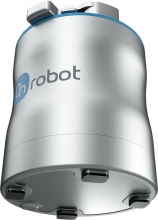 Item Number:MG10OnRobot's MG10 is a versatile, easy-to-use magnetic gripper for material handling, assembly and machine tending applications in manufacturing, automotive and aerospace environments.
 -
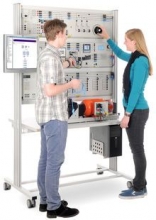 Item Number:EMG 1 / EMG 2A stand-alone power network is a type of power supply network which is closed and has no active lines coupling it to other parts of the electrical power supply grid. A stand-alone network is markedly smaller than a combined electricity grid and does not usually incorporate high-voltage power lines. For this type of network, there are two distinct modes of operation, stand-alone mode, and isolated parallel or generator-to-generator operation.
 -
 MIMBUS Discover is a turnkey VR solution for career exploration. Engage students with 16+ immersive modules across skilled trades while tracking performance in real-time with VULCAN. Ideal for CTE, K-12, and workforce programs.
 -
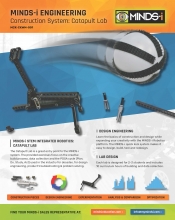 Item Number:MCK-CKWM-001The Catapult Lab is a great entry point to the MINDS-i system. The provided exercises focus on the creative build process, data collection and the PDSA cycle (Plan, Do, Study, Act) used in the industry for decades, for design engineering, product troubleshooting & problem-solving.
 -
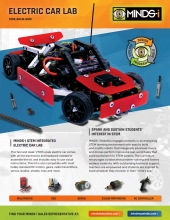 Item Number:MCK-ECLB-2WDThis fast and sleek 1/10th scale electric car comes with all the electronics and hardware needed to assemble the kit and includes easy to use visual instructions. This kit is also compatible with most hobby standard DC motors, gears, radio transmitters, servos, bodies, wheels, tires, and more.
 -
 Item Number:MCK-107P-001Prepare students for FAA Part 107 knowledge areas with the MINDS-i FAA 107 Certification Prep Course. Explore regulations, airspace, weather, safety, and UAV operations in a 45-hour program.
 -
 Item Number:CPK-W4X4-001Explore the Minds-i Search and Rescue Competition Kit, created for SkillsUSA robotics events. Learn how students can build, program, and remotely operate robots to tackle real-world rescue challenges.
 -
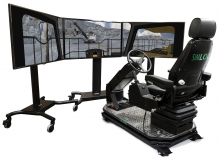 Item Number:MTModern mining equipment is increasingly complex, costly, and difficult to operate productively. As a result, proper operator training has become everyone's business. The fact is, it takes training to spot a truck and position it for loading under a full bucket. It also takes training to back up a truck just using mirrors under that bucket. Otherwise, your mining operations will suffer from lower productivity, higher fuel costs, increased tire wear, and more equipment maintenance and repair.
 -
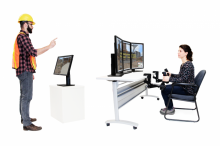 Item Number:MCRASimlog’s Advanced Edition puts you at the controls of a modern rough-terrain mobile crane equipped with telescoping boom and jib, and a variety of hook-blocks with best-in-class simulation graphics and physics, slings that go “slack”, and a boom that deflects. And now there’s wind, with parameters to define the direction, strength, and gusting.