
Smart Grids
Intelligent power supply networks
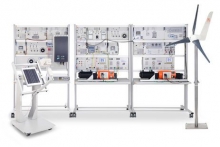
Features 9 stations that can be individually configured.

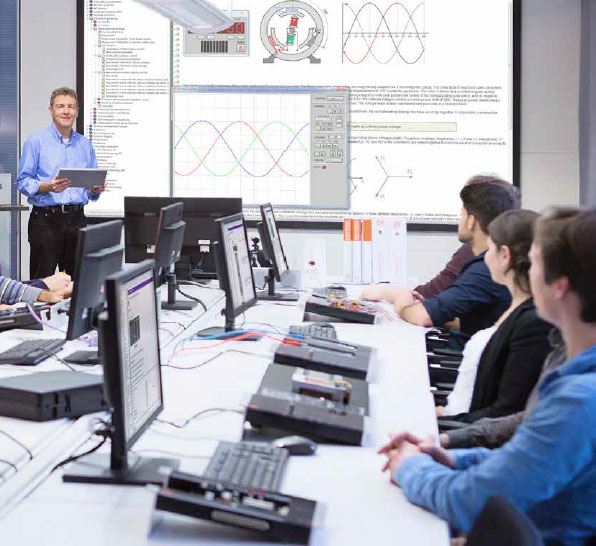
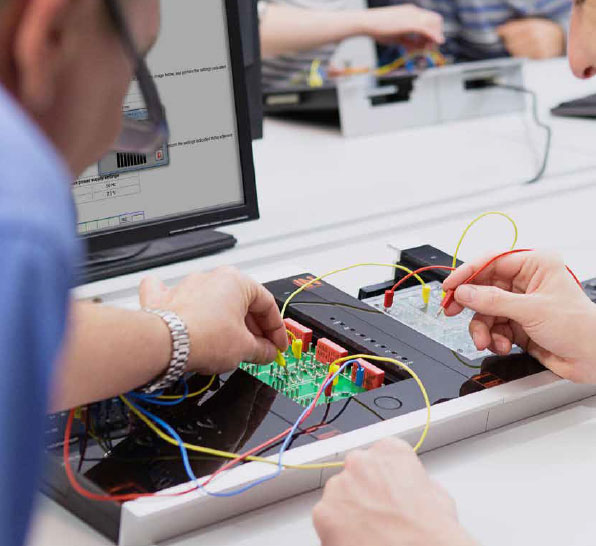
Technical knowledge becomes more valuable when students can apply it. Lucas-Nülle UniTrain combines guided multimedia instruction with real experiment hardware, measurement tools, and hands-on activities to help learners move from understanding technical concepts to developing practical skills.
Designed as a compact multimedia desktop laboratory, UniTrain supports vocational, career and technical education, engineering technology, and workforce training. Students can study theory, perform real measurements, analyze results, troubleshoot faults, and document their work within one integrated learning environment.
UniTrain brings digital instruction and physical experimentation together. Interactive multimedia courses introduce technical concepts and guide students through practical exercises using course-specific experiment hardware.
Through the LabSoft learning environment, students can access course content, virtual instruments, experiment instructions, measurements, results, and assessments from the same interface. This allows instructors to combine classroom teaching, guided laboratory activities, and independent student practice in a flexible learning environment.
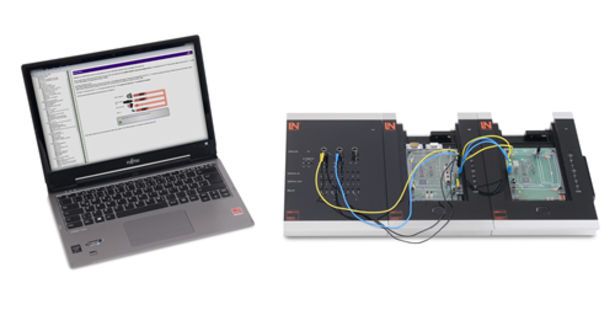
At the center of the system is the UniTrain Interface, a computer-based measurement and control interface that works with course-specific experiment boards and the LabSoft software environment.
Students connect real electrical and electronic circuits through the UniTrain Experimenter, then use virtual instruments to generate signals, make measurements, analyze system behavior, and record results. Depending on the course, hardware-based fault simulation can also be used to develop systematic troubleshooting and diagnostic skills.
The UniTrain Interface combines measurement, control, signal generation, and virtual instrumentation in a compact PC-based system. Together with the Experimenter and course-specific hardware, it provides students with the tools needed to investigate real electrical, electronic, automation, and related technical systems.
UniTrain courses combine technical theory, animations, graphics, experiment instructions, physical hardware, measurements, and assessments. Students learn the underlying concept and then apply it through practical experimentation, helping reinforce both knowledge and technical skill.
LabSoft supports course delivery and student experimentation, while Lucas-Nülle's classroom management tools can help instructors organize learners, manage educational content, monitor progress, and document results across simulator and laboratory activities.
One of UniTrain's greatest advantages is its breadth. The same core learning platform can support courses ranging from introductory electrical and electronic concepts to automation, power systems, communications, fluid power, and automotive technologies.
UniTrain allows more students to perform real experiments without requiring a full-size laboratory trainer for every topic. Its compact format makes it well suited for individual student workstations, technical laboratories, and programs that must cover multiple technologies in limited classroom space.
For instructors, the system provides a structured progression from theory to experimentation. For students, it creates opportunities to build confidence using measurement tools, interpreting results, following technical procedures, and troubleshooting systems before moving on to larger or more complex industrial training equipment.