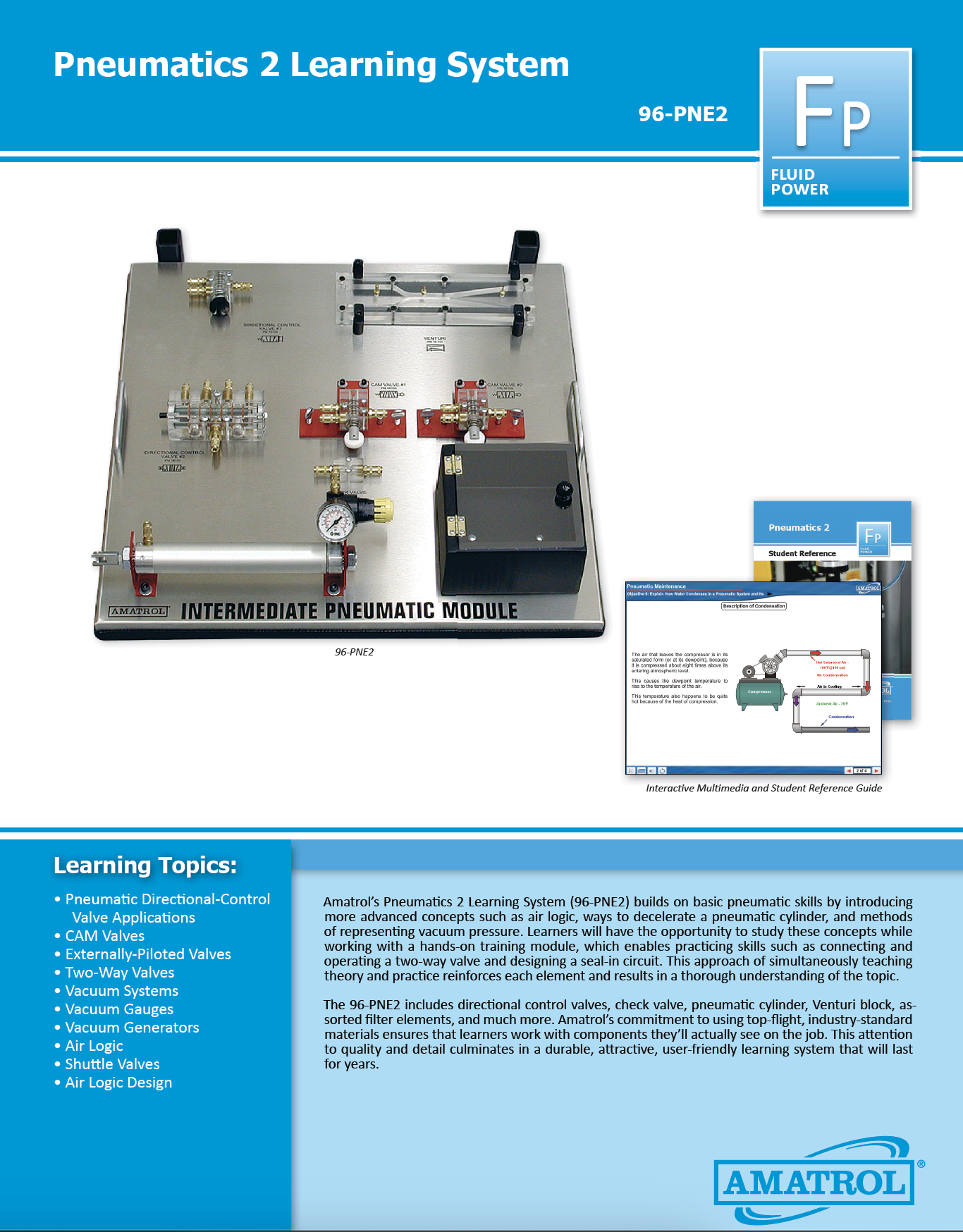


Explore the Pignat DVI/100 Continuous Distillation unit – a compact, glass-based educational system for studying thermal separation and column hydrodynamics in chemical engineering programs.
Amatrol’s high school pneumatics training system (96-PNE1) teaches learners how to operate and install basic pneumatic systems, analyze performance, and design basic pneumatic circuits. Pneumatic power is a foundation of industry used in applications across fields like agriculture, pharmaceuticals, automation, and many more!
The high school pneumatics training system includes a basic pneumatics panel, basic pneumatics instrumentation panel, and a pneumatic hose and fittings set. The system features industrial-quality components to prepare learners for what they will encounter on the job. Learners will use these components to study major topic areas, such as pneumatic power systems, basic pneumatic circuits, principles of pneumatic pressure and flow, and pneumatic speed control circuits. The system can also be expanded with Amatrol’s Pneumatics 2 Learning System to teach intermediate pneumatic knowledge and skills.
Amatrol’s Pneumatics 2 Learning System (96-PNE2) builds on basic pneumatic skills by introducing more advanced pneumatics training concepts, such as air logic, ways to decelerate a pneumatic cylinder, and how to connect and operate a vacuum generator. Learners will have the opportunity to study these concepts while working with a hands-on training module, which enables the practice of skills such as connecting and operating a two-way valve and designing a pneumatic circuit to control a reciprocating cylinder; this approach of simultaneously teaching theory and practice reinforces each element and results in a thorough understanding of the topic. This system requires Pneumatics 1, a computer, and a Hand Tool Package (41221).
Pneumatics 2 includes directional control valves, check valve, pneumatic cylinder, Venturi block, assorted filter elements, and much more. Amatrol’s commitment to using top-flight, industry-standard materials ensures that learners work with components they’ll actually see on the job. This attention to quality and detail culminates in a durable, attractive, user-friendly learning system that will last for years.
Print reading skills are essential for anyone directly involved in developing and manufacturing products. Engineers and designers communicate all the technical information required to make a product via prints. Manufacturing personnel must correctly interpret the prints to create the product. Technicians use prints to understand how to repair and troubleshoot machinery. Beginning with the basics, Amatrol’s 96-PR1 Print Reading 1 Learning System leads students to a thorough understanding of print reading techniques and skills.
The 96-PR1 is set up to accommodate either self-directed or traditional classroom formats. This learning system can be used by itself and is also a core system in Amatrol’s project-based learning program. The Print Reading 1 Learning System uses interactive computer- based instruction with both theory and hands-on tutorials consisting of text, digital video, voice, online self-review tests, interactive simulations, color diagrams and color photos. Student curriculum covers industry related skills in print reading, including use of different reference coordinates, creating and editing drawings, using technical drawing views and dimensions, multi-view drawings, and developing schematic diagrams.
Amatrol’s Robotics 1 Learning System (96-ROB1A) teaches articulated arm servo robotics and how it’s applied in industrial tasks like assembly, material handling, and inspection. This introductory robotics training system includes a 5-axis articulated servo robot arm with a 360-degree work envelope, mobile workstation, industrial controller, and state-of-the-art teach pendant. Using these real-world components, learners will be able to practice over 140 executable commands using the powerful MCL II programming language.
The system also includes in-depth multimedia curriculum covering the major topic areas of basic robot operation, programming, interfacing, and material handling. For example, learners will study: homing procedures for a servo robot; commands like grasp, release, and Pmove; and applications of robots in material handling. Amatrol’s combination of theoretical knowledge and hands-on practice allows learners to gain both conceptual and practical knowledge, broadening competency in robotic applications.
Amatrol's Robotics 1 and 2 Simulation Learning Systems (96-RSS1 and 96-RSS2) teaches the programming and operation of the Pegasus articulated servo robot. The Pegasus simulation software includes powerful 3D graphic simulation tool that reproduce the Pegasus and workcells in realistic 3D images with dynamic characteristics similar to actual operation. Learners can see four different views of workspace simultaneously. Solids modeling technology provides a realistic view of program results, including collision detection.
Intro to Civil Engineering
Amatrol’s Structural Engineering 1 Learning System (96-SE1) introduces high school students to the field of civil engineering. Civil engineers are responsible for creating structures such as skyscrapers, bridges, tunnels, dams, mass transit systems, water treatment facilities, and many more structures that we use every day for living, transportation, and industry. Learners will learn the fundamentals of structural analysis as well as bridge design and construction.
The structural engineering training system includes the T9004 Structural Testing Systems consisting of a workstation, bridge component sets, a test fixture set, indicator package, bridge designer software, supplemental CD, and interactive multimedia student curriculum. These components are used to teach topics such as civil engineering careers, structural stability, force vectors, and bridge design.
Intermediate Structural Engineering Training System for High School
Amatrol’s Structural Engineering 2 Learning System (96-SE2) adds to the Structural Engineering 1 Learning System (96-SE1) to teach statics, data acquisition, and bridge design analysis. The data acquisition system uses structural members equipped with stain gauges to measure the forces acting on a structure, constructed by the learners, and the system records these values to provide a clear picture of how the structure is reacting to the applied force. Through calculations and data acquisition analysis, intermediate structural engineering learners will analyze the forces in truss bridge designs.
The intermediate structural engineering training system includes a data acquisition system, bridge components fitted with strain gauges, a test fixture hardware package, and interactive multimedia student curriculum. The learning content covers topics such as bending stress and the moment of inertia, data acquisition, and truss bridge analysis.
Advanced Structural Engineering Training System for High School
Amatrol’s Structural Engineering 3 Learning System (96-SE3) covers a variety of foundational industrial topics including: concrete mixing, placement, and testing; how to control column and beam deflection; preventing columns from buckling; and designing buildings to both support normal loads and to stand up to environmental elements. These skills can be used to move into fields like construction, engineering, and architecture. The 96-SE3 utilizes components from the Structural Engineering 1 Learning System (96-SE1) and builds on knowledge introduced in that system.
The Advanced Structural Engineering training system includes concrete and metal beam component sets and a building component set that allow learners to practice real-world skills while they study the safety steps, advantages of certain materials, and overall theoretical knowledge behind these foundational engineering concepts. Some of the major topic areas covered by the 96-SE3’s curriculum include beam and column design, the fundamentals of concrete, building design, and building construction. This interlacing of theoretical knowledge and hands-on skills builds learner competencies and gives them the knowledge to move on to more advanced structural engineering topics.
Because surveying is utilized in so many aspects of industry, the skills taught by the Surveying 1 Learning System (96-SV1) opens the doors to careers in various fields, such as manufacturing, transportation, and construction. Amatrol’s Surveying training system introduces the fundamentals of surveying, which includes focusing on determining the terrestrial or three-dimensional position of points and the distances and angles between them; this signature Amatrol approach to curriculum reinforces both theory and practice, which produces a well-rounded understanding of the topic.
After completing this training system, learners will be able to operate surveying and mapping tools, including global positioning systems (GPS) associated with surveying, but will also understand the relevant key concepts.
Amatrol’s Thermal Technology 1 Learning System provides learners with the knowledge and equipment needed to comprehend the principles of modern thermal systems, such as HVAC, geothermal, refrigeration, and steam systems.
Pages
-
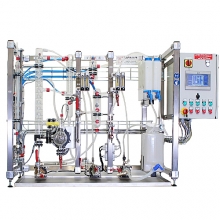 Item Number:DVI/100, DVI/300
 -
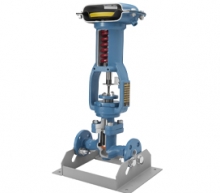 Item Number:255DAC Worldwide’s Control Valve Cutaway, .75"-1.5" (255) supports realistic classroom training in the operation, construction, and maintenance of a pneumatically-operated control valve used in industrial process systems. The complete internal configuration of the valve’s actuator and body is exposed and showcased through carefully-planned sectioning and color-coding.
 -
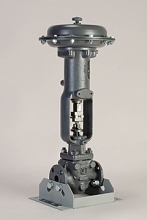 Item Number:255KDAC Worldwide's dissectible (255K) is a realistic, hands-on valve sample that supports realistic classroom training in the disassembly, inspection, and reassembly of a full-size industrial diaphragm-actuated control valve.
 -
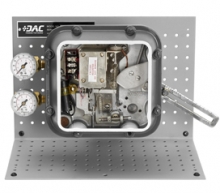 Item Number:273-810DAC Worldwide’s Control Valve Positioner Cutaway (273-810) is a detailed, sectioned, professionally-crafted control valve positioner cutaway that depicts a common control valve positioner.
 -
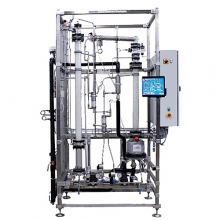 Item Number:ABR/3000The regeneration process is observed on the second column, which is continuously fed. An energy‐saving heat exchanger is placed between the two columns to optimize energy usage. With this unit, students are able to study various control loops, determine mass balance, and process efficiency. The unit also includes a LabView monitoring system.
 -
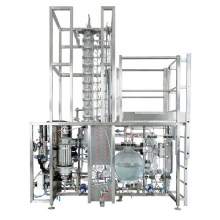 Item Number:OTP-DCPignat's Controlled Distillation Unit (OTP-DC) is an automated, controlled, continuous distillation pilot plant. This industrial-scale unit allows students to study unit operations, maintenance, and process supervision.
 -
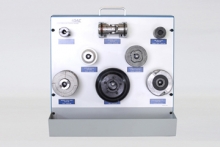 Item Number:839-PACDAC Worldwide’s Coupling Sample Board (839-PAC) is an introductory hands-on teaching aid designed to supplement courses in coupling selection and maintenance. It includes samples of eight industrial-quality couplings for users to learn to identify.
 -
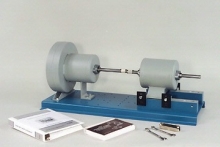 Item Number:208-PACDAC Worldwide’s Coupling/Shaft Alignment Plus (208-PAC) is a heavy-duty, precision learning aid that allows for convenient, realistic training in shaft alignment. When paired with a variety of hands-on exercises, the training system creates a complete performance-based course in the maintenance of shaft alignment.
 -
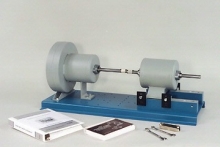 Item Number:208-000DAC Worldwide’s Coupling/Shaft Alignment Trainer (208-000) is a heavy-duty, precision learning aid that allows for convenient, realistic training in shaft alignment. When paired with a variety of hands-on exercises, the training system creates a complete performance-based course in the maintenance of shaft alignment.
 -
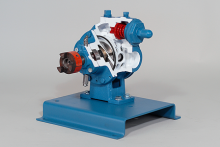
DAC Worldwide believes that successful training must match real-world conditions as much as possible. Our line of industrial cutaways are real-world industrial components that have been restored, cut away, and refinished using durable urethane coatings. Each of these industrial components has been professionally sectioned to expose each device’s primary components.