
Experience portable, high-performance simulation training with the CM Labs Vortex Edge Max. Deliver complete, immersive learning and real-world operator readiness from a compact, powerful system.
Inspiring Innovation at Every Education Level
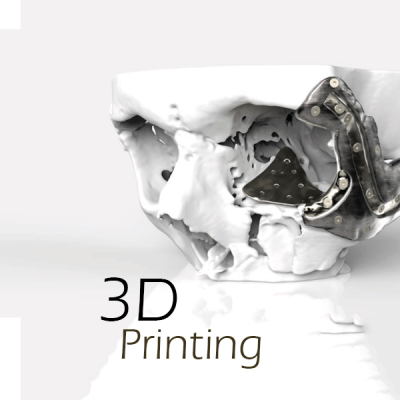
3D Printing Solutions for Classrooms, Labs, and Research Centers
From elementary classrooms to advanced university research labs, 3D printing is revolutionizing the way students learn, design, and solve problems. By transforming digital ideas into physical models, additive manufacturing provides learners with the opportunity to experiment, test, and refine their concepts in real time. These hands-on experiences not only strengthen creativity, critical thinking, and collaboration but also help students build the practical skills today’s workforce demands. Whether used to inspire curiosity in young learners or to push the boundaries of research at the graduate level, 3D printing opens doors to new possibilities in education and beyond.
Solutions for Every Stage of Learning
K-12 Classrooms
Introducing 3D printing early helps spark curiosity in STEM. Students gain confidence by creating tangible projects, exploring design thinking, and developing problem-solving skills. Affordable, classroom-friendly systems like UltiMaker make it easy for schools to integrate 3D printing into science, technology, and engineering programs.
Technical & Community Colleges
Career and technical education programs use 3D printing to bridge classroom concepts with real-world applications. Learners preparing for industry certifications can practice rapid prototyping, fixture design, and additive manufacturing fundamentals using Stratasys and Ultimaker printers, gaining job-ready skills in engineering, healthcare, and advanced manufacturing.
Colleges & Universities
At the higher education level, 3D printing attracts top students, faculty, and industry partnerships. Stratasys professional systems offer an unmatched variety of materials, detail, and durability, supporting disciplines ranging from engineering and architecture to life sciences and the fine arts. Caracol’s large-format 3D printing pushes design boundaries, enabling universities to prototype full-scale components for aerospace, construction, and automotive applications.
Research & Industry Collaboration
Universities and research institutions are using 3D printing to break barriers in innovation. With advanced additive technologies, researchers can test new materials, develop high-performance prototypes, and engage industry partners on real-world challenges. These collaborations not only expand knowledge but also give students meaningful opportunities to contribute to cutting-edge projects.
Ready to see how 3D printing can transform your classrooms, labs, or research programs?
Schedule a visit to our Solutions Center to explore Stratasys, UltiMaker, and Caracol technologies in action—or request a sample part to experience the quality firsthand.
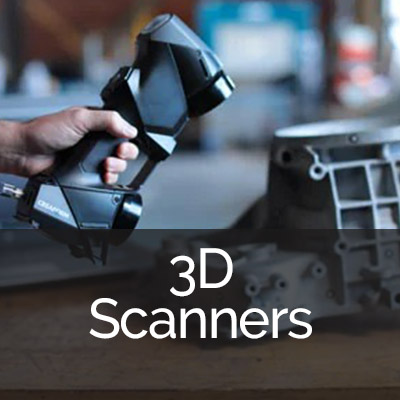
Tech-Labs offers a wide range of 3D scanners to fit your needs and budget. Our 3D scanners range from portable handheld scanners to a system of multiple scanners that work together to scan larger objects faster and more accurately.
A 3D scanner is a device that analyzes a real-world object or environment to collect data on its shape and possibly its appearance (i.e. color and texture). The collected data can then be used to construct digital three-dimensional models.
Many different technologies can be used to build these 3D-scanning portable devices; each technology comes with its own limitations, advantages, and costs. Many limitations in the kind of objects that can be digitized are still present, for example, optical technologies encounter many difficulties with shiny, mirroring, or transparent objects. For example, industrial computed tomography scanning can be used to construct digital 3D models, applying non-destructive testing.
Collected 3D data is useful for a wide variety of applications. These devices are used extensively by the entertainment industry in the production of movies and video games. Other common applications of this technology include industrial design, orthotics and prosthetics, reverse engineering and prototyping, quality control/inspection and documentation of cultural artifacts.
Amatrol delivers total learning solutions for Advanced Manufacturing Training!
Tech-Labs offers technical training equipment and curriculum from Amatrol’s Advanced Manufacturing program. Amatrol’s industry-leading equipment and curriculum are developed in partnership with industry to deliver job-ready, industry-relevant skills. Working closely with companies like Caterpillar, Tropicana, and many others Amatrol has designed equipment for workplace success.
Key Features
- Highly Demanded Industry Skills: Hands-On, Job-Ready
- Individualized Self-Paced or Group Learning Flexibility
- Extensive Curriculum Spanning Basics Through Advanced
- Authentic Industrial Troubleshooting
- Durable, Industrial Equipment Designed for Effective Teaching
- Superior Multimedia Interactivity Connects With Learners
- eAssessment to Accelerate Learning, Improve Effectiveness
- Learning Anywhere, Anytime – 24 x 7
- Outstanding Support
- Computer Based Training (CBT) with Amatrol’s eAssessment (available via the web)
As FANUC America's exclusive Education Authorized Reseller in Texas and Oklahoma, we provide our customers with high-quality CNC and Robotics learning systems. As the leading CNC and Robot manufacturer with the most extensive installed base, students will most likely use FANUC CNCs or Robots when entering the workforce.
There is a growing need for skilled workers competent in the setup, programming, and operation of CNCs. Since more manufacturers trust their operations to FANUC CNCs than any other control platform, students and workers must become FANUC CNC certified.
FANUC’s Certified Education Robot Training system sets the industrial robot certification training standard. As the number one supplier of intelligent robots, more FANUC robots are working in manufacturing and industrial facilities than any other brand. The FANUC Robots Certified Education Robot Training Cell is extremely valuable to trade schools, high schools, community colleges, and engineering schools.
The cybersecurity skills gap is estimated at 1.8 million unfilled positions globally. Tech-Labs is proud to offer IT and cybersecurity training programs from Marcraft ETG.
We offer a line of training systems for Advanced Manufacturing from Amatrol, including equipment specifically designed to teach hydraulics and pneumatics.
Tech-Labs is proud to offer equipment and curriculum from Amatrol’s Advanced Manufacturing program. Amatrol’s industry-leading equipment and curriculum is developed in partnership with industry to deliver job-ready, industry-relevant skills. Working closely with companies like Caterpillar, Tropicana, and many others Amatrol has designed equipment for workplace success.
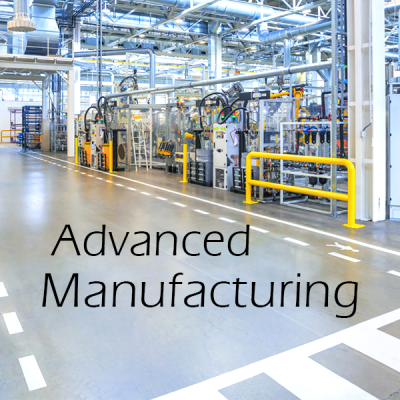
Tech-Labs offers a wide range of training products designed to keep pace with the world of Advanced Manufacturing. From Hydraulics to Process Control to CNC there is a program for any application.
Tech-Labs offers technical training equipment and curriculum from Amatrol’s Advanced Manufacturing line. Amatrol’s motor control trainers and curriculum is developed to deliver job-ready, industry-relevant motor control skills.
Advanced Manufacturing Skills For Workplace Success!
Amatrol’s mechanical training systems are the best in the industry. Our learning programs are developed in partnership with industry and education to ensure that the skills are on target to support modern industry needs. We off a wide variety of Amatrol training systems to meet the many diverse demands in mechanical training. Our learning programs are equally effective for technicians, engineers, production workers, and anyone needing further understanding and skills in mechanical systems.Process control is a versatile and vital part of major industries, including power generation; petrochemicals; food processing and bottling; chemical manufacturing; biotechnology; pharmaceuticals; and refineries.
Because of the wide application of this key component, Amatrol has developed the largest and most in-depth offering of industrial process control training options available. Amatrol offers four major process control trainers, each covering a different process control application: level and flow, temperature, analytical, and pressure. Amatrol also offers a variety of training options for related process control applications such as HART communication protocol, Foundation Fieldbus, and SCADA.
Pages
-

-
 Portable, high-performance simulation training anywhere. The CM Labs Edge Plus delivers a comprehensive heavy equipment training solution, compatible with CM Labs' entire fleet of equipment packs and integrated with Intellia Instructor.
 -
 Experience unmatched simulation realism with the Vortex Master, CM Labs’ full-suite training simulator designed to deliver immersive, high-fidelity operator training with a motion platform, scalable displays, and interchangeable controls.
 -
 CM Labs MasterCab Simulator delivers a complete immersive training experience with professional-grade hardware, Intellia Instructor integration, and full equipment training pack compatibility.
 -
 Screen and train operators safely with CM Labs’ Vortex Trainer—an affordable, desktop-based simulator compatible with multiple Intellia training packs for flexible, portable workforce development.
 -
 Item Number:K5338-1Introduce students to welding with the Voyage™ Arc VR headset. An immersive, classroom-ready solution for safe, engaging career exploration and foundational skills training.
 -
 Item Number:VR870-ABExplore Amatrol's VR Smart Factory – Allen-Bradley (VR870-AB) for Meta Quest. Train with a digital twin Mechatronics system to build real-world Industry 4.0 skills virtually.
 -
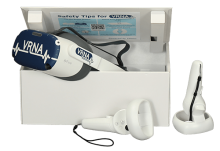 VRNA offers a fully immersive VR experience designed to enhance the efficiency and reduce the expenses associated with teaching patient care job skills typically conducted in a laboratory environment, including Certified Nursing Assistant (CNA) and Emergency Medical Services (EMS) modules.
 -
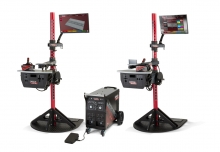 The VRTEX systems are virtual reality arc welding training simulators. These computer-based training systems are educational tools designed to supplement and enhance traditional welding training. They allow students to practice their welding technique in a simulated and immersive environment. The VRTEX systems promote the efficient transfer of quality welding skills and body positioning to the welding booth while reducing material waste associated with traditional welding training.
 -
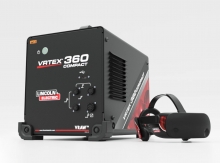 Item Number:K4914-20Lincoln Electric's VRTEX® 360 Compact is a small, portable Virtual Reality Welding Simulator for mobile use in multiple environments.