Teach Industrial Evaporation in the Lab

Evaporation Experiments for Chemical Engineering Education

Evaporation is widely used in chemical, food, and environmental industries to concentrate solutions and recover solvents. Pignat’s evaporation training units provide hands-on learning of heat transfer, phase change, and energy efficiency.

These systems allow students to evaluate operating conditions and optimize processes, preparing them for practical applications in industrial environments.

Key Learning Outcomes

  • Understand evaporation principles and heat transfer
  • Study concentration and solvent recovery techniques
  • Explore the role of energy efficiency in evaporation systems
  • Connect theoretical concepts with real-world industrial practice

Liquid–Liquid Separation for Education & Research

From Theory to Application: Extraction Education

Liquid–liquid extraction is a versatile separation technique, commonly applied in pharmaceuticals, environmental engineering, and chemical production. Pignat extraction units give students a hands-on platform to explore solvent recovery, phase equilibria, and distribution coefficients.

By operating real equipment, learners connect theoretical concepts to industrial practices, gaining valuable process engineering skills.

Key Learning Outcomes

  • Understand phase equilibria in liquid–liquid systems
  • Perform separation and purification through extraction
  • Study solvent recovery and distribution coefficients
  • Apply liquid–liquid extraction to real industrial challenges

Explore Solid–Liquid Separation Hands-On

Pignat Filtration Systems for Education & Research

Filtration is a core separation method across industries, from chemical production to environmental management. Pignat’s filtration training units let students experiment with solid–liquid separation, pressure effects, and filtration media.

These systems prepare learners for real-world challenges by linking academic knowledge with industrial filtration applications.

Key Learning Outcomes

  • Study the mechanics of solid–liquid separation
  • Understand the impact of pressure and media type
  • Evaluate efficiency and product quality
  • Apply filtration principles to chemical and environmental processes

Pignat Reaction Training Units for Education

Hands-On Training in Chemical Kinetics

Reaction engineering is the foundation of chemical process design. Pignat’s reaction training systems enable students to explore kinetics, reactor operation, and process optimization in a controlled lab setting.

These systems reinforce critical concepts in chemical engineering, preparing learners to design and scale up industrial processes effectively.

Key Learning Outcomes

  • Understand chemical kinetics and reaction rates
  • Explore different reactor designs and configurations
  • Study process optimization and operating parameters
  • Apply reaction engineering concepts to industrial challenges
  • Amatrol T7022 Brochure Cover

Amatrol T7022 EV-Battery Technology Fundamentals Learning System

The Amatrol T7022 EV-Battery Technology Fundamentals Learning System provides a comprehensive introduction to electric vehicle battery systems, combining theory with hands-on practice. Learners gain real-world experience in safety, diagnostics, charging, and storage through interactive training modules designed for workforce readiness.

Hands-On Training with Real Components

This training workstation features authentic EV battery system components, including lithium-ion batteries, a smart charger/discharger, an individual cell charger, battery storage unit, electrical circuit devices, and a thermal camera. These tools ensure students practice with the same technologies used in industry settings.

Skills Covered

  • Introduction to electric vehicle systems
  • Basic circuit concepts: voltage, current, and resistance
  • Circuit protection methods
  • Lithium-ion battery characteristics and operation
  • Battery charging, handling, and storage
  • Battery packs and life cycles
  • Battery production and testing
  • EV electrical system operation

Key Learning Features

  1. 29 Hands-On Skills: From cell testing to smart charging and troubleshooting.
  2. Multiple Power Options: Includes individual batteries, packs, and 12VDC supply.
  3. Safety-Focused: Battery circuit breakers, storage, and low-current lithium-ion phosphate batteries.
  4. Interactive Curriculum: Multimedia eLearning with 3D graphics, quizzes, and simulations.

Industry-Relevant Training

With growing demand for EV technicians, the T7022 delivers the skills employers require. By learning to operate smart chargers, analyze battery packs, and apply safety protocols, students graduate with the technical confidence to enter EV and advanced transportation careers.

Tech-Labs proudly offers Amatrol’s EV-Battery Technology Fundamentals Learning System to schools, colleges, and workforce training centers.

Contact us today to integrate EV battery training into your technical program.

  • over of the 2025 NeuroMaker Catalog featuring the Build, Code, Create, Discover tagline and Tech-Labs contact information.

Build. Code. Create. Discover. Download the 2025 Catalog

Download the latest NeuroMaker catalog to explore hands-on STEM programs that blend biomedical engineering, coding, AI, and brain–computer interface (BCI) with project-based learning.

Inside, you’ll find the NeuroMaker Hand 2.0, the BioSensor Kit, the accessible NeuroMaker BCI headband, and the exciting NeuroRacing experience—plus 100+ hours of curriculum, student projects, and professional development options. (English and Spanish resources included.)

Explore:

  • NeuroMaker Hand 2.0: A programmable prosthetic hand kit derived from real prosthetics work—teaches design, assembly, and coding.
  • BioSensor Kit: Plug-and-play sensors (EMG, flex, and more) to capture muscle signals, motion, temperature, and color for advanced projects.
  • NeuroMaker BCI: Classroom-ready EEG headband with activities introducing neuroscience, machine learning, and signal processing.
  • NeuroRacing: A brainwave-driven slot-car challenge that builds focus, engagement, and makerspace excitement.
  • Curriculum & Projects: 100+ hours of interdisciplinary content, student-oriented projects, and capstone challenges.
  • Professional Development: e-learning Suite/Core, live support, docs & FAQs for smooth implementation.

Why educators choose NeuroMaker

  1. Real-world relevance: Industry-derived activities connect prosthetics, AI, and BCI to authentic problem-solving.
  2. Flexible implementation: Browser-friendly tools, bilingual materials, and scaffolded lesson plans.
  3. Student impact: High engagement, career exploration, and 21st-century skill development.
  • Cover of the Amatrol Smart Factory Tabletop Mechatronics (87-TMS) brochure featuring smart sensors, I/O-Link, MES, and PLC training systems

Teach Industry 4.0—Hands-On, Bench-Top, and Cloud-Ready

Bring Industry 4.0 to your classroom—on the bench. Amatrol’s Smart Factory Tabletop Mechatronics (87-TMS) blends smart sensors, I/O-Link, cloud-based SCADA, mobile apps, and MES with traditional mechatronics equipment to deliver practical, workforce-ready training. Students learn to configure networks, acquire data in the cloud, troubleshoot PLCs with electronically inserted faults, and analyze performance—skills aligned to today’s Smart Factory jobs.

The 87-TMS is part of Amatrol’s Industry 4.0 Fundamentals (I4F) multi-course program (Introduction to Mechatronics, Industrial Control Systems, Robot Operations & Programming, and Industrial Internet of Things), making it a flexible fit for high school, college, and workforce programs.

Key Learning Outcomes

  • Industrial Networks & Ethernet IP addressing; managed switch diagnostics and performance tuning.
  • Smart sensors via I/O-Link, including photoelectric and pressure/vacuum sensors.
  • Barcode and RFID operation, programming, and Ethernet-to-serial integration.
  • Cloud-based data acquisition and SCADA operations with mobile app visualization.
  • Manufacturing Execution (MES): order entry, scheduling, status, statistics, and alarms.
  • PLC operations and troubleshooting, including FaultPro electronically inserted faults on an Allen-Bradley L16 processor.

What’s Included

  • Tabletop Mechatronics with conveyor, smart sensors, RFID, barcode reader, and I/O-Link master.
  • Network hardware: 24-port unmanaged and 8-port managed Ethernet switches.
  • Cloud-hosted SCADA and visual communications software (with mobile app).
  • Allen-Bradley L16 controller, I/O-Link interface for system status, and FaultPro for PLC troubleshooting.
  • World-class interactive multimedia eLearning with 3D animations and assessments.

Optional FANUC Robot Integration

Expand your Smart Factory Tabletop Mechatronics with a choice of industrial or collaborative robots from FANUC. Both options provide hands-on, industry-relevant automation training when combined with Amatrol’s 87-TMS stations.

FANUC 200iD Industrial Robot

Add a FANUC LR Mate 200iD six-axis industrial robot for traditional fenced-cell integration and advanced robot programming exposure. Ideal for learners progressing into high-throughput or manufacturing-line applications.
Prerequisite: Students should have prior FANUC programming experience.

FANUC CRX-5iA Collaborative Robot (COBOT)

Available exclusively to secondary and post-secondary educational institutions, the CRX-5iA Robot with Tabletop Mechatronics Workstation enables fenceless, collaborative training that’s classroom-friendly and fast to deploy.

Training Highlights

  • Fenceless robot operation with built-in force sensing for safe collaboration.
  • Tablet-based programming for intuitive student interaction.
  • Hands-on applications in pick-and-place, part transfer, and inspection.
  • Optional iRVision for part identification and quality analysis.

Curriculum Topics Snapshot

  1. Industrial Networks: Ethernet/IP addresses, managed switch setup & diagnostics, performance.
  2. Identification & Tracking: Barcode operation/programming, RFID programming and operation.
  3. Smart Sensing: Photoelectric and pressure/vacuum sensors via I/O-Link.
  4. Cloud & SCADA: Configuring cloud-based SCADA and maintenance management.
  5. MES: Order entry, scheduling, status dashboards, production statistics, alarms.
  6. PLC & Troubleshooting: Controller operation, I/O testing, event sequencing, processor troubleshooting.

Who It’s For

Programs building pathways in advanced manufacturing, mechatronics, IIoT, and smart maintenance—including high school career academies, community colleges, universities, and incumbent-worker upskilling.

Expand with I4F Learning Systems

Pair 87-TMS with complementary learning systems such as Portable AC/DC Electrical (990-ACDC1), Electrical Control (990-EC1), Pneumatics (990-PN1), Hydraulics (990-BH1), Electronic Sensors (990-SN1), Robotics 1 & 2 (96-ROB1 & 96-ROB2), CNC Machines (96-CNC1), Skill Boss Manufacturing (95-MSB1), and Measurement Tools (990-MES1) to build a complete Industry 4.0 pathway.

  • Full enterprise-level Industry 4.0 system integrating robots, conveyors, AMRs, machining center, MES, SCADA, and smart sensors

Enterprise-Level Industry 4.0 Training for the Connected Workforce

Take Industry 4.0 training to the enterprise level. Amatrol’s Smart Factory Enterprise System integrates industrial robots, conveyors, autonomous mobile robots (AMRs), machining centers, and smart sensors into a fully connected manufacturing environment. Students gain hands-on experience with secure networks, cloud-based data analytics, MES software, and IIoT communications — the technologies powering modern smart factories.

Learners explore big data analytics, predictive maintenance, and system-wide monitoring using real industrial hardware and software. The result: workforce-ready skills in networking, automation, cybersecurity, and data-driven production management.

Key Learning Outcomes

  • Secure network communications, Ethernet/IP setup, and wireless integration.
  • Big Data acquisition, visualization, and cloud-based MES analytics.
  • Smart maintenance and production management using real-time dashboards.
  • Enterprise-level system diagnostics, OEE calculations, and production tracking.
  • Mobile app monitoring for system status, alarms, and maintenance alerts.

Integrated Systems & Technologies

  • Smart Sensors & Product ID: RFID, barcode, analog position, and photoelectric sensors.
  • Visual Communications & SCADA: Cloud-based monitoring, mobile notifications, and collaboration tools.
  • Smart Conveyor System: Material handling, machine loading, and product transfer with pallet tracking.
  • Smart Robot Workstations: FANUC industrial robots with laser scanners, vision guidance, and discrete I/O controls.
  • Autonomous Mobile Robot (AMR): Internal transportation between manufacturing & assembly systems.
  • Machining Center: CNC mill and simulator integrated via Ethernet & network security switches.

Data Analytics & Communications

Students learn to manage real-time manufacturing and maintenance data across connected systems. Industry-relevant software provides secure access to production trends, quality data, OEE, and system health, enabling proactive, data-driven decision-making.

Integration & Flexibility

Each workstation is modular and interoperable, allowing programs to start small and scale up to a full enterprise environment. Systems can be combined or used independently for focused training in sensors, robotics, machining, or networked automation.

Expand Your Smart Factory Program

Combine the Enterprise System with Amatrol’s Smart Factory Tabletop Mechatronics (87-TMS) or Smart Factory Enterprise Upgrade options for a comprehensive Industry 4.0 pathway from classroom fundamentals to enterprise-scale automation.

  • LJ Create PETRA II Advanced Industrial Control Trainer for hands-on factory automation and PLC programming education

PETRA II Advanced Industrial Control Trainer

Manufacturer: LJ Create
Order Code: 292-01 P9192-J

The PETRA II Advanced Industrial Control Trainer provides a complete simulated factory automation process controlled by one or more industry-standard programmable logic controllers (PLCs). Ideal for teaching programmable control, engineering maintenance, and condition monitoring, this trainer allows students to create and test PLC programs that automate a full manufacturing process—moving, sorting, and rejecting parts based on specification compliance.

Students begin by programming individual sensors and actuators, then progress to managing the complete system. The trainer includes dual conveyor belts, pneumatic pick-and-place and gripper mechanisms, and a range of pneumatic and optoelectronic sensors. Switchable faults let learners explore diagnostics and intermittent system errors, preparing them for real-world troubleshooting.

  • Two conveyors with parts dispenser and storage bins for accepted/rejected items
  • Compatible with PLCs such as Allen Bradley MicroLogix 820 and Siemens Simatic S7-1200
  • Range of pneumatic and optoelectronic sensors for measurement and control
  • On-board DIN rail, 24V DC power, and screw terminal connectors for flexibility
  • Optional expansion for additional sensors and actuators
  • Includes 24V power adapter, PLC leads, manual, and digital curriculum

Dimensions:41 × 26 × 20 in
Packed Weight: 83.5 lb

Requires: PLC, computer with PLC software, and compressed air (max 0.6 MPa / 6 bar / 90 psi)

  • Cover of the PETRA II Advanced Industrial Control Teaching Set Brochure

Includes both the PETRA Trainer (292-01), and a Siemens HMI Pack (292-03).

The PETRA II Advanced Industrial Control Teaching Set from LJ Create provides an integrated platform for teaching the principles of HMI panels and SCADA systems in a modern industrial context. This twin-plant system combines two PLC units, an HMI interface, and STEP 7 programming software to simulate real-world control, monitoring, and data exchange between networked systems. Designed for quick setup and intuitive use, PETRA II enables students to explore the fundamentals of industrial automation, fault detection, and process supervision—all within a structured curriculum framework.

The included lessons and pre-built PLC programs allow instructors to focus on system logic, diagnostics, and network communication rather than extensive coding. Through hands-on practice, learners gain experience adapting existing programs, programming HMI screens, and analyzing process performance using SCADA tools such as trend analysis, recipes, alarms, and predictive maintenance.

  • Teaches HMI panel operation and SCADA principles using a complete twin-plant trainer
  • Includes two PLC units, STEP 7 software, and PC programming station
  • Emphasizes data sharing, system monitoring, and networked device communication
  • Supports instruction on PLC logic, sensors, counters, timers, and analog inputs
  • Features realistic fault insertion for maintenance and troubleshooting exercises
  • Curriculum includes both theory and practical lessons aligned with Industry 4.0 skills
  • Provides hands-on experience with recipes, alarms, data logging, and performance tracking

Pages

  • Basic Hydraulics Learning System BH-85
    Item Number:
    BH-85
    Each Basic Hydraulics training system features standard industrial grade components. This attention to quality gives students experience they would normally only get on-the-job by helping them recognize industrial components and how to troubleshoot them more effectively. Components included with Basic Hydraulics are pre-mounted on circuit panels with silk-screened labels next to each, which facilitates ease of use and identification.
  • Amatrol Basic Pneumatics (85-BP)
    Item Number:
    85-BP
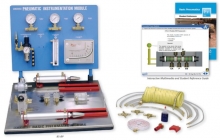
    Amatrol’s Basic Pneumatics training system (85-BP) introduces pneumatic principles through a combination of Amatrol’s top-flight multimedia curriculum with hands-on industrial pneumatic skill-building. Topics covered in this learning system include single-acting cylinder circuits, pressure vs. cylinder force, and flow control valves, while the panels can be used to practice skills such as connecting and operating a needle valve to control actuator speed.
  • Electro-Hydraulics Learning System (85-EH)
    Item Number:
    85-EH
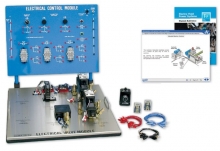
    The Electro-Hydraulics training system includes an electrical control panel with relay control components and an electrical valve module with solenoid-operated hydraulic directional control valves and electrical/electronic sensors. These components will be used to study a variety of topics including electrical control systems, basic control devices, power devices, control relays, sequencing control, timer control, pressure control applications, and circuit applications.
  • Collaborative Robots
    Item Number:
    CR-35iA
    FANUC’s new CR-35iA is the world’s first collaborative robot with a payload capacity of up to 35 kg. Fenceless, it opens a whole new world of possibilities. Working safely side by side with human operators, it is space as well as cost saving. And because inside it’s like any other FANUC robot, it operates like all FANUC robots. Certified to meet the requirements of ISO 10218-1:2011 and RIA/ANSI R15.06-2012, FANUC’s CR-35iA collaborative robot can work in a variety of applications alongside human workers including: machine tending, handling heavy payloads that require lift assist devices or custom equipment, higher payload mechanical assembly, palletizing or packing, and tote or carton handling.
  • FANUC CR-4iA Collaborative Robot
    Item Number:
    CR-4iA
    CR-4iA is a small collaborative robot with 4 kg payload
  • FANUC Collaborative Robots
    Item Number:
    CR-7iA
    The FANUC CR-7iA is FANUC's newest collaborative robot resembles the LR Mate family. Painted green to show it's ability to work beside humans, you can expect the same reliability as FANUC's yellow robots. The CR-7iA is ideal for small part sorting and assembly, inspection, machine tending, and part delivery. It has a 7 kg payload, 717 mm reach, and is equipped with iRVision and Force Sensing. There are a variety of mounting options such as floor, wall, and ceiling.
  • Robotics Training Equipment
    FANUC’s new SCARA robots are ideal for high-speed, precision applications such as assembly, pick and place, testing/inspection and packaging processes.
  • BOFA Americas Laser Fume Extraction

    In the rare event that a burning ember or spark is drawn into the fume extraction unit, there is the possibility that debris in the filters could ignite. Although any resultant fire would typically be retained within the fume extraction unit, this would cause significant damage and in extreme circumstances, the risk may extend beyond the extraction unit. For processes where such risks have been identified, additional protection in the form of an in-line firebox is an additional precaution.

  • BOFA Advantage Range of Laser Fume Extractors

    The BOFA inline pre-filter 1000 has been designed specifically for applications that generate high amounts of dust or particulate.

    This inline filter unit is positioned alongside the main BOFA fume filtration system to increase the overall filter capacity and extend the life of the main filters. The DeepPleat DUO pre-filter incorporates a massive drop-out chamber within the filter, having a volume area of 15ltrs. Above the drop-out chamber but still within the housing there is a sealed 200mm deep pleat layer of F8 media giving a surface area in excess of 30 sq meters.

  • Fume Extraction Systems from BOFA
    The BOFA inline prefilters have been designed specifically for applications that generate high amounts of dust or particulate.

Pages