Training systems from Lucas-Nuelle provide a modular, scalable approach to teaching power electronics—from foundational concepts in power converter technology to advanced applications in controlled drives. These systems are designed to evolve with your program, allowing for easy modernization, expansion, and integration of new technologies.

Hands-On Learning with Real-World Applications

Learners gain practical experience working with key components such as diodes, thyristors, and IGBTs, while exploring their role in real-world circuits. Through guided experiments, students build, operate, and measure circuits, developing critical skills in control, modulation, and diagnostics.

  • Understand power semiconductors and their applications
  • Build and test power converter and inverter circuits
  • Develop measurement skills using multimeters and oscilloscopes
  • Explore control and modulation techniques
  • Apply knowledge to drive technology and industrial systems

Integrated Multimedia Learning with UniTrain

The UniTrain multimedia courses enhance hands-on training with interactive animations, guided experiments, and step-by-step instruction. This blended approach helps learners visualize complex concepts while reinforcing practical skills in a structured, engaging format.

Whether you are building a new program or enhancing an existing lab, Lucas-Nülle power electronics systems provide the flexibility and depth needed to prepare students for careers in advanced manufacturing, energy systems, and industrial automation.

Ready to bring power electronics training into your program? Contact us today to request a quote, schedule a demo, or explore how these systems can align with your curriculum and workforce goals.

Portsmouth University is helping shape the future of engineering education with new power engineering training labs featuring Lucas-Nülle systems. Designed to support hands-on learning, these advanced labs give students and future professionals the opportunity to build practical skills in modern energy engineering, sustainable power generation, and real-world electrical systems.

As the energy sector continues to evolve, training environments must do more than teach theory. They must give learners the confidence to work with the technologies, systems, and processes they will encounter in the field. With Lucas-Nülle training systems, Portsmouth University is creating an immersive learning environment that helps bridge the gap between classroom instruction and workforce readiness.

Why This Lab Matters

  • Supports hands-on learning in power engineering
  • Helps prepare students for modern energy industry careers
  • Strengthens instruction with real-world training applications
  • Introduces learners to sustainable energy and advanced power systems
  • Creates a more engaging and career-relevant educational experience

Training for a Changing Energy Landscape

From renewable energy concepts to advanced power engineering applications, Portsmouth University’s new labs demonstrate how institutions can better prepare students for the demands of a changing industry. With modern equipment, interactive training experiences, and a focus on applied learning, these labs set a strong example for universities looking to strengthen engineering and energy education programs.

See What’s Possible with Advanced Training Solutions

We help education and training organizations identify solutions that align with their program goals, industry demands, and student outcomes. Contact us to learn more about Lucas-Nülle training solutions for power engineering, electrical systems, and workforce development.

Date: October 21-23, 2026

Location: Texas A&M Conference Center, College Station, TX

Date: October 13-15, 2026

Location: LyondellBasell Center, Pasadena, TX

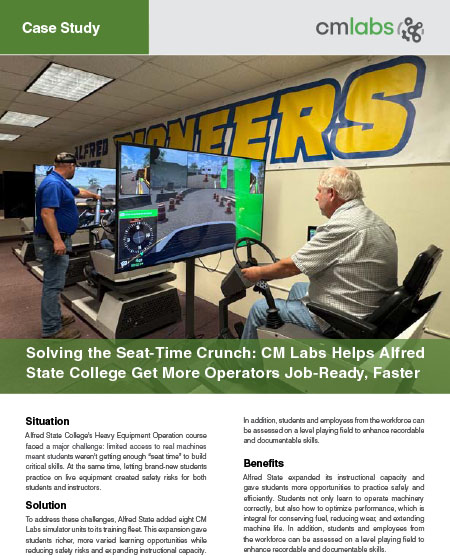
  • Case study cover showing CM Labs simulators in use at Alfred State College heavy equipment training program

Solving the Seat-Time Challenge with Simulation Training

Alfred State College faced a critical challenge in its Heavy Equipment Operation program: limited access to real machinery meant students weren’t getting enough hands-on experience to build essential skills. At the same time, training inexperienced students on live equipment introduced safety risks for both learners and instructors.

To overcome these challenges, Alfred State integrated CM Labs simulators into its training program. By adding multiple simulation units, the college expanded instructional capacity, increased student access to practice time, and created a safer, more controlled learning environment.

How Simulation Transformed Training

  • Increased Capacity: Expanded program enrollment and provided consistent access to training resources.
  • Enhanced Safety: Allowed students to build confidence before operating real equipment.
  • Faster Skill Development: Training time improved by an estimated 20–30%.
  • Real-World Scenarios: Simulators replicate weather, lighting, and jobsite conditions.
  • Objective Assessment: Performance metrics such as task time, fuel usage, and precision support measurable outcomes.
Students were able to gain critical seat time faster, improving skill development and reducing training bottlenecks.

Real Impact for Workforce Readiness

With the addition of simulation, Alfred State grew its program from approximately 40 students to over 100, all while improving training quality. Students now gain exposure to multiple machine types and develop both operational and performance-optimization skills—helping reduce fuel consumption, minimize wear, and extend equipment life.

By combining simulation with traditional training, Alfred State has created a scalable, safe, and highly effective pathway to workforce readiness—preparing students with the confidence and competence needed to succeed in the field.

  • Student Learning with Matrix TSL Hands-On Engineering Solutions

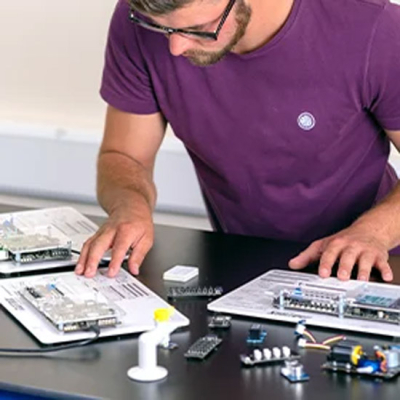
Engineering Education Systems bring complex engineering concepts to life through hands-on, interactive learning experiences. These systems are designed to help students move beyond theory and develop practical skills that align with real-world engineering applications across multiple disciplines.

Solutions within this category support a wide range of program areas, including mechanical, electrical, civil, and manufacturing engineering. By combining physical hardware, structured curriculum, and data acquisition tools, these systems enable students to explore, test, and analyze engineering principles in a controlled lab environment.

From foundational concepts to advanced applications, Engineering Education Systems provide scalable learning pathways for universities, community colleges, and advanced STEM programs. Students gain experience with industry-relevant equipment and methodologies, preparing them for careers in engineering, manufacturing, energy, and emerging technologies.

  • Hands-On Learning: Reinforce theoretical concepts through real-world experimentation and lab-based activities.
  • Industry-Relevant Skills: Utilize equipment and processes that mirror modern engineering environments.
  • Structured Curriculum: Support instructors with guided learning materials, lab exercises, and assessment tools.
  • Multi-Disciplinary Coverage: Address core engineering topics including mechanics, fluid dynamics, electrical systems, and automation.
  • Scalable Solutions: Adapt to different education levels, from introductory courses to advanced engineering programs.
  • Mechanical & Structural Engineering
  • Electrical & Electronic Systems
  • Fluid Mechanics & Process Control
  • Automation & Manufacturing Systems
  • Materials & Testing

Whether building a new lab or enhancing an existing program, our Engineering Education solutions provide the tools to deliver engaging, outcomes-focused training that prepares students for the demands of today’s engineering workforce.

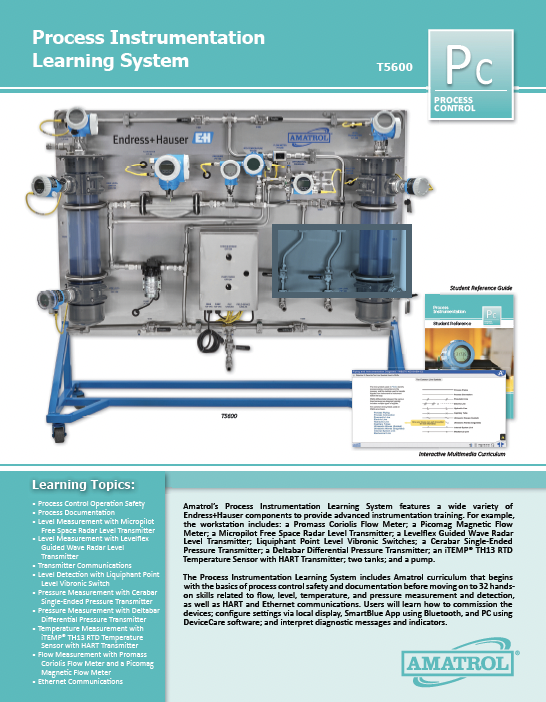
  • Download brochure for the Amatrol T5600 Process Instrumentation Learning System

Download the brochure for Amatrol’s Process Instrumentation Learning System (T5600) and explore a hands-on training solution designed to build real-world skills in modern process control and instrumentation.

This learning system features a wide variety of Endress+Hauser instrumentation components, including flow meters, radar level transmitters, pressure transmitters, point level switches, and an RTD temperature sensor with HART transmitter. Learners can develop practical experience with core process measurement applications involving flow, level, pressure, and temperature.

The included multimedia curriculum begins with the fundamentals of process control, safety, and documentation before progressing into 32 hands-on skills. Students also learn transmitter communications, device commissioning, configuration through local display and software tools, and diagnostic interpretation using HART and Ethernet communications.

What You’ll Find in the Brochure

  • Overview of the T5600 Process Instrumentation Learning System
  • Featured Endress+Hauser instrumentation components
  • Learning topics covering safety, documentation, and measurement applications
  • Details on HART and Ethernet communications training
  • Information about the included multimedia curriculum and hands-on skill development

Key Training Areas

  1. Process control operation safety
  2. Process documentation
  3. Level measurement and detection
  4. Pressure measurement
  5. Temperature measurement
  6. Flow measurement
  7. Transmitter communications
  8. Ethernet communications

Watch the Amatrol T5600 Process Instrumentation Learning System video to see how this advanced training system helps learners build practical skills in process control, instrumentation, and transmitter communications. Developed through a partnership between Amatrol and Endress+Hauser, this system is designed for hands-on training in calibration, commissioning, and diagnostics using industry-relevant instrumentation components.

In the video, viewers get an overview of the trainer’s measurement and detection capabilities across flow, level, pressure, and temperature, as well as its role in teaching calibration, commissioning, and diagnostic procedures. The system is also built for durability, with heavy-duty features such as stainless steel mounting panels and tubing, Swagelok compression fittings, NPT-threaded connections, anti-vibration mounting, and plastic sight tubes.

  • An overview of the T5600 Process Instrumentation Learning System
  • Featured Endress+Hauser transmitters and measurement devices
  • How learners practice calibration, commissioning, and diagnostics
  • Training applications for flow, level, pressure, and temperature measurement
  • Examples of transmitter communication using HART, Bluetooth, and Ethernet
  • How the system supports engineering, electrical, process control, and industrial training programs
  • Promass Coriolis Flow Meter
  • Picomag Magnetic Flow Meter
  • Micropilot Free Space Radar Level Transmitter
  • Levelflex Guided Wave Radar Level Transmitter
  • Liquiphant Point Level Vibronic Switches
  • Cerabar Single-Ended Pressure Transmitter
  • Deltabar Differential Pressure Transmitter
  • iTEMP® TH13 RTD Temperature Sensor with HART Transmitter
  • Process control safety and documentation
  • Flow measurement and detection
  • Level measurement and point level detection
  • Pressure measurement
  • Temperature measurement
  • Calibration and commissioning procedures
  • Device diagnostics and troubleshooting
  • Transmitter communication via HART, Bluetooth, and Ethernet

Learners can configure settings directly on the device, through Endress+Hauser’s SmartBlue application, or on a PC with DeviceCare software. This makes the T5600 a strong fit for programs preparing students and technicians for work in process control, instrumentation, and industrial maintenance environments.

Driver Training Solutions’ Sanitation Simulator provides immersive, scenario-based training designed specifically for waste collection and sanitation fleet operators. Trainees can safely develop critical skills such as route navigation, vehicle handling, stop-and-go operations, backing, tight turns, and hazard awareness—all within a controlled virtual environment.

By removing the risks, costs, and wear associated with on-road training, organizations can deliver consistent, repeatable instruction while protecting both equipment and personnel. The simulator allows drivers to build confidence and competence before ever operating a real vehicle.

Ideal for municipalities, private waste contractors, and fleet training academies, this solution supports safer operations, reduces accident rates, and improves overall efficiency across a wide range of waste management applications.

Pages

  • DAC Dissectibles
    Item Number:
    272-980
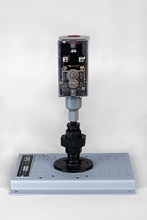
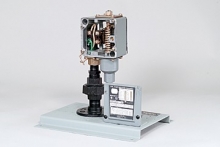
    DAC Worldwide's Pressure Control Switch Sample Dissectible (272-980) is a realistic dissectible sample of a common industrial control-type pressure switch as used in automation and process systems.
  • DAC Model: 272-981
    DAC Worldwide's Pressure Switch Sample Dissectible (272-981) is a realistic dissectible sample of a common industrial pressure switch.
  • Prism Downdraft Table for Welding and Grinding
    Item Number:
    K2751-10 / K2751-14
    Improve safety and air quality with Lincoln Electric’s Prism® Downdraft Tables—compact, dual-purpose workbenches with powerful extraction for welding, grinding, and plasma cutting applications.
  • DAC Worldwide Model: 278-195
    Item Number:
    278-195
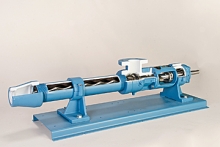
    DAC Worldwide’s Progressive Cavity Pump Cutaway – Moyno/Roper (278-195) depicts a sectioned industrial progressing cavity pump that allows for convenient classroom or laboratory training in the operating characteristics, construction, and maintenance of these common process pumps used in a variety of sectors.
  • Chemical Engineering Training Equipment
    Item Number:
    ELL/4000
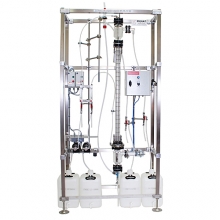
    The unit is used manually, with flows controlled by manual valves and flowmeters. The unit has a 2"-diameter glass column, which enhances the visual experience of the extraction process. A pneumatic pulsator increases the contact between the two phases and mass transfer. Students learn how to determine the interphase level, material balance, efficiency of the column, and more.
  • DAC Sample Boards
    Item Number:
    869-PAC
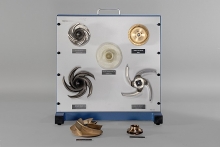
    DAC Worldwide’s Pump Impeller Sample Board (869-PAC) is a hands-on teaching aid that is designed to supplement courses in pump operation and maintenance. This rack-mounted identification panel accommodates magnetic identification tags relating to the impellers supplied, allowing association with the appropriate impeller by the student.
  • DAC Worldwide 275-PAC
    Item Number:
    275E-PAC
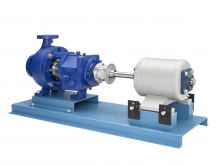
    DAC Worldwide’s Pump Maintenance and Alignment Training System Plus (275E-PAC) is a realistic benchtop training system for industrial pumps. Using an actual standard ANSI centrifugal pump, the training system allows for instruction in the complete tear-down and assembly procedure for this common pump type.
  • Pump Packing Mechanical Seal Trainer (280-000)
    Item Number:
    280-000
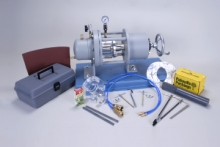
    Hands-On Technical TrainersDAC Worldwide’s Pump Packing / Mechanical Seal Trainer (280-000) is a unique, multi-purpose demonstration device related to training in industrial pump sealing systems. The trainer supports basic introductory training in pump packing / mechanical seal operation, and gives learners a first-hand view into a component that is found in various maintenance applications worldwide.
  • Item Number:
    295-408
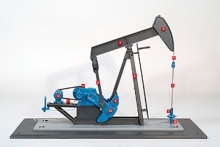
    DAC Worldwide's Pumpjack Package Model (295-408) is a highly detailed, professionally crafted technical scale model of a common oilfield production pump.
  • End of Arm Tooling for Collaborative Robots
    Item Number:
    QC10
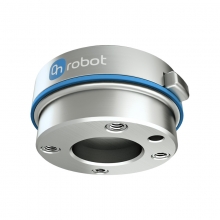
    The OnRobot Quick Changer enables easy and fast tool changing, can handle 20kg payload, and has a low built-in height and weight. Patented reliable and with an easy-to-use locking mechanism, extra safety locking structure and locking springs make the Quick Changer a unique product, ideal for all collaborative robot applications.

Pages