The Applied Electrical Control Learning System (90-EC1-A) teaches learners how to interpret, design, and operate relay control circuits using ladder diagrams. Electrical control is vital in the operation of electric and fluid power actuators and also forms the fundamental building block of automation systems like programmable logic controllers (PLCs), which are programmed using the electrical control schematic method, the ladder diagram.
Prepare Students for Modern Fabrication with Robotic Welding and Cutting
MOD-WELD® and MOD-CUT® systems from APT Manufacturing Solutions help schools, colleges, and workforce training centers introduce students to the next level of welding, cutting, robotics, and advanced manufacturing. Built around FANUC cobots and industrial robots, these systems help programs connect foundational fabrication skills with the automated technologies used in today’s industry.
These robotic fabrication systems can support everything from introductory CTE welding programs to advanced college-level robotics, mechatronics, and smart manufacturing labs.
Step 1: Build Welding and Cutting Fundamentals
Students begin by learning safety, materials, joint preparation, measurement, fit-up, workholding, weld quality, and cutting fundamentals.
Step 2: Introduce Robotic Processes
MOD-WELD® and MOD-CUT® help students see how manual skills transfer into automated workflows, including robot motion, torch positioning, part setup, and repeatability.
Step 3: Apply Programming and Automation Concepts
Students gain exposure to cobot programming, FANUC interfaces, offline programming, vision, seam tracking, and production-style workflows.
Step 4: Prepare for Industry Roles
Programs can connect robotic fabrication training to careers in welding, fabrication, robotics operation, automation, advanced manufacturing, and industrial maintenance.
Robotic welding and cutting do not replace foundational hands-on training. They complement it by helping students understand how welding and fabrication skills are applied in modern automated environments.
- Increase student engagement with robotics, automation, and real-world technology.
- Reinforce welding fundamentals through repeatable robotic processes.
- Teach automation readiness, including setup, programming, troubleshooting, and process control.
- Support career pathways in welding, robotics, fabrication, and advanced manufacturing.
- Help programs modernize labs while keeping manual welding instruction at the center of skill development.
For high school welding, manufacturing, STEM, and robotics programs, MOD-WELD® and MOD-CUT® systems can introduce students to automation in a way that is approachable, visual, and hands-on.
- Introduce students to robotic welding and plasma cutting careers.
- Support welding, manufacturing, engineering, robotics, and STEM pathways.
- Help students connect classroom learning to local industry needs.
- Use cobot systems to demonstrate automation concepts in a compact lab footprint.
- Build awareness of future careers before students enter college, apprenticeships, or the workforce.
Best fit: Cobot weld carts, cobot cut carts, mobile travelers, fixture tables, clamp kits, and introductory automation demonstrations.
For community colleges, technical colleges, and workforce training centers, MOD-WELD® and MOD-CUT® systems can support deeper instruction in robotic programming, production workflows, weld quality, process optimization, and industrial automation.
- Prepare students for robotic welding operator, technician, and automation support roles.
- Support advanced welding, robotics, mechatronics, and manufacturing programs.
- Demonstrate high-volume production concepts and fixture-based repeatability.
- Expose students to FANUC robots, FANUC CRX cobots, Rockwell controls, and industrial power supplies.
- Help programs align training with regional employer expectations.
Best fit: Cobot drop centers, robotic weld cells, dual-station systems, rotary tables, H-frame cells, headstock/tailstock systems, offline programming, vision, and seam tracking.
Robotic fabrication systems can support broader credentialing goals by giving students hands-on exposure to the skills used in advanced manufacturing environments. While certification requirements vary by program, MOD-WELD® and MOD-CUT® can complement training aligned to welding, robotics, automation, and manufacturing credentials.
- Robotics: Supports exposure to FANUC robot and cobot operation concepts.
- Welding: Reinforces process understanding, weld quality, fit-up, and production consistency.
- Advanced Manufacturing: Connects fabrication with automation, programming, safety, and workflow design.
- SACA Pathways: Can complement Smart Automation Certification Alliance skill areas such as industrial automation, robotics, mechatronics, and Industry 4.0 concepts.
- Workforce Readiness: Helps students build the vocabulary and confidence needed for interviews, internships, apprenticeships, and entry-level technical roles.
MOD-WELD® cobot systems are well-suited for education because they are approachable, flexible, and designed to help users learn robotic welding without starting with a large industrial cell.
- Cobot Weld Cart: A mobile training platform with an integrated work surface for classroom and lab instruction.
- Cobot Weld Traveler: A flexible option that can work with existing lab tables, fixtures, or training stations.
- Cobot Weld Drop Center: Demonstrates advanced positioning, rotation, and multi-axis welding concepts.
- Cobot Weld Bundle: Helps programs integrate a FANUC CRX cobot into a custom training environment.
MOD-CUT® systems allow students to explore robotic plasma cutting, toolpath planning, cutting parameters, part setup, and automated fabrication workflows.
- Cobot Cut Cart: Compact mobile system for classroom or lab environments.
- Cobot Cut Traveler: Supports flexible lab layouts and shared workspace environments.
- Cobot Cut Drop Center: Demonstrates advanced motion and access for complex cutting applications.
- Hypertherm Powermax SYNC®: Gives students exposure to modern plasma cutting technology used in industry.
For advanced programs, MOD-WELD® robot cells provide exposure to full-scale industrial automation and production-style robotic welding workflows.
- Single Station Fixed Wide Table: Supports foundational robotic welding instruction and fixtured work.
- Dual Station Fixed Table: Demonstrates loading on one side while the robot welds on the other.
- Dual Station Rotary Table: Introduces efficient load/unload workflows and continuous operation concepts.
- Dual Station H-Frame: Supports high-payload robotic welding demonstrations.
- Dual Station Ferris Wheel: Demonstrates ergonomic handling of longer parts.
- Headstock/Tailstock Systems: Supports training with long and large components.
Students can gain exposure to the technologies that support modern robotic fabrication, including welding power supplies, plasma cutting systems, programming tools, vision, and seam tracking.
- Miller and Fronius welding systems for industry-relevant welding process exposure.
- Hypertherm plasma cutting systems for robotic cutting applications.
- FANUC robot and cobot interfaces for programming and operation.
- Robotmaster offline programming for CAD/CAM-based workflow instruction.
- FANUC iRVision for part location and smart manufacturing concepts.
- Laser seam tracking and finding for advanced process control discussions.
A complete robotic fabrication lab includes more than the robot. Supporting equipment helps students learn setup, safety, organization, repeatability, and real-world fabrication practices.
- Downdraft weld tables and fume extraction systems for safer training spaces.
- Fixture tables and clamp kits for repeatable part setup.
- Cart accessories, storage, drawers, pegboards, and clamp hangers for lab organization.
- Collaborative positioners for teaching part rotation and weld access.
- Burn boxes and cutting accessories for robotic plasma cutting instruction.
- High school CTE welding programs
- Manufacturing and fabrication pathways
- Robotics and automation programs
- Community and technical colleges
- Workforce development and reskilling programs
- Apprenticeship and pre-apprenticeship programs
- Advanced manufacturing and Industry 4.0 labs
Build a Future-Ready Welding and Fabrication Program
Whether your program is introducing students to robotics for the first time or expanding into advanced robotic welding and cutting, Tech-Labs can help you compare systems, plan lab layouts, and select the right MOD-WELD® or MOD-CUT® configuration.
Need help choosing between a cobot cart, traveler, drop center, or full robotic weld cell? Our team can help evaluate your curriculum, lab space, budget, and workforce goals.
The MOD-WELD Drop Center Dual Axis Positioner expands what’s possible in robotic welding by combining the power of the FANUC CRX-25iA with two additional FANUC auxiliary axes. This advanced configuration allows parts to both spin and rotate during welding, giving the robot optimal access to complex geometries and hard-to-reach weld zones. In this video, you’ll see how coordinated motion between the robot and positioner improves weld quality, reduces repositioning, and enables consistent results on parts that would otherwise be difficult—or impossible—to weld efficiently. Designed for both education and real-world application, this system demonstrates how multi-axis control brings greater flexibility and precision to modern welding environments.
Pages
-
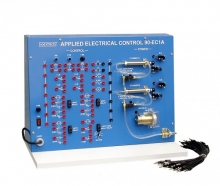 Item Number:90-EC1A
 -
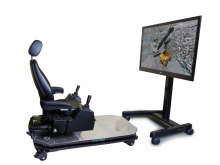 Item Number:ERSThere are eight "Simulation Modules" of increasing difficulty, starting with Controls Familiarization. The final modules combine elements of dipper fill at the rock face, and cab-side or blind-side truck loading. A simulated Mining Truck is built right in, to help teach truck spotting interaction. Key "Performance Indicators" measure how quickly and how carefully the simulated work is performed.
 -
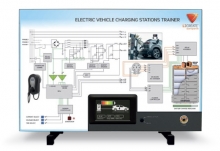 Item Number:743-01This trainer provides students and instructors with the opportunity to demonstrate, investigate and fault-find the circuitry and operation of off-car charging systems.
 -
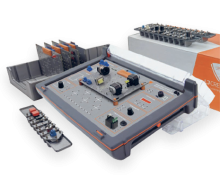 Item Number:730-10 / 730-00Desktop training systems provide very specific instruction and practice in the basic skills that are required by students as they embark on their careers.
 -
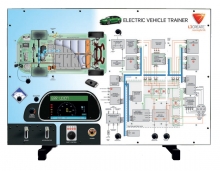 Item Number:740-01LJ Create's Electric Vehicle Systems Panel Trainer provides students and instructors with the opportunity to demonstrate, investigate, and fault-find a simulation of the electrical system of a typical electric vehicle.
 -
 Item Number:810-000Teach the critical safety skill of electrical lock-out/tag-out with DAC Worldwide's Electrical Lock-Out/Tag-Out Training System (Model: 810-000). This hands-on, portable trainer ensures your workforce is prepared to handle hazardous electrical energy safely and effectively.
 -
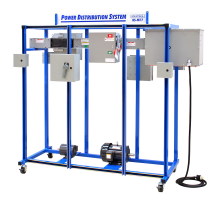 Item Number:85-MT7BAmatrol’s Electrical Power Distribution Learning System (85-MT7B) teaches a broad range of electrical advanced manufacturing skills, such as installing, maintaining, and troubleshooting modern power distribution systems that require skills ranging from setting up basic raceways to selecting appropriate over-current protection for sensitive equipment.
 -
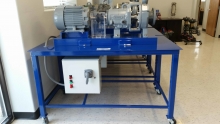 Item Number:SMMT / MT / FGT / LOTOTeach Electro-Mechanical Maintenance skills with Bayport Technical products, such as training systems for Flanges and Gaskets, Lock Out/Tagout, Pumps, and Motors, as well as a Lubrication Working Demonstrator.
 -
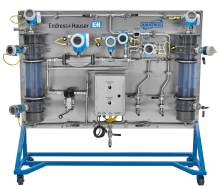 Item Number:T5600Train learners on real-world process instrumentation with Amatrol’s T5600, featuring Endress+Hauser components for flow, level, pressure, temperature, HART, Bluetooth, and Ethernet communications.
 -
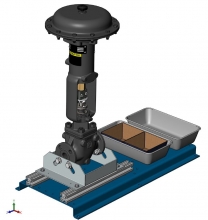 Item Number:255KEDAC Worldwide's Enhanced Control Valve Dissectible (255KE) is a realistic, hands-on valve sample that supports realistic classroom training.