This ACR Oil Separator Cutaway, Float-Type provides a full cutaway view of an oil separator that exposes the complete internal components and operating principles. Color coding, flow arrows, and numbered call-outs combine to make the device more informative to the inquiring student and more useful to the instructor.
Global Leader in CTE Courses
With a passion for excellence, Amatrol is helping build a culture that embraces change by doing the right thing, respecting others, being responsible, improving growth, and creating lasting partnerships.
Amatrol’s training solutions are used in all fifty states and over fifty countries. Their courses are not only engaging, but also customizable to allow programmers a one-of-a-kind interactive learning experience.
e-Learning Course ListAdvanced Manufacturing Skills ChartVisit Amatrol's Site
World Leader in Designing and Building Training Simulators & Educational Models
Bayport Technical specializes in building trainers, working industrial demonstrators, glass & acrylic training models, and customized training equipment in instrumentation and process control. Located off the Texas Gulf Coast, they are fully equipped for research, manufacturing, and special production needs.
They offer a wide range of product solutions to fit all your training needs, ranging from training systems which teach a full range of skills to cutaways that increase understanding of how a component works. Bayport’s never-ending diligence and dedication to their products and services make them a leader in the industry.

Educational Solutions in CNC, CAD, and CAM
Denford Ltd is a British manufacturer with over 70 years of experience in designing and producing cutting-edge CAD/CAM training equipment for education. Renowned for their precision CNC routers, lathes, and mills, Denford supports educators in delivering hands-on engineering, design, and manufacturing training. Their machines and learning solutions are trusted worldwide to develop future-ready skills in STEM fields—from middle school classrooms to university engineering labs.
Denford is also the proud founder and sponsor of the internationally acclaimed F1® in Schools STEM Challenge, a global educational competition that merges the excitement of Formula 1 with real-world design, manufacturing, and business concepts. Through this initiative, students learn CAD/CAM design, 3D modeling, CNC machining, and aerodynamics, while building teamwork and entrepreneurial skills. Denford’s F1 in Schools equipment, including the new MCR 100 CNC Router and race systems, enables learners as young as nine to engineer compressed-air-powered race cars.
We proudly represent Denford as a provider of industry-aligned, classroom-friendly technologies that empower instructors and inspire students. Whether you're looking to introduce CNC machining in middle school or elevate a college-level manufacturing program, Denford delivers robust tools and educational resources to meet your goals.
Global Leader in Industrial Robotics and Automation
FANUC Robotics industrial robots and automated systems cover a wide range of applications for the aerospace, automotive, consumer goods, food, metal fabrication, medical, pharmaceutical, solar panel, and many other industries. FANUC Robotics America is the industrial robotics industry leader.
As the number one supplier of intelligent robots, there are more FANUC robots working in manufacturing and industrial facilities than any other brand. The FANUC Robots Certified Education Robot Training Cell is extremely valuable to trade schools, high schools, community colleges, and engineering schools. Tech-Labs is proud to be FANUC Robotics exclusive Education Authorized Reseller in Texas and Oklahoma.
Visit FANUC:
FANUC Robotic's Website | FANUC Certifications
Stay informed - Make sure to follow FANUC!
Comprehensive Cloud-Based Blended Teaching Resources
LJ Create produces blended-learning resources in the form of hardware, software, and e-learning curriculum for schools, colleges, universities, and vocational training organizations worldwide. LJ Create creates practical and innovative teaching solutions that provide the tools to inspire students. LJ Create has been dedicated to being the world's leading educational systems provider since 1979.
LJ Create offers products from topic-specific learning solutions to complete classroom management systems for Science, Technology, Engineering, and Mathematics (STEM) curricula. LJ Create also produces training for automotive technicians at the vocational level.
Innovative STEM and Robotics Education Solutions
Minds-i Robotics offers cutting-edge STEM and robotics kits that empower students to learn critical engineering, coding, and robotics skills. With a focus on hands-on, project-based learning, Minds-i equips educational institutions with comprehensive kits and curriculum designed to engage students in problem-solving, creativity, and collaboration. From autonomous vehicles to UAVs, Minds-i provides modular systems that evolve with students' capabilities, making them perfect for middle schools, high schools, and universities alike.
Whether you're building a new STEM program or enhancing an existing one, Minds-i is dedicated to making technology and engineering education accessible and exciting for the next generation of innovators.
Trusted Leader in Innovative 3D printing and Manufacturing Solutions
Tech-Labs finished in the "Top 30 Stratasys Reseller in the World," and have been recognized by Stratasys as a Platinum Reseller!!! This is extremely difficult to achieve and we are proud to be the only Educational Reseller to receive this honor in our territory.
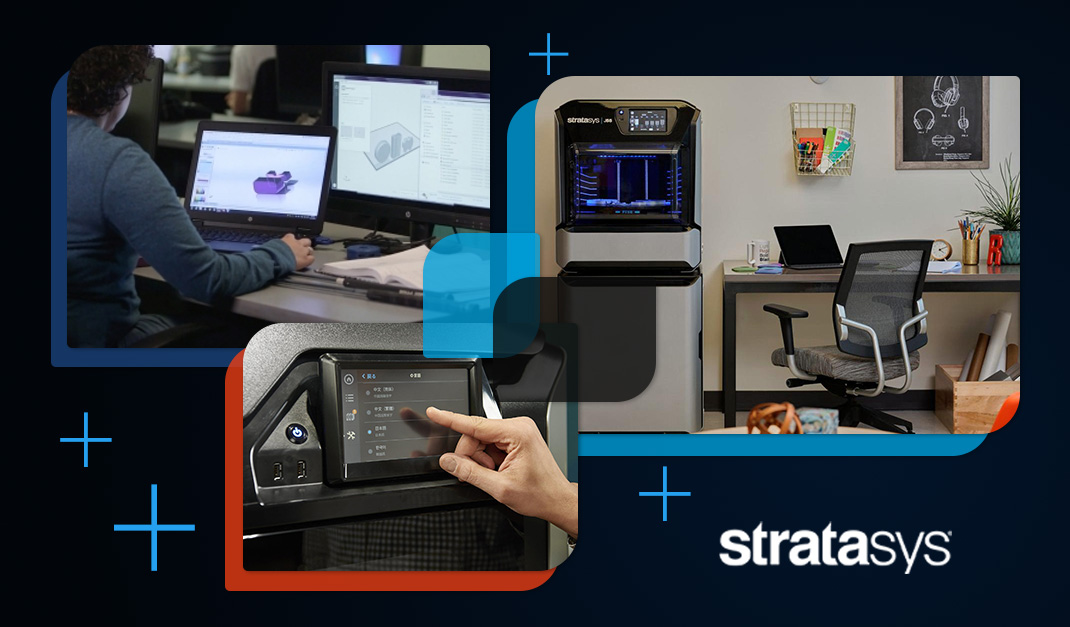
Stratasys, is a leading provider of high-quality, cost-effective Fused Deposition Modeling (FDM) & inkjet-based 3D printing systems and materials. A global company, Stratasys has offices in North America, Europe, Japan, China, Hong Kong, and India.
Stratasys FDM & PolyJet’s solutions can be typically found in industries ranging from to aerospace to medical, architecture, industrial machinery, footwear, sporting goods, toys. Stratasys 3D printing systems and 3D printing materials are ideal to allow students to design physical models using 3D software or other 3D content. Stratasys 3D printers can also be found in many K-20 educational institutions and research centers worldwide.
Visit Stratasys' Website to learn more!
Personal Simulators for Everyone
Simlog is the world leader in providing affordable and effective PC-based simulation software for heavy equipment operator training in mining, construction, material handling, and forestry. Called Personal Simulators, only Simlog’s products leverage the power of today’s PCs with the variety of USB-ready setup options needed to suit a range of training budgets. With hundreds of training service providers and equipment owner/operators around the world training thousands of people every year, Simlog products have been proven to reduce training costs, increase operator productivity, and help minimize the safety risks associated with operator inexperience.
How Simlog can help:
- Introduce new career choices
- Evaluate operator aptitude
- Better prepare students for real seat-time
- Bring new visibility to your training program
- Join a world-wide community of leading education professionals
For additional information please visit www.simlog.com.
Introduce new career choices
Expose your students to a possible career operating heavy equipment, and set them on the path to high-paying jobs. Our Personal Simulators will provide a learning environment that encourages skills exploration, with students learning in a self-managed way. And having fun along the way will foster a completely new attitude toward learning!
Evaluate operator aptitude
Operating heavy equipment requires a combination of “psycho-motor” ability (manual dexterity), “sensory/perceptual” ability (depth perception), and “cognitive” ability (spatial reasoning). Unfortunately, studies show that up to 30% of training candidates don’t have enough and for that reason, can never become fully proficient.
Our Personal Simulators will let you and your students evaluate this aptitude. This is especially important when training programs are over-subscribed, in order to use your training budget as wisely as you can.
Better prepare students for real seat-time
Training at the controls of real equipment is dangerous, and expensive. Operating costs are high, supervisors must be paid, and mistakes mean equipment that is damaged. And there will always be details that are specific to the particular makes and models that you have.
Instead, our Personal Simulators are “generic” and will teach your students core skills, making it easy to proceed to “hands-on” training on a variety of real equipment
And by preparing your students at the controls of our Personal Simulators, the real seat-time training becomes
- Safer, because “accidents” now happen at the simulator
- Better, because students learn to do things right at the simulator, and gain confidence in their operating skills
- Faster, because your students reach their performance targets sooner
- Cheaper, thanks to all of the above
In this way, training costs go down, training quality goes up, and graduates are more employable!
Bring new visibility to your training program
Use your Personal Simulator to promote your training program in your community, and improve your recruiting efforts. Just set things up at local events such as job fairs, or at middle schools as part of “out-reach” efforts, and watch the lineups form!
Join a world-wide community of leading education professionals
Becoming a Simlog customer means joining a growing community of leading educational organizations around the world, all dedicated to improving heavy equipment operator training. Share simulation benchmarks, best practices, and suggestions to help Simlog make our Personal Simulators even better.
Virtual Reality and Simulation Training for the Future
VRSim products use the latest, proprietary technology to address training and skills development needs in spray coatings, welding, advanced manufacturing, construction, robotics, and other skilled trades.
They provide immersive virtual reality and interactive training systems designed to improve skills, accelerate training, reduce costs, and streamline job placement and retention with VRSim. Used by companies and schools, VRSim’s solutions support and improve your training programs with experience-based learning designed for real-world applications and to produce the next generation of skilled tradespeople. In keeping with our commitment to the future, VRSim’s suite of products are all environmentally friendly.
Tech-Labs is FANUC's exclusive Education Authorized Reseller in Texas and Oklahoma. FANUC’s Certified Education Robot Training system sets the standard in Industrial Robotics certification training. As the number one supplier of intelligent robots, there are more FANUC robots working in manufacturing and industrial facilities than any other brand. The FANUC Robots Certified Education Robot Training Cell is extremely valuable to trade schools, high schools, community colleges, and engineering schools.
MINDS-i is rocking the Robotics Education world with a high-technology platform that is simple to use, extraordinarily durable, infinitely modifiable, and will prepare students with the skills they need to excel in the 21st century.
Pages
-
 Item Number:373-721
 -
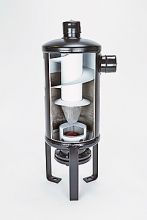 Item Number:373-722DAC Worldwide’s ACR Oil Separator Cutaway, Helical-Type is a professionally-crafted, economical teaching aid that depicts a conventional helical-type centrifugal oil separator commonly used in industrial and commercial refrigeration systems for oil entrapment and compressor crankcase replenishment.
 -
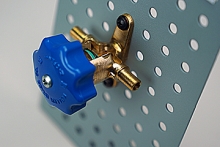 Item Number:373-503This ACR Packless Diaphragm Line Valve Cutaway provides a full cutaway view of the diaphragm line valve that exposes the complete internal components and operating principles.
 -
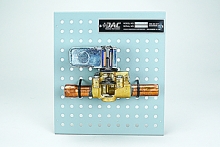 Item Number:373-502DAC Worldwide’s ACR Solenoid Valve Cutaway is a sectioned example of a commonly-encountered solenoid valve used in air conditioning and refrigeration systems with a remotely-operated maintenance-related block valve, system fluid, or gas flow control valve.
 -
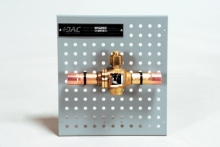 Item Number:373-501This ACR Steel Ball Valve Cutaway provides a full cutaway view of the compressor body that exposes the complete internal components and operating principles. Economically mounted on a formed-steel and powder-coated modular display panel, this sample panel can be mounted on a variety of optional benchtop display fixtures and storage structures.
 -
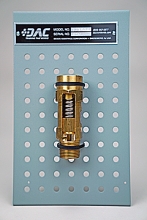 Item Number:373-506This ACR Straight-Thru Pressure Relief Valve Cutaway provides a full cutaway view of the reversing valve that exposes the complete internal components and operating principles.
 -
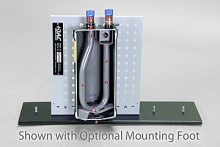 Item Number:373-701This ACR Suction Line Accumulator Cutaway provides a full cutaway view of an accumulator that exposes the complete internal components and operating principles. Color coding, flow arrows, and numbered call-outs combine to make the device more informative to the inquiring student and more useful to the instructor.
 -
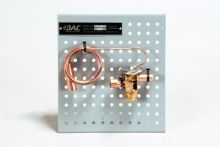 Item Number:373-521The full-size, fully-detailed example gives learners a first-hand view into a component that is found in various applications worldwide. This professionally-crafted, yet-economical component sample will enhance any training activity relating to commercial and industrial air conditioning and refrigeration systems.
 -
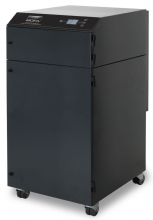 BOFA’s AD 1000 iQ high-end laser extraction system combines extremely large filter capacity with high airflow and pressure rates, making it the ideal choice for heavy-duty applications that generate large amounts of particulate and gaseous organic compounds.
 -
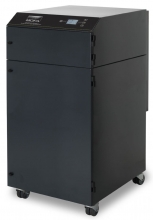
BOFA’s AD 1500 iQ is the ideal choice for heavy-duty applications that generate large amounts of particulate and gaseous organic compounds.
Performance has been further enhanced with the inclusion of several features including BOFA’s acclaimed iQ Operating System, making the AD 1500 iQ one of the most advanced systems available.
The iQ system takes performance and safety parameters to a new level and ensures that maintenance, downtime, and ownership costs are kept to a minimum.