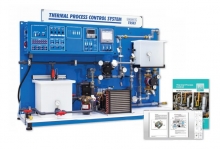
Amatrol’s Temperature Process Control Learning System (T5553) demonstrates how to install, calibrate, operate, adjust, and tune thermal process control systems in a wide variety of industrial applications, including food processing, chemical manufacturing, and biotechnology.
Discover how the NeuroMaker Hand 2.0 empowers students to build, code, and innovate with real-world biomedical technology. This printable brochure introduces key features of the NeuroMaker Hand, including its plug-and-play BioSensor integration and immersive, project-based curriculum.
What You'll Find:
- Highlights of hands-on STEM and CTE learning with prosthetic and biosensor technology
- Overview of coding tools: block-based programming and browser-based Arduino C SDK
- Details on classroom-friendly packaging, reusability, and modular design
- How students address real-world challenges faced by amputees and design inclusive solutions
- Access to student competitions focused on empathy, impact, and innovation
This is a great one-pager to share with educators, grant committees, and educational decision-makers looking for STEM programs with social purpose and advanced skill development.
Ready for a demo or classroom consultation? Contact us today to bring NeuroMaker into your school or program.
Align NeuroMaker STEM Lessons to CTE Pathways
Bridge classroom learning with real-world career pathways using the NeuroMaker Hand CTE Curriculum Crosswork. This resource maps each hands-on module in the NeuroMaker Hand 2.0 program to high-demand CTE pathways such as Engineering & Technology, Biotechnology Research & Development, Programming & Software Development, and more.
Each module outlines the 21st-century skills students will develop—such as critical thinking, collaboration, digital literacy, and innovation—while highlighting corresponding career tracks, salary data, and job outlooks from O*NET. Whether you’re writing a grant, aligning to CTE frameworks, or enhancing STEM/CTE integration, this document is an essential tool for educators, administrators, and program planners.
Train for Precision in Tight Indoor Environments
This simulator focuses on electric, stand-up counterbalanced lift trucks, widely used in manufacturing and shipping facilities. With Simlog’s simulation technology, operators can practice turning, loading, and stacking in confined spaces—all while building the muscle memory and judgment needed for safe forklift operation. It's a cost-saving solution that helps new hires ramp up faster and more confidently.
The Slalom 2 – Reverse module is designed to enhance backward driving control and forklift maneuverability. This advanced exercise pushes operators to refine their steering accuracy, mirror usage, and spatial awareness under pressure.
In this video, viewers see how trainees navigate a series of reverse turns, simulating the kind of tight path navigation required in real-world loading zones. The simulator builds the confidence and control needed to reverse safely in active warehouse environments.
Simlog’s Shipping Container Unloading module teaches safe material handling in one of the most challenging forklift tasks: working within the tight confines of a container. Operators are tested on their ability to maneuver, lift, and place loads with minimal clearance on all sides.
The demo illustrates how this scenario builds core competencies such as steering precision, load stability, and forward planning—equipping users with skills needed for ports, warehouses, and freight centers.
The Dry Van Trailer Loading module challenges trainees to operate in confined trailer spaces, simulating real-world shipping environments. Users must maintain forklift control while navigating tight clearances and stacking pallets safely inside the trailer.
This demo captures how the simulator replicates critical aspects of trailer loading—including smooth entry/exit, pallet alignment, and managing limited visibility—ensuring learners are job-ready from day one.
In the Selective Pallet Racks 1 module, operators learn how to accurately handle pallets in a high-density storage system. This simulation enhances spatial awareness, vertical lifting accuracy, and horizontal control—key skills for maintaining warehouse productivity and avoiding costly errors.
The video demonstrates how the simulator helps users build consistency and confidence when placing and retrieving pallets from various rack levels, including proper fork alignment and depth control.
Simlog’s Stand Up Counterbalanced Lift Truck Personal Simulator is a powerful training tool designed to build core competencies in forklift operation. The simulator replicates key tasks and environments found in modern distribution centers, giving trainees the chance to develop safety-conscious, real-world skills through virtual practice.
From navigating tight spaces to managing pallet placement at height, the simulator covers a wide range of operational challenges. This overview video introduces the simulator interface, learning objectives, and hardware setup—offering a preview of how this solution brings hands-on training to life in classrooms, labs, and industrial facilities.
The Drive-In / Drive-Through Racks module trains users on the complexities of maneuvering in tight warehouse aisles with limited visibility. This simulation emphasizes alignment, precision, and safe entry/exit from racking systems, skills essential for real-world efficiency and safety.
This demo shows operators navigating into the racking system with care, placing and retrieving loads while avoiding collisions—perfect for reinforcing best practices in space-restricted warehouse environments.
Electronics PLC Programming & Troubleshooting Training
Amatrol’s Electronics PLC Programming and Troubleshooting systems deliver industry-relevant, hands-on training with real-world components from leading manufacturers like Allen-Bradley, Siemens, and Mitsubishi. These systems teach critical automation skills including PLC operation, ladder logic programming, motor control, analog and digital I/O, event sequencing, and systematic troubleshooting—all essential for success in modern manufacturing and industrial environments.
From fully integrated workstations to portable learning systems, Amatrol offers flexible solutions that support in-depth learning in both classroom and on-site settings. Each system features interactive multimedia curriculum and FaultPro software for realistic fault insertion and diagnostics practice, ensuring learners build confidence in diagnosing and resolving real-world automation issues. Prepare students or trainees for tomorrow’s workforce with advanced PLC training that meets the needs of today’s technology.
Pages
-
 Item Number:T5553
 -
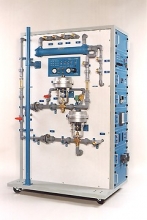 Item Number:602-PACProcess control systems maintain precise control of liquid and gas variables, such as liquid level, flow rate, pressure, temperature, and pH level. These multifaceted systems are a critical part of major industries like power generation, refineries, petrochemicals, chemical manufacturing, pharmaceuticals, biotechnology, and food processing and bottling.
 -
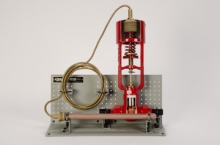 Item Number:295-701DAC Worldwide's Temperature Regulator Cutaway (295-701) is a sectioned temperature regulator allowing for convenient classroom or lab training in the design, operation, construction, and maintenance of this common control device used in oil and gas production.
 -
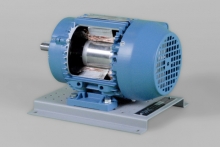 Item Number:273-920This 3-phase, squirrel-cage, induction motor cutaway supports industrial training activities related to electric motor types, as well as repair and troubleshooting. An integral horsepower, industrial-duty motor is modified for training purposes.
 -
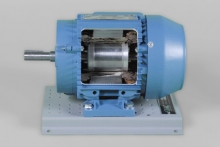 Item Number:273-925The 3-phase, squirrel-cage, explosion-proof induction motor cutaway supports industrial training activities related to electric motor types, as well as repair and troubleshooting. An integral horsepower, industrial-duty motor is modified for training purposes.
 -
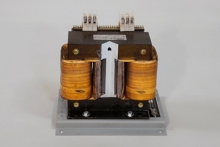 Item Number:273-915DAC Worldwide’s Three-Phase Transformer Cutaway (273-915) is a detailed and professionally-crafted three-phase transformer cutaway that depicts a common coaxially-wound, three-phase, delta-wye wired transformer.
 -
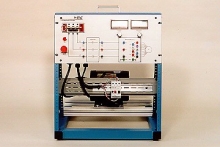 Item Number:412-000DAC Worldwide’s Three-Phase, Squirrel Cage Rotor, AC Motor Training System (412-000) provides a starting point for understanding a common, widely-used industrial induction motor. These self-starting, 56 frame, simply constructed motors are used in applications like generators or where low starting torque is required.
 -
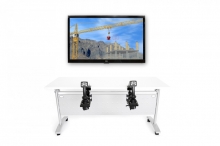 Item Number:TCRSimlog's simulation software puts you at the controls of a modern freestanding top-slewing tower crane with trolley jib. Instrument readings include working slew angle, working radius, lowering depth (hook height), and load weight. There is also a simulated three-way switch for hoist gear selection. You can even change the viewpoint during the simulation at the touch of a button.
 -
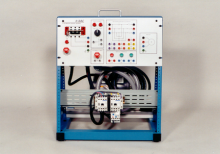 DAC Worldwide’s training systems are designed to provide a realistic, hands-on learning experience in a variety of industrial sectors. Each system has the look and feel of real equipment learners might encounter on the job. Built with full-size, industrial-quality components, as well as high-durability, powder-coated surfaces throughout, DAC Worldwide's training systems allow for repeated use and rough handling.
 -
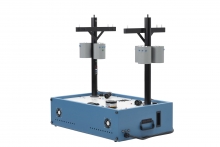 Item Number:491-000DAC Worlwide’s Transformer Connections Training System (491-000) replicates the conditions and circumstances that a utility worker encounters when making common transformer connections in the field.