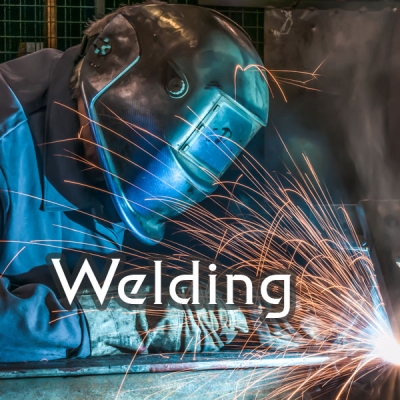
The FANUC Fenceless Collaborative Cert Cart was developed by combining FANUC DCS Position and Speed Check software with an Allen Bradley SafeZone Mini Safety Laser Scanner. The result is FANUC’s NEW FENCELESS CERT Cart, which still fits through a standard door and runs off 110V power. The FENCELESS cart allows a greater work envelope and introduces students to the latest integrated safety products from FANUC and Allen Bradley.
Amatrol’s electrical training systems are the best in the industry. Our learning programs are developed in partnership with industry and education to ensure that the skills are on target to support modern industry needs.
Amatrol offers a wide selection of training systems to meet the many diverse demands in electrical training. Our learning programs are equally effective for technicians, engineers, production workers, and anyone needing further understanding and skills in electrical systems.
Amatrol’s electronics learning systems combine hands-on skills and multimedia curriculum to form a training experience with unmatched breadth and depth. This product line focuses on electronic drives and programmable logic controllers to give current and future workforce members the knowledge that they’ll need to excel in their career paths.
Amatol's electronic learning systems provide an essential tool for electronics training for technicians, engineers, production workers, and many more!
Learning Tools for Primary & Secondary Schools
Science
We offer customized TEKs based learning software from LJ Create, Edusmart and sciTex for Elementary, Middle School and High School science programs. For STEM education we feature Minds-i Robotics and LJ Create as well as Stratasys 3D Printers.
At Tech-Labs we are focused on delivering differentiated science instructional materials and providing teachers the tools to engage, explore, explain, elaborate and evaluate scientific theory.
3D Printers
Stratasys takes learning to new heights by capturing imaginations, testing ideas and proving theories rapidly in real space. Universities use 3D printers to provide lifelike prototypes and durable custom lab equipment. Stratasys offers a powerful range of 3D printing capabilities, with PolyJet technology for multi-material 3D printing and impressively detailed surfaces, and FDM Technology for durable parts in production-grade thermoplastic.
MakerBot | 3D Printing for Grades K-8 | 3D Printing for Grades 9-12
STEM: Science, Technology, Engineering & Math
STEM is an acronym for Science, Technology, Engineering and Mathematics. STEM is based on the idea of educating students in four specific disciplines in an interdisciplinary and applied approach. For STEM Education we feature Amatrol, and Minds-i Robotics.
Career & Technical Education
A student’s career pathway is influenced by their interests and experiences during Elementary, Middle and High School. Our extensive Career & Technical Education learning systems include project-based and 3D learning programs, authentic technology, virtual reality, and eLearning platforms that spark students' interest and teach the knowledge and skills they need to advance in their education and their life.
Prepare your students for their future careers with the Career and Technology Education (CTE) technologies they will encounter on the job.
Tech-Labs partnered with industry-leading manufacturers in the Vocational Education segment to deliver training solutions to our customers that are industry-relevant and engaging for students.
We offer an diverse selection of technical training equipment for Vocational and Trade programs from industry leading manufacturers including a line of advanced manufacturing trainers from Amatrol, CNC and Robotics trainers from Fanuc, trainers for skills in the Oil & Gas industry as well as training equipment for Welding Education, Maintenance, Heavy Equipment Simulation and HVAC/R systems.
Advanced Manufacturing
Tech-Labs offers equipment and curriculum from Amatrol's Advanced Manufacturing program. Amatrol's industry-leading equipment and curriculum was developed working closely with industry partners to deliver job-ready, industry-relevant skills.
Automotive Technology & Collision Repair
As cars incorporate more electronics than ever before, the need for advanced automotive skills training has become imperative. Today's automotive technicians must be as proficient on a computer as they are with an engine. LJ Create's Automotive Program prepares students for a successful career in the automotive field.
In order to appeal to a younger workforce, many automotive collision repair programs have added virtual training simulators that quickly draw interest to the skills and techniques being taught because of its video game-like format.
Certifications
We offer several different certification programs from industry leading training manufactuers including four manufacturing skills training certification programs from Amatrol, Robot and CNC certified education programs from FANUC, 3D Printer Certificate training from Stratasys and IT, Security and Automotive Electronis training from Marcraft.
CNC/Robotics
Tech-Labs is proud to be FANUC Robotics exclusive Education Authorized Reseller in Texas and Oklahoma. FANUC's Certified Education Robot Training system sets the standard in Industrial Robotics certification training. here are more FANUC robots working in manufacturing and industrial facilities than any other brand. The FANUC Robots Certified Education Robot Training Cell is extremely valuable to trade schools, high schools, community colleges, and engineering schools.
Green Energy: Solar, Wind & Green Technology
With the demand for renewable energy on the rise and a lack of qualified technicians to maintain the new wind turbines, solar production and green technology, Tech-Labs is proud to introduce a new line of Green Energy products. We offer training products that help students at schools, universities, and research institutions to understand key concepts regarding renewable energy, energy management, and energy storage. You will bring students closer to these complex technologies while achieving the desired learning outcomes in a fun and interesting way.
HVAC/R Training Equipment
Before going out into the field, the student should fully understand the theory and operational or service techniques behind each specific system. iConnect has been providing high-quality training units to educational institutions for over thirty years. They are found in high schools, colleges, and so on all over the world. The training units in this catalog represent a wide variety of subjects in the heating, refrigeration and air conditioning industries. The heating and air conditioning training units range from demonstrating simple concepts to illustrating advanced troubleshooting and servicing techniques.
IT & Cyber Security
Tech-Labs is proud to offer IT and Security training products from Marcraft Educational Systems.
e-Learning
Tech-Labs is proud to offer E-Learning programs from Amatrol and LJ Create. Teachers utilizing E-learning in the classroom enjoy more flexibility for both the instructor and the student. With virtual training simulations and real world scenarios that incorporate real time assessment, these programs provide the skills to succeed in the students chosen field.
Mechatronics
Modern industry relies on highly complex production systems to produce high-quality, economical products for an ever-demanding world. Mechatronics teaches systems thinking that is required to effectively operate, program, and problem solve in this complex environment. With the rapid proliferation of automation technology, mechatronics has become one of the fastest-growing technical education programs in the world.
Oil & Gas
The Oil and Gas Industry provides the fuel that keeps the world moving forward and connects us in previously impossible ways. Tech-Labs is proud to offer a wide variety of training resources from Amatrol and Bayport Technical which includes Cut Away Valves, Acrylic Trainers, and Demonstrators, Working Models...
Portable Learning Systems
Insufficient Training Space? Not Any Longer! Amatrol's Portable Learning Systems are the Answer! These mobile systems may be placed on a conference room table, shop floor desk, or practically anywhere! Their durability and compact size also provide for safe, compact storage when available training space is needed to teach other topics.
Simulators
It's time to look again at the training simulators, but in a brand new, cost-effective way to complement, not replace, real seat-time. Rising workforce shortages are creating strong demand for skilled heavy equipment operators. More students train using the innovative technology of simulation! With 15 simulators, Simlog is at the forefront of affordable PC-based simulation that takes students from the classroom to the virtual work-site as they develop real skills and valuable safety-conscious habits. We offer simulators for forestry, construction, mining and material handling.
Welding
Our product offering includes the VRTEX® Virtual Reality Welding Training Systems, RealWeld Trainer™ Welding Education System, and the ClassMate™ Robotic Welding Trainer. The virtual and hands-on arc welding training and evaluation equipment is used to teach welding theory and technique and the advanced skills required to operate and program automated and robotic welding systems.
Educational Tools and Innovative Solutions for Post-Secondary Schools
Today's technology is advancing incredibly. To be competitive in today’s job market your students need to learn on the latest technologies they will encounter throughout their careers.
We partnered with leading manufacturers of cutting-edge technologies like 3D Printing, 3D Scanning, laser cutting and engraving, medical simulation, industrial training equipment and more. We have partner with industry-leading manufacturers including Stratasys, Renishaw, Desktop Metal, and Artec.
3D Printers
Stratasys 3D Printing takes learning to new heights by capturing imaginations, testing ideas and proving theories rapidly in real space. Universities use 3D printers to provide lifelike prototypes and durable custom lab equipment. Stratasys offers a powerful range of 3D printing capabilities, with PolyJet technology for multi-material 3D printing and impressively detailed surfaces, and FDM Technology for durable parts in production-grade thermoplastic.
3D Scanners
Artec 3D prides themselves on developing and manufacturing high quality, yet easy to use portable 3D scanners, smart, user-friendly 3D software and an SDK that provides the best integration possibilities, whatever the application. With a worldwide presence and a large number of global clients, they supply state of the art 3D technology in several areas including Industrial Design & Manufacturing, Healthcare, Science and Education and Art & Design.
Anatomy Models
SynDaver Labs designs and builds the world’s most sophisticated synthetic human tissues and body parts. Our SynDaver Synthetic Human bleeds, breathes, and employs hundreds of replaceable muscles, bones, organs, veins, and arteries – all made from materials that mimic the mechanical, thermal, and physicochemical properties of live tissue. This validated technology is used to replace live animals, cadavers, and even human patients in medical device studies, clinical training, and surgical simulation.
Laser Cutting & Engraving Machines
Users of ULS laser engraving systems enjoy how easy it is to operate and customize for their specific business needs. With processing areas ranging from 16" x 12" to 48" x 24" and options for single or dual lasers—on top of a host of add-on features and patented technologies—you will have a laser platform that can adapt to your unique requirements. Universal Laser Systems offers laser sources that range in power from 10 watts to 150 watts and are available in three wavelengths: 10.6μ, 9.3μ, 1.06μ.
Fume Extraction
BOFA’s line of PrintPRO print fume extraction systems was developed for applications that generate particulate and gaseous organic compounds within the wide and super-wide printing sector. Solutions are available for a variety of ink types including Solvent, UV, and Dye Sublimation.
Proven Track Record for Over 125 Years
Lincoln Electric is the world leader in the design, development and manufacture of arc welding products, robotic arc welding systems, plasma and oxyfuel cutting equipment and has a leading global position in the brazing and soldering alloys market. Headquartered in Cleveland, Ohio, Lincoln has 47 manufacturing locations, including operations and joint ventures in 19 countries and a worldwide network of distributors and sales offices covering more than 160 countries. For more information about Lincoln Electric and its products and services, visit the Company's website at www.lincolnelectric.com.
In addition to being the industry standard for welding equipment and supplies, Lincoln Electric also develops and supplies Welding Training Simulators and supplies. Tech-Labs is proud to represent Lincoln’s line of educational Welding Simulators and is your Authorized Educational Reseller.
Download Training Catalog (pdf)
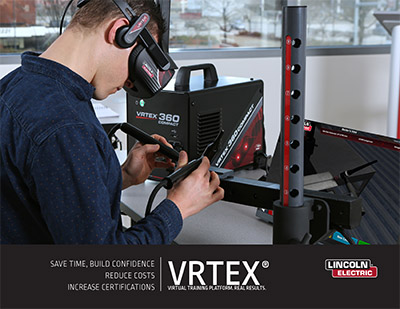
Lincoln Electric is your one-stop, your one partner, — your single education resource.
We offer a full range of training solutions for educators -- teaching aids and curriculum, equipment, and consumables for every process, welding training systems, personal protection gear and tools, fume extraction, and more. Browse products organized into Levels to help you determine which training tools are right for your program.
Welding Training Systems • Robotics & Advanced Welding • Welding & Cutting Equipment • Welding & Cutting Curriculum ... and more!
Modernize Your Welding Lab for Real-World Fabrication Skills
Prepare students for high-demand careers in welding, fabrication, and metalworking with industry-aligned training solutions designed for today’s workforce needs. Tech-Labs partners with leading manufacturers to provide education programs with the tools, curriculum, and technology needed to build real-world skills—from foundational welding techniques to advanced automated fabrication systems.
Whether you're supporting a high school CTE program, community college, or workforce training center, our welding and cutting solutions help bridge the gap between classroom instruction and hands-on application. These systems are designed to improve student confidence, increase lab safety, and deliver measurable outcomes through structured training and skill progression.
Strong welding programs begin with consistent, repeatable skill development. Training solutions from leading manufacturers such as Lincoln Electric provide structured pathways for students to build core competencies in processes like MIG, TIG, and Stick welding.
These systems combine hands-on equipment with guided instruction, allowing students to develop proper technique, understand weld quality, and gain experience with real-world materials and applications.
- Process-based welding skill development (MIG, TIG, Stick)
- Structured lab exercises and guided practice
- Improved consistency and repeatability for students
- Alignment with industry expectations and certifications
Simulation is transforming how students are introduced to welding. Solutions like Lincoln Electric’s VRTEX® and Voyage™ Arc provide immersive, hands-on training experiences without the need for consumables or safety risks.
These tools allow students to practice technique, receive immediate feedback, and build confidence before transitioning to live welding equipment—helping programs reduce material costs while improving student readiness.
- Safe, beginner-friendly learning environment
- Immediate feedback on technique and performance
- Reduced material consumption and lab costs
- Ideal for recruitment, engagement, and early exposure
As fabrication environments continue to evolve, welding programs are expanding to include automation and robotics. Modular systems like APT Manufacturing’s Mod-Weld®, integrated with FANUC collaborative robots, allow students to learn robotic welding concepts in a safe, flexible environment.
These platforms introduce students to programming, part positioning, and automated welding workflows—skills that are increasingly required in modern manufacturing facilities.
- Hands-on robotic welding training with collaborative robots
- Flexible modular systems for multiple lab configurations
- Exposure to real-world automation workflows
- Preparation for advanced manufacturing careers
Welding programs are most effective when paired with cutting and fabrication technologies that reflect real shop environments. Training solutions can include plasma cutting, oxy-fuel systems, and material preparation tools to support the entire fabrication process.
By integrating cutting technologies into the curriculum, programs can provide students with a complete understanding of fabrication workflows—from raw material to finished product.
- Plasma cutting and oxy-fuel training systems
- Material preparation and layout skills
- Integration with welding projects and fabrication workflows
- Real-world shop experience for students
Today’s welding programs are under pressure to produce job-ready graduates while managing safety, cost, and instructor bandwidth. Modern training solutions help programs scale effectively while improving outcomes.
- Improve student engagement through hands-on and interactive learning
- Increase safety with simulation and guided training tools
- Reduce consumable costs with blended learning approaches
- Align with industry needs including automation and advanced fabrication
By combining traditional welding equipment with simulation and automation, schools can create a comprehensive training environment that prepares students for a wide range of careers in fabrication and manufacturing.
Build or Expand Your Welding & Cutting Program
Tech-Labs works with education and workforce programs to design, implement, and support welding labs that deliver measurable results. From foundational training to advanced fabrication and robotic welding, we help you identify the right solutions for your goals and budget.
Ready to modernize your welding program? Let’s talk about how to build a lab that prepares students for today’s fabrication careers.
PolyJet 3D printing technology produces astonishingly smooth, detailed architectural models in an array of materials, including rigid photopolymers ready for painting. For models that must bear loads or take abuse, FDM Technology builds strong parts in production-grade thermoplastics.
The aerospace industry has long been looked to as a leader in predicting manufacturing trends. Learn how organizations, such as NASA & Leptron, are using additive manufacturing in all cycles of production, from design concept to near-end-of-life repairs.
Aerospace engineers rely on patented FDM Technology for prototyping, tooling and part manufacturing. FDM works with high-performance thermoplastics, including ULTEM 9085, to build jigs, fixtures, check gauges and production aircraft parts. Designers in aerospace have long embraced FDM for concept modeling and prototyping.
For precision prototyping that includes rigid, rubberlike and clear materials, Stratasys also offers PolyJet 3D printing.
Pages
-
-
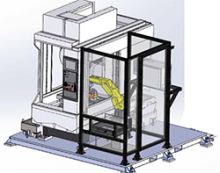 Students trained on ROBODRILL products will be more productive. Excellent repeatability makes the ROBODRILL suited for milling, drilling, tapping, and boring with flexibility, versatility, and reliability. Specific ROBO DRILL education packages have been configured for the needs of educational institutes teaching 3-axis and 5-axis machining, robotic machine tending, and Connected Smart Manufacturing (CSM).
 -
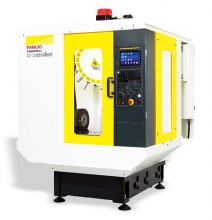 Item Number:α-D14MiBThe new-generation FANUC ROBODRILL promises unrivaled quality and precision at great hourly rates. At the heart of every ROBODRILL is a patented high-speed tool changer that can carry 21 tools and offers the best reliability in its class.
 -
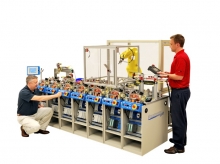 The FANUC Robot Integration Package (25098) allows customers to use a FANUC industrial robot with Amatrol’s 870-series mechatronics stations. This package contains a module enclosure that includes PLC and FANUC interface cables along with a customized program to integrate a customer-supplied FANUC robot with the mechatronics system. Additional features include customized gripper tooling and a safety guard assembly to protect learners.
 -
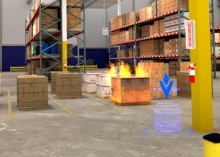 The primary goal of this course is to teach workers safe work procedures to be aware of and mitigate warehouse fires in a warehouse environment. The Warehouse Fire Hazard Awareness simulation is ideal for employees or supervisors who work in or around warehouse operations.
 -
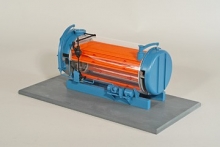 Item Number:356DAC Worldwide’s Fire Tube Boiler Model (356) is a highly-detailed scale model of a common fire tube, Scotch marine boiler, supporting training in the operation and maintenance of industrial boilers, as found within utility systems in industrial facilities and large commercial applications.
 -
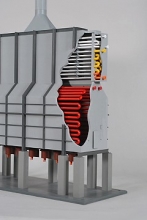 Item Number:291DAC Worldwide’s Fired Heater Model (291) depicts a highly-detailed, to-scale model of a common industrial furnace found in refineries and process facilities in technically-accurate, professionally-crafted detail.
 -
 Train fire and EMS drivers safely with the Acron Aviation FireSim™ Series 8 Simulator. Includes emergency response scenarios, vehicle configuration options, and Replay Studio™ for after-action reviews.
 -
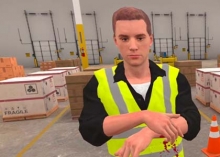 The primary goal of this course is to teach workers the correct procedures to follow in a potential bloodborne pathogen event. The Bloodborne Pathogen VR simulation is ideal for future employees or supervisors who will work in hazardous environments where a potential bloodborne pathogen event may occur.
 -
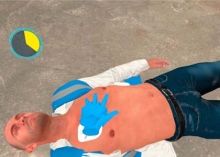 VR Hard Hat's First Aid: CPR & AED course aims to equip participants with the knowledge and hands-on skills required to effectively administer CPR and operate an AED during cardiac emergencies.