DAC Worldwide’s Pneumatic Component Cutaway Set (760) is a tabletop assortment of industrial pneumatic components that have been modified for classroom use as teaching aids for pneumatic component training.
In this episode, we're speaking with Shravya Nahar Product Manager at BOFA with specialist knowledge of additive manufacturing and extraction technology.
Shravya discusses the important interaction between temperature control and fume and particle extraction in additive manufacturing and how this need for extraction can be achieved while maintaining optimal chamber conditions.
Dawn Hartung, Strategic Account Manager at BOFA Americas, is joined by Jay Roberts, Product Manager for UV Printers at leading print technology company Roland to discuss some of the innovations that are helping to contribute to a more sustainable future in printing.
The refreshed BOFA 3D PrintPRO 4 provides a premium fume extraction solution for high-performing 3D printers. With a special blend of chemical adsorbents and high-efficiency particulate filter (HEPA), the extractor helps to filter emissions from 3D printing processes.
The BOFA 3D PrintPRO 3 incorporates externally mounted plenum system manifolds, which help to filter fumes generated during the printing process, helping you maintain a clean, healthy working environment.
It has the benefits of low cost, low power consumption and integral speed control. Each filtration unit is supplied with connection hoses and ‘print your own’ manifold instructions.
The BOFA 3D PrintPRO 2 is a low-cost unit, that helps to extract fumes generated by an open-framed 3D printer without causing the filament deposition area to be cooled.
It has the benefits of low noise levels and minimal power consumption. Each unit is supplied with a connection hose, ‘stay put’ arm and conical-shaped funnel.
Luke Ziolkowski, International Business Development Manager at BOFA, explains the differences between 3D printing and additive manufacturing. He dives into the challenges facing the 3D printing world and how BOFA technology is keeping pace with this fast-moving sector.
BOFA filtration and atmosphere management systems for additive manufacturing.
In this episode, Richard Heard, Technical Sales Manager at BOFA, guides us through the world of laser engraving and cutting.
From food to fashion, packaging and more, lasering is the ‘Swiss Army Knife’ of industrial processes. In this latest episode of our Filtration Matters podcast, Geoff Sagar, a Product Manager at BOFA, highlights how the impact of laser technology grows wider and deeper across industry…and how fume extraction is helping enable a new era of productivity.
Dawn Hartung, Strategic Account Manager for BOFA Americas, discusses how continued growth in 3D print markets is driving the development of new functional materials designed for specific applications and products.
Pages
-
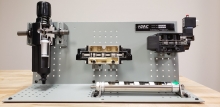 Item Number:760C
 -
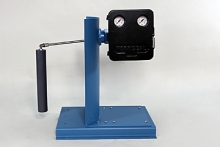 Item Number:295-713DAC Worldwide’s Pneumatic Level Controller Assembly Cutaway (295-713) is a sectioned, highlighted float-operated pneumatic level controller assembly that allows for realistic demonstration and training related to this common level control device used in oil and gas production operations.
 -
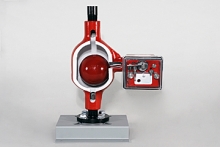 Item Number:295-722DAC Worldwide's Pneumatic Level Switch Cutaway, Oilfield-Type (295-722) is a realistic, sectioned example of a common industrial level switch, as used in oilfield production applications and other process systems.
 -
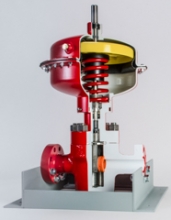 Item Number:295-719PDAC Worldwide’s Pneumatic Surface Safety Valve Cutaway (295-719P) depicts a sectioned full-size valve sample. A key component in ESD systems, these safety-related wellhead components ensure system shutdown in emergency circumstances.
 -
 Item Number:950-PT1Hands-on pneumatic troubleshooting training with real-world faults. Amatrol’s 950-PT1 uses FaultPro® to teach pneumatic, mechanical, and electrical system diagnostics.
 -
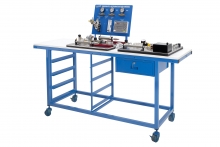 Item Number:27-PNA1Amatrol’s Pneumatics 1 Assessment Workstation (27-PNA1) features a compact workstation designed to effectively assess hands-on pneumatics skills with a variety of industry-standard components.
 -
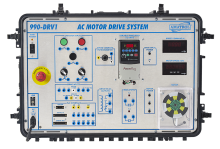 Item Number:990-DRV1FAmatrol's 990-DRV1F features industry-standard components like a Rockwell PowerFlex 4 variable frequency AC drive and a 3-phase AC motor used to teach the fundamentals of configuring and operating an AC drive. The 990-DRV1F uses FaultPro, Amatrol’s electronic fault insertion, to teach motor drive troubleshooting skills, such as drive input, motor input, and drive relay troubleshooting.
 -
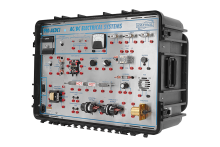 Item Number:990-ACDC1With the 990-ACDC1 learning system, you can teach the basics of AC and DC electrical systems in industrial, commercial, agricultural, and residential applications. The system offers industry-relevant skills including how to operate, install, design, and troubleshoot fundamental AC and DC electrical circuits for various purposes.
 -
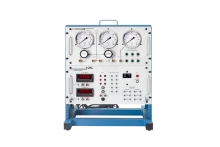 Item Number:616-000DAC’s Portable Calibration Training System (616-000) is a portable tabletop instrument calibration workstation that allows for convenient testing and calibration of instruments, process controllers, and other instrumentation and process control-related components.
 -
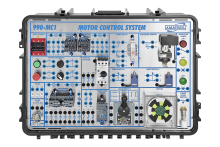 Item Number:990-MC1FSL
Amatrol’s Portable Electric Motor Control Troubleshooting Training System (990-MC1FSL) features typical industry components like a 3-phase AC squirrel cage motor. It uses 3-phase AC for power and 24 VDC for control, all packed within a space-saving, portable product. The real-world motor control components will prepare learners for work in industries where electric relay control applications are used, like conveyor control and driving large utility pumps. Teach students how to read and interpret ladder diagrams.