


Front-end labeling, a vital component of the picking process, ensures that products are correctly identified, tracked, and dispatched. Proper labeling can reduce errors, improve efficiency, and enhance customer satisfaction. Hard Hat VR's course is designed to address the nuances of labeling at the initial stages of the picking process, ensuring that errors are minimized and efficiency is maximized.
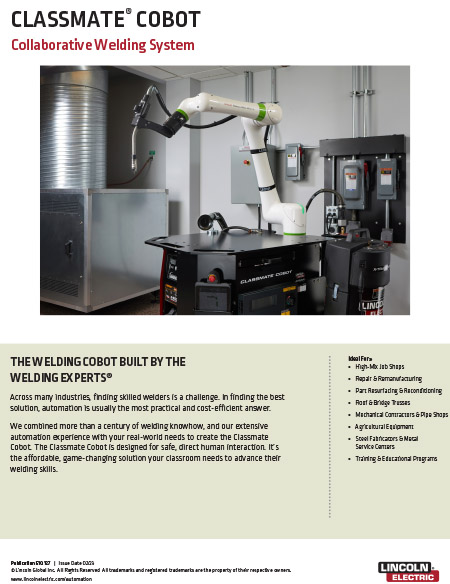
Collaborative Welding
Across many industries, finding skilled welders is a challenge. In finding the best solution, automation is usually the most practical and cost-efficient answer.
The Lincoln Electric Classmate Cobot is designed for safe, direct human interaction. It’s the affordable, game-changing solution your classroom needs to advance their welding skills.
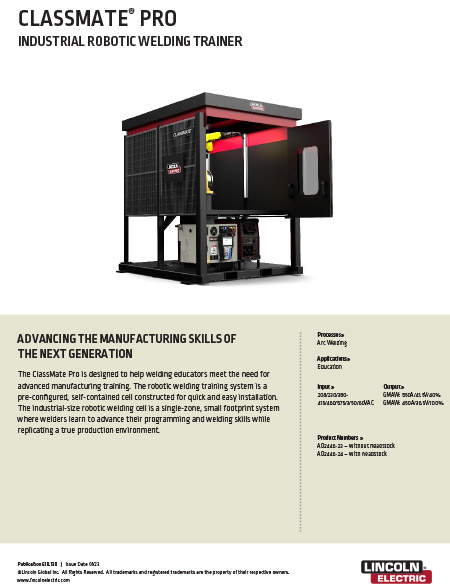
Industrial Robotic Welding Trainer
The ClassMate Pro is designed to help welding educators meet the need for advanced manufacturing training. The robotic welding training system is a pre-configured, self-contained cell constructed for quick and easy installation. The industrial-size robotic welding cell is a single-zone, small-footprint system where welders learn to advance their programming and welding skills while replicating a true production environment.
Classroom Laser Welding System
A complete, all-in-one laser-welding cell designed for training students in advanced laser welding technologies. Utilizing a laser system and robotic arm, the laser welding process is programmable and integrated via the teach pendant. A laser welding cell complete with everything each student needs, including fume extraction, laser optics, water chiller- all in one cart!
- Complete educational software assets at an affordable price.
- Everything you need to teach the class safely and productively.
- Advanced manufacturing and technology capabilities.
- Transformational capabilities and processes.
- CDRH Class 1 Laser Safe Enclosure.
- Laser Cell door with interlock: no chance for exposure to laser.
- Small footprint: fits into a 36” doorway.
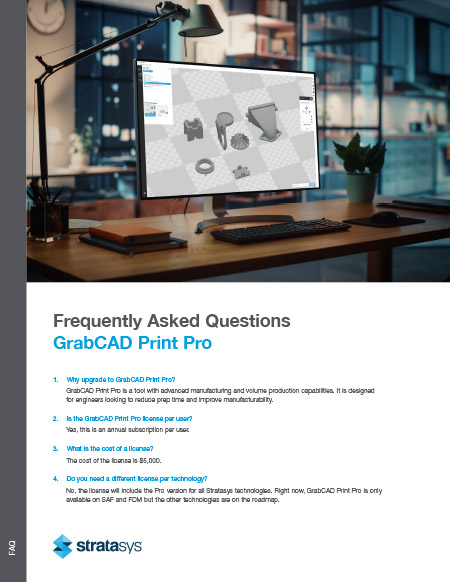
GrabCAD Print Pro is a package of new features and tools that extend the capabilities of GrabCAD Print Standard focusing on improving accuracy and saving time. Print Pro is not a separate application or installer from Print Standard. By upgrading, Print Standard becomes Print Pro, unlocking the Pro features.
Are you ready to take your teaching or research to a new level?
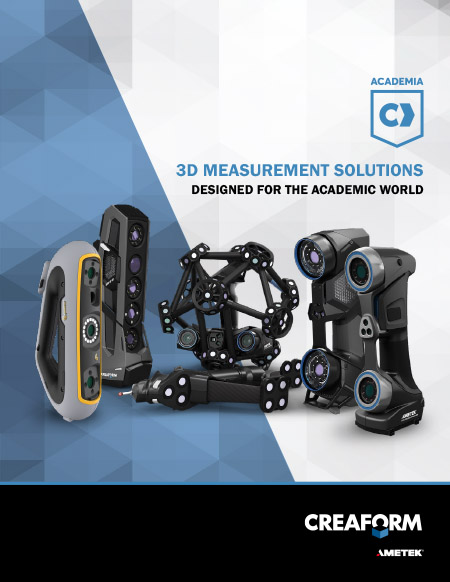
Discover Creaform ACADEMIA™, a solution suite for forward-thinking teachers and researchers looking to inspire, collaborate, and push the innovation envelope forward by using the latest advancements in 3D measurement technologies.
Creaform’s educational program goes beyond delivering didactic tools, providing a complete and collaborative academic solution designed to nurture learners’ skills. With this educational solution suite, you can choose from our full line of 3D scanners and portable CMM, free application software, complimentary add-ons, and useful tools tailored to getting you started with industrial 3D measurement solutions.
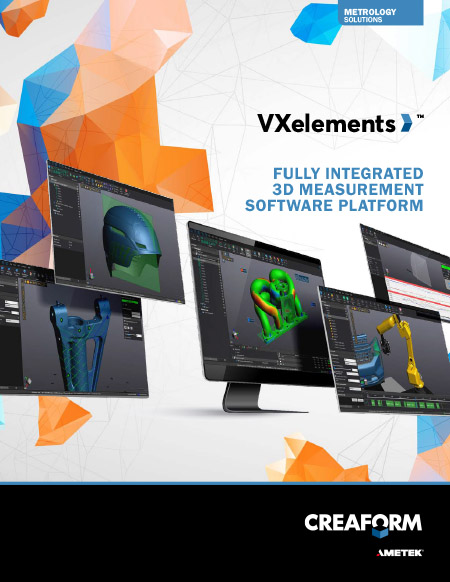
Fully Integrated 3D Measurement Software Platform
Creaform’s 3D Measurement Technologies VXelements is a powerful integrated 3D software platform that works in complete synergy with the entire fleet of Creaform’s 3D measurement and scanning solutions. It gathers all essential elements and tools into an intuitive, user-friendly working environment.
Thanks to its sophisticated algorithms, VXelements gives users the capability to generate 3D measurements with unmatched accuracy and data quality, empowering them to use Creaform’s optical solutions to their full potential.
VXelements is the intelligence behind your 3D measurement and scanning devices, as well as their application complement, offering a real solution to your business challenges. This software is continuously improved to ensure that you always get the most out of your Creaform measurement technologies.
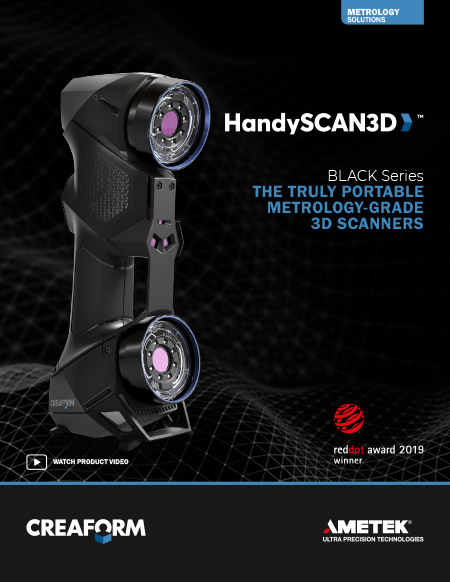
The Truly Portable Metrology-Grade 3D Scanners
The HandySCAN 3DTM line-up is the industry standard in portable metrology-grade 3D scanners and a proven and trusted patented technology. Optimized to meet the needs of design, manufacturing, and metrology professionals, the BLACK Series provides the most effective and reliable way to acquire accurate 3D measurements of physical objects anywhere.
Portable, accurate, and simple to use, the HandySCAN 3D | BLACK Series features unmatched speed that captures high-quality measurements. Since it performs regardless of environment changes or part movement, it represents the ideal tool for quality assurance and product development applications.
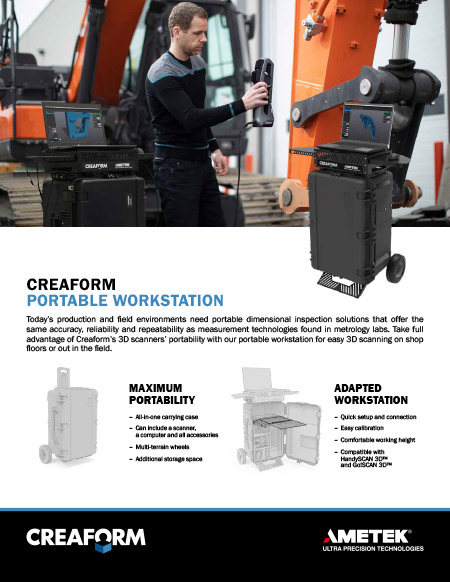
Today’s production and field environments need portable dimensional inspection solutions that offer the same accuracy, reliability, and repeatability as measurement technologies found in metrology labs. Take full advantage of Creaform’s 3D scanners’ portability with our portable workstation for easy 3D scanning on shop floors or out in the field.
Fast and Accurate 3D Scanning Solutions for Automated Quality Control
Designed for automated quality control applications, the R-SeriesTM 3D scanning solutions are perfect for manufacturing companies that want to increase their productivity by measuring more dimensions on more parts without compromising accuracy. Composed of a robot-mounted optical CMM scanner available for custom integration or in a turnkey solution, the R-Series can solve productivity issues efficiently and guarantee optimal measurement accuracy, speed, versatility, and simplicity, thereby providing increased product quality.
Proven and Trusted Professional 3D Scanners at an Accessible Price
The SILVER Series is part of the HandySCAN 3DTM line-up, the industry standard in portable metrology-grade 3D scanners. This proven and trusted patented technology captures accurate and repeatable 3D measurements of any complex surface in any location.
The HandySCAN 3D | SILVER Series is optimized to meet the needs of technology innovators and engineering professionals looking for a powerful, accessible, and reliable way to improve product development, shorten time-to-market, and reduce development costs.
Pages
-
-
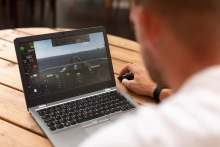 Leveraging 25 years of industry experience, unparalleled mathematical models and the latest techniques like gamification, virtual and augmented recreations, we offer the most sophisticated immersive training solutions to prepare mariners for the real world that awaits them onboard and onshore. These simulation solutions also expedite innovation and research processes by acting as the perfect testbed for new concepts and products that then directly contribute to the decarbonization and commercialization of the solutions.
 -
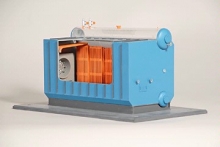 Item Number:355DAC Worldwide’s Water Tube Boiler Model (355) depicts a highly-detailed scale model of a common water tube boiler in a technically-accurate, professionally-crafted design. The model supports training in the operation and maintenance of industrial boilers found within utility systems in industrial facilities.
 -
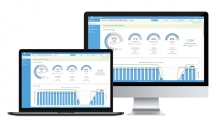 WebLytics from OnRobot is the first software solution that provides real-time production monitoring for collaborative applications across major robot brands.
 -
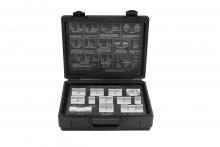 Item Number:825-000DAC Worldwide’s Weld Fault Comparison Kit (825-000) is a three-dimensional visual aid with accompanying training materials that facilitates basic training in weld quality and weld fault terminology by accurately depicting and identifying common weld defects.
 -
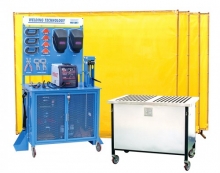 Item Number:950-WT1Welding is central to many industries including manufacturing, construction, and aerospace to name only a few. Welding is a blend of both art and science, joined together to create enduring bonds that allow us to create structures and machines on a scale impossible to achieve without it. The 950-WT1 teaches how to safely create an array of high quality weld types.
 -
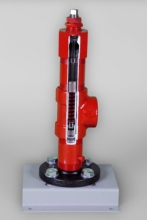 Item Number:295-703DAC's Wellhead Backpressure Regulator Cutaway (295-703) is a sectioned specialty regulator example for training in the operation, construction, and maintenance of three industrial back pressure regulators (BPRs), as used in gas and oil service in the oilfield.
 -
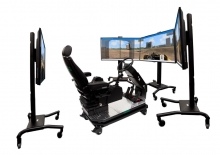 Item Number:WLSimlog’s Wheel Loader Personal Simulator is equipped with either a bucket or forks, at work in a typical construction site with a dump truck or flatbed truck. Configuration options are offered for both “Steering Wheel Steering” and “Stick Steering”, to reproduce the operator controls of (real) small, medium, and large-size wheel loaders.
 -
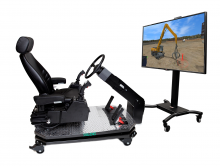 Item Number:WMHSimlog's new Wheeled Material Handler Personal Simulator puts you at the controls of a typical wheeled material handler equipped with an articulated boom, four-tine grapple, elevating cab, and outriggers. Many different kinds of situations typical of (metal) scrap recycling yards are presented, in order to address the training needs of a wide variety of customers using different operational practices.
 -
 Item Number:TFX-EMITT-TM-1The TacMed Whole-Body Simulator Emergency Medical Trauma Trainer (WBS EMITT-TM) offers high-fidelity trauma simulation for medics and first responders. With advanced features like airway management, active bleeding, and real-time feedback, it provides true-to-life training in critical care situations.