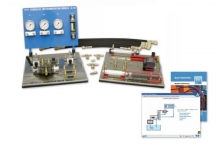
Each Basic Hydraulics training system features standard industrial grade components. This attention to quality gives students experience they would normally only get on-the-job by helping them recognize industrial components and how to troubleshoot them more effectively. Components included with Basic Hydraulics are pre-mounted on circuit panels with silk-screened labels next to each, which facilitates ease of use and identification.
Date: Monday, May 5, 2026 | 10:30AM-2:30PM
Location: TopGolf | 1500 Andrews Pkwy, Allen, TX
Amatrol Skill Boss Manufacturing
Amatrol’s Skill Boss Manufacturing is a portable, hands-on training and assessment system designed to meet the rigorous standards of the Manufacturing Skill Standards Council (MSSC). Built for the Certified Production Technician (CPT+) program, this system evaluates over 60 essential skills across safety, quality practices, production processes, and maintenance awareness.
The Skill Boss system replicates real-world manufacturing tasks, including assembly, machine operation, and troubleshooting. Learners gain practical experience with components such as programmable logic controllers (PLCs), human-machine interfaces (HMIs), electro-pneumatic systems, sensors, mechanical drives, and robotic pick-and-place systems. By completing CPT+, individuals prove both their technical knowledge and applied competency, making them job-ready for advanced manufacturing careers.
- Assess and train in Safety, Quality, Production, and Maintenance
- Hands-on demonstrations in electrical, fluid power, mechanical, and electronic systems
- Supports MSSC’s Certified Production Technician Plus (CPT+) certification
- Portable design for classrooms, training centers, and workforce development programs
With its real-world finishing and sorting process, Skill Boss Manufacturing automatically feeds, sorts, and polishes parts, while learners control and monitor operations. The system’s design provides educators and employers with a reliable way to both develop and validate critical advanced manufacturing skills.
Levil Technology EDU-RoboMill: CNC Precision Meets FANUC Robotics
The EDU-RoboMill brings together the world of CNC machining and FANUC robotics in a single, compact solution designed for both education and industrial applications. Built with precision and durability in mind, the RoboMill allows students to practice robot programming, CNC fundamentals, and integrated automation—all in a footprint that fits through a standard 35″ doorway. Its combination of industrial-grade controls and accessible design makes it the perfect choice for classrooms, labs, and training centers preparing the next generation of advanced manufacturing professionals.
- Robot G-code Control: FANUC CNC issues coordinated X/Y/Z moves to the robot, enabling true CNC-style motion paths.
- Compact & Classroom-Ready: Fits standard doorways and runs on single-phase power for easy integration into labs.
- High Precision: Achieves repeatability down to ~0.0012 in (0.03 mm).
- Spindle Options: Configurable spindles with automatic tool changer (ATC), high-speed air-cooled motors, and rigid tapping capability.
- Industrial Flexibility: Train in robotics, CNC machining, and real-world automation tasks on one versatile platform.
Technical Highlights
- Precision & Feeds: ~0.0012 in (0.03 mm) precision; 79 ipm rapid feed; 59 ipm cutting feed.
- Power: 220 VAC, single-phase, 15 A (step-up/down transformer available for 110 VAC).
- Drive System: In-line direct drive with linear guideways and ball screws for smooth motion.
- Spindle Speeds: Options up to 30,000 rpm depending on configuration.
- Dimensions: 83.6″ W x 74.7″ H x 32.9″ D; fits through 35″ doorway.
FANUC Robot Compatibility
- LR-Mate 200iD/4S
- LR-Mate 200iD
- LR-Mate 200iD/7L
- LR-Mate 200iSD/14L
- LR-10iA/10
Other FANUC robots may be used; larger models may affect doorway clearance and table dimensions.
Gateway Technical College (GTC) is helping shape the workforce of tomorrow with its Smart Factory lab located at the SC Johnson Integrated Manufacturing and Engineering Technology (iMET) Center in Sturtevant, Wisconsin. As the first publicly funded technical college in the United States, GTC continues to lead by preparing students with the skills needed for Industry 4.0.
This advanced lab simulates a real-world production line where students gain hands-on experience in “lights out” manufacturing, automation, and data analytics. Learners work with programmable logic controllers (PLCs), human-machine interfaces (HMIs), industrial controllers, and smart sensors to understand how modern factories operate. By integrating connectivity and data analysis, the lab demonstrates how to unlock siloed information and apply it to real-world decision-making.
One of the lab’s most exciting features is its development of a digital twin—a virtual replica of the physical environment that collects and processes real-time data from robotics, machinery, and sensors. This allows students to explore artificial intelligence, advanced automation, and smart technologies that are rapidly transforming the manufacturing industry. By engaging with this innovative environment, students are better prepared to become the highly skilled employees industry partners need today and in the future.
Industrial Absorption Principles for Education & Research
Teaching Industrial Absorption Through Real Experiments
Absorption is a critical separation process in chemical engineering, widely applied in industries such as environmental engineering, pharmaceuticals, and petrochemicals. Pignat’s absorption training systems provide hands-on learning by simulating real-world gas–liquid interactions, enabling students to explore both the theory and practice of mass transfer operations.
These systems are designed for flexibility and precision, helping learners understand core concepts such as absorption efficiency, column design, and operating parameters. Whether used in an undergraduate classroom or an advanced research lab, Pignat’s absorption units bridge the gap between academic knowledge and industrial practice.
Key Learning Outcomes
- Understand the fundamentals of gas–liquid absorption processes
- Explore packed and tray column designs
- Measure and analyze absorption efficiency under varied conditions
- Apply theoretical principles to real-world separation challenges
Solid–Fluid Adsorption Principles for Engineering Labs
Hands-On Solid–Fluid Interaction Experiments
Adsorption plays a vital role in chemical engineering and industrial applications, from gas purification and pollution control to water treatment and chemical recovery. Pignat’s adsorption training units enable students to study surface phenomena, adsorption isotherms, and regeneration techniques.
These versatile systems demonstrate the behavior of gases and liquids when interacting with solid surfaces, offering real-world insight into adsorption processes that industries rely on daily.
Key Learning Outcomes
- Understand adsorption isotherms and kinetics
- Examine breakthrough curves and column design
- Study regeneration and reuse of adsorbents
- Apply adsorption theory to environmental and industrial challenges
Crystallization Principles for Future Engineers
Explore the Science of Crystallization with Pignat
Crystallization is a widely used process in chemical, pharmaceutical, and food industries for product purification and separation. Pignat’s crystallization units provide a hands-on approach to studying solubility, cooling rates, and crystal formation.
Students gain real-world understanding of crystal nucleation and growth, learning how operational conditions affect product quality and purity.
Key Learning Outcomes
- Examine solubility and saturation principles
- Study the impact of cooling and evaporation on crystallization
- Analyze crystal growth and size distribution
- Apply solid–liquid separation concepts to industrial processes
Train Students in Industrial-Scale Distillation Concepts
From Classroom to Industry: Distillation Education
Distillation is one of the most common and important separation methods in the chemical process industry. Pignat’s distillation training systems bring industrial operations into the classroom, teaching fractional distillation, column efficiency, and reflux control.
These systems allow students to analyze mixtures, understand boiling point differences, and optimize process conditions—all while reinforcing real-world chemical engineering skills.
Key Learning Outcomes
- Perform simple and fractional distillation experiments
- Examine column efficiency and operating parameters
- Understand reflux and product purity control
- Apply separation principles to multi-component systems
Explore Vapor–Liquid Equilibrium with Pignat Systems
Thermodynamics Meets Real-World Application
Understanding vapor–liquid equilibrium (VLE) is essential for designing separation processes. Pignat’s ebulliometer training systems allow students to investigate boiling points, azeotropes, and thermodynamic properties directly in the lab.
These systems bridge theory and practice, giving learners critical insight into the phase behavior that drives distillation and other chemical processes.
Key Learning Outcomes
- Measure and analyze boiling points under different pressures
- Explore azeotrope formation and its impact on separation
- Apply vapor–liquid equilibrium data to distillation design
- Strengthen thermodynamic understanding with hands-on training
Teach Industrial Evaporation in the Lab
Evaporation Experiments for Chemical Engineering Education
Evaporation is widely used in chemical, food, and environmental industries to concentrate solutions and recover solvents. Pignat’s evaporation training units provide hands-on learning of heat transfer, phase change, and energy efficiency.
These systems allow students to evaluate operating conditions and optimize processes, preparing them for practical applications in industrial environments.
Key Learning Outcomes
- Understand evaporation principles and heat transfer
- Study concentration and solvent recovery techniques
- Explore the role of energy efficiency in evaporation systems
- Connect theoretical concepts with real-world industrial practice
Pages
-
 Item Number:BH-85
 -
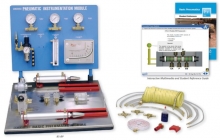 Item Number:85-BPAmatrol’s Basic Pneumatics training system (85-BP) introduces pneumatic principles through a combination of Amatrol’s top-flight multimedia curriculum with hands-on industrial pneumatic skill-building. Topics covered in this learning system include single-acting cylinder circuits, pressure vs. cylinder force, and flow control valves, while the panels can be used to practice skills such as connecting and operating a needle valve to control actuator speed.
 -
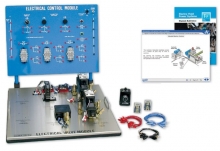 Item Number:85-EHThe Electro-Hydraulics training system includes an electrical control panel with relay control components and an electrical valve module with solenoid-operated hydraulic directional control valves and electrical/electronic sensors. These components will be used to study a variety of topics including electrical control systems, basic control devices, power devices, control relays, sequencing control, timer control, pressure control applications, and circuit applications.
 -
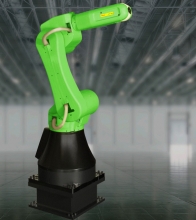 Item Number:CR-35iAFANUC’s new CR-35iA is the world’s first collaborative robot with a payload capacity of up to 35 kg. Fenceless, it opens a whole new world of possibilities. Working safely side by side with human operators, it is space as well as cost saving. And because inside it’s like any other FANUC robot, it operates like all FANUC robots. Certified to meet the requirements of ISO 10218-1:2011 and RIA/ANSI R15.06-2012, FANUC’s CR-35iA collaborative robot can work in a variety of applications alongside human workers including: machine tending, handling heavy payloads that require lift assist devices or custom equipment, higher payload mechanical assembly, palletizing or packing, and tote or carton handling.
 -
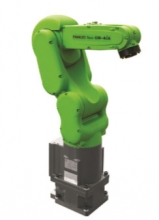 Item Number:CR-4iACR-4iA is a small collaborative robot with 4 kg payload
 -
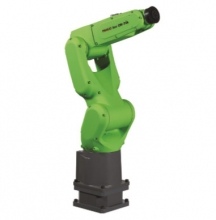 Item Number:CR-7iAThe FANUC CR-7iA is FANUC's newest collaborative robot resembles the LR Mate family. Painted green to show it's ability to work beside humans, you can expect the same reliability as FANUC's yellow robots. The CR-7iA is ideal for small part sorting and assembly, inspection, machine tending, and part delivery. It has a 7 kg payload, 717 mm reach, and is equipped with iRVision and Force Sensing. There are a variety of mounting options such as floor, wall, and ceiling.
 -
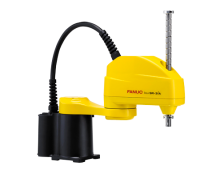 FANUC’s new SCARA robots are ideal for high-speed, precision applications such as assembly, pick and place, testing/inspection and packaging processes.
 -
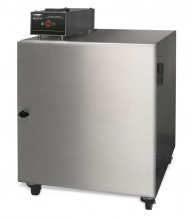
In the rare event that a burning ember or spark is drawn into the fume extraction unit, there is the possibility that debris in the filters could ignite. Although any resultant fire would typically be retained within the fume extraction unit, this would cause significant damage and in extreme circumstances, the risk may extend beyond the extraction unit. For processes where such risks have been identified, additional protection in the form of an in-line firebox is an additional precaution.
-
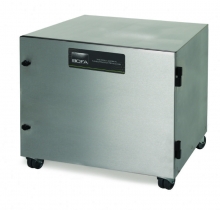
The BOFA inline pre-filter 1000 has been designed specifically for applications that generate high amounts of dust or particulate.
This inline filter unit is positioned alongside the main BOFA fume filtration system to increase the overall filter capacity and extend the life of the main filters. The DeepPleat DUO pre-filter incorporates a massive drop-out chamber within the filter, having a volume area of 15ltrs. Above the drop-out chamber but still within the housing there is a sealed 200mm deep pleat layer of F8 media giving a surface area in excess of 30 sq meters.
-
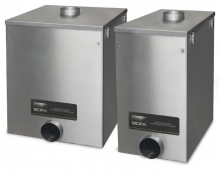 The BOFA inline prefilters have been designed specifically for applications that generate high amounts of dust or particulate.