The AD 2000 iQ’s technology delivers superior and measurable performance, ensuring airflow and filtration is maintained even when particulates start to build up. It’s thanks to the vacuum/pressure which is three times greater than that of its predecessor, the AD 2000.
Levil Technology EDU-RoboMill: CNC Precision Meets FANUC Robotics
The EDU-RoboMill brings together the world of CNC machining and FANUC robotics in a single, compact solution designed for both education and industrial applications. Built with precision and durability in mind, the RoboMill allows students to practice robot programming, CNC fundamentals, and integrated automation—all in a footprint that fits through a standard 35″ doorway. Its combination of industrial-grade controls and accessible design makes it the perfect choice for classrooms, labs, and training centers preparing the next generation of advanced manufacturing professionals.
- Robot G-code Control: FANUC CNC issues coordinated X/Y/Z moves to the robot, enabling true CNC-style motion paths.
- Compact & Classroom-Ready: Fits standard doorways and runs on single-phase power for easy integration into labs.
- High Precision: Achieves repeatability down to ~0.0012 in (0.03 mm).
- Spindle Options: Configurable spindles with automatic tool changer (ATC), high-speed air-cooled motors, and rigid tapping capability.
- Industrial Flexibility: Train in robotics, CNC machining, and real-world automation tasks on one versatile platform.
Technical Highlights
- Precision & Feeds: ~0.0012 in (0.03 mm) precision; 79 ipm rapid feed; 59 ipm cutting feed.
- Power: 220 VAC, single-phase, 15 A (step-up/down transformer available for 110 VAC).
- Drive System: In-line direct drive with linear guideways and ball screws for smooth motion.
- Spindle Speeds: Options up to 30,000 rpm depending on configuration.
- Dimensions: 83.6″ W x 74.7″ H x 32.9″ D; fits through 35″ doorway.
FANUC Robot Compatibility
- LR-Mate 200iD/4S
- LR-Mate 200iD
- LR-Mate 200iD/7L
- LR-Mate 200iSD/14L
- LR-10iA/10
Other FANUC robots may be used; larger models may affect doorway clearance and table dimensions.
Gateway Technical College (GTC) is helping shape the workforce of tomorrow with its Smart Factory lab located at the SC Johnson Integrated Manufacturing and Engineering Technology (iMET) Center in Sturtevant, Wisconsin. As the first publicly funded technical college in the United States, GTC continues to lead by preparing students with the skills needed for Industry 4.0.
This advanced lab simulates a real-world production line where students gain hands-on experience in “lights out” manufacturing, automation, and data analytics. Learners work with programmable logic controllers (PLCs), human-machine interfaces (HMIs), industrial controllers, and smart sensors to understand how modern factories operate. By integrating connectivity and data analysis, the lab demonstrates how to unlock siloed information and apply it to real-world decision-making.
One of the lab’s most exciting features is its development of a digital twin—a virtual replica of the physical environment that collects and processes real-time data from robotics, machinery, and sensors. This allows students to explore artificial intelligence, advanced automation, and smart technologies that are rapidly transforming the manufacturing industry. By engaging with this innovative environment, students are better prepared to become the highly skilled employees industry partners need today and in the future.
Industrial Absorption Principles for Education & Research
Teaching Industrial Absorption Through Real Experiments
Absorption is a critical separation process in chemical engineering, widely applied in industries such as environmental engineering, pharmaceuticals, and petrochemicals. Pignat’s absorption training systems provide hands-on learning by simulating real-world gas–liquid interactions, enabling students to explore both the theory and practice of mass transfer operations.
These systems are designed for flexibility and precision, helping learners understand core concepts such as absorption efficiency, column design, and operating parameters. Whether used in an undergraduate classroom or an advanced research lab, Pignat’s absorption units bridge the gap between academic knowledge and industrial practice.
Key Learning Outcomes
- Understand the fundamentals of gas–liquid absorption processes
- Explore packed and tray column designs
- Measure and analyze absorption efficiency under varied conditions
- Apply theoretical principles to real-world separation challenges
Solid–Fluid Adsorption Principles for Engineering Labs
Hands-On Solid–Fluid Interaction Experiments
Adsorption plays a vital role in chemical engineering and industrial applications, from gas purification and pollution control to water treatment and chemical recovery. Pignat’s adsorption training units enable students to study surface phenomena, adsorption isotherms, and regeneration techniques.
These versatile systems demonstrate the behavior of gases and liquids when interacting with solid surfaces, offering real-world insight into adsorption processes that industries rely on daily.
Key Learning Outcomes
- Understand adsorption isotherms and kinetics
- Examine breakthrough curves and column design
- Study regeneration and reuse of adsorbents
- Apply adsorption theory to environmental and industrial challenges
Crystallization Principles for Future Engineers
Explore the Science of Crystallization with Pignat
Crystallization is a widely used process in chemical, pharmaceutical, and food industries for product purification and separation. Pignat’s crystallization units provide a hands-on approach to studying solubility, cooling rates, and crystal formation.
Students gain real-world understanding of crystal nucleation and growth, learning how operational conditions affect product quality and purity.
Key Learning Outcomes
- Examine solubility and saturation principles
- Study the impact of cooling and evaporation on crystallization
- Analyze crystal growth and size distribution
- Apply solid–liquid separation concepts to industrial processes
Train Students in Industrial-Scale Distillation Concepts
From Classroom to Industry: Distillation Education
Distillation is one of the most common and important separation methods in the chemical process industry. Pignat’s distillation training systems bring industrial operations into the classroom, teaching fractional distillation, column efficiency, and reflux control.
These systems allow students to analyze mixtures, understand boiling point differences, and optimize process conditions—all while reinforcing real-world chemical engineering skills.
Key Learning Outcomes
- Perform simple and fractional distillation experiments
- Examine column efficiency and operating parameters
- Understand reflux and product purity control
- Apply separation principles to multi-component systems
Explore Vapor–Liquid Equilibrium with Pignat Systems
Thermodynamics Meets Real-World Application
Understanding vapor–liquid equilibrium (VLE) is essential for designing separation processes. Pignat’s ebulliometer training systems allow students to investigate boiling points, azeotropes, and thermodynamic properties directly in the lab.
These systems bridge theory and practice, giving learners critical insight into the phase behavior that drives distillation and other chemical processes.
Key Learning Outcomes
- Measure and analyze boiling points under different pressures
- Explore azeotrope formation and its impact on separation
- Apply vapor–liquid equilibrium data to distillation design
- Strengthen thermodynamic understanding with hands-on training
Teach Industrial Evaporation in the Lab
Evaporation Experiments for Chemical Engineering Education
Evaporation is widely used in chemical, food, and environmental industries to concentrate solutions and recover solvents. Pignat’s evaporation training units provide hands-on learning of heat transfer, phase change, and energy efficiency.
These systems allow students to evaluate operating conditions and optimize processes, preparing them for practical applications in industrial environments.
Key Learning Outcomes
- Understand evaporation principles and heat transfer
- Study concentration and solvent recovery techniques
- Explore the role of energy efficiency in evaporation systems
- Connect theoretical concepts with real-world industrial practice
Liquid–Liquid Separation for Education & Research
From Theory to Application: Extraction Education
Liquid–liquid extraction is a versatile separation technique, commonly applied in pharmaceuticals, environmental engineering, and chemical production. Pignat extraction units give students a hands-on platform to explore solvent recovery, phase equilibria, and distribution coefficients.
By operating real equipment, learners connect theoretical concepts to industrial practices, gaining valuable process engineering skills.
Key Learning Outcomes
- Understand phase equilibria in liquid–liquid systems
- Perform separation and purification through extraction
- Study solvent recovery and distribution coefficients
- Apply liquid–liquid extraction to real industrial challenges
Explore Solid–Liquid Separation Hands-On
Pignat Filtration Systems for Education & Research
Filtration is a core separation method across industries, from chemical production to environmental management. Pignat’s filtration training units let students experiment with solid–liquid separation, pressure effects, and filtration media.
These systems prepare learners for real-world challenges by linking academic knowledge with industrial filtration applications.
Key Learning Outcomes
- Study the mechanics of solid–liquid separation
- Understand the impact of pressure and media type
- Evaluate efficiency and product quality
- Apply filtration principles to chemical and environmental processes
Pages
-
-
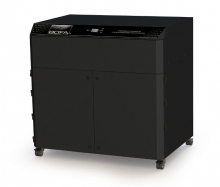
Low airflow entry-level laser fume extractor incorporating DeepPleat pre filter technology and large combined filter.
BOFA’s Advantage 250 fume extraction and filtration system has been designed to provide a cost-effective solution for light duty applications. This compact and extremely quiet system is ideal for use in schools, sign making workshops, small-scale industrial environments and light laser coding applications.
-
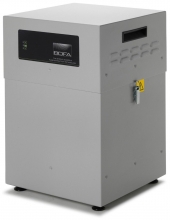
The Advantage Base C180 has been designed specifically for the GCC C180 laser engraver. The dimensions of the unit allow the C180 to fit perfectly onto the extractor, effectively doubling it up as a workstation. The unit is also offered with an onboard air compressor to provide the laser with its air assist requirements and comes complete with extraction hose kit and compressor link up on compressor models.
-
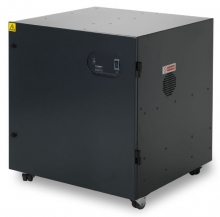
The compact system designed for small-scale industrial sites and light laser coding applications.
The AD Nano+ fume extraction and filtration system has been designed as a cost-effective solution for light to medium duty applications and is the ideal choice for installations where floor space is limited.
-
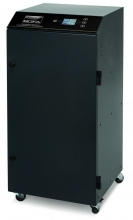
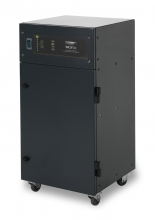
The AD Oracle iQ is our most technically advanced laser fume extractor, combining a powerful range of unique features into one compact unit.
This versatile unit can be used across a range of laser applications and the revolutionary auto-voltage sensing blower automatically self-adjusts to run on any voltage worldwide.
Our inline AD Cyclone has been designed to separate lower particle sizes during laser marking process.
-
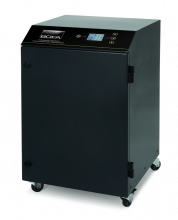 Introducing BOFA’s most technically advanced compact laser fume extractor. The AD Oracle SA iQ has been enhanced with BOFA’s iQ Operating System, RFA and ACF technology and packs a powerful range of unique features into one compact unit.
 -
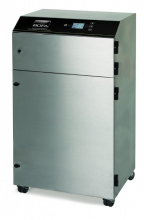
The AD PVC iQ extraction system has been designed to effectively deal with the corrosive nature of the fumes generated when lasering PVC materials.
The latest design specification now offers many of the features associated with our “Best in class” AD Oracle iQ model as standard but in addition all internally exposed surfaces have been coated to resist the corrosive nature of the fume and each unit is fitted with HCL and VOC sensors which continually monitor the exhaust air of the unit giving added safety assurance.
-
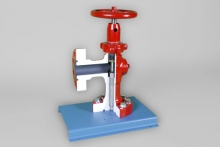 Item Number:295-711ADAC Worldwide’s Adjustable Oil Field Choke Valve Cutaway (295-711A) is a sectioned, specialty valve sample that supports training in the design features, internal components, and maintenance of adjustable choke valves used in oil and gas production operations.
 -
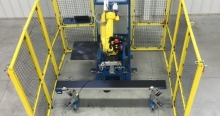 Item Number:AM-CERTThe AM-CERT cell was specifically designed for Advanced Manufacturing training. Learn robot to PLC interface, PLC ladder logic, operator interface, safety, mechatronics, and iRVision all in one cell. Certified for Material Handling, Level II and III Training.
 -
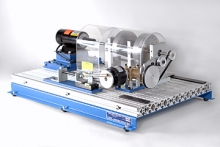 Item Number:203E-PACIndustrial maintenance technicians must learn to operate, maintain, troubleshoot, and repair a wide variety of mechanical systems used to manufacture products. One of the key diagnostic tools technicians will use during preventive maintenance as well as to maintain optimum efficiency is vibration analysis.