• Stratasys FDM Nylon 12

Nylon 12 is a semi-crystalline, FDM® thermoplastic. As with other semi-crystalline materials used in traditional manufacturing processes, special considerations should be implemented to ensure an optimal part is obtained. The information in this document illustrates the following considerations:

  • Tip Selection
  • Build Modes
  • Porosity
  • Sacrificial Tower Features
  • Build Sheets
  • Support Removal
  • Annealing
  • Stratasys FDM Nylon 12

FDM® Nylon 12 filament is the 3D printing equivalent of standard industrial PA12 (polyamide 12) material. A strong engineering thermoplastic that exhibits toughness and high impact strength without being brittle. Its excellent fatigue properties make it a good option for repetitive-flex applications such as snap-fit clips, closures, and press-fit inserts.

Other applications include jigs, fixtures, low-volume production parts, and accurate prototyping of nylon 12 high-volume injection molded parts. FDM Nylon 12 is available in black.  

  • Stratasys Nylon CF10
FDM® Nylon-CF10 is a composite material combining a blended nylon polymer with 10% chopped carbon fiber (by weight), enhancing the material’s strength and rigidity. The nylon base polymer also gives FDM Nylon-CF10 good chemical resistance.
  • Stratasys FDM Nylon 12CF

FDM® Nylon 12CF™ is a PA12 (polyamide 12) thermoplastic filament reinforced with chopped carbon fiber, 35% by weight. It has the highest flexural strength of any FDM thermoplastic, resulting in the highest stiffness-to-weight ratio. The combination of high strength, stiffness, and light weight makes it an optimal replacement for heavier metal components in appropriate use cases.

Typical applications include strong, lightweight tooling, functional prototyping and select end-use parts.

  • Stratasys FDM Nylon 6

FDM Nylon 6™ combines strength and toughness superior to other FDM thermoplastics, for applications that require strong, customized parts and tooling that lasts longer and withstands rigorous functional testing.

Engineered with nylon 6, a popular thermoplastic for manufacturing, this material works with the Fortus 900mc™ to produce durable parts with a clean finish and high break resistance. FDM Nylon 6 is ideal for product manufacturers and development engineers in automotive, aerospace, consumer goods, and industrial manufacturing.

  • Stratasys FDM PC-ABS

PC-ABS is a blend of polycarbonate (PC) and acrylonitrile butadiene styrene (ABS) thermoplastics. The result is an FDM filament that exhibits optimal characteristics of each – excellent strength, high toughness and heat resistance, and good flexural strength. Choose PC-ABS when you need the strength of PC but the impact resistance of ABS.

PC-ABS is suitable for various applications that include prototyping, tooling, and low-volume production. Available colors are black, white, and red.
  • Stratasys FDM Materials

PC-ISO (polycarbonate-ISO), an industrial thermoplastic, is biocompatible in its raw state (ISO 10993 USP Class VI)* and can be gamma or EtO sterilized. PC-ISO is commonly used in food and drug packaging and medical device manufacturing because of the material’s strength and medical compatibility. When combined with a Fortus® 3D Printer, PC-ISO gives you parts that can be used for conceptual modeling, functional prototyping, and production parts.

  • Stratasys FDM Polycarbonate PC
PC is a polycarbonate FDM® filament that brings the attributes of this industrial plastic to 3D printing applications. PC is characterized by its high strength, impact resistance, dimensional stability, and heat resistance. These attributes make it a good choice for 3D-printed prototypes, parts, and tools that demand higher material properties than ABS or ASA. FDM PC is available in white, black, and red.
  • Stratasys FDM PC

Material properties are an important consideration when evaluating additive manufacturing for advanced applications such as production runs of end-use parts. Since these products will be in service for extended periods and in varying conditions, qualifying the properties beyond published specifications is imperative.

  • Stratasys ULTEM 1010 Resin Material

ULTEM™ 1010 resin is a flame-retardant, high-performance thermoplastic for direct digital manufacturing and rapid prototyping. ULTEM™ 1010 resin offers good chemical resistance, high heat resistance and tensile strength, and the lowest coefficient of thermal expansion (CTE) of any FDM® thermoplastic. Its high strength-to-weight ratio and FST (flame, smoke, and toxicity) ratings make it an excellent choice for the commercial transportation industry, especially aerospace, marine, and ground vehicles.

ULTEM™ 1010 resin is offered in a certified grade (ULTEM™ 1010 resin CG), with documentation for food contact and biocompatibility compliance.

Pages

  • SACA’s Certified Industry 4.0 Professional certification
    SACA’s Certified Industry 4.0 Professional certification is an engineering certification that focuses on the analysis, design, and optimization of Industry 4.0 systems. It prepares engineers to succeed in positions in modern production environments that use Industry 4.0 technologies.
  • SACA Smart Automation Certifications
    SACA’s Specialist certifications certify Industry 4.0 technical skills in operations, troubleshooting, programming, maintenance, and systems integration. Each certification is keyed to a skilled occupation.
  • Certified Logistics Technical CLT
    The purpose of the Certified Logistics Technician (CLT) program is to recognize through certification individuals who demonstrate mastery of the core competencies of material handling at the front-line (entry-level through front-line supervisor) through successful completion of the certification assessments.
  • Manufacturing Skills Standards Council (MSSC)
    Item Number:
    CPT / CPT+ / CPT 4.0
    The purpose of the Certified Production Technician (CPT) ® 4.0 certification program is to recognize through certification, individuals who demonstrate mastery of the foundational, core competencies of advanced manufacturing production at the entry-level to front-line supervisor through successful completion of the certification assessments.
  • Supply Chain Automation Training & Assessment
    Item Number:
    CT-SCA
    MSSC’s Certified Technician in Supply Chain Automation (CT-SCA) logistics certification enables both students and incumbent workers to gain the skills needed to meet the definition of a supply chain automation technician established by the National Science Foundation-funded National Center for Supply Chain Automation: a technician who installs, operates, supports, upgrades or maintains the automated material handling equipment and systems which support the supply chain.
  • DAC Model: 223-000
    Item Number:
    223-000
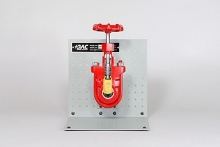
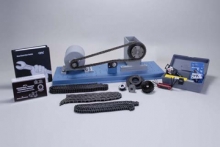
    DAC Worldwide’s Chain Drive Training System (223-000) is a heavy-duty learning aide that allows for in-depth training in industrial chain drives, heavy/silent chains, and sprocket set usage.
  • DAC Mechanical Drives
    Item Number:
    223-PAC
    DAC Worldwide’s Chain Drive Training System Plus (223-PAC) is a heavy-duty learning aide that allows for in-depth training in industrial chain drives, heavy/silent chains, and sprocket set usage.
  • Model: 838-PAC
    Item Number:
    838-PAC
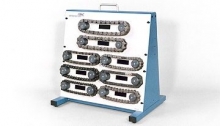
    DAC Worldwide’s Chain Sample Board (838-PAC) is an introductory hands-on teaching aid, designed to supplement courses in chain selection and maintenance. It includes samples of eight (8) industrial-quality chains for users to learn to identify.
  • VR Training: Chemical Spill Cleanup
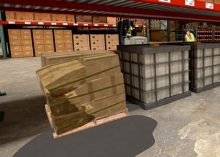
    Hard Hat VR's Chemical Spill Cleanup simulation is ideal for future employees or supervisors who will work in or visit warehouses or factories. The primary goal of this course is to teach individuals safe work procedures for chemical spill cleanup.
  • EMT Training Simulator
    Item Number:
    TFX-T-CT-1
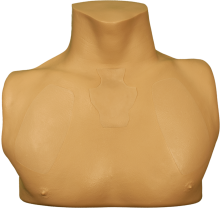
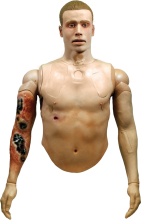
    The TacMed Simulation Chest Trainer is a ruggedized partial upper torso medical simulator that helps trainees during the crawl phase of training to treat patients requiring needle decompression and intraosseous (I/O) infusion. Students learn to locate realistic anatomic landmarks to execute critical patient treatment without relying on marked indicators. The unit functions as a stand-alone skills station with multiple training sites that allow for multiple uses with cost-effective replacement components.

Pages