Each Basic Hydraulics training system features standard industrial grade components. This attention to quality gives students experience they would normally only get on-the-job by helping them recognize industrial components and how to troubleshoot them more effectively. Components included with Basic Hydraulics are pre-mounted on circuit panels with silk-screened labels next to each, which facilitates ease of use and identification.
Discover how College of the Mainland’s Industrial Careers Program, led by Program Manager Kermit Harris, is preparing students for success in refinery instrumentation and electrical careers. Using state-of-the-art training equipment and curriculum provided by Tech-Labs, students gain the knowledge and hands-on experience needed to confidently enter the workforce.
This program goes beyond education—it transforms lives. Hear the heartfelt story of how one student’s journey from uncertainty to a promising career showcases the power of technical training.
Key highlights include:
- Real-world training on advanced industrial trainers.
- Expert guidance that builds a solid foundation for refinery work.
- Stories of life-changing impact and career growth.
Join the movement. Learn how Tech-Labs can empower your training programs today!
Oklahoma State University-Oklahoma City (OSU-OKC) is setting a new benchmark for advanced manufacturing education through its innovative FAME program. With a vision to create industry-ready professionals, the program combines academic rigor, hands-on training, and real-world industry experience.
What is the FAME Program?
The Federation for Advanced Manufacturing Education (FAME) provides a world-class workforce development model that combines strong technical training, manufacturing core competencies, and intensive professional practices. Through intentional hands-on experience, FAME prepares students to excel in the modern manufacturing industry and meet the evolving demands of employers.
Originally created by Toyota, FAME transitioned to the Manufacturing Institute in 2019 for national scaling. As the workforce development and education partner of the National Association of Manufacturers, the Manufacturing Institute now manages FAME USA, which continues to grow with the support of over 450 manufacturers nationwide.
At OSU-OKC, the FAME program integrates this proven model, offering students a unique opportunity to work in industry while attending school. This approach ensures graduates are equipped with the skills, experience, and professional mindset to thrive in advanced manufacturing careers.
By leveraging industry partnerships and cutting-edge equipment provided by Tech-Labs, OSU-OKC’s FAME program is shaping the future of manufacturing education and talent development in Oklahoma and beyond..
Industry Partnerships for Success
The program requires students to work in industry while completing their coursework. This mutual commitment ensures students receive both theoretical and practical knowledge, creating a workforce that’s ready to contribute from day one.
Tech-Labs: Empowering Education
Tech-Labs has played a crucial role in OSU-OKC's success. By providing state-of-the-art equipment and ongoing support, Tech-Labs has helped establish an environment where students can learn using tools that mirror what they will encounter in industry. From setup and training to sustained service, Tech-Labs has been a vital partner in OSU-OKC’s journey to excellence.
Impactful Outcomes
The FAME program is already making a difference in the lives of students like Tyler Connor, who values the hands-on experience and the opportunity to make an impact in the field. The program is not just about teaching skills but also about instilling servant leadership and creating a legacy of innovation.
Contact us to learn more about our advanced training solutions!
Empowering the Next Generation of Semiconductor Professionals
Train the Next Generation of Semiconductor Manufacturing Professionals
The semiconductor industry is booming thanks to the CHIPS Act, driving unprecedented investments in manufacturing and innovation. With this growth comes the urgent need for a highly skilled workforce. Amatrol is here to help you design custom training programs that equip students with the hands-on skills required to succeed in this dynamic field.
Comprehensive Training for Advanced Manufacturing & Industry 4.0 Careers
IGNITE, Amatrol’s comprehensive skill development program, is tailored for high schools and colleges. Available in 1-, 2-, or 3-year formats, IGNITE stimulates interest in advanced manufacturing careers while teaching industry-aligned skills. These courses prepare students for Smart Automation Certification Alliance (SACA) credentials, including the industry's first semiconductor-specific certifications developed with the Florida Semiconductor Institute.
Cutting-Edge Curriculum and Technology
Amatrol’s eLearning programs are designed to engage learners of all styles with:
- Interactive Multimedia: Stunning 3D graphics, voiceovers, and videos.
- Quizzes & Exercises: Reinforce understanding and practical application.
Our hands-on trainers provide unparalleled opportunities for students to practice skills critical to semiconductor manufacturing.
Key Training Modules
Amatrol offers training solutions for a wide range of topics in advanced manufacturing and semiconductor technology, including:
Smart Manufacturing
- Tabletop Smart Factory
- Smart Process Sensors
- Virtual Trainer for Smart Machine Sensors
Electrical & Electronics
- AC Motor Drives
- PLC Troubleshooting
Lean Manufacturing
- 5S Methodology
- Kaizen & Value Stream Mapping
- Total Productive Maintenance
- Basic Pneumatics
- Pneumatics Troubleshooting
Pneumatics
Safety Practices
- Lockout/Tagout
- Hazardous Communication
- Confined Spaces
Measurement Tools
- Precision Gauging
- Multiview & Assembly Drawings
- Inspection Techniques
Why Choose Amatrol?
- ISO 9001:2015 Certified Quality: Trusted for delivering exceptional training solutions.
- Hands-On Learning: Comprehensive trainers that simulate real-world scenarios.
- Industry-Aligned Credentials: Courses aligned with certifications from SACA and other recognized organizations.
Ready to Build Your Semiconductor Training Program? Contact us today to discuss your needs and let Amatrol help you craft a program that develops the next generation of skilled semiconductor professionals.
Empowering the Semiconductor Workforce of Tomorrow
The Semiconductor Boom: A Golden Opportunity for Training Programs
The CHIPS Act has ignited massive growth in semiconductor manufacturing, creating an urgent demand for a highly skilled workforce.
- 80+ new projects across the U.S.
- $447 billion in private investments in 25 states
- Over 56,000 high-quality jobs available
States like Texas, Oklahoma, New Mexico, Utah, Colorado, Wyoming, Montana, and Idaho are experiencing unprecedented demand for skilled workers in this rapidly expanding sector. Now is the time to prepare students and workers to meet the needs of this high-tech industry.
Why Amatrol?
Amatrol’s comprehensive training solutions align with industry-recognized credentials from the Smart Automation Certification Alliance (SACA), developed in partnership with the Florida Semiconductor Institute. These credentials certify essential hands-on skills needed for the semiconductor manufacturing workforce.
Features of Amatrol Training Programs:
- Interactive eLearning Curriculum: Engaging 3D graphics, videos, voiceovers, and quizzes appeal to all learning styles.
- Cutting-Edge Topics:
- Smart Manufacturing
- Basic Pneumatics
- PLC Troubleshooting
- Smart Process Sensors
- Pneumatics Troubleshooting
- Virtual Trainers
- AC Motor Drives
- Blueprint Reading
- Safety Practices & Regulations
Tailored Solutions for Industry and Universities
Amatrol helps universities and industrial training programs design custom training programs to prepare the next generation of semiconductor workers. Equip your students with:
- Smart Factory Systems
- Electrical and Electronics Training
- Precision Gauging Techniques
- Lean Manufacturing Practices
Addressing Workforce Needs in Key States
Semiconductor manufacturers in Texas, Oklahoma, New Mexico, Utah, Colorado, Wyoming, Montana, and Idaho are facing a growing skills gap. By integrating Amatrol’s advanced training systems, your program can:
- Provide industry-standard credentials.
- Develop hands-on competencies for high-tech careers.
- Address the regional demand for skilled technicians in this booming field.
Ready to transform your training program? Contact us today to learn how Amatrol can help you design a cutting-edge semiconductor workforce development program.
The TDL Academy at Western Guilford High School provides students with a transformative journey from classroom learning to high-demand careers in transportation, distribution, and logistics. Established in the 2019–2020 school year, this innovative program equips students with the skills, knowledge, and experience to excel in a rapidly growing industry.
Hands-On, Simulator-Based Training
- Students engage in real-world projects and problem-solving scenarios.
- Simlog simulators provide immersive training experiences, including forklift and reach truck operations.
- From beginner to advanced levels, students master equipment controls and full operation, preparing them to step into real-world roles confidently.
Building Career Pathways Through Partnerships
TDL Academy’s partnerships with leading companies like Fastenal and FedEx offer students real-world internship opportunities. These collaborations bridge classroom learning with workplace readiness, ensuring students leave the program career-ready. Many graduates transition into full-time roles, thriving in logistics careers while pursuing further education.
Simlog Simulators: The Key to Success
- Simlog forklift and reach truck simulators provide industry-standard training tools.
- Students gain hands-on experience in operating both stand-up and sit-down equipment.
- Simlog simulators support a range of users, from beginners to experienced technicians seeking supplemental training.
Success Stories
- Graduates have excelled in positions at logistics giants like Fastenal and FedEx Freight.
- Interns gain a competitive edge with Simlog-based simulator training, making them highly valued in the workforce.
- Companies report reduced training times and increased productivity thanks to the hands-on experience students receive.
Empowering Students for High-Demand Careers
With the capacity to train 60 students annually, the TDL Academy delivers a win-win solution for students, schools, and businesses. Graduates are job-ready and equipped to thrive in a field where skilled professionals are in high demand.
Take the Next Step
Ready to elevate your logistics training program? Discover how Simlog simulators can transform your classroom into a hands-on, career-ready learning environment. Whether you're starting a new program or enhancing an existing one, Simlog’s cutting-edge forklift and reach truck simulators provide the tools to prepare students for high-demand jobs in transportation, distribution, and logistics.
Contact us today to learn how to integrate Simlog simulators into your curriculum and create a pipeline of skilled, job-ready graduates!
Discover the industry-leading Smart Process Plant Training System (Model 603-SP)—a hands-on solution for mastering the complexities of process control systems. Designed for real-world training, this system allows learners to measure and control critical process variables, including level, pressure, temperature, flow, and pH. Featuring industry-standard components and advanced technologies, the 603-SP prepares trainees for careers in power generation, petrochemicals, biotechnology, food processing, and beyond.
Download the brochure to explore how the 603-SP integrates cutting-edge tools like smart sensors, distributed control systems (DCS), and Rockwell Automation’s PlantPAx software to provide a robust, immersive learning experience. Learn about hands-on exercises and experiments that simulate real-world applications, such as bioreactor operations, clean-in-place (CIP) systems, and wastewater treatment. Equip your team with the skills they need to excel—download now!
Discover the Power of Stratasys 3D Printers for Education
Empower your students to innovate and create with Stratasys 3D printers, the trusted choice for educators worldwide. Whether enhancing STEM curricula, equipping Makerspaces, or supporting design and engineering programs, Stratasys delivers reliable, industry-leading additive manufacturing technology tailored to educational environments.
Learn how schools, colleges, and universities can integrate these solutions to inspire hands-on learning and future-ready skills in students. With robust technical support and curriculum resources, Stratasys simplifies the adoption of 3D printing into your classroom or lab.
Why Stratasys Stands Out for Education
With a focus on innovation, sustainability, and accessibility, Stratasys offers a range of 3D printers designed for diverse educational applications. Explore how your institution can leverage Stratasys technology to foster creativity, collaboration, and real-world problem-solving. Dive into the brochure to uncover exciting features, case studies, and exclusive promotions available for educators like you.
Download the brochure now and take the first step toward transforming your educational programs with Stratasys!
Hands-On CNC Plasma Cutting Experience for Students in 30 Minutes or Less
Lincoln Electric® CNC plasma cutting tables are the ideal addition to educational programs, providing students with real-world skills in precision metal cutting. Designed as fully integrated systems, these machines offer seamless operation, allowing instructors and students to focus on learning rather than troubleshooting equipment.
Why Choose Lincoln Electric® for Your Classroom or Training Lab?
- Turnkey Solutions for Educators: Fully assembled and ready to use—start teaching metal cutting skills the same day the table arrives.
- Integrated Design: Every component is engineered to work together, ensuring reliable performance and easy operation for students.
- Durable and Low Maintenance: Torchmate tables are built to handle the rigors of daily classroom use with minimal upkeep, so your focus remains on teaching.
- Industry-Standard Training: Equip students with hands-on experience using technology trusted by professionals in manufacturing and fabrication.
Whether you’re running a high school CTE program, a technical college course, or a workforce development initiative, Lincoln Electric® CNC plasma tables empower students with practical, job-ready skills in CNC programming and metal fabrication.
Empowering Workforce Development with Lincoln Electric® Torchmate
Waukesha County Technical College (WCTC) is a leader in workforce development, offering over 150 programs, including associate degrees, technical diplomas, apprenticeships, and short-term certificates. With Waukesha and Pewaukee, Wisconsin campuses, WCTC delivers hands-on training designed for immediate application in the workplace. As a proud partner of Lincoln Electric®, WCTC equips its students with cutting-edge tools and skills to meet industry demands.
Upgrading to the Torchmate 5100 for Better Learning Outcomes
In the Fall semester of 2022, WCTC upgraded its CNC plasma-cutting capabilities by investing in a Torchmate 5100 equipped with a FineLine® 170HD. This advanced system replaced their previous 2’x4’ Torchmate Growth Series tables. It enabled students to work on larger sheets and produce higher-quality cuts, even on thicker materials like half-inch aluminum and steel.
- Enhanced Precision: Achieves superior cut quality on a wide range of materials.
- Increased Capacity: Handles extended work hours, with students using the table for 20+ hours each week.
- Diverse Applications: Students create parts for welding classes, fire pits, metal décor, smoker grills, and more.
Real-World Training Leads to Career Success
WCTC’s Automated Cutting Processes program, part of the Automated Systems Technology curriculum, integrates CNC plasma cutting with robotics and programmable logic controllers (PLCs). Students gain hands-on experience operating advanced systems like the Torchmate 5100, learning automation principles critical in modern industries.
Success Stories
Graduates of the Automated Systems program have secured roles at industry leaders like Messer, a global provider of industrial and medical gases:
- Three alumni now serve as application engineers.
- One graduate works as a product manager.
- Another alum is a software engineer.
These career placements highlight how WCTC’s partnership with Lincoln Electric® empowers students to achieve high-level roles in their fields.
Lincoln Electric®: Partnering with Educators
Lincoln Electric® is committed to supporting education by providing instructors with state-of-the-art equipment and comprehensive training. WCTC’s arsenal of Lincoln Electric products includes:
- Torchmate 5100 with FineLine® 170HD
- Tomahawk® manual plasma cutters
- Robot welding machines
- Power Wave®, Flextec®, and Precision TIG® welders
After the Torchmate 5100 purchase, Lincoln Electric sent expert trainers to WCTC, ensuring educators were equipped to maximize the machine’s capabilities.
“Lincoln Electric is a trusted name with a long history. They have individually focused teams that perfect each product. They’ve done great for WCTC, and I would absolutely recommend the Torchmate 5100.” – Brad LeTourneau, WCTC Metal Fabrication and Welding Instructor
Investing in the Future Workforce
By partnering with schools like WCTC, Lincoln Electric® ensures the next generation of welders, engineers, and fabricators is well-prepared for industry challenges. With innovative solutions like the Torchmate 5100, students gain the skills and confidence to succeed in their careers.
Ready to bring Lincoln Electric® solutions to your school? Contact us today to learn more about how our training systems can empower your students.
Check out the Torchmate CNC plasma table education packages! These packages are the ideal choice for the education setting with unlimited student licenses, superb training options, and numerous other online learning tools to keep your students engaged.
Pages
-
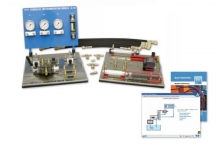 Item Number:BH-85
 -
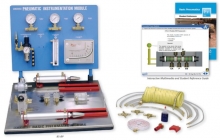 Item Number:85-BPAmatrol’s Basic Pneumatics training system (85-BP) introduces pneumatic principles through a combination of Amatrol’s top-flight multimedia curriculum with hands-on industrial pneumatic skill-building. Topics covered in this learning system include single-acting cylinder circuits, pressure vs. cylinder force, and flow control valves, while the panels can be used to practice skills such as connecting and operating a needle valve to control actuator speed.
 -
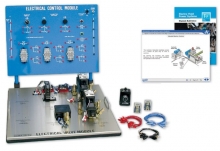 Item Number:85-EHThe Electro-Hydraulics training system includes an electrical control panel with relay control components and an electrical valve module with solenoid-operated hydraulic directional control valves and electrical/electronic sensors. These components will be used to study a variety of topics including electrical control systems, basic control devices, power devices, control relays, sequencing control, timer control, pressure control applications, and circuit applications.
 -
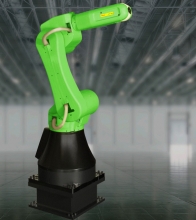 Item Number:CR-35iAFANUC’s new CR-35iA is the world’s first collaborative robot with a payload capacity of up to 35 kg. Fenceless, it opens a whole new world of possibilities. Working safely side by side with human operators, it is space as well as cost saving. And because inside it’s like any other FANUC robot, it operates like all FANUC robots. Certified to meet the requirements of ISO 10218-1:2011 and RIA/ANSI R15.06-2012, FANUC’s CR-35iA collaborative robot can work in a variety of applications alongside human workers including: machine tending, handling heavy payloads that require lift assist devices or custom equipment, higher payload mechanical assembly, palletizing or packing, and tote or carton handling.
 -
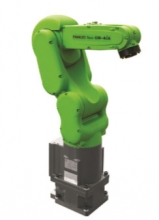 Item Number:CR-4iACR-4iA is a small collaborative robot with 4 kg payload
 -
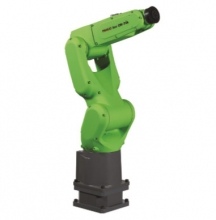 Item Number:CR-7iAThe FANUC CR-7iA is FANUC's newest collaborative robot resembles the LR Mate family. Painted green to show it's ability to work beside humans, you can expect the same reliability as FANUC's yellow robots. The CR-7iA is ideal for small part sorting and assembly, inspection, machine tending, and part delivery. It has a 7 kg payload, 717 mm reach, and is equipped with iRVision and Force Sensing. There are a variety of mounting options such as floor, wall, and ceiling.
 -
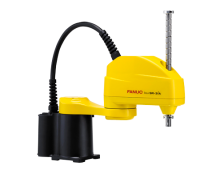 FANUC’s new SCARA robots are ideal for high-speed, precision applications such as assembly, pick and place, testing/inspection and packaging processes.
 -
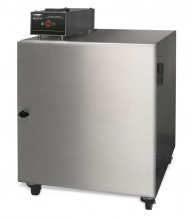
In the rare event that a burning ember or spark is drawn into the fume extraction unit, there is the possibility that debris in the filters could ignite. Although any resultant fire would typically be retained within the fume extraction unit, this would cause significant damage and in extreme circumstances, the risk may extend beyond the extraction unit. For processes where such risks have been identified, additional protection in the form of an in-line firebox is an additional precaution.
-
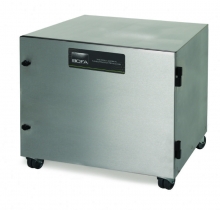
The BOFA inline pre-filter 1000 has been designed specifically for applications that generate high amounts of dust or particulate.
This inline filter unit is positioned alongside the main BOFA fume filtration system to increase the overall filter capacity and extend the life of the main filters. The DeepPleat DUO pre-filter incorporates a massive drop-out chamber within the filter, having a volume area of 15ltrs. Above the drop-out chamber but still within the housing there is a sealed 200mm deep pleat layer of F8 media giving a surface area in excess of 30 sq meters.
-
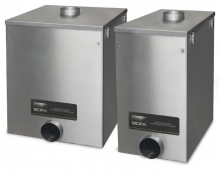 The BOFA inline prefilters have been designed specifically for applications that generate high amounts of dust or particulate.