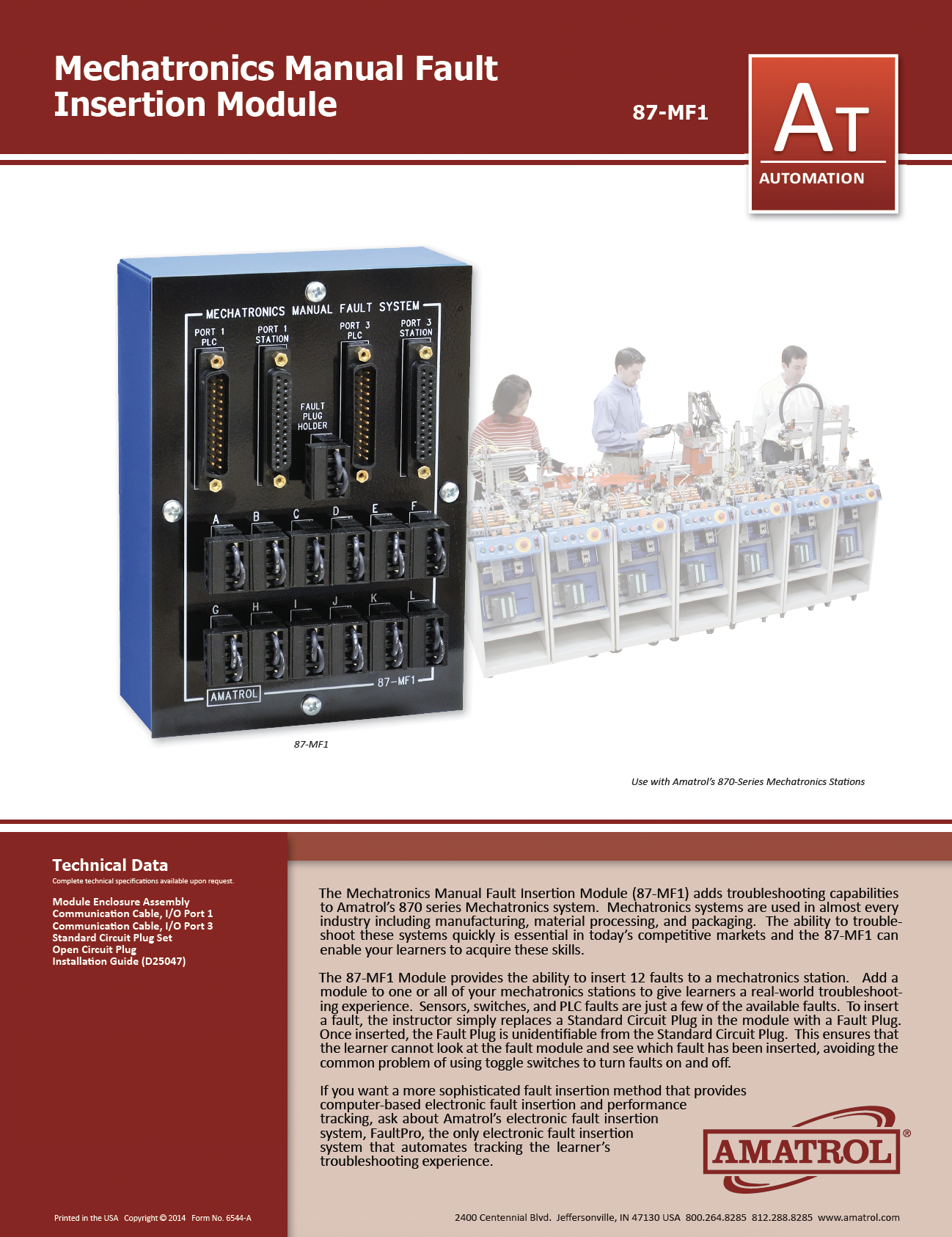


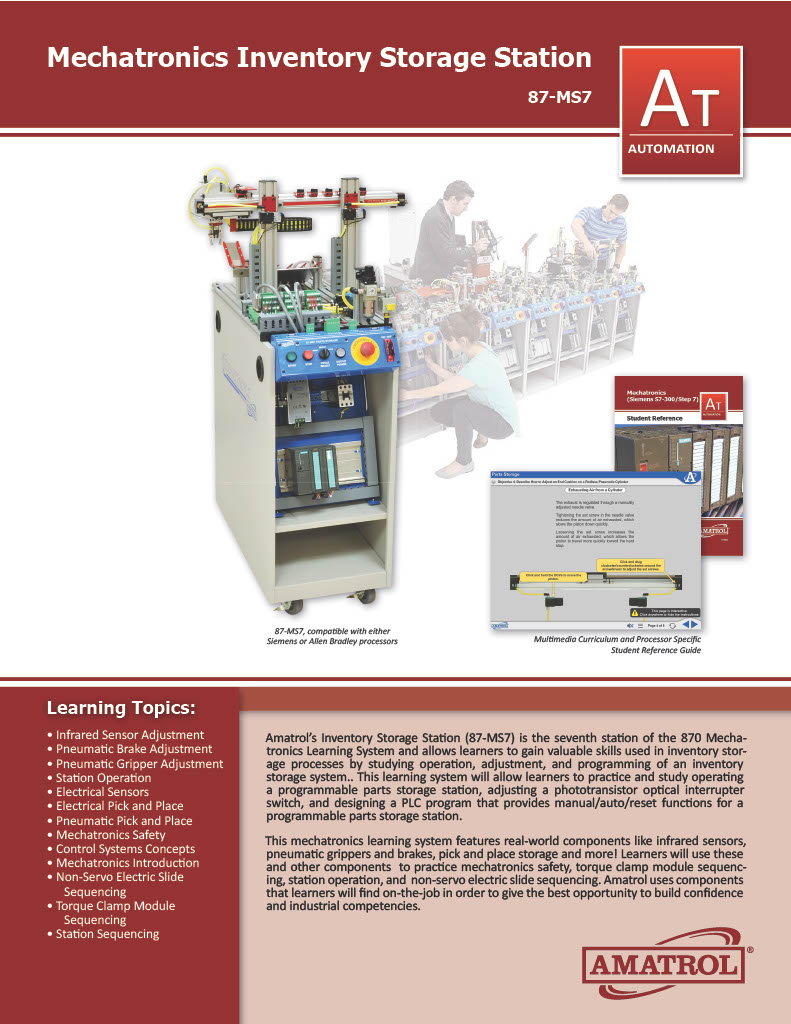
Each Basic Hydraulics training system features standard industrial grade components. This attention to quality gives students experience they would normally only get on-the-job by helping them recognize industrial components and how to troubleshoot them more effectively. Components included with Basic Hydraulics are pre-mounted on circuit panels with silk-screened labels next to each, which facilitates ease of use and identification.
Amatrol’s PLC Learning System – Siemens S7-1500 (87-IOSS715) provides an input/output simulator that allows learners to test PLC programs by providing manual input and output indicators that connect to a Siemens S7-1500 PLC input/output. This Siemens PLC program simulation system adds to Amatrol’s Mechatronics Learning System – Siemens S7-1500 (870-S715) and covers vital PLC training topics like PLC operation, programming, motor control, event sequencing, timer instructions, and counter instructions. The knowledge and skills covered by this PLC training system are extremely valuable for advanced manufacturing career opportunities like industrial maintenance technicians.
In addition to the PLC simulator module, the PLC training system for the Siemens S7-1500 PLC includes interactive multimedia curriculum, an instructor’s guide, an installation guide, and a student reference guide. Amatrol’s world-class multimedia training courses provide real-world technical knowledge that covers theoretical concepts and reinforces hands-on skills. Within this PLC online eLearning curriculum, learners will study PLC communications and program execution, PLC program editing and documentation, seal-in program logic, safety interlocks, multiple actuator sequencing, on-delay and off -delay timers, and count up and count down instructions.
Computer-Based Fault Insertion Software
The Mechatronics Manual Fault Insertion Training Module (87-MF1) adds troubleshooting capabilities to Amatrol’s 870 series Mechatronics system. Mechatronics systems are used in almost every industry including manufacturing, material processing, and packaging. The ability to troubleshoot these systems quickly is essential in today’s competitive markets and the Mechatronics Manual Fault Insertion training can enable your learners to acquire these skills.
The 87-MF1 Module provides the ability to insert 12 faults to a mechatronics station. Add a module to one or all of your mechatronics stations to give learners a real-world troubleshooting experience. Sensors, switches, and PLC faults are just a few of the available faults. To insert a fault, the instructor simply replaces a Standard Circuit Plug in the module with a Fault Plug. Once inserted, the Fault Plug is unidentifiable from the Standard Circuit Plug. This ensures that the learner cannot look at the fault module and see which fault has been inserted, avoiding the common problem of using toggle switches to turn faults on and off.
If you want a more sophisticated fault insertion method that provides computer-based electronic fault insertion and performance tracking, ask about Amatrol’s electronic fault insertion system, FaultPro, the only electronic fault insertion system that automates tracking the learner’s troubleshooting experience.
Amatrol’s Basic Fluid Power Learning System – Single Surface Bench (850-C1) teaches the fundamentals of two bedrocks of industry: hydraulic and pneumatic power. This fluid power training system includes three panels on its work surface and can store up to four additional panels under the work surface for expanded hydraulic and pneumatic training.
The basic fluid power training system includes a controls technology bench with a hydraulic power supply and Amatrol’s basic pneumatics and hydraulics systems. These systems feature industrial-quality components to prepare learners for what they will encounter on the job. Major topics covered by the system’s multimedia curriculum include hydraulic and pneumatic power systems, basic hydraulic and pneumatic circuits, principles of pneumatic and hydraulic pressure and flow, and hydraulic and pneumatic speed control.
Amatrol’s 87-MS1, Mechatronics Pick and Place Feeding, is station 1 of the 870 Mechatronics Learning System. The 87-MS1 station is a small mechatronics system in itself with multiple, integrated technologies that can be used stand-alone or in combination with other stations. Industrial safety and operation are emphasized on all Amatrol mechatronic stations.
Interfacing, Programming, Sequencing & Operation
Amatrol’s 87-MS2, Gauging, is station 2 of the 870 Mechatronics Learning System. The 87-MS2 station is a small mechatronics system in itself with multiple, integrated technologies that can be used stand-alone or in combination with other stations. Industrial safety and operation are emphasized on all Amatrol mechatronic stations.
Index Tables, Stepper Motors, Homing Sensors
Amatrol’s 87-MS3, Mechatronics Orientation-Processing Station, is station 3 of the 870 Mechatronics Learning System. The Mechatronics orientation training station is a small Mechatronics system in itself with multiple, integrated technologies that can be used stand-alone or in combination with other stations. Industrial safety and operation are emphasized on all Amatrol Mechatronic stations.
Mechatronics Sorting and Buffering
Amatrol’s Mechatronics Sorting-Buffering Learning System (87-MS4) is training mobile workstation 4 of the 870 Mechatronics Learning System. The 87-MS4 station is a small Mechatronics system in itself with multiple, integrated technologies that can be used stand-alone or in combination with other stations. In efforts to protect workers and machines, industrial safety and operation are emphasized on all Amatrol Mechatronic stations.
The Sorting-Buffering training station teaches interfacing, problem solving, programming, sequencing and operation for sorting, queuing, flat belt conveyors, photoelectric sensors, and inductive sensors. This station performs the role of sorting parts by material type in the process of assembling a working industrial control valve.
The 87-MS4 is a mobile workstation with slotted work surface that contains an operator station, belt conveyor module, part sorting module, buffer module, proximity sensing module, parts set, a pneumatic distribution module as well as an electrical distribution module, an electro-pneumatic valve manifold, and a digital I/O interface module.
Mechatronics Robotic Assembly
Amatrol’s 87-MS5-P2, Servo Robotic Assembly – Pegasus II, is station 5 of the 870 Mechatronics Learning System. The 87-MS5-P2 station is a small Mechatronics system in itself with multiple, integrated technologies that can be used stand-alone or in combination with other stations. Industrial safety and operation are emphasized on all Amatrol Mechatronic stations. The Servo Robotic Assembly station trains students for pick and place assembly, and teaches interfacing, problem solving, programming, sequencing and operation for servo robotics, gravity feeders, pneumatic screw feeders, and part insertion. This station performs the role of assembling a working industrial directional control valve using a combination of servo robotic and pick and place technologies.
The 87-MS5-P2 has two mobile training workstations with slotted work surfaces that contain an operator station, Pegasus II servo robot with teach pendant, spool insertion module, screw feed module, spring/knob feed module, screw/knob engagement module, assembly shuttle module, parts presentation module, finished parts storage module, parts set, a pneumatic distribution module as well as an electrical distribution module, an electro-pneumatic valve manifold, and a digital I/O interface module.
Interfacing, Programming & Sequencing
Amatrol’s 87-MS6, Torque Assembly, is mobile training station 6 of the 870 Mechatronics Learning System. The 87-MS6 station is a small Mechatronics system in itself with multiple, integrated technologies that can be used stand-alone or in combination with other training work stations. Industrial safety and operation are emphasized on all Amatrol Mechatronic stations.
Mechatronics Technician Training
Amatrol’s Automated Inventory Storage System (87-MS7) is the seventh station of the 870 Mechatronics Learning System and allows learners to gain valuable skills used in inventory storage processes by studying operation, adjustment, and programming of an inventory storage system. This learning system will allow learners to practice and study operating a programmable parts storage station, adjusting a phototransistor optical interrupter switch, and designing a PLC program that provides manual/auto/reset functions for a programmable parts storage station.
This mechatronics learning system features real-world components like infrared sensors, pneumatic grippers and brakes, pick and place storage and more! Learners will use these and other components to practice mechatronics safety, torque clamp module sequencing, station operation, and non-servo electric slide sequencing. Amatrol uses components that learners will find on-the-job in order to give the best opportunity to build confidence and industrial competencies.
Pages
-
 Item Number:BH-85
 -
 Item Number:85-BPAmatrol’s Basic Pneumatics training system (85-BP) introduces pneumatic principles through a combination of Amatrol’s top-flight multimedia curriculum with hands-on industrial pneumatic skill-building. Topics covered in this learning system include single-acting cylinder circuits, pressure vs. cylinder force, and flow control valves, while the panels can be used to practice skills such as connecting and operating a needle valve to control actuator speed.
 -
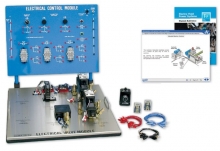 Item Number:85-EHThe Electro-Hydraulics training system includes an electrical control panel with relay control components and an electrical valve module with solenoid-operated hydraulic directional control valves and electrical/electronic sensors. These components will be used to study a variety of topics including electrical control systems, basic control devices, power devices, control relays, sequencing control, timer control, pressure control applications, and circuit applications.
 -
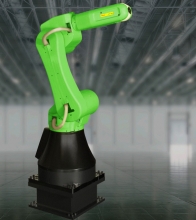 Item Number:CR-35iAFANUC’s new CR-35iA is the world’s first collaborative robot with a payload capacity of up to 35 kg. Fenceless, it opens a whole new world of possibilities. Working safely side by side with human operators, it is space as well as cost saving. And because inside it’s like any other FANUC robot, it operates like all FANUC robots. Certified to meet the requirements of ISO 10218-1:2011 and RIA/ANSI R15.06-2012, FANUC’s CR-35iA collaborative robot can work in a variety of applications alongside human workers including: machine tending, handling heavy payloads that require lift assist devices or custom equipment, higher payload mechanical assembly, palletizing or packing, and tote or carton handling.
 -
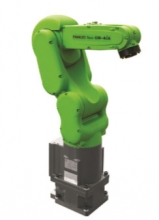 Item Number:CR-4iACR-4iA is a small collaborative robot with 4 kg payload
 -
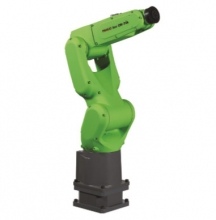 Item Number:CR-7iAThe FANUC CR-7iA is FANUC's newest collaborative robot resembles the LR Mate family. Painted green to show it's ability to work beside humans, you can expect the same reliability as FANUC's yellow robots. The CR-7iA is ideal for small part sorting and assembly, inspection, machine tending, and part delivery. It has a 7 kg payload, 717 mm reach, and is equipped with iRVision and Force Sensing. There are a variety of mounting options such as floor, wall, and ceiling.
 -
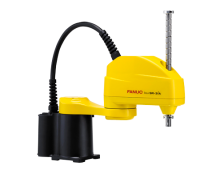 FANUC’s new SCARA robots are ideal for high-speed, precision applications such as assembly, pick and place, testing/inspection and packaging processes.
 -
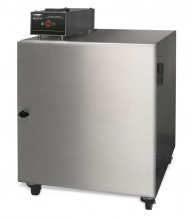
In the rare event that a burning ember or spark is drawn into the fume extraction unit, there is the possibility that debris in the filters could ignite. Although any resultant fire would typically be retained within the fume extraction unit, this would cause significant damage and in extreme circumstances, the risk may extend beyond the extraction unit. For processes where such risks have been identified, additional protection in the form of an in-line firebox is an additional precaution.
-
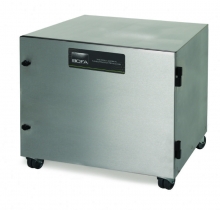
The BOFA inline pre-filter 1000 has been designed specifically for applications that generate high amounts of dust or particulate.
This inline filter unit is positioned alongside the main BOFA fume filtration system to increase the overall filter capacity and extend the life of the main filters. The DeepPleat DUO pre-filter incorporates a massive drop-out chamber within the filter, having a volume area of 15ltrs. Above the drop-out chamber but still within the housing there is a sealed 200mm deep pleat layer of F8 media giving a surface area in excess of 30 sq meters.
-
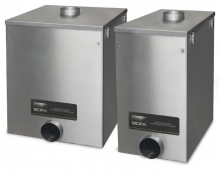 The BOFA inline prefilters have been designed specifically for applications that generate high amounts of dust or particulate.