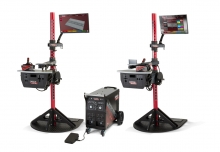
The VRTEX systems are virtual reality arc welding training simulators. These computer-based training systems are educational tools designed to supplement and enhance traditional welding training. They allow students to practice their welding technique in a simulated and immersive environment. The VRTEX systems promote the efficient transfer of quality welding skills and body positioning to the welding booth while reducing material waste associated with traditional welding training.
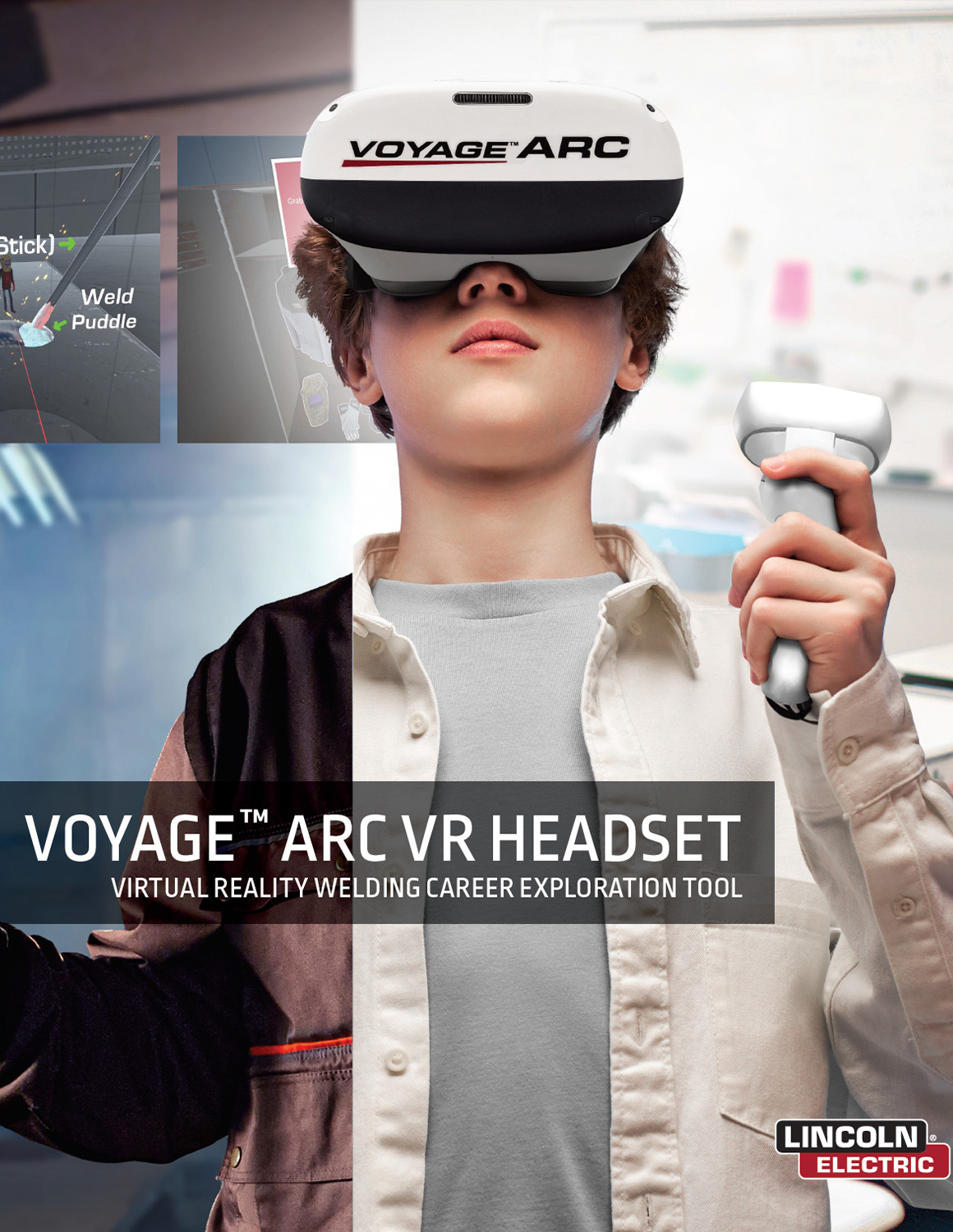
Download the Voyage™ Arc Virtual Reality Welding Career Exploration brochure to discover how immersive technology is transforming welding education. This innovative solution introduces students to welding fundamentals through an engaging, interactive virtual experience.
Designed to capture the attention of today’s tech-savvy learners, Voyage™ Arc provides a unique entry point into skilled trades by combining career exploration with hands-on virtual learning.
What You’ll Learn
- How VR introduces welding fundamentals in a safe, engaging environment
- Interactive lessons covering GMAW (MIG) and SMAW (Stick) processes
- How students explore real-world welding applications through guided scenarios
- Classroom benefits including easy implementation and student progress tracking
- Technical specifications, system components, and bundle options
Immersive Learning That Sparks Interest
The Voyage™ Arc experience places students in a virtual amusement park where they complete welding tasks and learn key concepts through guided, self-paced lessons. This approach helps students understand welding applications while building confidence and interest in the field.
As outlined in the brochure, students progress through bite-sized learning modules, practice welding techniques, and apply their skills in realistic scenarios—making it an effective tool for career exploration and program recruitment.
Designed for the Modern Classroom
The Lincoln Electric Voyage™ Arc is a stand-alone, classroom-ready solution that requires minimal setup and no internet connection. Educators can easily integrate the system into existing curriculum or use it as a foundation for new career exploration programs.
The system also supports classroom-wide deployment with optional LAN connectivity, allowing instructors to monitor student progress, track performance metrics, and enhance learning outcomes.
Build a Pathway into Welding Careers
Voyage™ Arc represents the first step in a complete welding education pathway—introducing students to the trade before advancing to simulation and hands-on lab training. This progression helps programs improve engagement, retention, and overall student success.
Ready to bring VR welding training to your program? Contact us to schedule a demo or discuss how Voyage™ Arc can support your CTE or workforce development initiatives.
Designed with education in mind, these 3D printing solutions support quick adoption in classrooms and labs through intuitive setup, guided workflows, and minimal technical barriers. Students can move from concept to physical part with confidence, allowing more time to focus on design thinking, iteration, and problem-solving.
A fully connected ecosystem of hardware, materials, and cloud-based software enables instructors to manage multiple devices and student projects efficiently. This streamlined approach is especially valuable in environments where scalability, ease of management, and consistent results are critical.
Reliable performance and repeatable output help ensure successful prints across a wide range of applications, from introductory STEM activities to more advanced engineering and prototyping projects. Built-in safeguards and user-friendly interfaces support safe operation while maintaining a strong emphasis on hands-on learning.
This approach aligns well with K-12, early college, and workforce training programs seeking to introduce additive manufacturing in a way that is accessible, structured, and easy to integrate into existing curriculum pathways.
See how a dedicated STEM center is expanding access to hands-on learning through 3D printing, mentorship, and shared resources. Students from multiple schools are gaining real experience designing, prototyping, and testing their ideas—using industry-relevant equipment in an environment built for exploration and growth.
This video highlights how quickly learners can get started, build confidence through iteration, and develop skills aligned with today’s technical education and workforce pathways. With accessible tools, certification opportunities, and mentor support, programs like this help improve engagement and create meaningful, career-connected learning experiences.
Watch to see how this scalable model supports goals around equity, access, and workforce readiness—and how similar approaches can be implemented to strengthen STEM programs and expand opportunities for your students.

Matrix TSL engineering education systems are designed to bridge the gap between theory and real-world application by giving students hands-on experience with core engineering principles. Developed by Matrix TSL, these compact, lab-ready solutions support universities, community colleges, and advanced STEM programs with equipment and curriculum that align directly with industry expectations. From mechanical and structural analysis to fluid dynamics and advanced manufacturing, each system is built to reinforce critical concepts through experimentation, measurement, and applied learning.
Unlike traditional lecture-based instruction, Matrix systems emphasize active engagement—allowing learners to visualize, test, and analyze engineering concepts in a controlled environment. Integrated data acquisition, structured experiments, and instructor resources make it easy to deliver consistent, outcomes-focused training while supporting a wide range of teaching styles. Whether introducing foundational concepts or advancing into specialized applications, these systems help students develop the problem-solving skills and technical confidence required for today’s engineering careers.
By combining scalable hardware with guided curriculum, Matrix TSL solutions enable institutions to modernize their labs without overcomplicating setup or delivery. The result is a flexible, future-ready learning environment where students gain practical experience that directly translates to the workplace—preparing them for careers in engineering, manufacturing, and technology-driven industries.
Matrix TSL aerospace teaching resources provide students with a hands-on introduction to the systems and technologies that power modern aviation. Covering topics such as aerodynamics, avionics, and aircraft electrical systems, these solutions allow learners to explore complex concepts through practical experimentation rather than theory alone.
Designed for schools, colleges, and advanced technical programs, these systems support structured learning while building the foundational knowledge required for careers in aviation maintenance, aerospace engineering, and related industries. By simplifying advanced aerospace principles into safe, lab-based activities, students gain confidence before transitioning to real-world applications.
Matrix TSL automotive teaching resources are designed to help students understand the underlying technologies behind today’s vehicles before working on live systems. With a strong focus on electrical systems, diagnostics, and vehicle networks, these solutions break down complex automotive concepts into manageable, hands-on learning experiences.
From introductory automotive electricity to advanced topics like CAN bus systems and high-voltage battery circuits, these training systems support learners at multiple levels. The result is a scalable pathway that prepares students for careers in automotive service, EV technology, and advanced vehicle diagnostics.
Matrix TSL electrical engineering teaching resources provide a comprehensive platform for learning electrical and electronic principles through practical application. Students move beyond theory by building circuits, testing systems, and analyzing real data—developing a deeper understanding of how electrical systems function in real-world environments.
These systems support a wide range of topics, from foundational electrical concepts to advanced control systems and embedded technologies. With integrated curriculum and structured experiments, educators can deliver consistent, outcomes-focused training that prepares students for careers in electrical engineering, electronics, and industrial automation.
Matrix TSL manufacturing engineering teaching resources introduce students to modern production methods, combining traditional machining concepts with advanced manufacturing technologies. Through hands-on systems such as CNC machining, process control, and automated production, learners gain practical insight into how products are designed, produced, and optimized.
These solutions help bridge the gap between classroom learning and industrial practice, enabling students to develop skills in areas such as G-code programming, quality control, and production workflows. Ideal for technical education and workforce training programs, they prepare learners for careers in advanced manufacturing and Industry 4.0 environments.
Matrix TSL mechanical engineering teaching resources allow students to explore core principles such as statics, dynamics, materials, and thermodynamics through hands-on experimentation. Rather than relying solely on theoretical instruction, learners can visualize and test mechanical behavior in a controlled lab setting.
These systems are designed to support engineering programs at multiple levels, helping students build problem-solving skills and a strong understanding of mechanical systems. By connecting theory to real-world applications, they prepare learners for careers in mechanical design, engineering analysis, and related technical fields.
Matrix TSL skilled trade teaching resources are designed to build foundational technical skills that apply across multiple industries. From electrical installation and maintenance to basic engineering and troubleshooting, these systems provide hands-on training that emphasizes practical, job-ready competencies.
Ideal for career and technical education programs, these solutions help students develop confidence working with tools, systems, and processes they will encounter in the field. By combining structured curriculum with real-world applications, they support pathways into apprenticeships, certifications, and skilled trade careers.
Pages
-
-
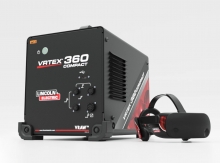 Item Number:K4914-20Lincoln Electric's VRTEX® 360 Compact is a small, portable Virtual Reality Welding Simulator for mobile use in multiple environments.
 -
 With CM Labs’ Walkaround Inspection trainees gain hands-on experience identifying issues, performing maintenance checks, and following safety protocols in a guided and measurable format. This tool builds operator confidence, reinforces safe habits, and strengthens maintenance knowledge—making it an essential part of a comprehensive training program.
 -
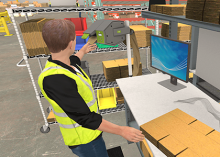 Effective packing surpasses mere item placement; it encompasses product safety, reduced shipping expenses, and the cultivation of brand loyalty. Inadequate packing practices can result in damaged goods, escalated expenses, and pose potential risks for both employees and recipients. This VR course directly confronts and addresses these challenges.
 -
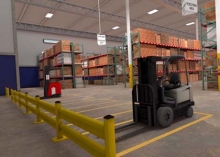 The primary goal of this course is to teach you safe work procedures to follow in a warehouse environment. You will learn how to maintain a safe warehouse and identify common hazards. The Warehouse Hazard awareness simulation is ideal for employees or supervisors who will work in or visit warehouses.
 -
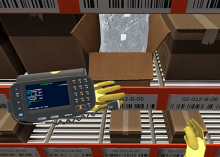 Discover the pivotal final steps of warehouse picking through VR Hard Hat's immersive Back-End Labeling course. Ensure product readiness, accurate shipment identification, and end-to-end traceability. Our course emphasizes precision in back-end labeling, minimizing logistical hurdles for efficient operations.
 -
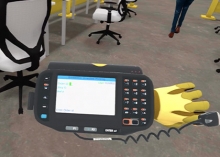 VR Hard Hat's Warehouse Picking: Case virtual reality course is meticulously designed to provide insights into the best practices of case picking, ensuring both speed and precision.
 -
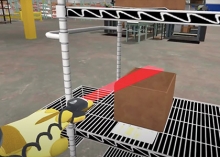 Front-end labeling, a vital component of the picking process, ensures that products are correctly identified, tracked, and dispatched. Proper labeling can reduce errors, improve efficiency, and enhance customer satisfaction. Hard Hat VR's course is designed to address the nuances of labeling at the initial stages of the picking process, ensuring that errors are minimized and efficiency is maximized.
 -
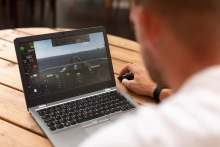 Leveraging 25 years of industry experience, unparalleled mathematical models and the latest techniques like gamification, virtual and augmented recreations, we offer the most sophisticated immersive training solutions to prepare mariners for the real world that awaits them onboard and onshore. These simulation solutions also expedite innovation and research processes by acting as the perfect testbed for new concepts and products that then directly contribute to the decarbonization and commercialization of the solutions.
 -
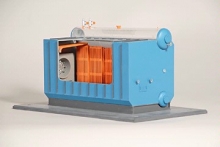 Item Number:355DAC Worldwide’s Water Tube Boiler Model (355) depicts a highly-detailed scale model of a common water tube boiler in a technically-accurate, professionally-crafted design. The model supports training in the operation and maintenance of industrial boilers found within utility systems in industrial facilities.