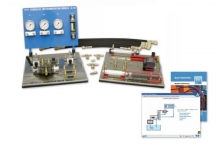
Each Basic Hydraulics training system features standard industrial grade components. This attention to quality gives students experience they would normally only get on-the-job by helping them recognize industrial components and how to troubleshoot them more effectively. Components included with Basic Hydraulics are pre-mounted on circuit panels with silk-screened labels next to each, which facilitates ease of use and identification.
The Matrix TSL Automatics range is designed to simplify the teaching of
pneumatics and automation, while also providing a powerful platform for
PLC programming and control. Built with industry-standard components adapted
for education, Automatics allows students to move from foundational concepts to advanced
automation applications using real hardware and software.
This video demonstrates how instructors can integrate PLC programming into their curriculum
using multiple flexible approaches—whether introducing basic control concepts or developing
advanced programming skills aligned with industry practices.
Control Add-On Kit for PLC Training
The Control Add-On Kit enhances the Automatics Essentials system by introducing
a powerful PLC, sensors, and solenoid valves. This setup allows students to
directly control pneumatic hardware using software-based programming.
- Develop skills in reading sensors and switches
- Control pneumatic circuits through software commands
- Understand digital vs. analog signals
- Use flowcharts to visualize logic and decision-making
- Program sequences, loops, and feedback systems
Two curriculum levels are included: one focused on pre-programmed control,
and another introducing students to writing their own PLC programs.
PLC Integration with Industry Controllers
For programs that want to align with specific manufacturers, the Automatics system can be
expanded using a PLC bracket and input/output modules. This allows connection
to a wide range of industry-standard PLCs, including:
- Siemens
- Mitsubishi
- Allen-Bradley
- Omron
- Other leading PLC platforms
Students can then program using ladder logic or manufacturer-specific software,
gaining experience that directly translates to real-world automation environments.
Siemens S7-1200 Add-On Training Option
As an educational partner of Siemens, Matrix TSL also offers a dedicated
S7-1200 PLC training add-on. This solution includes:
- Siemens PLC hardware
- Industry-standard programming software
- Curriculum aligned to Siemens automation systems
This option provides students with hands-on experience using one of the most widely used
PLC platforms in modern industry.
Flexible Solutions for Automation Education
Whether introducing basic control concepts or delivering advanced PLC programming, the
Matrix Automatics range offers flexible, scalable solutions to meet the needs
of secondary, postsecondary, and workforce training programs.
With modular hardware, structured curriculum, and compatibility with multiple PLC platforms,
educators can design training that aligns with industry standards and workforce demands.
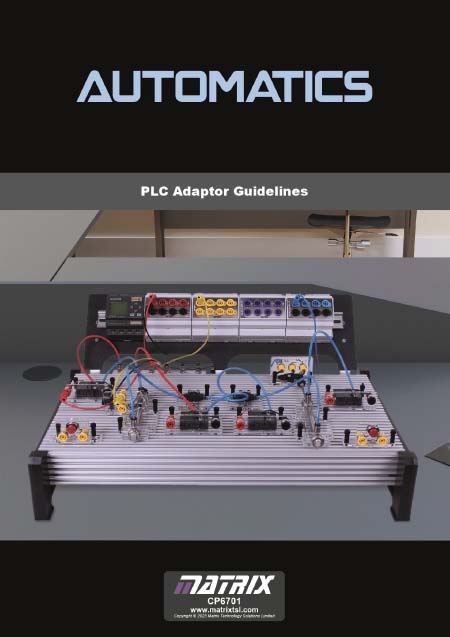
Download the Matrix Automatics PLC Adaptor Guidelines to learn how to connect PLC systems to pneumatic training platforms for advanced automation instruction.
Available through Tech-Labs, these adaptor modules allow educators to bridge pneumatic fundamentals with real-world PLC control, helping students build practical automation skills.
What’s Covered in This Guide
- PLC input, output, relay, and power interface modules
- Wiring diagrams and connection examples
- Module compatibility with different PLC types
- DIN rail mounting options and configurations
- Suggested setups for Siemens and other PLC systems
The guide outlines multiple module options for connecting PLC inputs, motor outputs, relay outputs, and power connections to the Automatics training platform.
Why PLC Integration Matters
Integrating PLCs into pneumatic training allows students to move beyond basic circuits into industrial automation concepts such as digital inputs/outputs, relay logic, sequencing, and control system design.
- Bridges foundational skills with advanced automation
- Supports real-world industrial control workflows
- Enhances troubleshooting and system design skills
This guide is ideal for programs looking to expand into Industry 4.0-aligned automation training.
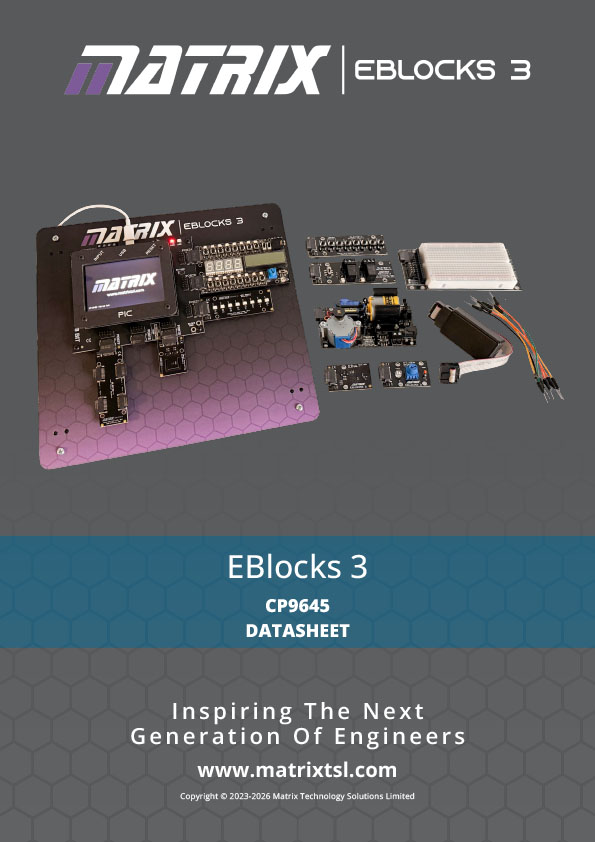
EBlocks3 from Matrix TSL is a modern, modular embedded systems platform designed to simplify the teaching and learning of microcontrollers, electronics, programming, and rapid prototyping. Whether students are just beginning their journey in embedded systems or advancing toward complex IoT and automation projects, EBlocks3 provides a flexible and scalable learning environment.
The platform combines powerful upstream processor boards with a growing ecosystem of downstream modules, allowing learners to build complete embedded systems quickly and easily. With support for PIC®, Arduino®, ESP32, and FPGA technologies, EBlocks3 enables institutions to teach multiple hardware and software platforms using a common modular architecture.
- Modular design for rapid system development and experimentation
- Compatible with PIC, Arduino, ESP32, and FPGA platforms
- Integrated color touchscreen display with Wi-Fi and Bluetooth capabilities
- Automatic hardware detection through Matrix Auto-ID technology
- Support for Flowcode, MPLAB X, Arduino IDE, and other development environments
- Extensive range of sensor, communications, actuator, and interface boards
- Designed specifically for educational environments
- Fully compatible with existing EBlocks 2 downstream hardware
EBlocks3 helps bridge the gap between theory and practical application by allowing students to build real-world embedded systems using industry-relevant hardware. Learners can explore digital electronics, sensor integration, communications protocols, control systems, wireless technologies, and Internet of Things (IoT) applications through hands-on projects and experimentation.
The modular architecture allows instructors to create learning experiences that grow alongside student skill levels—from introductory electronics concepts through advanced embedded systems development and engineering design projects.
- Overview of the EBlocks3 platform architecture
- PIC, Arduino, ESP32, and FPGA programming solutions
- Communication and networking modules
- Sensor and actuator expansion boards
- Prototype and project development boards
- Wireless, RFID, Ethernet, CAN Bus, and IoT technologies
- Software integration and Flowcode support
- Technical specifications and system configurations
Download the catalog to discover how EBlocks3 can support embedded systems, electronics, mechatronics, automation, engineering, and computer science programs.
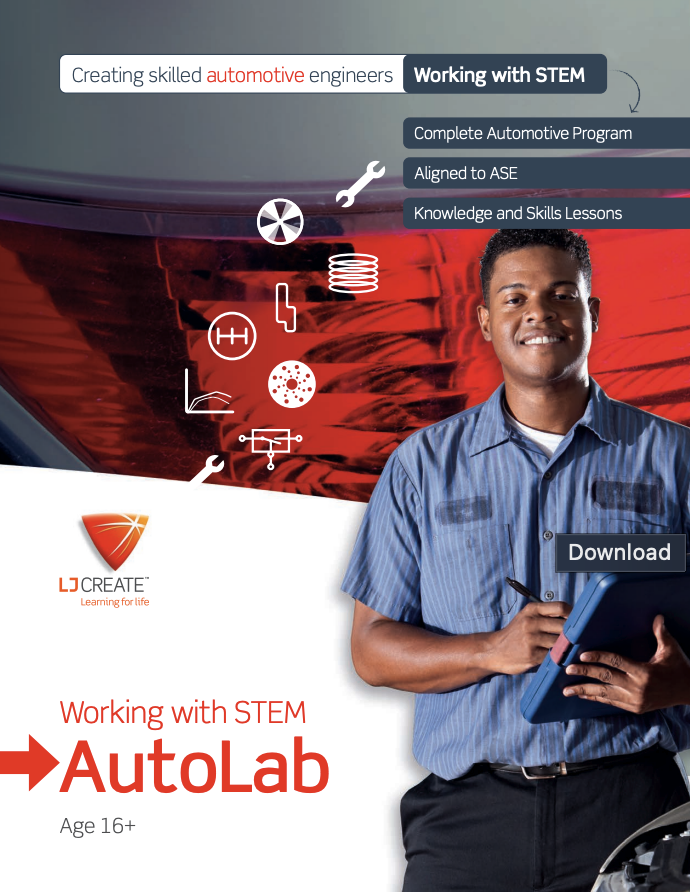
Prepare students for today’s automotive careers with AutoLab from LJ Create, a complete automotive training program designed to support ASE-aligned instruction through digital curriculum, hands-on trainers, simulations, assessments, and practical skills lessons.
The AutoLab program helps instructors guide students from classroom theory to shop-based application. With resources for light-vehicle systems, EV technology, medium- and heavy-vehicle skills, and ASE task alignment, AutoLab provides a flexible way to strengthen or expand an automotive technology program.
What’s Inside the Brochure?
- ASE-aligned learning pathways for MLR, AST, and MAST levels
- Knowledge Lessons including presentations, investigations, simulations, and assessments
- Skills Lessons using automotive rigs, panel trainers, circuit trainers, job sheets, and shop activities
- Light vehicle training equipment covering electrical, braking, steering, suspension, engine management, HVAC, and more
- EV and hybrid training resources for modern automotive programs
- ASE crosswalk support to help match equipment to relevant ASE tasks
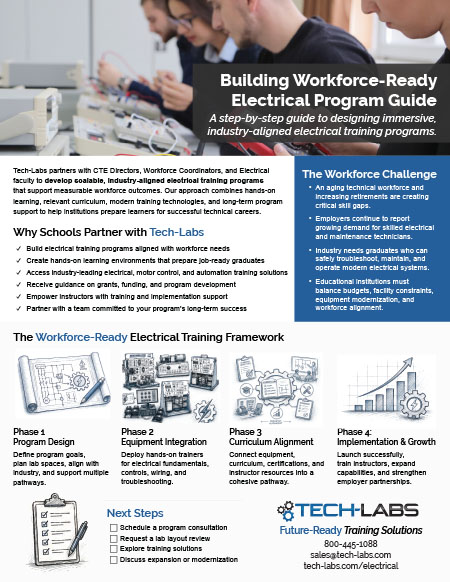
Electrical training programs are essential for preparing students and technicians for careers in electrical systems, industrial maintenance, automation, and skilled trades.
This free guide provides a practical framework for developing workforce-ready electrical training programs that align with employer needs while balancing equipment, curriculum, facility, and budget considerations.
Inside the Guide:
- Current workforce challenges impacting electrical training programs
- A workforce-ready electrical training framework
- Program design and lab planning recommendations
- Equipment and technology integration strategies
- Curriculum alignment and certification pathways
- Implementation and program growth best practices
Who Should Download This Guide?
- CTE Directors
- Electrical Instructors
- Technical College Faculty
- Workforce Development Leaders
- Apprenticeship Coordinators
- Training Managers
Whether you're launching a new electrical program, modernizing an existing lab, or expanding workforce development initiatives, this guide can help support your planning process.
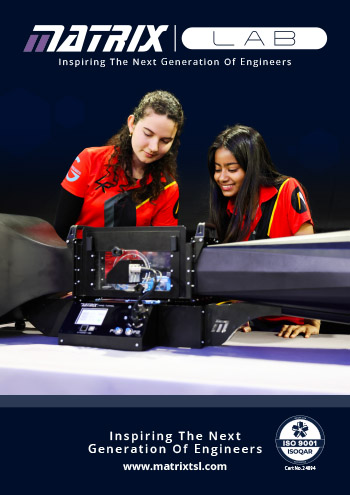
Matrix Lab: Complete Engineering Training Laboratories Designed for Student Success
Matrix Lab provides a comprehensive approach to engineering education by combining hands-on training equipment, interactive software, curriculum resources, instructor support, and complete lab design services into a unified learning environment. Designed to inspire the next generation of engineers and technicians, Matrix Lab solutions help educational institutions create engaging, practical learning experiences that bridge the gap between classroom theory and real-world applications.
From individual classroom training systems to fully customized engineering laboratories, Matrix Lab supports educators with everything needed to build effective training environments. Each solution is designed for durability, flexibility, and long-term value, allowing programs to expand and evolve as industry requirements and educational objectives change.
What's Included with Matrix Lab?
- Hands-On Equipment designed for practical engineering and technical training
- Interactive Software developed alongside the equipment for data collection, analysis, and experimentation
- Teaching Resources including instructor guides, worksheets, assessments, and lesson materials
- Custom Lab Design services tailored to available space, class sizes, and learning objectives
- Teacher Portal with access to instructor resources, answers, results, and planning tools
- Online Learning Environment featuring simulations, interactive exercises, progress tracking, and student feedback
- Lifetime Support from training and implementation through ongoing classroom assistance
- Storage and Furniture Planning to maximize functionality and organization
Engineering Disciplines Supported
Matrix Lab solutions support a wide variety of engineering and technical education pathways, helping institutions create specialized learning environments for multiple disciplines.
- Electrical and Electronic Engineering
- Mechanical Engineering
- Manufacturing and Automation
- Industrial Maintenance
- Aerospace Engineering
- Automotive Technology
- Skilled Trades
- Renewable Energy
- Civil Engineering
- Chemical Engineering
- Defense and Technical Training
Designed for Every Learning Environment
Whether serving high schools, community colleges, universities, private training providers, or industrial workforce development programs, Matrix Lab solutions can be customized to meet specific curriculum requirements and facility constraints. The modular approach allows institutions to start with targeted training areas and expand over time as programs grow.
From Empty Space to Complete Engineering Lab
Matrix Lab offers a complimentary lab planning and design service that helps institutions transform unused or underutilized space into modern engineering learning environments. Services include room layout planning, equipment selection, storage recommendations, furniture integration, and instructor training to ensure successful implementation and long-term program success.
Ready to create a hands-on engineering training environment? Contact Tech-Labs to learn how Matrix Lab can help design and equip a complete laboratory solution tailored to your educational goals and workforce development needs.
Discover the Matrix Fundamental Fluids training system and see how students can explore the principles of fluid mechanics through engaging, hands-on experiments.
Designed for mechanical engineering and engineering technology programs, the system combines a versatile main workstation with sixteen interchangeable experiment modules to create nine laboratory experiments. Students investigate concepts such as pressure, flow, and fluid behavior while building practical skills through real-world testing.
Six experiments utilize USB-connected pressure and flow sensors to automatically capture and graph data for analysis, while three manual experiments reinforce traditional measurement and interpretation techniques. Quick-release components allow each experiment to be assembled and changed over quickly, and a complete curriculum with guided laboratory exercises is included to support instruction.
Watch the video below to see the Matrix Fundamental Fluids system in action and learn how it can enhance hands-on fluid mechanics education.
Understanding how arches transfer loads is a fundamental part of structural and civil engineering education. The Matrix Two & Three Pinned Arch Experiment allows students to investigate the behavior of two of the most common arch configurations through practical, hands-on experiments that reinforce structural analysis theory.
In this overview video, you'll see how the training system enables learners to compare two-pinned and three-pinned arches while measuring horizontal thrust, vertical support reactions, and load distribution under a variety of loading conditions. Students can collect real experimental data, compare their findings with theoretical calculations, and gain a deeper understanding of structural mechanics.
What You'll Learn
- Compare the behavior of two-pinned and three-pinned arches.
- Measure horizontal thrust generated within arch structures.
- Determine vertical reactions at the supports.
- Investigate how loads are distributed throughout an arch.
- Validate theoretical calculations using experimental measurements.
- Develop practical skills in structural analysis and engineering mechanics.
Ideal For
- Civil Engineering programs
- Structural Engineering courses
- Engineering Mechanics laboratories
- University engineering education
- Applied structural analysis training
By combining theoretical concepts with experimental investigation, the Matrix Two & Three Pinned Arch system gives students valuable insight into how real structures behave under load while strengthening their analytical and problem-solving skills.
Take a behind-the-scenes look at the Matrix Fundamental Fluids training system as it is unpacked and assembled. This video showcases the thoughtful design and modular construction of the workstation, giving educators and students a closer look at the engineering that goes into creating a versatile fluid mechanics training solution.
Designed for mechanical, civil, and multidisciplinary engineering programs, the Matrix Fluid Mechanics Rig features a robust workstation with interchangeable experiment modules that can be assembled quickly without specialized tools. The modular design allows institutions to efficiently support multiple laboratory activities while minimizing setup time between experiments.
Whether you're evaluating equipment for a new laboratory or simply interested in how the system is built, this video provides a unique look at the quality, attention to detail, and practical design philosophy behind Matrix engineering education solutions.
Pages
-
 Item Number:BH-85
 -
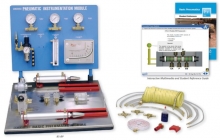 Item Number:85-BPAmatrol’s Basic Pneumatics training system (85-BP) introduces pneumatic principles through a combination of Amatrol’s top-flight multimedia curriculum with hands-on industrial pneumatic skill-building. Topics covered in this learning system include single-acting cylinder circuits, pressure vs. cylinder force, and flow control valves, while the panels can be used to practice skills such as connecting and operating a needle valve to control actuator speed.
 -
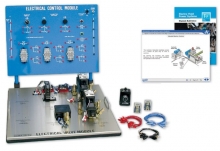 Item Number:85-EHThe Electro-Hydraulics training system includes an electrical control panel with relay control components and an electrical valve module with solenoid-operated hydraulic directional control valves and electrical/electronic sensors. These components will be used to study a variety of topics including electrical control systems, basic control devices, power devices, control relays, sequencing control, timer control, pressure control applications, and circuit applications.
 -
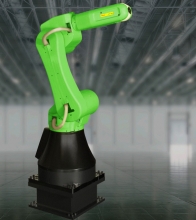 Item Number:CR-35iAFANUC’s new CR-35iA is the world’s first collaborative robot with a payload capacity of up to 35 kg. Fenceless, it opens a whole new world of possibilities. Working safely side by side with human operators, it is space as well as cost saving. And because inside it’s like any other FANUC robot, it operates like all FANUC robots. Certified to meet the requirements of ISO 10218-1:2011 and RIA/ANSI R15.06-2012, FANUC’s CR-35iA collaborative robot can work in a variety of applications alongside human workers including: machine tending, handling heavy payloads that require lift assist devices or custom equipment, higher payload mechanical assembly, palletizing or packing, and tote or carton handling.
 -
 Item Number:CR-4iACR-4iA is a small collaborative robot with 4 kg payload
 -
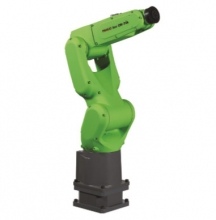 Item Number:CR-7iAThe FANUC CR-7iA is FANUC's newest collaborative robot resembles the LR Mate family. Painted green to show it's ability to work beside humans, you can expect the same reliability as FANUC's yellow robots. The CR-7iA is ideal for small part sorting and assembly, inspection, machine tending, and part delivery. It has a 7 kg payload, 717 mm reach, and is equipped with iRVision and Force Sensing. There are a variety of mounting options such as floor, wall, and ceiling.
 -
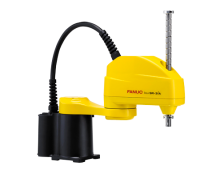 FANUC’s new SCARA robots are ideal for high-speed, precision applications such as assembly, pick and place, testing/inspection and packaging processes.
 -
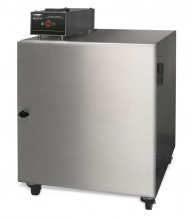
In the rare event that a burning ember or spark is drawn into the fume extraction unit, there is the possibility that debris in the filters could ignite. Although any resultant fire would typically be retained within the fume extraction unit, this would cause significant damage and in extreme circumstances, the risk may extend beyond the extraction unit. For processes where such risks have been identified, additional protection in the form of an in-line firebox is an additional precaution.
-
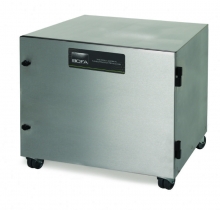
The BOFA inline pre-filter 1000 has been designed specifically for applications that generate high amounts of dust or particulate.
This inline filter unit is positioned alongside the main BOFA fume filtration system to increase the overall filter capacity and extend the life of the main filters. The DeepPleat DUO pre-filter incorporates a massive drop-out chamber within the filter, having a volume area of 15ltrs. Above the drop-out chamber but still within the housing there is a sealed 200mm deep pleat layer of F8 media giving a surface area in excess of 30 sq meters.
-
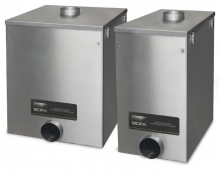 The BOFA inline prefilters have been designed specifically for applications that generate high amounts of dust or particulate.