
This ACR Oil Separator Cutaway, Float-Type provides a full cutaway view of an oil separator that exposes the complete internal components and operating principles. Color coding, flow arrows, and numbered call-outs combine to make the device more informative to the inquiring student and more useful to the instructor.
Tech-Labs represents multiple product lines as a regional dealer for the states of Texas and Oklahoma. Tech-Labs supports the following industry-recognized certifications by providing technical training systems, curricula, and software.
Industry 4.0 has redefined how manufacturers operate—and how Career and Technical Education programs must prepare students for the workforce. Automation, robotics, data, connectivity, and system integration are no longer advanced topics reserved for industry training; they are foundational skills for today’s technicians.
Industry 4.0 training solutions bring real-world manufacturing concepts into the classroom by combining hands-on equipment, digital systems, and industry-aligned curriculum. These integrated learning environments allow students to experience how modern factories function—from automated production and robotics to troubleshooting, data flow, and smart decision-making.
At Tech-Labs, we partner with educators to design Industry 4.0 training labs that support certifications, workforce readiness, and long-term program growth. Whether you’re building a new advanced manufacturing program or upgrading an existing lab, our Industry 4.0 solutions help bridge the gap between classroom instruction and real-world careers.
Academic institutions trust Quanser to strengthen their reputation through transformative teaching and research labs that accurately replicate theories and bring engineering mathematics and concepts to life.
“We are in a golden age of engineering education. There’s a lot to be excited about and a lot to be challenged by. The education we offer students must capture this momentum and help them realize their potential.” – Paul Gilbert, CEO, Quanser
When students are engaged, they are better able to discover their talents and develop the mental resources they need to think critically. But maintaining engagement can be a challenge, especially in middle school when both data and teacher experience point to a decline in student motivation.
World Leader in Technical Training Solutions
DAC Worldwide has been helping maintenance departments, training professionals, vocational educators, and workforce development specialists with realistic, hands-on training systems for over 35 years.
Whatever your industrial training needs, they have a wide range of products to help. For teaching fundamentals and troubleshooting, their cutaways provide a better understanding of how components actually work. The dissectibles teach essential hands-on skills for disassembly and assembly. The models allow you to explain how the various components of a system work together to create an entire process.
DAC Worldwide’s training systems provide a realistic, hands-on learning experience. Each system has the look and feel of real equipment students may encounter during their careers. These training systems are built with full-size, industrial-quality components and high-durability, powder-coated surfaces throughout to allow for repeated use and rough handling.
Technical Topics
Electrical/Electronics Heat Transfer & Steam Mechanical Drives Process Control & Instrumentation Pumps, Compressors & ValvesThis is DAC WORLDWIDE, your premium resource for industrial training & assessment solutions.
DAC Worldwide's line of industrial cutaways are real-world industrial components that have been restored, cutaway, and refinished using durable urethane coatings.
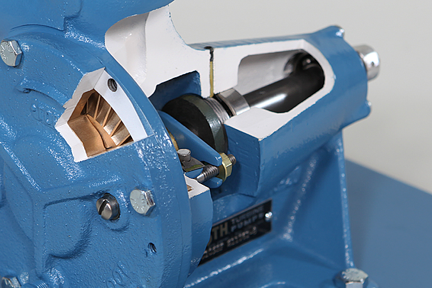
Successful training must match real-world conditions as closely as possible. DAC's line of industrial cutaways are real-world industrial components that have been restored, cutaway, and refinished using durable urethane coatings. Each of these industrial components has been professionally sectioned to expose each device’s primary components.
On many of DAC Worldwide’s cutaways, functionality has been retained and a hand wheel is provided to demonstrate low-speed manual operation. Each cutaway is mounted on a modular, heavy-gauge steel baseplate and support assembly. For industrial training relevance, common models by well-known manufacturers are chosen.
Features
- Hands-On Experience with Real Industrial Components
- Professionally-Sectioned To Expose Key Internal Components
- Functionality Retained Wherever Possible To Allow Observation of Low-Speed Manual Operation
- Common Models by Popular Manufacturers Chosen for Industrial Training Relevance
Technical Topics
HVAC Cutaways Heat Transfer & Steam Electrical/Electronics Fluid Power Mechanical Drives Oil Production Process Control & Instrumentation Pumps, Compressors & ValvesDAC Worldwide’s models are detailed, to-scale models that depict various industrial machines across numerous sectors.
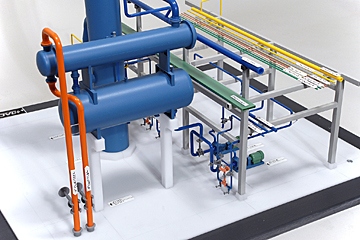 The industrial models, which are loosely based on common equipment by industry leaders, include all primary features and components. The primary housing and secondary components are sectioned off into cutaways, allowing for easy viewing of internal components while visualizing assembly and disassembly procedures.
The life-like industrial models are a convenient size and offer stunning realistic detail and color-coded flow paths, which will help prepare learners for rewarding industrial careers, such as maintenance technicians, machines operators, and more!
DAC Worldwide offers models in a variety of industrial disciplines.
Pages
-
 Item Number:373-721
 -
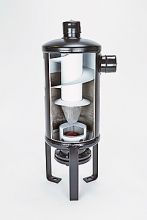 Item Number:373-722DAC Worldwide’s ACR Oil Separator Cutaway, Helical-Type is a professionally-crafted, economical teaching aid that depicts a conventional helical-type centrifugal oil separator commonly used in industrial and commercial refrigeration systems for oil entrapment and compressor crankcase replenishment.
 -
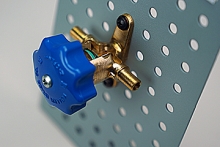 Item Number:373-503This ACR Packless Diaphragm Line Valve Cutaway provides a full cutaway view of the diaphragm line valve that exposes the complete internal components and operating principles.
 -
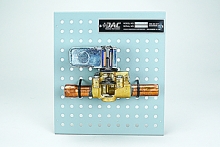 Item Number:373-502DAC Worldwide’s ACR Solenoid Valve Cutaway is a sectioned example of a commonly-encountered solenoid valve used in air conditioning and refrigeration systems with a remotely-operated maintenance-related block valve, system fluid, or gas flow control valve.
 -
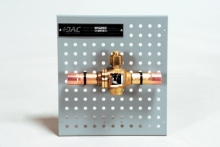 Item Number:373-501This ACR Steel Ball Valve Cutaway provides a full cutaway view of the compressor body that exposes the complete internal components and operating principles. Economically mounted on a formed-steel and powder-coated modular display panel, this sample panel can be mounted on a variety of optional benchtop display fixtures and storage structures.
 -
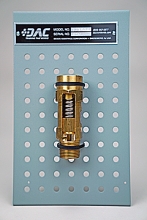 Item Number:373-506This ACR Straight-Thru Pressure Relief Valve Cutaway provides a full cutaway view of the reversing valve that exposes the complete internal components and operating principles.
 -
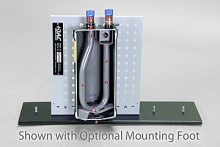 Item Number:373-701This ACR Suction Line Accumulator Cutaway provides a full cutaway view of an accumulator that exposes the complete internal components and operating principles. Color coding, flow arrows, and numbered call-outs combine to make the device more informative to the inquiring student and more useful to the instructor.
 -
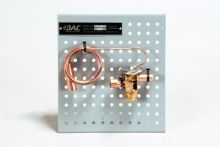 Item Number:373-521The full-size, fully-detailed example gives learners a first-hand view into a component that is found in various applications worldwide. This professionally-crafted, yet-economical component sample will enhance any training activity relating to commercial and industrial air conditioning and refrigeration systems.
 -
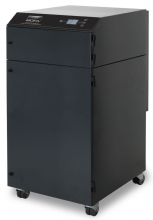 BOFA’s AD 1000 iQ high-end laser extraction system combines extremely large filter capacity with high airflow and pressure rates, making it the ideal choice for heavy-duty applications that generate large amounts of particulate and gaseous organic compounds.
 -
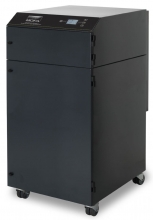
BOFA’s AD 1500 iQ is the ideal choice for heavy-duty applications that generate large amounts of particulate and gaseous organic compounds.
Performance has been further enhanced with the inclusion of several features including BOFA’s acclaimed iQ Operating System, making the AD 1500 iQ one of the most advanced systems available.
The iQ system takes performance and safety parameters to a new level and ensures that maintenance, downtime, and ownership costs are kept to a minimum.