Each Basic Hydraulics training system features standard industrial grade components. This attention to quality gives students experience they would normally only get on-the-job by helping them recognize industrial components and how to troubleshoot them more effectively. Components included with Basic Hydraulics are pre-mounted on circuit panels with silk-screened labels next to each, which facilitates ease of use and identification.
Teach the principles of fluid flow, pressure drop, cavitation, and pump behavior with Pignat’s transparent, lab-ready training equipment. These systems are essential for students to understand hydraulic systems and flow diagnostics — foundational knowledge for chemical, mechanical, and process engineering careers.
Explore conduction, convection, radiation, and phase change with Pignat’s heat transfer training systems. From shell-and-tube exchangers to thermal conductivity benches, these units are designed to help students measure heat flux, efficiency, and energy conservation in industrial processes.
Bridge the gap between theory and control room with Pignat’s PID control, SCADA, and PLC-integrated systems. Students learn to manage multi-variable processes with real-time monitoring of pressure, flow, temperature, and level control loops — just like in industrial operations.
Give students hands-on experience with coagulation, filtration, ion exchange, softening, biological treatment, and reverse osmosis. These systems simulate real-world water and wastewater treatment processes, supporting environmental engineering education and sustainability-focused programs.
Support education in pharmaceutical, food, and life science industries with Pignat’s bioprocessing systems. Train students to manage fermentation, gas-liquid reactions, CIP systems, and aseptic operations using safe, scalable systems ideal for cleanroom or lab use.
Enhance your lab with glassware, measurement tools, control panels, and custom setups from Pignat. From glass-blown components to full-scale process training lines, we offer the parts and customization needed to make your process engineering lab complete.
Download the 2025 Pignat Educational Equipment Catalog
Explore the complete line of process engineering and science training systems from Pignat. The 2025 catalog includes detailed information on educational units for chemical engineering, fluid mechanics, heat transfer, process control, water treatment, bioprocessing, and more.
Whether you're upgrading your engineering labs or designing a new technical training center, this catalog is your guide to scalable, hands-on systems trusted by educators worldwide.
- Over 100+ systems with technical specifications
- Grouped by topic for easy reference
- Designed for high school, college, university, and industrial training
Ready to explore what’s possible? Contact us for a personalized recommendation.
Pignat’s Mini Units provide compact, bench-scale systems tailored for foundational instruction in chemical engineering. These units offer a hands-on, visual approach to understanding key principles such as distillation, evaporation, absorption, crystallization, and liquid-liquid extraction. Designed for ease of use and quick experimentation, they are ideal for technical programs, undergraduate labs, and institutions introducing core unit operations.
Each Mini Unit features transparent construction and manual operation to enhance observation and comprehension. With models like the DVI/100 series for continuous distillation or the REA/2000 chemical reactor, educators can demonstrate essential process behaviors and thermodynamic principles with minimal space and setup requirements.
Pignat’s Pilot and Advanced Unit Operations systems bring industrial realism into the classroom with equipment that bridges theory and large-scale process simulation. These systems allow learners to operate advanced filtration, biodiesel synthesis, pulsed extraction, multi-effect evaporation, and crystallization equipment that mimics industrial setups while remaining safe and educational.
Perfect for advanced labs, engineering programs, and workforce development, these systems offer sophisticated instrumentation and optional computer integration. Whether studying gas-solid adsorption or operating a continuous reactor, learners gain a deep understanding of dynamic process control and chemical behavior under realistic conditions.
Pignat’s Multi-Purpose Reactors are modular systems that support a wide range of chemical reactions and configurations. Available in both manual and SCADA-controlled automated versions, these reactors allow for in-depth experimentation with parameters such as temperature, pressure, mixing speed, and reaction kinetics—mirroring real-world chemical production environments.
Ideal for upper-level university courses, research applications, and operator training, these versatile systems support synthesis, batch and continuous operation, and multiphase reactions. Units like the UPR/5000 combine automation, safety interlocks, and real-time data acquisition for modern chemical engineering instruction.
Pages
-
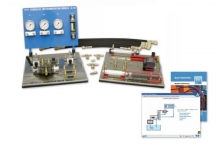 Item Number:BH-85
 -
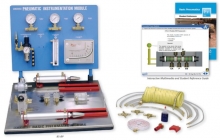 Item Number:85-BPAmatrol’s Basic Pneumatics training system (85-BP) introduces pneumatic principles through a combination of Amatrol’s top-flight multimedia curriculum with hands-on industrial pneumatic skill-building. Topics covered in this learning system include single-acting cylinder circuits, pressure vs. cylinder force, and flow control valves, while the panels can be used to practice skills such as connecting and operating a needle valve to control actuator speed.
 -
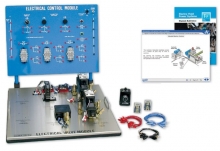 Item Number:85-EHThe Electro-Hydraulics training system includes an electrical control panel with relay control components and an electrical valve module with solenoid-operated hydraulic directional control valves and electrical/electronic sensors. These components will be used to study a variety of topics including electrical control systems, basic control devices, power devices, control relays, sequencing control, timer control, pressure control applications, and circuit applications.
 -
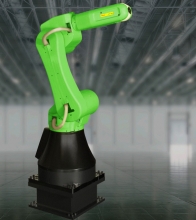 Item Number:CR-35iAFANUC’s new CR-35iA is the world’s first collaborative robot with a payload capacity of up to 35 kg. Fenceless, it opens a whole new world of possibilities. Working safely side by side with human operators, it is space as well as cost saving. And because inside it’s like any other FANUC robot, it operates like all FANUC robots. Certified to meet the requirements of ISO 10218-1:2011 and RIA/ANSI R15.06-2012, FANUC’s CR-35iA collaborative robot can work in a variety of applications alongside human workers including: machine tending, handling heavy payloads that require lift assist devices or custom equipment, higher payload mechanical assembly, palletizing or packing, and tote or carton handling.
 -
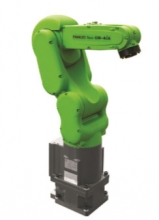 Item Number:CR-4iACR-4iA is a small collaborative robot with 4 kg payload
 -
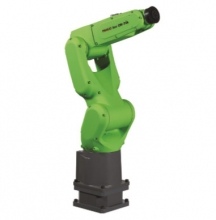 Item Number:CR-7iAThe FANUC CR-7iA is FANUC's newest collaborative robot resembles the LR Mate family. Painted green to show it's ability to work beside humans, you can expect the same reliability as FANUC's yellow robots. The CR-7iA is ideal for small part sorting and assembly, inspection, machine tending, and part delivery. It has a 7 kg payload, 717 mm reach, and is equipped with iRVision and Force Sensing. There are a variety of mounting options such as floor, wall, and ceiling.
 -
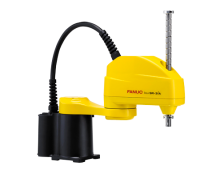 FANUC’s new SCARA robots are ideal for high-speed, precision applications such as assembly, pick and place, testing/inspection and packaging processes.
 -
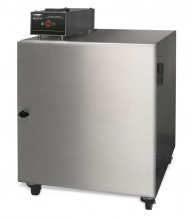
In the rare event that a burning ember or spark is drawn into the fume extraction unit, there is the possibility that debris in the filters could ignite. Although any resultant fire would typically be retained within the fume extraction unit, this would cause significant damage and in extreme circumstances, the risk may extend beyond the extraction unit. For processes where such risks have been identified, additional protection in the form of an in-line firebox is an additional precaution.
-
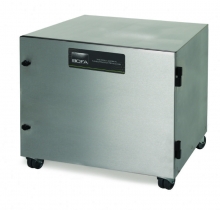
The BOFA inline pre-filter 1000 has been designed specifically for applications that generate high amounts of dust or particulate.
This inline filter unit is positioned alongside the main BOFA fume filtration system to increase the overall filter capacity and extend the life of the main filters. The DeepPleat DUO pre-filter incorporates a massive drop-out chamber within the filter, having a volume area of 15ltrs. Above the drop-out chamber but still within the housing there is a sealed 200mm deep pleat layer of F8 media giving a surface area in excess of 30 sq meters.
-
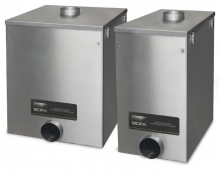 The BOFA inline prefilters have been designed specifically for applications that generate high amounts of dust or particulate.