This ACR Oil Separator Cutaway, Float-Type provides a full cutaway view of an oil separator that exposes the complete internal components and operating principles. Color coding, flow arrows, and numbered call-outs combine to make the device more informative to the inquiring student and more useful to the instructor.
Stratasys offers the world’s most advanced 3D printing solutions for educators and students. With Stratasys students gain a key advantage in the employment market. The same Stratasys 3D Printers in use at many academic and technical institutions are also used by your students’ future employers at Fortune500 companies and other leading design and manufacturing businesses around the world.
We are committed to provide educational or industrial tools aimed at promoting a true “hands-on” teaching concept. Cut-Away trainers have sections of the part cut out in order to expose the internal components. The sectioned parts are painted with different colors to differentiate the various components. The variety of cutaways, demonstrators and models we offer were designed through a client-driven needs analysis program.
Bayport is leader in the design and manufacturing of training aids, mock-ups, simulators, cutaways and demonstration equipment relating to industrial maintenance skills. Our Maintenance Training Division offers a three-dimensional solution to industrial maintenance skills training.
Additive Manufacturing Systems
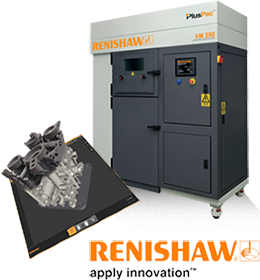
Renishaw is a systems manufacturer and solutions provider for additive manufacturing (AM). Additive manufacturing introduces new design possibilities, including opportunities to combine multiple components in production, minimize material use, and reduce tooling costs.
Advanced metal additive manufacturing systems are designed and built by Renishaw to fulfill a range of industry applications where durability, customized parts and precision are key. Industries include dental, medical, mould tooling, automotive, industrial tooling, aerospace, and creative.
Cyber Science 3D specializes in the development and delivery of simulation technologies and simulators for the education, military, medical, and training industries. The company leverages many years of experience in the simulation industry to create products that are of the highest quality. The company was founded by a professor of engineering, using simulation know-how to create the most compelling experience for users.
The initial product, Cyber Anatomy Med VR, was developed in response to a need in third world countries that were having difficulty obtaining cadavers for medical training due to religious or cultural reasons. This award-winning product presented an immersive, interactive, 3D experience that was unparalleled. Anatomy students were able to experience dissection virtually, holographically, for the first time.
After the company’s initial development, Cyber Science 3D partnered with market leader ELSEVIER (the publishers of Grey’s Anatomy and the Netter Atlas) to transform the system into Netter’s 3D Interactive Anatomy Powered by Cyber-Anatomy. This award-winning product has been adopted by several leading medical schools, including Harvard, Cornell, Stanford, and the University of Chicago.
Following the launch of Netter’s Interactive Anatomy Powered by Cyber-Anatomy, the company began the development of Cyber Science 3D, a K-12 version of our software for virtual dissections, such as Frogs and Fetal Pigs. The educational library now has hundreds of powerful interactive experiences.
Cyber Science 3D developers, computer programmers, and engineers also provide custom development of simulations for various industries. Our military experience in creating simulation technologies for training spans many years and various successful projects.
Cyber Science 3D runs on three main principles:
- Quality is vital
- Interactivity is essential
- Visuals must be believable and realistic
Today, Cyber Science 3D creates immersive learning packages – Bringing Learning to Life for education, government and business.
Liberate your creativity. Accelerate your design process. A Stratasys Mojo, uPrint SE or uPrint SE Plus 3D Printer brings professional 3D printing to your desktop or small team workspace. Soon, you’ll be asking yourself how you ever got through the design process without one.
Size up each system to find the affordability and speed right for you — then harness the power of 3D printing! View Case Studies for Idea Series 3D Printers:
Stratasys Design Series 3D Printers dramatically tighten design and development cycles, improve communication and collaboration, and resolve issues between design and engineering. They speed products to market and reduce costly mistakes — all while keeping your intellectual property onsite. Very soon, you’ll wonder, “Why weren’t we doing this before?”
Imagine production without the oppressive costs and time requirements of tooling. Make changes quickly and affordably — at any stage in the production cycle. Create low–volume assembly fixtures and jigs directly from CAD data.
Additive manufacturing is where the world is going, and nothing will get you there faster than the truly transformative 3D production systems from Stratasys.
Innovation and Technology Leadership
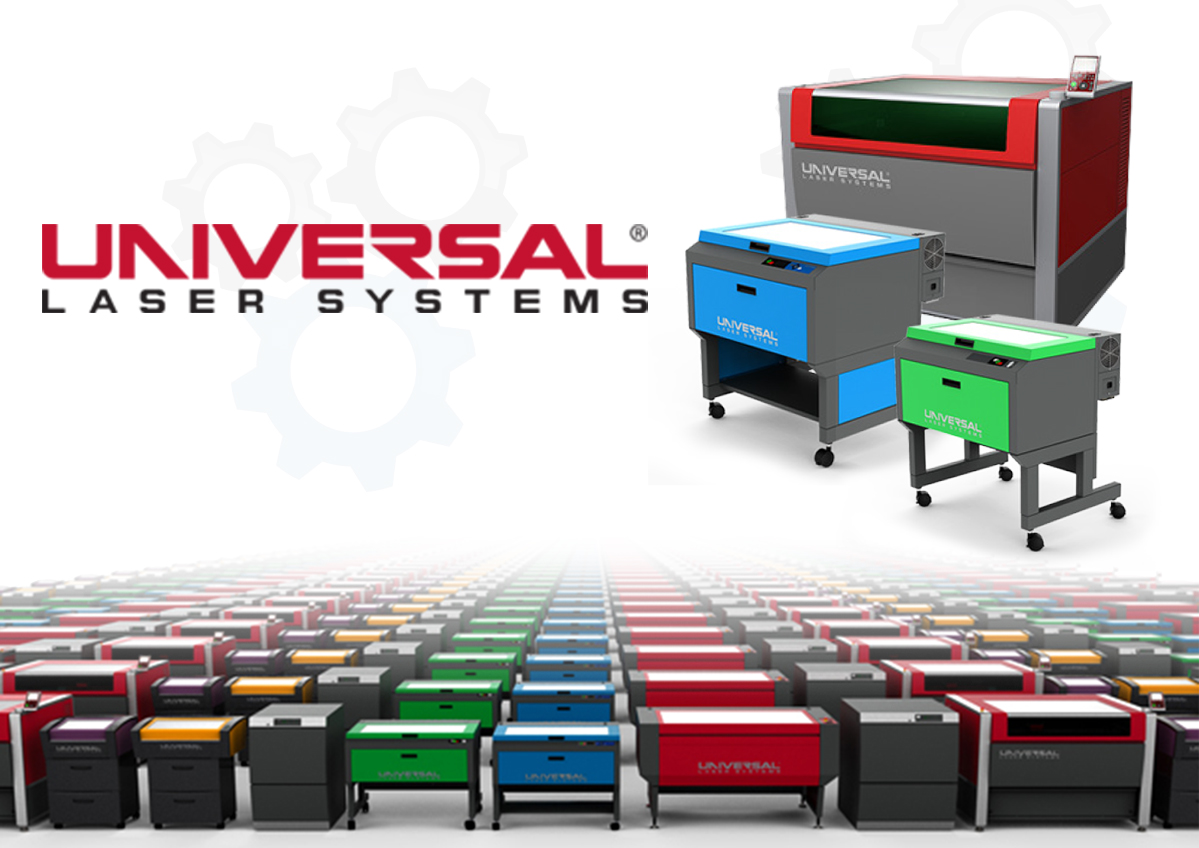
Universal Laser Systems understands the importance of implementing innovative technology into your school. The demand for students to be “technically-savvy” and “digitally literate” has multiplied in just a few years. You want to allow your students to work with the latest technology to prepare them for their futures.
The laser systems they offer can cut through and precisely engrave many materials. Not only will your students gain essential skills, but they will also be able to see their designs and ideas come to life.
Visit Universal Laser Systems to learn more.
*Desktop units are shown on optional air cleaner cart.
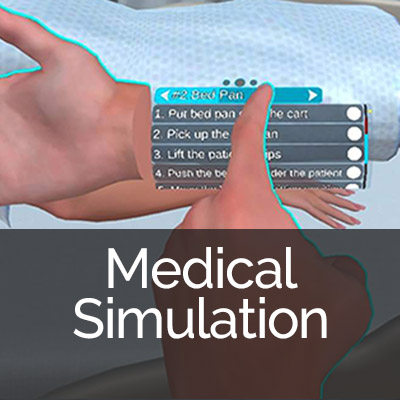
Our medical training solutions encompass a comprehensive range of tools to enhance learning and skill development in patient care. We offer cutting-edge medical simulators and K-9 Simulators from TacMed, providing realistic and immersive training experiences for healthcare professionals and first responders. These simulators are designed to simulate real-world scenarios, allowing users to practice critical procedures and decision-making skills in a safe and controlled environment.
In addition to our physical simulators, we also offer virtual reality training solutions through VRNA. Our VRNA CNA and EMS modules are specifically tailored to supplement traditional lab instruction. By leveraging fully immersive VR experiences, VRNA helps instructors optimize their teaching efficiency, reduce split attention during small group activities, and keep students actively engaged in lab content. This approach empowers learners with independent practice opportunities, enabling them to hone their patient care skills with confidence in a zero-risk setting.
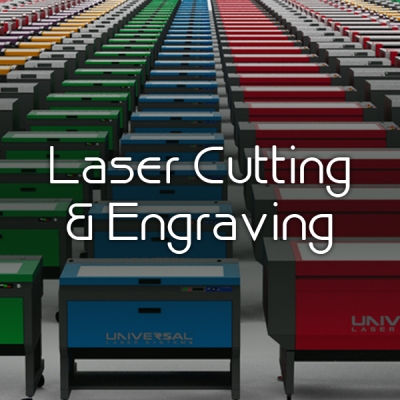
Universal Laser Systems (ULS) takes pride in its laser engraving systems' innovative technologies and modular components. With over a million laser system configurations, users can laser engrave on numerous materials with high precision and speed.
ULS laser engraving systems utilize a precise, non-contact process that upholds the integrity of the material even if directed onto small areas.
Laser Systems with Flexibility
Users of ULS laser engraving systems enjoy how easy it is to operate and customize for their specific business needs. With processing areas ranging from 16" x 12" to 48" x 24" and options for single or dual lasers—on top of a host of add-on features and patented technologies—you will have a laser platform that can adapt to your unique requirements.
Universal Laser Systems offers laser sources that range in power from 10 watts to 150 watts and are available in three wavelengths: 10.6μ, 9.3μ, 1.06μ.
Laser Engraving, Cutting, and Marking with ULS Laser Systems
One of the most impressive capabilities of ULS laser machines is the capacity to execute two or three laser processes with the same system—whether laser engraving, laser cutting, and/or laser marking—eliminating the need for multiple laser platforms. Users can enhance business productivity, increase their return on future investments, and take advantage of ULS' patented technologies with a singular laser system.
Pages
-
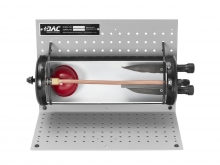 Item Number:373-721
 -
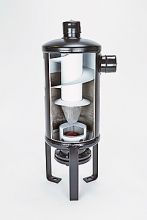 Item Number:373-722DAC Worldwide’s ACR Oil Separator Cutaway, Helical-Type is a professionally-crafted, economical teaching aid that depicts a conventional helical-type centrifugal oil separator commonly used in industrial and commercial refrigeration systems for oil entrapment and compressor crankcase replenishment.
 -
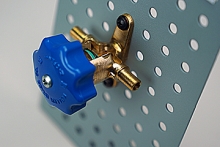 Item Number:373-503This ACR Packless Diaphragm Line Valve Cutaway provides a full cutaway view of the diaphragm line valve that exposes the complete internal components and operating principles.
 -
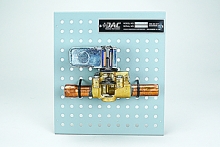 Item Number:373-502DAC Worldwide’s ACR Solenoid Valve Cutaway is a sectioned example of a commonly-encountered solenoid valve used in air conditioning and refrigeration systems with a remotely-operated maintenance-related block valve, system fluid, or gas flow control valve.
 -
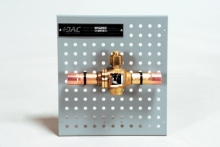 Item Number:373-501This ACR Steel Ball Valve Cutaway provides a full cutaway view of the compressor body that exposes the complete internal components and operating principles. Economically mounted on a formed-steel and powder-coated modular display panel, this sample panel can be mounted on a variety of optional benchtop display fixtures and storage structures.
 -
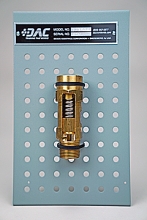 Item Number:373-506This ACR Straight-Thru Pressure Relief Valve Cutaway provides a full cutaway view of the reversing valve that exposes the complete internal components and operating principles.
 -
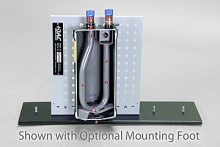 Item Number:373-701This ACR Suction Line Accumulator Cutaway provides a full cutaway view of an accumulator that exposes the complete internal components and operating principles. Color coding, flow arrows, and numbered call-outs combine to make the device more informative to the inquiring student and more useful to the instructor.
 -
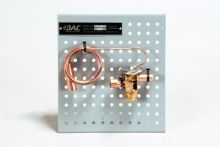 Item Number:373-521The full-size, fully-detailed example gives learners a first-hand view into a component that is found in various applications worldwide. This professionally-crafted, yet-economical component sample will enhance any training activity relating to commercial and industrial air conditioning and refrigeration systems.
 -
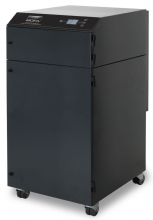 BOFA’s AD 1000 iQ high-end laser extraction system combines extremely large filter capacity with high airflow and pressure rates, making it the ideal choice for heavy-duty applications that generate large amounts of particulate and gaseous organic compounds.
 -
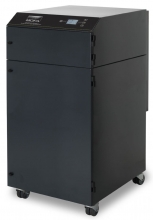
BOFA’s AD 1500 iQ is the ideal choice for heavy-duty applications that generate large amounts of particulate and gaseous organic compounds.
Performance has been further enhanced with the inclusion of several features including BOFA’s acclaimed iQ Operating System, making the AD 1500 iQ one of the most advanced systems available.
The iQ system takes performance and safety parameters to a new level and ensures that maintenance, downtime, and ownership costs are kept to a minimum.