
Each Basic Hydraulics training system features standard industrial grade components. This attention to quality gives students experience they would normally only get on-the-job by helping them recognize industrial components and how to troubleshoot them more effectively. Components included with Basic Hydraulics are pre-mounted on circuit panels with silk-screened labels next to each, which facilitates ease of use and identification.
Think 3D printing is just for prototypes? Think again. With carbon fiber–reinforced materials, UltiMaker printers are producing strong, lightweight, and functional parts used directly in manufacturing, defense, and automotive industries. These aren’t just test models—they’re working components that are driving innovation on the ground, in the lab, and on the road.
From replacing aluminum end-of-arm tools to building structural parts for high-performance vehicles, UltiMaker users are tapping into the power of composites to cut costs, reduce weight, and manufacture faster than ever before. Carbon fiber printing unlocks real-world performance—without the need for metal.
What You’ll See
- Automotive teams 3D printing 44+ carbon fiber parts for production use
- End-of-arm tooling produced in under an hour
- Carbon-reinforced nylon filaments replacing machined aluminum
- Real-world stories from manufacturing and defense innovators
“What excites me about 3D printing is that the possibilities are pretty limitless.” – UltiMaker User
With UltiMaker composite materials, the line between prototyping and production is disappearing. Stronger, lighter, smarter. That’s the power of carbon fiber 3D printing.
The UltiMaker Method XL redefines what's possible in additive manufacturing by bridging the gap between desktop convenience and industrial-grade performance. Designed to meet the needs of engineers, product developers, and manufacturers, Method XL delivers precision, repeatability, and scale—without the traditional cost or complexity of industrial machines.
With its expansive build volume and actively heated build chamber, Method XL is meticulously engineered to produce large, durable, and complex parts with outstanding dimensional accuracy. It supports high-performance materials like ABS-R, ABS-CF, Nylon, and RapidRinse™ to meet the demands of functional prototyping and end-use manufacturing.
Engineered for Industrial Results
- Large build volume: Print full-size functional prototypes or multiple parts in one job
- Precision accuracy: Match the tolerances and finish of injection-molded parts
- Heated build chamber: Maintain consistent temperatures for warp-free prints
- Material versatility: Compatible with engineering composites and water-soluble supports
- Office-ready design: Advanced performance with a compact footprint
Whether you're producing precision tooling, fixtures, housings, or full-scale prototypes, the Method XL enables professional results with less time, less hassle, and greater freedom to innovate.
The MakerBot Sketch Series is built from the ground up for education, providing schools with the most reliable and accessible 3D printing setup available. Designed with ideal classroom-to-printer ratios, the Sketch Series helps educators maximize student engagement while reducing downtime and setup challenges.
Whether your students are new to 3D printing or ready to take on advanced design projects, the Sketch Series offers a turnkey solution with robust teacher training, student certification, and built-in safety features. Empower your classroom with hands-on learning, cross-curricular applications, and reliable results—every time.
Why Choose the Sketch 3D Printer Series?
- Classroom-optimized design: Compact, enclosed printers designed for safe and accessible use by students of all skill levels
- Ready-to-teach resources: Access to MakerBot certification programs, lesson plans, and project ideas
- Multi-printer management: Queue and monitor jobs across devices using MakerBot Cloud or Digital Factory
- Reliable performance: Built to reduce failed prints and increase student confidence
- Trusted by educators: Used in thousands of schools for STEM, CTE, and design programs
From elementary makerspaces to high school engineering labs, the Sketch Series gives educators the tools they need to bring creativity and innovation into the classroom—no prior experience required.
UltiMaker S7 Material Partner Testimonials
What happens when you hand the UltiMaker S7 to eight of the industry's leading material partners and let them test it using their own materials and STL files? You get real-world feedback on performance, precision, and print success—straight from the source.
Each partner brought their unique filament, ran their own tests, and explored how the S7’s new hardware features—including the PEI-coated flexible build plate, integrated Air Manager, and advanced active leveling—stand up to their most demanding print jobs.
What They Noticed
- Superior bed adhesion: Materials held firm to the new PEI-coated build plate—even without adhesives
- Easy part removal: Flexible build plate made removing strong-sticking parts quick and damage-free
- Improved thermal control: Single front door enhances temperature stability for large-format parts
- Real-time visibility: Integrated HD camera lets users monitor the entire print—not just the first layer
- Ecosystem confidence: Partners praised the reliability and openness of UltiMaker’s material and printer integration
“UltiMaker has always made machines that just work. With the S7, the full ecosystem—printer, materials, and software—comes together to deliver excellent results on the first try.”
From precision part production to material behavior testing, the S7 exceeded expectations across the board—proving once again why UltiMaker is trusted by professionals and material scientists worldwide.
The UltiMaker S Series is more than just a 3D printer—it's a complete professional ecosystem. From streamlined post-processing to advanced material capabilities, every accessory and integration is designed to maximize uptime, reduce manual effort, and expand the range of applications possible with the S3, S5, S7, and beyond.
Below are just a few standout highlights that showcase how the S Series grows with your needs and scales with your creativity.
- Efficient post-processing: Cut support dissolution time by up to 75%
- Hands-free removal: Consistent flow agitation removes PVA faster and more evenly
- Cleaner workspace: Enclosed design minimizes mess and requires minimal maintenance
- Print real metal parts: Compatible with BASF Forward AM Ultrafuse® 17-4 PH and 316L filaments
- Designed for S5 and S7: Fully validated workflows with slicing integration in Cura
- Complete workflow: Includes debinding/sintering partners and design guidelines
- Fleet management: Queue, monitor, and manage multiple printers remotely
- Print job tracking: View material usage, print success rates, and real-time status
- Scalable integration: Designed for multi-user teams and enterprise workflows
- UltiMaker Cura: Industry-leading slicing software with pre-configured material profiles
- Plugin support: Seamless integrations with SolidWorks, Siemens NX, Autodesk Inventor
- Enterprise access: UltiMaker Essentials for compliance, control, and collaboration
Whether you're optimizing support removal, printing in metal, or scaling across teams, the UltiMaker S Series ecosystem gives you the tools to Design. Print. Repeat.—faster, smarter, and more efficiently than ever.
The METHOD Pro Series has empowered designers and engineers across a wide range of industries to bring bold ideas to life. From toymakers and industrial designers to manufacturers and aerospace innovators, our customers have used METHOD and METHOD X to push the boundaries of what's possible with desktop 3D printing.
Whether printing functional prototypes, concept models, or production-ready tools, METHOD customers consistently highlight speed, accuracy, and seamless integration as the keys to success. Here are just a few real-world stories of how the METHOD Pro Series is making an impact.
Customer Highlights
- Mattel: Uses METHOD printers to accelerate toy development and bring ideas for the next generation of play to life
- Industrial Automation: Created an end-of-arm tool with METHOD X in under 48 minutes—ready for use straight off the build plate
- Return on Investment: One customer reported full ROI on their METHOD X printer within 3–4 months
- NASA Collaboration: METHOD X helped support rapid iteration for parts used in instrumentation on the James Webb Space Telescope
- Design Freedom: High dimensional accuracy and easy-to-use features allow users to prototype without limits
“With METHOD X, we get the accuracy, ease of use, and a cohesive ecosystem that delivers professional results—fast.”
Explore how METHOD Pro Series customers are turning ideas into impact—across industries, materials, and missions.
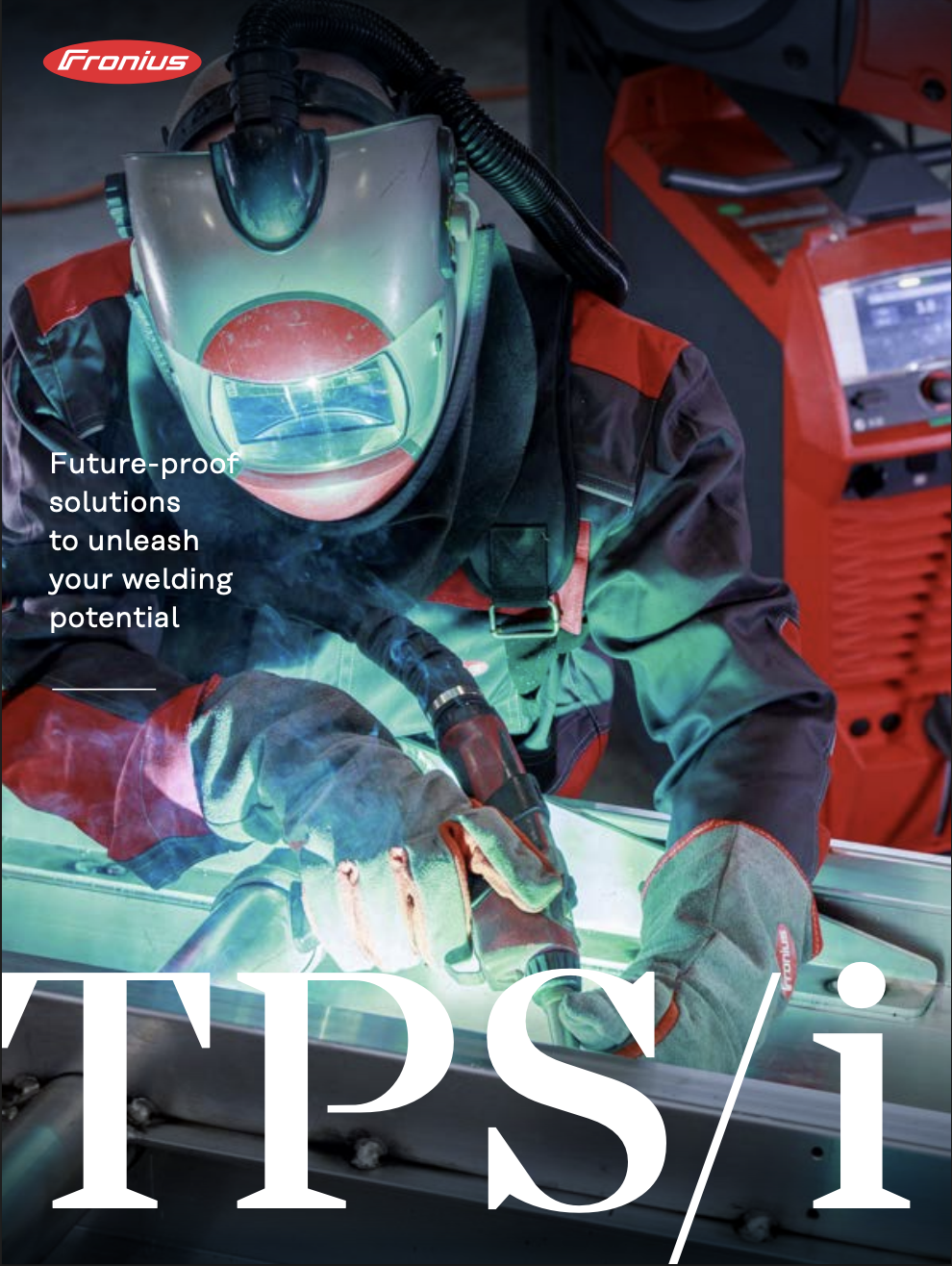
The Fronius TPS/i series sets the standard for intelligent, high-performance robotic welding. With models ranging from 320 to 600 amps and advanced features like arc length stabilization, touch-screen controls, and modular expandability, TPS/i is engineered to meet the highest demands for steel, stainless steel, and aluminum welding. When paired with APT’s FANUC robotic welding carts, this solution offers unmatched flexibility and seamless automation for educational and industrial training environments.
Advanced welding software packages—including LSC (Low Spatter Control), PMC (Pulse Multi Control), and CMT (Cold Metal Transfer)—enable a wide range of materials and welding positions with precision, repeatability, and reduced heat input. Combined with intuitive operation and future-ready digital connectivity via WeldCube, the TPS/i is a powerhouse platform that prepares students and trainees for the real-world demands of Industry 4.0 manufacturing.
Discover why the Fronius TPS/i is a leading choice for advanced welding training and robotic integration. With power levels up to 600 amps, modular software packages, and seamless compatibility with APT/FANUC robotic welding carts, the TPS/i delivers performance, precision, and future-ready flexibility. Whether you're teaching students in a CTE program or upskilling your workforce, this system adapts to real-world demands in steel, stainless steel, and aluminum welding applications.
Why Choose the TPS/i Series?
- High-performance output: Available in 320, 400, 500, and 600 A configurations
- Modular and upgradeable: Expand with welding packages like LSC, PMC, and CMT
- Touchscreen interface: 7" color display with intuitive, glove-friendly operation
- Precision welding: Intelligent arc length and penetration stabilizers
- Software integration: Compatible with WeldCube for performance monitoring and training
This brochure provides a full overview of system capabilities, supported processes, hardware configurations, torch packages, and digital control features—making it a valuable resource for welding educators, program coordinators, and industrial training managers.
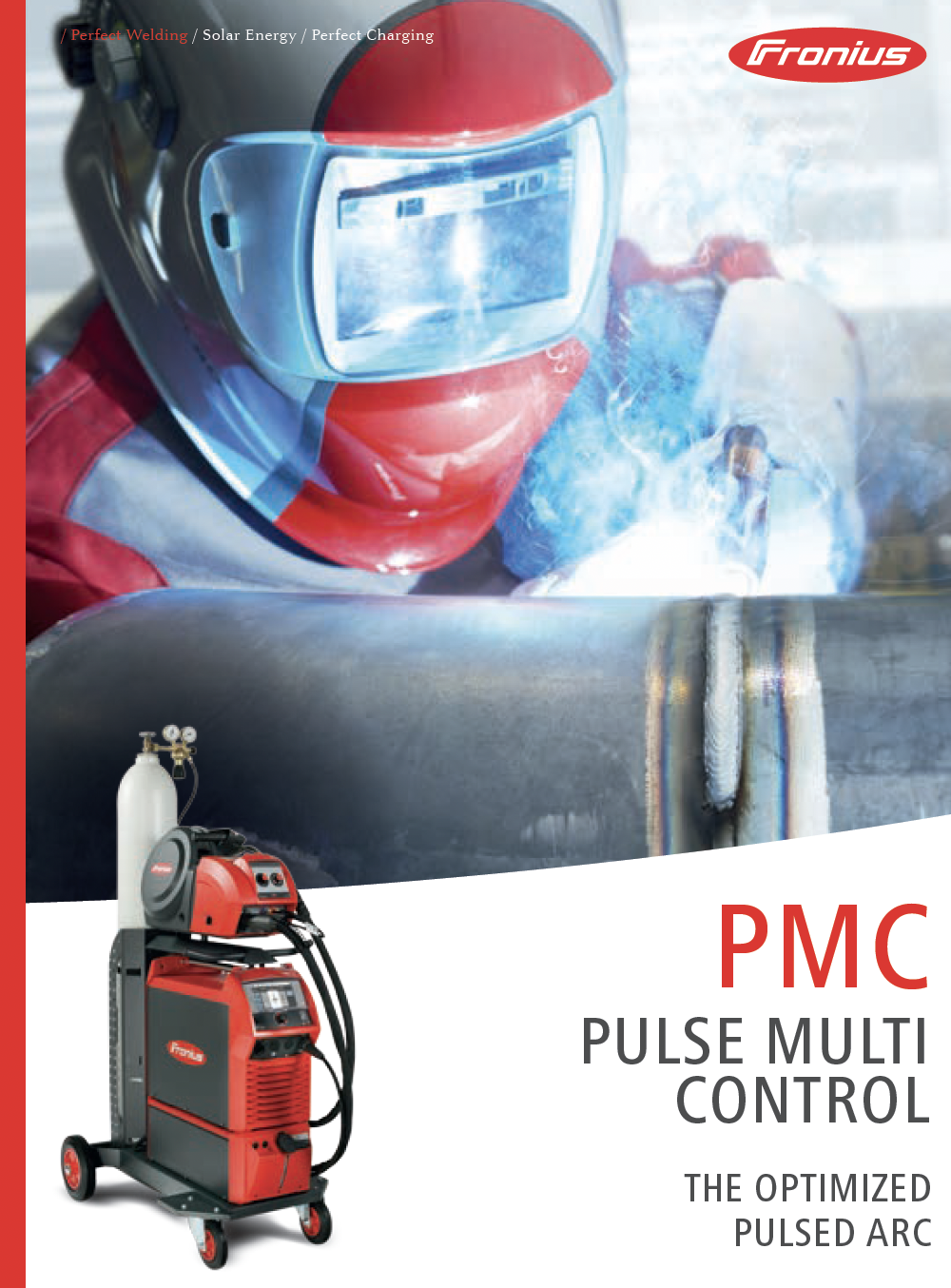
The Fronius PMC (Pulse Multi Control) welding package transforms the standard pulsed arc into a high-precision, high-speed process with optimized arc length and penetration stabilizers. Designed for maximum control and minimal spatter, PMC supports both manual and robotic welding, producing high-quality, repeatable results even in vertical and overhead positions.
With features like spatter-free ignition (SFI), TIG-like seam appearance, and improved productivity across steel, aluminum, and galvanized applications, PMC is ideal for advanced welding environments. Download the brochure to explore how PMC outperforms standard pulse and LSC processes—helping you reduce energy use, material waste, and rework.
Cold Metal Transfer (CMT) by Fronius offers an innovative approach to welding with dramatically reduced heat input and up to 99% less spatter. Using oscillating wire motion, the CMT process delivers exceptionally stable arcs, enabling precise droplet control and seamless welds on thin materials, aluminum, galvanized steel, and even dissimilar metals.
With twice the welding speed of standard dip transfer processes and minimal post-weld cleanup, CMT is a top choice for applications requiring tight tolerances, clean finishes, or low distortion. Download the full brochure to learn how CMT supports automotive, additive manufacturing, and advanced fabrication use cases.
Pages
-
 Item Number:BH-85
 -
 Item Number:85-BPAmatrol’s Basic Pneumatics training system (85-BP) introduces pneumatic principles through a combination of Amatrol’s top-flight multimedia curriculum with hands-on industrial pneumatic skill-building. Topics covered in this learning system include single-acting cylinder circuits, pressure vs. cylinder force, and flow control valves, while the panels can be used to practice skills such as connecting and operating a needle valve to control actuator speed.
 -
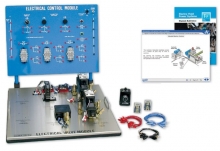 Item Number:85-EHThe Electro-Hydraulics training system includes an electrical control panel with relay control components and an electrical valve module with solenoid-operated hydraulic directional control valves and electrical/electronic sensors. These components will be used to study a variety of topics including electrical control systems, basic control devices, power devices, control relays, sequencing control, timer control, pressure control applications, and circuit applications.
 -
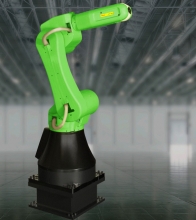 Item Number:CR-35iAFANUC’s new CR-35iA is the world’s first collaborative robot with a payload capacity of up to 35 kg. Fenceless, it opens a whole new world of possibilities. Working safely side by side with human operators, it is space as well as cost saving. And because inside it’s like any other FANUC robot, it operates like all FANUC robots. Certified to meet the requirements of ISO 10218-1:2011 and RIA/ANSI R15.06-2012, FANUC’s CR-35iA collaborative robot can work in a variety of applications alongside human workers including: machine tending, handling heavy payloads that require lift assist devices or custom equipment, higher payload mechanical assembly, palletizing or packing, and tote or carton handling.
 -
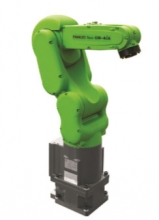 Item Number:CR-4iACR-4iA is a small collaborative robot with 4 kg payload
 -
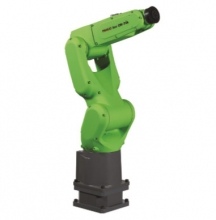 Item Number:CR-7iAThe FANUC CR-7iA is FANUC's newest collaborative robot resembles the LR Mate family. Painted green to show it's ability to work beside humans, you can expect the same reliability as FANUC's yellow robots. The CR-7iA is ideal for small part sorting and assembly, inspection, machine tending, and part delivery. It has a 7 kg payload, 717 mm reach, and is equipped with iRVision and Force Sensing. There are a variety of mounting options such as floor, wall, and ceiling.
 -
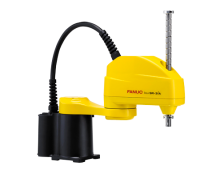 FANUC’s new SCARA robots are ideal for high-speed, precision applications such as assembly, pick and place, testing/inspection and packaging processes.
 -
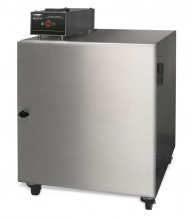
In the rare event that a burning ember or spark is drawn into the fume extraction unit, there is the possibility that debris in the filters could ignite. Although any resultant fire would typically be retained within the fume extraction unit, this would cause significant damage and in extreme circumstances, the risk may extend beyond the extraction unit. For processes where such risks have been identified, additional protection in the form of an in-line firebox is an additional precaution.
-
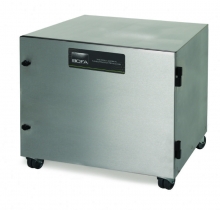
The BOFA inline pre-filter 1000 has been designed specifically for applications that generate high amounts of dust or particulate.
This inline filter unit is positioned alongside the main BOFA fume filtration system to increase the overall filter capacity and extend the life of the main filters. The DeepPleat DUO pre-filter incorporates a massive drop-out chamber within the filter, having a volume area of 15ltrs. Above the drop-out chamber but still within the housing there is a sealed 200mm deep pleat layer of F8 media giving a surface area in excess of 30 sq meters.
-
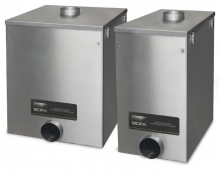 The BOFA inline prefilters have been designed specifically for applications that generate high amounts of dust or particulate.