DAC Worldwide's Variable Speed Gear Reducer Cutaway is a sectioned variable speed industrial gear reducer. Speed variations allow for continuous variable-ratio speed adjustment of mechanical systems are still regularly encountered in industrial applications due to their durability, dependability, and consistency of operation.
This video demonstrates the Matrix Torsion of Rods experiment in manual mode, where students investigate how different materials respond to applied torque. Following the included curriculum workbook, learners compare the torsional characteristics of brass, aluminum, and steel rods while collecting experimental data for analysis.
During the investigation, students install each rod, measure its dimensions, and gradually increase the angle of twist while recording the torque required at each increment. The experiment is repeated for each material, allowing students to compare torque-versus-angle relationships and better understand material properties, torsional stiffness, and structural behavior through practical experimentation.
What You'll Learn
- How to set up the Torsion of Rods experiment in manual mode
- Comparing the torsional behavior of brass, aluminum, and steel rods
- Measuring torque and angle of twist using integrated LCD displays
- Recording experimental measurements for multiple materials
- Investigating the relationship between torque and angular displacement
- Repeating experiments to compare material properties
- Plotting torque versus angle graphs for analysis
- Reinforcing engineering concepts through hands-on laboratory investigations
Why Study Torsion?
Torsional loading is an important consideration in the design of shafts, drive systems, fasteners, and structural components. This experiment gives students practical experience measuring the effects of torque on different materials, helping them connect engineering theory with real-world mechanical behavior and material performance.
This video demonstrates the Matrix Bending Stress experiment using data acquisition mode, allowing students to investigate how bending loads create stress within a beam. Using the included curriculum workbook, learners configure strain gauges, collect real-time measurement data, and perform engineering analysis to validate theoretical calculations.
Students begin by configuring a quarter-bridge Wheatstone bridge circuit using strain gauges and precision resistors before applying incremental loads to the beam. As each load is added, measurements are captured through the integrated data acquisition system and exported for analysis. The resulting data allows students to calculate bending stress, compare theoretical and experimental results, and gain practical experience with strain measurement techniques used throughout structural and mechanical engineering.
What You'll Learn
- How to configure a quarter-bridge Wheatstone bridge using strain gauges
- Setting up the Bending Stress experiment using data acquisition
- Applying incremental loads to investigate bending stress
- Collecting real-time strain measurements using integrated sensors
- Measuring beam dimensions for engineering calculations
- Exporting experimental data for post-laboratory analysis
- Comparing theoretical bending stress calculations with measured results
- Developing practical skills in experimental stress analysis
Why Study Bending Stress?
Measuring bending stress is fundamental to understanding how structural components perform under load. This experiment introduces students to strain gauge technology, Wheatstone bridge circuits, and modern data acquisition methods while reinforcing core concepts in mechanics of materials, structural analysis, and engineering design.
This video provides an overview of the Matrix Fundamental Mechanics Materials Kit, demonstrating how students perform practical experiments to investigate the mechanical properties of engineering materials. Designed for classroom and laboratory environments, the kit allows learners to build experiments using the portable work panel while following the included curriculum workbook.
The featured experiment investigates how an aluminum beam deflects under increasing loads. Students measure the beam's dimensions, apply incremental weights, and use a precision dial gauge to record deflection. The collected data is then plotted on a graph, helping students understand the relationship between load and beam deflection while reinforcing important concepts in material science and mechanics.
What You'll Learn
- How to perform beam deflection experiments using the Materials Kit
- Measuring beam dimensions for engineering calculations
- Recording beam deflection with a precision dial gauge
- Applying incremental loads and collecting experimental data
- Plotting deflection versus load graphs for analysis
- Understanding stress, strain, and elastic behavior
- Exploring Young's modulus and other material properties
- Developing practical laboratory and engineering analysis skills
Topics Covered by the Materials Kit
The Fundamental Mechanics Materials Kit supports a wide range of experiments covering beam deflection, stress and strain, torsion, elastic constants, Young's modulus, and other core principles of mechanics of materials. The included curriculum provides approximately 10 hours of guided laboratory activities that combine theory with practical investigation, making it ideal for engineering, technology, and STEM education programs.
Pages
-
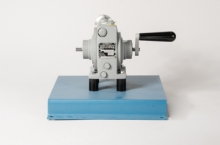 Item Number:205-290
 -
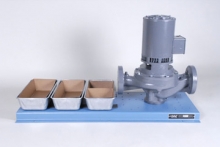 Item Number:275-128DDAC Worldwide’s Vertical Centrifugal Pump Dissectible (275-128D) is an actual industrial centrifugal pump assembly that allows for realistic training in the field or bench-top disassembly, inspection, and reassembly of a vertical centrifugal pump.
 -
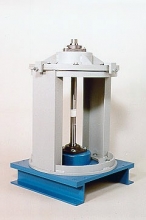 Item Number:207-000DAC Worldwide’s Vertical Coupling/Shaft Alignment Training System (207-000) is a heavy-duty, precision learning system that allows for convenient, realistic training in shaft alignment. When paired with a variety of hands-on exercises, the system creates a complete performance-based course in the maintenance of shaft alignment.
 -
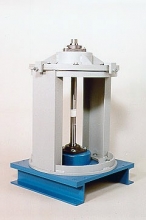 Item Number:207-PACDAC Worldwide’s Vertical Coupling/Shaft Alignment Training System Plus (207-PAC) is a heavy-duty, precision learning package that allows for convenient, realistic training in shaft alignment. When paired with a variety of hands-on exercises, the training system creates a complete performance-based course in the maintenance of shaft alignment.
 -
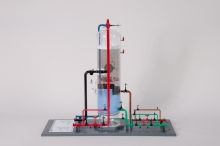 Item Number:295-115DAC Worldwide's Vertical Cross-Flow Separator Model (209) is a highly-detailed scale model of a common vertical cross-flow separator used throughout the oil and gas industry, as well as other processing, production, and refining applications.
 -
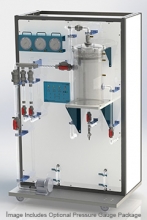 Item Number:295-101DAC Worldwide’s Vertical Separator Trainer (295-101) is a reduced-scale, three-phase vertical separator that mimics its real-world counterpart by using alternate production stream components, refined oil, air, and water.
 -
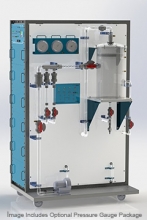 Item Number:295-101-PACDAC Worldwide's Vertical Separator Training System Plus (295-101-PAC) is a realistic working demonstration separation system that duplicates the process at a reduced scale using alternate production stream components: refined oil, air, and water.
 -
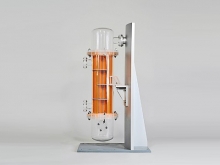 Item Number:289DAC Worldwide's Vertical Thermosyphon Reboiler Heat Exchanger Training Model (289) is a highly-detailed scale model of a vertical thermosyphon reboiler, supporting training in the operation and maintenance of industrial heat exchangers.
 -
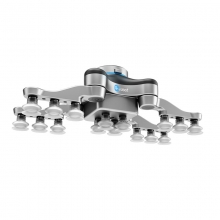 Item Number:VG10The compact OnRobot VG10 Universal Robot Vacuum Gripper doesn't require a compressor or air supply bringing flexibility to your production line and saving maintenance costs. It has flexible arms and an adjustable vacuum enabling the VG10 to handle a variety of objects in many different sizes.
 -
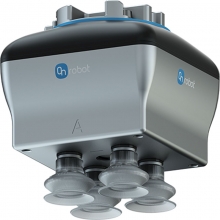 Item Number:VGC10The OnRobot VGC10 electrical compact universal robot vacuum gripper has unlimited customization possibilities. Smaller than the VG10, the VGC10 can fit into tight environments to extend your automation possibilities.