Welding is central to many industries including manufacturing, construction, and aerospace to name only a few. Welding is a blend of both art and science, joined together to create enduring bonds that allow us to create structures and machines on a scale impossible to achieve without it. The 950-WT1 teaches how to safely create an array of high quality weld types.
Pignat’s OTP Pilots simulate full-scale industrial processes, giving students and professionals a realistic, high-fidelity environment to explore advanced chemical engineering operations. These systems replicate complex processes like controlled continuous distillation, CO₂ absorption and regeneration, and distillation control using industrial-grade components and instrumentation.
Designed for universities, pilot plants, and advanced workforce development centers, OTP Pilots emphasize safety, control systems, and operational efficiency. Learners gain experience with real process variables, troubleshooting, and scalable process optimization—preparing them for roles in chemical manufacturing, environmental engineering, and process design.
Absorption processes are critical in gas-liquid operations where a component from a gas phase is transferred into a liquid solvent. Commonly used in environmental control (e.g., CO₂ capture) and chemical production, these systems help study parameters such as gas solubility, contact efficiency, and column dynamics. Educational units like Pignat’s ABS/100 and ABS/2000 provide hands-on training in both manual and automated gas absorption processes, reinforcing understanding through transparent components and real-time instrumentation.
Adsorption is a surface-based separation technique in which molecules from a fluid phase adhere to a solid surface, often used for purification, drying, and environmental applications. With units like ADM/2000 and ADS/2000, learners can explore gas-solid and liquid-solid adsorption in lab and pilot scales. These systems support detailed study of breakthrough curves, isotherms, and regeneration cycles, making them ideal for chemical engineering and process technology programs.
Crystallization is a key method for purifying solid compounds from liquids and is widely used in pharmaceuticals, food processing, and chemical manufacturing. Pignat’s CRA/100 and CRA/200 systems enable the study of both batch and continuous crystallization. These units support investigation into cooling and evaporation methods, crystal size distribution, and process optimization—ideal for demonstrating real-world industrial separation techniques in an academic setting.
Distillation is a fundamental separation technique that exploits differences in boiling points to purify or fractionate chemical mixtures. Pignat’s product line ranges from lab-scale DVI/100 and DVI/300 mini units to advanced pilot-scale DVI/6000 systems. These solutions cover essential concepts like mass and energy balances, reflux ratios, thermosiphon reboilers, and differential pressure monitoring, preparing students and professionals for real-world industrial distillation operations.
An ebulliometer is used to determine the boiling point of liquids and study vapor-liquid equilibrium, a core topic in thermodynamics. Pignat’s EEA/1000 and EEA/2000 ebulliometers allow for both manual and automated experiments, supporting instruction in azeotrope formation, Raoult’s Law, and boiling point elevation. These compact units serve as vital tools in chemical engineering labs focusing on phase equilibrium and fluid properties.
Liquid-liquid extraction is a separation method used to isolate compounds based on solubility differences in two immiscible liquids. Pignat’s ELA/100 and ELA/3000 stirred extraction units, along with the ELM/2000 mixer-settler system, allow learners to explore batch and continuous extraction processes. These systems are ideal for studying partition coefficients, emulsion formation, and separation efficiency in pharmaceutical, food, and chemical industries.
Evaporation is essential for concentrating solutions by removing solvents, typically water, through thermal energy. Pignat offers both simple (EVV/100) and multiple-effect (EVV/1000, EVV/2000) evaporators to demonstrate core concepts like heat transfer, boiling point elevation, and energy savings through effect cascading. These units are ideal for exploring process efficiencies and the design considerations found in food processing and chemical production.
Filtration is a solid-liquid separation process that is foundational in industries such as pharmaceuticals, water treatment, and chemical manufacturing. Pignat’s FSP/3000, FIL/2000, and FIP/2000 units offer varied filtration methods and study parameters such as flow rate, cake resistance, and filter media selection. These systems enhance student comprehension of industrial-scale separation challenges while maintaining hands-on laboratory relevance.
Chemical reaction systems provide students with practical experience in kinetics, reactor design, and process control. Pignat’s REA/2000 and REA/3000 reactors offer both basic and computerized training platforms to investigate isothermal and non-isothermal reactions. These units are designed to demonstrate fundamental reaction engineering principles, including residence time distribution, catalyst behavior, and heat effects, preparing learners for diverse applications in chemical and pharmaceutical industries.
Pages
-
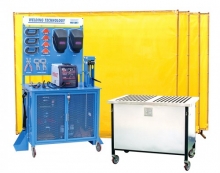 Item Number:950-WT1
 -
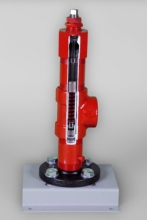 Item Number:295-703DAC's Wellhead Backpressure Regulator Cutaway (295-703) is a sectioned specialty regulator example for training in the operation, construction, and maintenance of three industrial back pressure regulators (BPRs), as used in gas and oil service in the oilfield.
 -
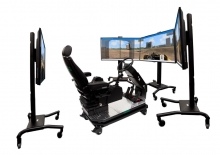 Item Number:WLSimlog’s Wheel Loader Personal Simulator is equipped with either a bucket or forks, at work in a typical construction site with a dump truck or flatbed truck. Configuration options are offered for both “Steering Wheel Steering” and “Stick Steering”, to reproduce the operator controls of (real) small, medium, and large-size wheel loaders.
 -
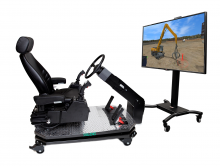 Item Number:WMHSimlog's new Wheeled Material Handler Personal Simulator puts you at the controls of a typical wheeled material handler equipped with an articulated boom, four-tine grapple, elevating cab, and outriggers. Many different kinds of situations typical of (metal) scrap recycling yards are presented, in order to address the training needs of a wide variety of customers using different operational practices.
 -
 Item Number:TFX-EMITT-TM-1The TacMed Whole-Body Simulator Emergency Medical Trauma Trainer (WBS EMITT-TM) offers high-fidelity trauma simulation for medics and first responders. With advanced features like airway management, active bleeding, and real-time feedback, it provides true-to-life training in critical care situations.
 -
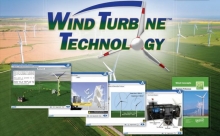 Item Number:950-WC1Amatrol’s Wind Concepts Learning System (950-WC1) introduces learners to a broad range of basic concepts in wind energy technology. Learners study how wind power systems work and what it takes to generate electrical power with wind.
 -
 Item Number:950-TGC1Master wind turbine generator control with Amatrol’s 950-TGC1 training system. Hands-on troubleshooting, fault insertion, and realistic grid integration skills for future wind techs.
 -
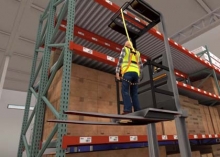 The Warehouse Working from Heights simulation is ideal for future employees or supervisors who work in or around warehouse operations.
 -
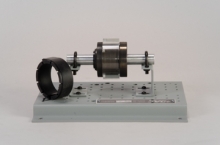 Item Number:200-2203DAC Worldwide’s Wrap-Spring Clutch Sample (200-2203) depicts a modified industrial in-line, wrap-spring-type clutch for mechanical drive training in a classroom or laboratory.
 -
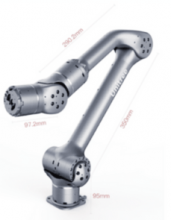 Unitree Z1 is a super-lightweight robotic arm with great payload capacity designed for Unitree robot dogs. It can cooperate with AlienGo or B1 quadruped and other mobile robots to complete complex tasks and explore various scenarios.