With payloads up to 20kg, the OnRobot VGP20 is a powerful electric powered universal robot vacuum gripper ideal for quickly and cost-effectively automating the palletizing of cardboard boxes, as well as handling bulky, porous, and irregularly shaped objects.
The VIRTUAL INDUS Refrigerant Accreditation module simulates a professional industrial environment where HVAC trainees can practice and master refrigerant fluid safety procedures—without risk.
This immersive VR training tool offers hands-on experience with industry-standard protocols, helping learners understand best practices for refrigerant handling, leak detection, environmental precautions, and pressure management. Whether you're preparing students for certification or reinforcing safety in your HVAC program, VIRTUAL INDUS ensures high-impact learning in a secure, virtual setting.
Module Highlights:
- Realistic industrial workshop simulation tailored for HVAC training
- Safe refrigerant handling procedures without environmental or physical risk
- Certification-ready instruction aligned with industry expectations
- Reinforces critical safety protocols through immersive practice
- Ideal for blended learning: Use alongside classroom or in-person training
Ideal For:
- HVAC and Building Systems programs
- Technical colleges and CTE centers
- Workforce development and safety training
- Facilities maintenance and technician certification prep
This VR training solution allows learners to develop hands-on skills in electrical maintenance while navigating realistic, interactive scenarios. From troubleshooting circuits to applying lockout/tagout procedures, trainees gain critical experience without exposure to real-world hazards.
Ideal for technical schools, CTE centers, and industrial maintenance programs, the Electrical Maintenance VR module supports competency-based learning with repeatable tasks, guided instructions, and built-in assessments to track performance and improve safety reflexes.
Key Features:
- Realistic worksite environments: Practice in simulated industrial or building settings
- Safe skill-building: No live electricity or physical danger
- Troubleshooting tasks: Diagnose and repair electrical faults in real time
- Lockout/Tagout (LOTO) training: Reinforce proper safety procedures
- Performance tracking: Evaluate speed, accuracy, and safety compliance
Perfect For:
- Electrical and facilities maintenance programs
- Industrial technology and CTE instructors
- Technical colleges and apprenticeship programs
- Workforce development and safety training centers
VULCAN is the first platform dedicated to tracking manual skills in real-time. Designed for vocational training centers, technical schools, and industry partners, VULCAN offers objective performance analysis for hands-on activities—making manual training measurable, trackable, and comparable.
Whether learners are cutting, assembling, welding, or operating tools, VULCAN captures key data points such as precision, motion, timing, and consistency. Instructors can monitor progress, benchmark performance, and offer personalized feedback—empowering learners and improving training outcomes.
Key Features:
- Real-time motion tracking: Analyze hand movement, speed, and precision
- Objective skill measurement: Remove guesswork with data-backed evaluation
- Customizable task modules: Adapt to multiple trades and training goals
- Progress dashboards: Track learner development over time
- Instructor insights: Identify strengths, gaps, and areas for improvement
Ideal For:
- Technical education and trade programs
- Welding, machining, construction, and assembly training
- Workforce readiness and upskilling programs
- Industrial partners seeking performance validation
VIRTUAL CONSTRUCT by Mimbus is a virtual reality training simulator designed to teach and assess essential construction site safety practices in a fully immersive, risk-free environment.
This VR training solution allows students, apprentices, and workers to experience realistic job site scenarios—from fall prevention to PPE checks—helping them identify hazards, make safe decisions, and build muscle memory for real-world safety compliance. With measurable outcomes and built-in assessments, VIRTUAL CONSTRUCT is ideal for onboarding, safety refreshers, and technical education programs.
Key Features:
- Immersive job site simulations: Navigate active construction environments in VR
- Hazard identification and prevention: Learn to recognize and respond to safety threats
- OSHA-aligned practices: Reinforce safe behavior and PPE protocols
- Built-in performance assessments: Track safety awareness and reflexes
- Ideal for all experience levels: From students to new hires and seasoned crews
Best For:
- CTE and construction training programs
- Technical and vocational education centers
- Contractor safety training and onboarding
- Workforce development organizations
VIRTUAL CONSTRUCT by Mimbus is a virtual reality training simulator that prepares students and workers to safely navigate and work on scaffolding structures—before setting foot on a real site.
This VR solution allows learners to identify common risks such as improper assembly, fall hazards, and PPE misuse in a realistic 3D construction environment. Whether used in pre-apprenticeship programs, safety certification courses, or workforce development, it ensures trainees build safety reflexes and gain confidence through repeatable, controlled experiences.
Training Features:
- Immersive scaffolding environments: Practice working at height in realistic jobsite conditions
- Hazard identification: Spot safety violations and poor assembly in real time
- Fall protection protocol: Reinforce harness use, edge awareness, and ladder access
- Built-in assessments: Track student progress and safety performance
- Risk-free training: Eliminate injury while reinforcing safety culture
Great For:
- Construction safety and OSHA-aligned programs
- Technical and trade schools
- Workforce development and pre-apprenticeship training
- Contractor safety refreshers and jobsite onboarding
Turnkey VR Career Exploration Solution
All-in-One VR Career Exploration
The MIMBUS Discover bundle is a fully equipped, ready-to-use VR system designed to help schools, workforce boards, and career centers bring real-world trades to life. Each bundle includes a cutting-edge headset package with tablet and flight case, cloud-based ArborXR device management, Vulcan LMS for real-time performance tracking, and Mimbus Bridge for classroom control and screen sharing.
Students and job seekers can explore 16+ immersive scenarios across Industrial, Construction, Automotive, Agrifood, Scientific, and Personal Services industries. Simulations are short, engaging, and skill-focused, helping participants discover hidden talents, assess abilities, and connect classroom learning to real careers.
From career guidance centers to CTE classrooms and job fairs, MIMBUS Discover offers a safe, guided environment for skill exploration and career readiness. Training is backed by an online VR teaching course, equipping instructors with strategies for successful integration into any learning program.
Turnkey VR Career Exploration Bundles
The MIMBUS Career Exploration Bundles make it easy to integrate VR into your training or guidance programs. Each bundle includes preconfigured VR headsets, a tablet, and a durable flight case, so you can start exploring as soon as it arrives. ArborXR enables remote device management, app updates, and analytics, while Vulcan LMS tracks skills and progress in real time.
With Mimbus Bridge, instructors can view and share student perspectives, turning any session into an interactive learning opportunity. Self-paced instructor training ensures your team is ready to maximize VR's potential for student engagement, recruitment, and skills assessment.
Designed for CTE classrooms, career fairs, and workforce agencies, MIMBUS bundles help uncover hidden talents, assess skill levels, and prepare learners for high-demand careers through realistic, hands-on VR experiences.
Prepare your students for the future of automotive technology with Lucas-Nuelle’s Advanced Driver Assistance Systems (ADAS) Training Solutions — fully mapped to the ASE L4 certification requirements. These training systems bring real-world ADAS components into the classroom, allowing students to gain practical experience in diagnostics, calibration, and troubleshooting without the risks or costs of using a real vehicle.
Designed for modern classrooms and workshops, these training systems cover critical technologies like Adaptive Cruise Control, Lane Keeping Assistance, LIDAR, and Radar systems. The platform also includes CAN bus and Ethernet technologies for realistic data communication training — ensuring students understand the connectivity that drives today’s vehicles.
Key Benefits of Lucas-Nuelle ADAS Training:
- 100% aligned with ASE L4 certification standards
- Hands-on ADAS training without leaving the classroom
- Safe, repeatable, and scalable learning for large groups
- Build real-world diagnostic and calibration skills
Whether you teach at a Community College, technical school, or workforce training center, Lucas-Nuelle’s ADAS Training Systems provide the tools to transform complex automotive technologies into accessible, engaging lessons. Equip your students with future-ready skills that meet industry standards and employer expectations.
University of St. Thomas Expands Chemical Engineering with Pignat Training Systems
At the University of St. Thomas in Houston, Texas, students are preparing for real-world careers in chemical engineering through hands-on practice with industry-grade equipment. The university recently added a Batch Continuous Distillation trainer (DVI/3000) and a Gas-Liquid Absorption trainer (ABS/2000) to its new Unit of Operations Lab. These systems, manufactured by Pignat SAS and sourced through DAC Worldwide, give students direct experience with two essential separation processes: distillation and gas absorption.
Preparing the First Class of Chemical Engineers
According to Lab Manager Thomas Ciavatti, the new additions mark an important milestone for the program. Four years ago, the Physics and Engineering Department expanded to include multiple disciplines, with chemical engineering joining most recently. Thanks to these units, the University of St. Thomas will graduate its first class of chemical engineers this year.
“These process units will really give students experience with very important processes. The units that have been delivered are top quality and we’re really looking forward to our students getting the full experience with them.” — Thomas Ciavatti
Real-World Processes in the Lab
- DVI/3000 Distillation Column – separates alcohol from water, reinforcing concepts in liquid-liquid separation.
- ABS/2000 Absorption Unit – demonstrates gas separation, such as removing CO₂ from a gas mixture.
With these Pignat trainers, students gain an experiential grasp of core engineering concepts that can be applied across industries. For Ciavatti, this hands-on training ensures graduates leave school with knowledge layered by experience, ready to solve challenges in their future careers.
Partnering for Workforce Success
Through partnerships with Pignat and DAC Worldwide, the University of St. Thomas is equipping students to become highly skilled engineers. The program not only emphasizes technical expertise but also the university’s mission of shaping ethical, well-rounded professionals ready to make an impact in industry and society.
Amatrol Skill Boss Manufacturing
Amatrol’s Skill Boss Manufacturing is a portable, hands-on training and assessment system designed to meet the rigorous standards of the Manufacturing Skill Standards Council (MSSC). Built for the Certified Production Technician (CPT+) program, this system evaluates over 60 essential skills across safety, quality practices, production processes, and maintenance awareness.
The Skill Boss system replicates real-world manufacturing tasks, including assembly, machine operation, and troubleshooting. Learners gain practical experience with components such as programmable logic controllers (PLCs), human-machine interfaces (HMIs), electro-pneumatic systems, sensors, mechanical drives, and robotic pick-and-place systems. By completing CPT+, individuals prove both their technical knowledge and applied competency, making them job-ready for advanced manufacturing careers.
- Assess and train in Safety, Quality, Production, and Maintenance
- Hands-on demonstrations in electrical, fluid power, mechanical, and electronic systems
- Supports MSSC’s Certified Production Technician Plus (CPT+) certification
- Portable design for classrooms, training centers, and workforce development programs
With its real-world finishing and sorting process, Skill Boss Manufacturing automatically feeds, sorts, and polishes parts, while learners control and monitor operations. The system’s design provides educators and employers with a reliable way to both develop and validate critical advanced manufacturing skills.
Pages
-
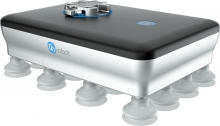 Item Number:VGP20
 -
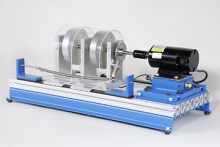 Item Number:203-000DAC Worldwide’s Vibration Analysis Training System (203-000) is a heavy-duty learning package that allows for in-depth training in vibration analysis, using a vibration meter, gear/belt drives, and bearing faults.
 -
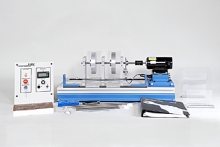 Item Number:203-PACDAC Worldwide’s Vibration Analysis Training System Plus (203-PAC) is a heavy-duty learning package that allows for in-depth training in vibration analysis, using a vibration meter, gear/belt drives, and bearing faults.
 -
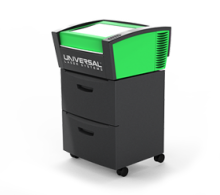 Item Number:VLS 2.30DTThe VLS2.30DT Desktop is a compact and economical entry-level platform. It offers a material processing envelope of 16" x 12" x 4" or 768 in³ and can be equipped with one 10.6µm CO2 laser source ranging in power from 10 to 30 watts or one 9.3µm CO2 30 watt laser source.
 -
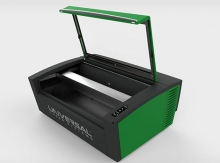 Item Number:VLS3.60DTThe VLS3.60DT is a compact and economical entry-level platform that offers a material processing envelope of 24" x 12" x 4" or 1,152 in³. The VLS3.60DT can be equipped with one of five 10.6µm CO2 laser sources ranging in power from 10 to 60 watts or one 9.3µm CO2 30 watt or 50-watt laser source.
 -
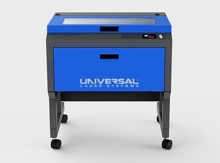 Item Number:VLS3.75The VLS3.75 is a free-standing platform with a materials processing envelope of 24" x 12" x 8.5" or 2,448 in³. The single laser platform supports a 10.6µm CO2 laser source ranging in power from 10 to 75 watts or one 9.3µm CO2 30 watt, 50 watt, or 75 watt laser source.
 -
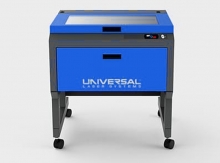 Item Number:VLS4.75The VLS4.75 is a free-standing platform with a materials processing envelope of 24" x 18" x 8.5" or 3,672 in³. The single laser platform supports a 10.6µm CO2 laser source ranging in power from 10 to 75 watts or one 9.3µm CO2 30 watt, 50 watt, or 75 watt laser source.
 -
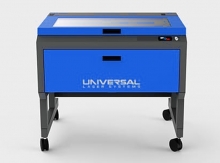 Item Number:VLS6.75The VLS6.75 is a free-standing platform with a material processing envelope of 32" x 18" x 8.5" or 4,896 in³. The single laser platform supports a 10.6µm CO2 laser source ranging in power from 10 to 75 watts or one 9.3µm CO2 30 watt, 50 watt, or 75 watt laser source.
 -
 Learn about the VMC 1300 Pro CNC Milling Machine, a precision 3-axis solution ideal for advanced educational training and industrial applications.
 -
 The CM Labs Vortex Advantage is a scalable simulator platform designed for 1-screen to 5-screen configurations, supporting full equipment control sets and immersive training experiences.