Basic mechanical maintenance skills are fundamental throughout advanced manufacturing and a wide variety of industries. For example, industrial maintenance technicians must possess essential knowledge and skills to perform shaft alignments and maintain, troubleshoot, and repair a variety of couplings.
DAC Worldwide's process control models are a great addition to training areas, conference rooms, and public areas to create a better understanding of the system.
DAC Worldwide's pumps, compressors, and valves models are great for presentations and to enhance the learning process.
DAC Worldwide’s sample boards offer valuable maintenance training in the identification and selection of a variety of industrial components. Each sample board features a selection of industrial-quality components mounted on either a panel or a station that features nameplates for easy association with individual components.
Technical Topics
Electrical/Electronics Machining & Measurement Mechanical Drives Pumps, Compressors & ValvesDAC Worldwide's electrical & electronics sample boards are perfect for component identification & selection. Sample boards help reinforce training and serve as a quick reference tool.
DAC Worldwide's machining and measurement sample boards are perfect for training and quick reference. Including items such as the 825-PAC Weld Fault Comparison Sample Board, these training aids are great additions to a training program.
DAC Worldwide's mechanical drives sample boards are perfect for component identification & selection. Sample boards help reinforce training and serve as a quick reference tool.
DAC Worldwide's pumps, compressors, and valves sample boards are perfect for component identification & selection. Sample boards help reinforce training and serve as a quick reference tool.
DAC Worldwide's mechanical drives Dissectibles showcase the inner workings of common industrial components while teaching disassembly and assembly skills. Dissectibles provide the ability to teach these skills without removing devices from other systems.
DAC Worldwide's electrical/electronics Dissectibles offer the perfect solution when you wish to see the interior of a component. These Dissectibles showcase the inner workings of common industrial components.
DAC Worldwide's oil production dissectibles offer the perfect solution when you wish to see the interior of a component. These dissectibles showcase the inner workings of common industrial components.
Pages
-
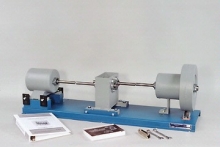 Item Number:206-000
 -
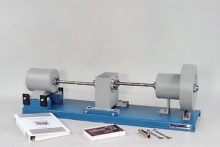 Item Number:206-PACBasic mechanical maintenance skills are fundamental throughout advanced manufacturing and a wide variety of industries. For example, industrial maintenance technicians must possess essential knowledge and skills to perform shaft alignments and maintain, troubleshoot, and repair a variety of couplings.
 -
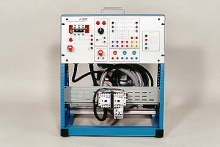 Item Number:423-000DAC Worlwide’s 3-Phase Motor Control Training System with Magnetic Starter (423-000) is a motor control-related device for training in the operational principles, wiring, fault troubleshooting, and application of industrial three-phase, reversing magnetic starters.
 -
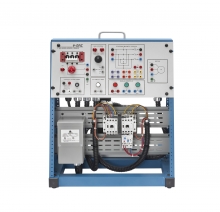 Item Number:424-000DAC Worldwide’s 3-Phase Motor Control Training System with Magnetic Starter, Low Voltage Start (424-000) is a motor control-related device for training in the operational principles, wiring, fault troubleshooting, and application of industrial three-phase, reversing magnetic starters.
 -
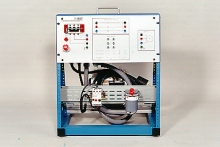 Item Number:422-000DAC Worldwide’s 3-Phase Motor Control Training System with Manual Starter (422-000) is a task-specific, motor control-related training device that allows for skill-building in the operational principles, circuit design, wiring, fault troubleshooting, and application of industrial three-phase, manual motor starters.
 -
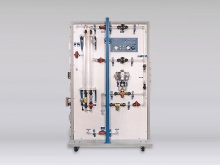 Item Number:601-000DAC Worldwide’s 3-Variable Process Control Training System (601-000) is a working, large-scale, fluid process system allowing for hands-on training relating to the measurement and control of process variables including level, pressure, and flow.
 -
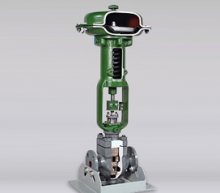 Item Number:256DAC Worldwide’s 3-Way Control Valve Cutaway, ¾”-1” (256) takes classroom training in the operation, construction, and maintenance of an industrial control valve, and enhances it by providing a visual, hands-on learning aide. The fully-detailed examples of industrial three-way valves give learners a first-hand view into a component that is found in various maintenance applications worldwide.
 -
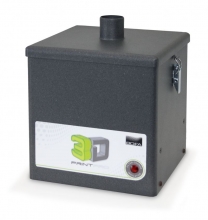
The BOFA 3D PrintPRO 2 is a low-cost unit that extracts fumes generated by the printer without causing the filament deposition area to be cooled.
It has the benefits of low noise level and minimal power consumption. Each unit is supplied with a connection hose, ‘Stay Put’ arm and conical shaped nozzle.
-
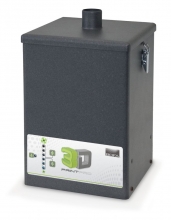
The BOFA 3D PrintPRO 3 incorporates an externally mounted plenum system which effectively captures fumes generated during the printing process and returns ultra clean, filtered air to the operator’s breathing zone.
The BOFA 3D PrintPRO 3 has the benefits of low cost, low power consumption, and integral speed control. Each filtration unit is supplied with connection hoses and ‘print your own’ plenum instructions.
-
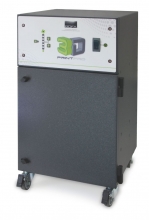
The BOFA 3D PrintPRO 4 provides a high fume evacuation and filtration rate when connected to a large enclosed 3D printer via its extraction off take point. the system can also return the filtered clean air either back to the printer enclosure for a cleaner print area or to the operator’s breathing zone.
The BOFA 3D PrintPRO 4 combines high flow rate with speed control within a compact free-standing unit.